Ava Ramirez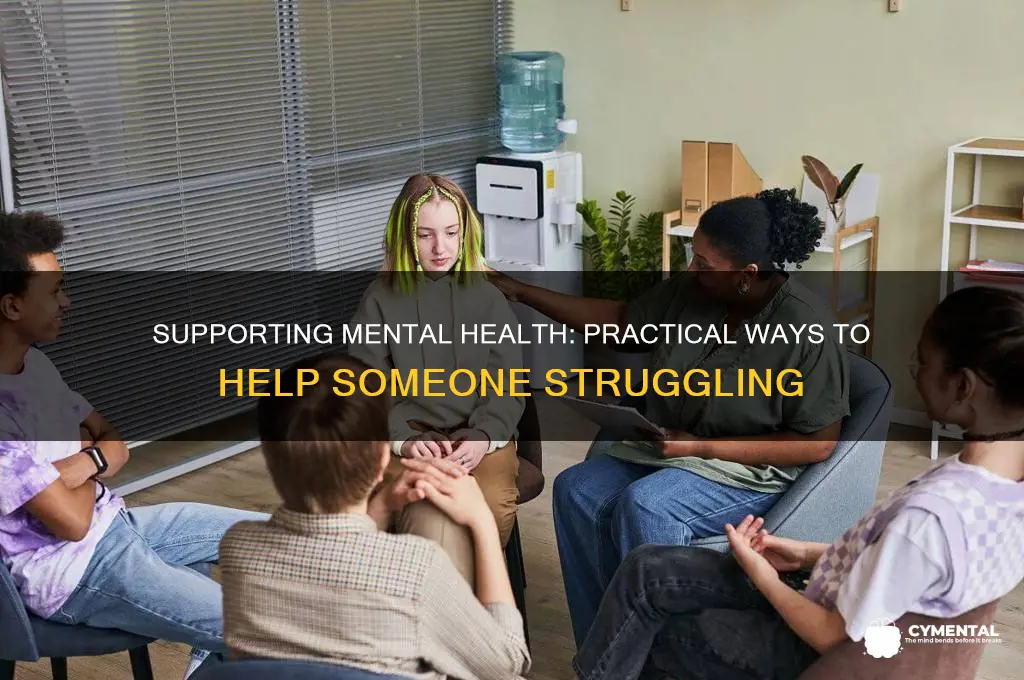
Helping someone with mental health issues requires empathy, patience, and understanding. It’s essential to approach the situation with compassion, actively listening without judgment and validating their feelings. Encourage them to seek professional help, such as therapy or counseling, while offering consistent emotional support. Educate yourself about their specific struggles to better understand their experience, and avoid minimizing their pain or offering unsolicited advice. Small gestures, like checking in regularly or spending quality time together, can make a significant difference. Remember, your role is to be a supportive ally, not a therapist, and it’s crucial to also prioritize your own well-being while helping them navigate their journey toward healing.
Explore related products


What You'll Learn
- Active Listening: Show empathy, focus fully, avoid judgment, and validate feelings during conversations
- Encourage Professional Help: Gently suggest therapy, counseling, or support groups for expert guidance
- Offer Practical Support: Assist with daily tasks, appointments, or creating a stable routine
- Educate Yourself: Learn about their condition to better understand and support them effectively
- Promote Self-Care: Encourage healthy habits like exercise, sleep, and mindfulness for mental well-being

Active Listening: Show empathy, focus fully, avoid judgment, and validate feelings during conversations
One of the most powerful tools in supporting someone with mental health struggles is the art of active listening. It’s not just about hearing words; it’s about creating a safe, non-judgmental space where the person feels truly seen and understood. Imagine a friend confiding in you about their anxiety. Instead of interrupting with advice or downplaying their feelings, you lean in, maintain eye contact, and say, “It sounds like this has been really overwhelming for you. I’m here to listen.” This simple act of empathy can make a profound difference.
To practice active listening effectively, start by eliminating distractions. Put away your phone, turn off notifications, and focus solely on the person speaking. Mirror their emotions by reflecting back what you hear. For instance, if they mention feeling isolated, respond with, “It seems like you’ve been feeling alone lately. That must be really hard.” Avoid the urge to fix their problems or compare their experiences to others. Instead, validate their feelings by acknowledging their reality. Phrases like, “That makes sense,” or “I can see why you’d feel that way,” show that you’re not just listening, but truly understanding.
A common pitfall is letting your own biases or judgments creep into the conversation. Someone might share a decision you don’t agree with, but active listening requires setting aside your perspective. For example, if a colleague admits to skipping work due to depression, resist the urge to criticize. Instead, say, “It sounds like this has been a really tough time for you. How can I support you?” This approach fosters trust and encourages openness.
Active listening isn’t a one-time effort; it’s a skill that improves with practice. Start small by setting aside 10–15 minutes daily to engage in focused conversations. Pay attention to nonverbal cues—tone of voice, body language, and facial expressions—as they often reveal more than words. Over time, you’ll notice how this technique strengthens relationships and provides a sense of relief to those struggling. Remember, the goal isn’t to solve their problems, but to let them know they’re not alone. In a world where mental health challenges are increasingly common, being a compassionate listener can be a lifeline.
Empowering Students: The Impact of Mental Health Resources in Schools
You may want to see also
Explore related products


Encourage Professional Help: Gently suggest therapy, counseling, or support groups for expert guidance
Professional help can be a lifeline for someone struggling with mental health issues, yet many hesitate to seek it. Fear of stigma, uncertainty about the process, or simply not knowing where to start can create barriers. As a supportive ally, your role is to gently illuminate the path to expert guidance without overwhelming or pressuring the individual. Begin by normalizing therapy, counseling, or support groups as valuable tools for self-care, just like visiting a doctor for physical health concerns. Frame these options as collaborative efforts to improve well-being, not as admissions of failure.
One effective approach is to share relatable examples or anecdotes that highlight the benefits of professional help. For instance, mention a friend who found clarity through cognitive-behavioral therapy or a family member who gained coping strategies in a support group. Be specific about the positive outcomes, such as reduced anxiety, improved relationships, or a renewed sense of purpose. Avoid generalities like "it really helped them" and instead describe tangible changes, like "they learned to manage panic attacks using breathing techniques taught in therapy." This concreteness makes the idea of seeking help feel more accessible and less abstract.
When suggesting professional help, timing and delivery matter. Choose a moment when the person is receptive and not in acute distress. Use "I" statements to express your observations and concerns without sounding accusatory, such as, "I’ve noticed you’ve been feeling overwhelmed lately, and I think talking to someone trained in these issues could offer new perspectives." Offer to help research therapists, counselors, or local support groups, removing logistical hurdles that might deter them. Websites like Psychology Today or the National Alliance on Mental Illness (NAMI) provide directories and resources to simplify the search.
It’s crucial to respect boundaries and avoid pushing too hard. If the person resists, acknowledge their hesitation without judgment and let them know you’re there to support them regardless. Sometimes, planting the seed is enough; they may revisit the idea later when they feel ready. Remember, your goal is to empower, not coerce. By approaching the conversation with empathy, specificity, and patience, you can help bridge the gap between their current struggles and the professional support that could make a transformative difference.
Faith's Role in Mental Health: Finding Strength and Resilience
You may want to see also
Explore related products


Offer Practical Support: Assist with daily tasks, appointments, or creating a stable routine
Mental health struggles often manifest in a person's ability to manage daily life. Simple tasks like grocery shopping, paying bills, or even getting out of bed can feel insurmountable. This is where practical support becomes a powerful tool. By assisting with these tasks, you provide a sense of stability and reduce the overwhelming burden they carry.
Think of it as temporarily sharing the load, allowing them to conserve energy for healing and self-care.
Identifying Needs and Offering Help:
Start by observing and asking. Notice areas where they seem to struggle. Are they neglecting meals? Missing appointments? Struggling to keep their living space organized? Instead of a general "How can I help?", offer specific, actionable assistance: "I’m heading to the store, can I pick up anything for you?" or "I have some free time tomorrow, would it be helpful if I came by to help with [specific task]?"
This direct approach removes the pressure of them having to articulate their needs and shows you're genuinely invested in their well-being.
Creating Structure and Routine:
A stable routine can be incredibly grounding for someone battling mental health issues. Help them establish a daily schedule, even if it's simple: consistent wake-up and bedtime, designated meal times, and blocks for self-care activities like exercise or hobbies. Use tools like planners, phone reminders, or shared calendars to reinforce this structure. Remember, the goal isn't rigidity but providing a framework that fosters a sense of control and predictability.
Accompanying to Appointments:
Medical appointments, therapy sessions, or even social engagements can be anxiety-inducing. Offer to accompany them, providing moral support and assistance with transportation or note-taking. Your presence can make a significant difference in reducing their stress and ensuring they feel heard and understood during these interactions.
Sustainability and Self-Care:
While offering practical support is crucial, it's essential to establish boundaries and encourage self-reliance. Gradually empower them to take on more responsibilities as they improve. Remember, your role is to provide a helping hand, not become their sole source of support. Prioritize your own well-being too; you can't pour from an empty cup. By taking care of yourself, you ensure you can continue to be a reliable source of assistance.
Boost Your Mind: The Mental Benefits of Physical Fitness
You may want to see also
Explore related products


Educate Yourself: Learn about their condition to better understand and support them effectively
Understanding the specific mental health condition your loved one is facing is the cornerstone of effective support. Imagine trying to navigate a foreign city without a map; you’d likely feel lost, frustrated, and ineffective. Similarly, without knowledge of their condition, your attempts to help may fall short or even cause unintended harm. For instance, someone with generalized anxiety disorder may need reassurance, but too much can reinforce their fears, while someone with depression might need gentle encouragement to engage in activities, not constant cheerleading.
Start by researching reputable sources such as the National Alliance on Mental Illness (NAMI), the World Health Organization (WHO), or peer-reviewed journals. Focus on symptoms, triggers, and evidence-based coping strategies. For example, if they have obsessive-compulsive disorder (OCD), learn that their rituals are not just "quirks" but compulsions driven by intrusive thoughts. Understanding this can help you avoid minimizing their struggles with comments like, "Just stop washing your hands so much."
However, education isn’t just about reading articles or watching videos. It’s also about listening to their personal experience. Mental health conditions manifest differently in each individual. Ask open-ended questions like, "What does this feel like for you?" or "What helps you the most when you’re struggling?" This combines your research with their lived reality, creating a more nuanced understanding. For instance, while textbooks may describe panic attacks as involving hyperventilation and chest pain, your loved one might experience them as a sense of detachment from reality.
A caution: avoid becoming an armchair diagnostician. Your role is to support, not to treat. Resist the urge to label their behaviors or offer unsolicited advice based on your newfound knowledge. Instead, use what you’ve learned to adapt your communication and actions. For example, if they have bipolar disorder, recognize that during manic episodes, they may need help setting boundaries to prevent impulsive decisions, while during depressive episodes, they may need patience and gentle reminders to take care of basic needs.
Finally, remember that education is an ongoing process. Mental health conditions can evolve, and new research emerges constantly. Stay curious and open to learning. Attend workshops, join support groups for caregivers, or subscribe to mental health newsletters. By committing to this process, you not only empower yourself to provide meaningful support but also model empathy and dedication—qualities that can inspire hope and resilience in your loved one.
Probation Officers: Supporting Mental Health During Probationary Periods
You may want to see also
Explore related products




Promote Self-Care: Encourage healthy habits like exercise, sleep, and mindfulness for mental well-being
Self-care isn’t just a buzzword—it’s a cornerstone of mental health. When someone is struggling, their basic needs often fall by the wayside. Encouraging healthy habits like exercise, sleep, and mindfulness can provide a stable foundation for recovery. For instance, just 30 minutes of moderate exercise, such as brisk walking or cycling, three to five times a week, has been shown to reduce symptoms of depression and anxiety. These habits don’t replace therapy or medication, but they complement professional treatment by empowering the individual to take control of their well-being.
Consider sleep, a critical yet often overlooked aspect of mental health. Adults need 7–9 hours of quality sleep per night, yet stress and mental health issues frequently disrupt this. Help by suggesting a consistent sleep routine: going to bed and waking up at the same time daily, limiting screen time an hour before bed, and creating a calming environment with dim lighting and white noise. For those with insomnia, cognitive behavioral therapy for insomnia (CBT-I) is a proven method to improve sleep patterns without medication. Small changes in sleep hygiene can lead to significant improvements in mood and energy levels.
Mindfulness practices, such as meditation or deep breathing exercises, are another powerful tool. Start with just 5–10 minutes a day—guided apps like Headspace or Calm can make this accessible for beginners. Research shows that mindfulness reduces cortisol levels, the stress hormone, and enhances emotional regulation. Encourage the person to focus on their breath or bodily sensations without judgment. Over time, this practice can help them become more aware of their thoughts and feelings, breaking the cycle of rumination that often accompanies mental health struggles.
However, promoting self-care requires sensitivity. Avoid phrases like “just exercise” or “get more sleep,” which can sound dismissive. Instead, offer to join them in these activities—a walk together, a shared bedtime routine, or a mindfulness session. This not only fosters accountability but also strengthens your relationship. Remember, self-care isn’t one-size-fits-all; what works for one person may not work for another. Be patient, flexible, and supportive as they discover what helps them feel grounded.
Finally, track progress without being intrusive. Celebrate small wins, like a week of consistent sleep or a few days of mindfulness practice. These victories build momentum and reinforce the value of self-care. By integrating these habits into their daily life, the person can develop resilience and a sense of agency, even in the face of mental health challenges. Self-care isn’t a cure, but it’s a vital step toward healing and stability.
Mastering the Basics: Simple Practices for Sustaining Mental Well-Being
You may want to see also
Frequently asked questions
Approach them with empathy and without judgment. Start by expressing concern in a gentle, non-confrontational way, such as, "I’ve noticed you seem a bit down lately, and I wanted to check in. How are you doing?" Let them know you’re there to listen and support them without pushing for details they’re not ready to share.
Listen actively and validate their feelings by acknowledging their experience, e.g., "That sounds really tough, and I’m here for you." Avoid offering unsolicited advice or minimizing their struggles. Encourage them to seek professional help if needed, and offer to assist with finding resources or accompanying them to appointments.
Set clear boundaries to protect your own mental health. Let the person know what kind of support you can realistically provide. Encourage them to build a support network beyond just you, and prioritize self-care by taking breaks, seeking your own support, and engaging in activities that recharge you.