Lucas Bennett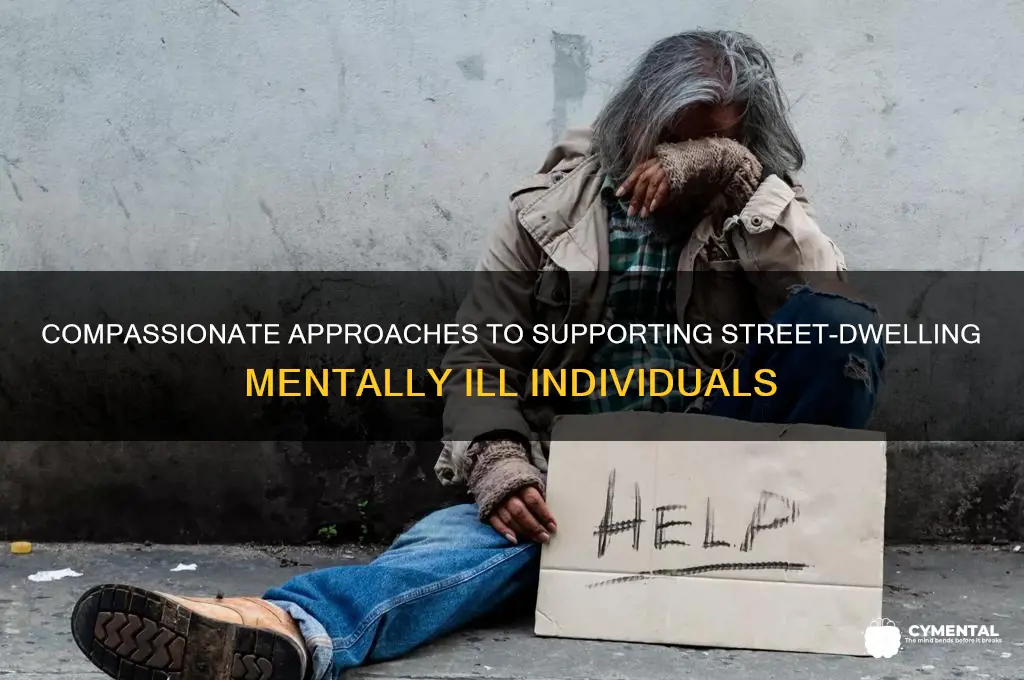
Helping the mentally ill on the street requires compassion, understanding, and practical action. Many individuals experiencing homelessness and mental illness face significant barriers to accessing care, including stigma, lack of resources, and fragmented support systems. To make a meaningful impact, it’s essential to approach them with empathy, offering immediate assistance such as food, water, or warm clothing while also connecting them to professional mental health services. Community outreach programs, crisis intervention teams, and partnerships with local shelters or healthcare providers can play a crucial role in providing long-term support. Educating the public about mental health awareness and reducing stereotypes can foster a more supportive environment. Ultimately, addressing this issue demands a collaborative effort from individuals, organizations, and policymakers to ensure those in need receive the care and dignity they deserve.
Explore related products


What You'll Learn
- Offer Food & Water: Provide basic necessities like meals, drinks, and hygiene kits to build trust and rapport
- Active Listening: Engage in non-judgmental conversations, showing empathy and understanding without pushing for details
- Connect to Services: Share info on shelters, mental health clinics, and outreach programs for professional support
- Safety Awareness: Ensure personal safety while helping; avoid confrontations and involve authorities if needed
- Small Acts of Kindness: Offer simple gestures like a smile, warm clothing, or a kind word to uplift them

Offer Food & Water: Provide basic necessities like meals, drinks, and hygiene kits to build trust and rapport
Meeting basic needs is the first step in connecting with anyone, especially those experiencing homelessness and mental illness. Offering food, water, and hygiene items isn’t just about physical sustenance—it’s a non-verbal gesture of goodwill that can begin to rebuild shattered trust. For individuals who may feel invisible or threatened by society, a simple bottle of water or a warm meal can signal that someone cares, creating a foundation for further interaction.
Consider the logistics: carry non-perishable, easy-to-eat items like granola bars, fruit cups, or bottled water. Hygiene kits should include essentials like soap, toothpaste, a toothbrush, wet wipes, and a small towel. Avoid items that require preparation or refrigeration, as these may not be practical for someone without stable living conditions. Pair these offerings with a calm, respectful approach; avoid hovering or pressuring the person to accept. A quiet “I have some food and water if you’d like it” can be more effective than an insistent offer.
The act of giving these items serves a dual purpose. Physically, it addresses immediate needs—dehydration, hunger, and poor hygiene can exacerbate mental health symptoms. Emotionally, it humanizes the interaction, shifting the dynamic from one of charity to one of shared humanity. For instance, a study by the National Alliance on Mental Illness (NAMI) found that consistent, non-judgmental support—like providing basic necessities—increases the likelihood of individuals accepting further help, such as mental health services.
However, be mindful of potential pitfalls. Not everyone will accept assistance, and that’s okay. Forcing help can erode trust rather than build it. Additionally, be aware of allergies or dietary restrictions if possible; asking “Do you have any dietary needs?” shows respect for their autonomy. Finally, while offering these items, avoid making promises you can’t keep. If you’re not equipped to provide ongoing support, focus on being present in the moment.
In conclusion, offering food, water, and hygiene kits is a simple yet powerful way to engage with mentally ill individuals on the street. It bridges the gap between indifference and compassion, laying the groundwork for deeper connections. By approaching this act with thoughtfulness and respect, you can make a meaningful difference in someone’s day—and potentially their life.
Church and Mental Health: Exploring the Impact of Faith Communities
You may want to see also
Explore related products


Active Listening: Engage in non-judgmental conversations, showing empathy and understanding without pushing for details
A person experiencing mental illness on the street may not have had a genuine, empathetic conversation in weeks, months, or even years. Their reality is often marked by isolation, stigma, and a constant barrage of well-intentioned but superficial interactions. Active listening offers a rare opportunity to connect on a human level, to acknowledge their existence beyond their struggles. It’s not about fixing, advising, or rescuing—it’s about bearing witness to their humanity.
To practice active listening, begin by creating a safe, non-threatening space. Maintain eye contact if it feels comfortable for them, but respect their boundaries if they prefer to look away. Use open-ended questions like, “How are you managing today?” or “What’s been on your mind lately?” instead of yes/no queries. Reflect back what you hear to show understanding: “It sounds like you’re feeling overwhelmed by the noise here.” Avoid interrupting or rushing them; silence is a tool, not an awkward pause. If they share something distressing, resist the urge to minimize their experience with phrases like “It’ll get better” or “At least you’re alive.” Instead, validate their emotions: “That must be incredibly difficult to carry every day.”
Active listening is not a passive act—it’s an intentional, energy-intensive practice. It requires setting aside your own assumptions, biases, and agenda. For instance, if someone mentions hearing voices, don’t ask intrusive questions like, “What do they say?” or “Do you think they’re real?” Instead, focus on their emotional state: “That sounds really unsettling. How do you cope with that?” The goal is to communicate, “I’m here, I hear you, and you matter.”
One common pitfall is mistaking active listening for therapy. You’re not a professional, and attempting to diagnose or counsel can do more harm than good. Keep the conversation grounded in the present moment and their immediate experience. If they express suicidal thoughts, however, it’s crucial to take action by contacting local crisis services or offering to stay with them until help arrives. Active listening doesn’t mean abandoning responsibility when someone’s life is at risk.
In practice, active listening can look like sitting on a bench with someone for 15 minutes, sharing a cup of coffee, or simply walking alongside them for a block. It’s about being fully present, not about the duration of the interaction. Over time, consistent, non-judgmental conversations can rebuild trust and remind individuals of their worth. This approach doesn’t solve systemic issues like homelessness or underfunded mental health services, but it humanizes a dehumanizing experience. In a world that often treats the mentally ill as invisible, active listening says, “You are seen. You are heard. You are not alone.”
Accessing Mental Health Support in West Virginia: A Comprehensive Guide
You may want to see also
Explore related products


Connect to Services: Share info on shelters, mental health clinics, and outreach programs for professional support
One of the most effective ways to assist individuals experiencing mental illness on the street is by connecting them to professional services that can provide long-term support. Shelters, mental health clinics, and outreach programs are vital resources, but many people in crisis are unaware of their existence or how to access them. Carrying a list of local shelters, their locations, and their services can be a practical first step. For instance, some shelters offer not only temporary housing but also meals, medical care, and case management. Knowing which shelters cater to specific needs—such as those for women, veterans, or individuals with substance use disorders—can make a significant difference in the effectiveness of your assistance.
Sharing information about mental health clinics is equally crucial, as these facilities often provide counseling, medication management, and therapy services. Many clinics operate on a sliding scale fee basis, making them accessible to those without insurance. For example, a clinic might offer free initial assessments or reduced rates for follow-up appointments. If you’re unsure about the services available, contact local clinics beforehand to gather brochures or contact information. This preparation ensures you can provide accurate, actionable details when the opportunity arises.
Outreach programs act as a bridge between individuals on the street and the services they need. These programs often employ trained professionals who can engage with people in a non-threatening way, assess their needs, and guide them toward appropriate resources. For instance, mobile crisis units can provide on-the-spot mental health evaluations and connect individuals to emergency care if necessary. By familiarizing yourself with local outreach programs, you can direct someone to a team that will actively follow up and ensure they receive ongoing support.
A practical tip is to create a small, laminated card with key contact information for shelters, clinics, and outreach programs in your area. Include addresses, phone numbers, and a brief description of services. This card can be easily shared and retained by the individual, serving as a tangible reminder of available resources. Additionally, consider pairing this information with a friendly conversation about the benefits of seeking help, emphasizing that these services are non-judgmental and designed to support their well-being.
While sharing information is essential, it’s equally important to approach these interactions with empathy and respect. Avoid being pushy or dismissive of their concerns. Instead, acknowledge their autonomy and let them know you’re there to help if they decide to reach out. By combining practical resource-sharing with a compassionate approach, you can play a meaningful role in connecting individuals to the professional support they need to stabilize and improve their lives.
Supporting Loved Ones: How to Get Mental Health Help Through Mail
You may want to see also
Explore related products


![A Report on homeless assistance policy and practice in the nation's five largest cities. 1989 [Leather Bound]](https://m.media-amazon.com/images/I/61IX47b4r9L._AC_UY218_.jpg)


Safety Awareness: Ensure personal safety while helping; avoid confrontations and involve authorities if needed
Helping someone experiencing mental illness on the street requires a delicate balance between compassion and caution. Prioritizing your safety isn’t selfish—it’s essential for ensuring you can offer effective assistance without escalating the situation. Always maintain a safe distance, both physically and emotionally, to avoid triggering aggression or misunderstanding. If the person appears agitated or unpredictable, step back and assess the environment for potential hazards like traffic or weapons. Remember, your ability to help diminishes if you become part of the crisis.
Instructive steps can make a significant difference in these encounters. First, remain calm and speak in a low, steady tone to de-escalate tension. Avoid sudden movements or direct eye contact, which can be perceived as confrontational. If the person becomes hostile, disengage immediately and move to a public area where others are present. Carry a phone with emergency contacts pre-programmed, and don’t hesitate to call local authorities if the situation turns dangerous. For instance, in the U.S., dialing 911 and requesting a Crisis Intervention Team (CIT) officer, if available, can ensure a trained professional handles the situation.
Comparing this approach to untrained intervention highlights its effectiveness. Well-intentioned but unprepared individuals often worsen outcomes by inadvertently provoking the person in distress. For example, attempting to physically restrain someone or arguing with them about their behavior can lead to violence. In contrast, involving authorities trained in mental health crises reduces risks for both parties. A study by the National Alliance on Mental Illness (NAMI) found that CIT programs decrease injuries during encounters by 40%, demonstrating the value of professional intervention.
Persuasively, it’s crucial to recognize that safety awareness isn’t about fear—it’s about responsibility. By protecting yourself, you preserve your ability to advocate for systemic solutions, like increased funding for mental health services or housing programs. Practical tips include carrying a small kit with gloves, a mask, and a list of local resources (e.g., shelters, crisis hotlines) to offer from a distance. For instance, in Canada, distributing cards with the Crisis Services Canada helpline (1-833-456-4566) can provide immediate support without direct involvement.
Descriptively, imagine a scenario where a person is pacing erratically on a sidewalk, muttering to themselves. Instead of approaching directly, you position yourself nearby, speaking softly and offering to call for help. If they refuse, you retreat to a safe spot, dial the non-emergency police line, and describe the situation clearly: “There’s an individual in distress at [location], possibly experiencing a mental health crisis. They’re agitated but haven’t harmed anyone.” This approach ensures safety while connecting them to appropriate care.
In conclusion, safety awareness isn’t a barrier to helping—it’s a framework for doing so effectively. By staying calm, avoiding confrontations, and involving authorities when necessary, you can provide meaningful assistance without compromising your well-being. Remember, the goal is to connect the individual to professional help, not to resolve the crisis single-handedly. Your role is to be a bridge, not a barrier.
Move Your Body, Boost Your Mind: Physical Activity's Mental Health Benefits
You may want to see also
Explore related products

$124.99 $139.99


$177.58


Small Acts of Kindness: Offer simple gestures like a smile, warm clothing, or a kind word to uplift them
A simple smile can be a powerful tool when encountering someone struggling with mental health on the street. It’s a non-verbal acknowledgment of their humanity, a silent message that says, “I see you, and you matter.” Research in psychology highlights that even fleeting positive interactions can trigger the release of neurotransmitters like dopamine, which can momentarily alleviate feelings of isolation or despair. Practically, this act requires no resources—only the intentional decision to offer warmth instead of indifference.
When considering material gestures, warm clothing is a tangible way to address immediate physical discomfort, which often exacerbates mental distress. A clean, gently used jacket or a pair of socks can provide not just warmth but also a sense of care. For instance, organizations like the Sock It to ’Em campaign emphasize the importance of clean socks for homeless individuals, noting that they are one of the least donated but most needed items. Pairing this with a brief, respectful conversation can amplify its impact, showing that the gift is an act of kindness, not charity.
Words carry weight, especially for those marginalized by their mental health struggles. A kind phrase like, “I hope your day gets better,” or “You’re not alone,” can disrupt cycles of negative self-talk. However, delivery matters—avoid platitudes or unsolicited advice. Instead, use open-ended questions like, “How are you doing today?” to signal genuine interest without intrusion. Studies in crisis intervention stress the importance of active listening, even in brief encounters, as it fosters a sense of connection and validation.
Balancing these acts requires awareness of boundaries and safety. Not everyone will welcome interaction, and it’s crucial to respect their space. For example, offering a granola bar alongside a smile allows them to accept or decline without pressure. Additionally, be mindful of cultural differences in communication—what’s perceived as kind in one context might not translate universally. The goal is to humanize, not to impose, ensuring that your gesture is a bridge, not a burden.
In practice, consistency matters more than grand gestures. Small acts of kindness, when repeated by many, create a ripple effect that can transform public spaces into environments of empathy. For instance, a community initiative in Portland, Oregon, encourages residents to carry “blessing bags” with essentials like water, snacks, and hygiene items, paired with a handwritten note of encouragement. Such efforts not only meet immediate needs but also challenge societal stigma by normalizing compassion. Every interaction, no matter how brief, has the potential to remind someone that they are part of a shared humanity.
Green's Healing Power: Physical and Mental Benefits of Nature's Color
You may want to see also
Frequently asked questions
Approach calmly and respectfully, maintaining a safe distance. Use a friendly tone and ask open-ended questions like, "How can I help?" or "Are you okay?" Avoid being confrontational or judgmental, and be prepared to listen without interrupting.
If the person refuses help, avoid forcing assistance. Instead, contact local crisis services or a mental health hotline for guidance. You can also leave them with information about local resources, such as shelters or mental health clinics, in case they change their mind.
Focus on providing resources that address their immediate needs, such as food, water, or shelter, rather than giving money directly. Encourage them to connect with mental health professionals or outreach programs that can offer long-term support.
Signs include disorganized speech, erratic behavior, self-neglect, or expressions of distress like crying or shouting. They may also appear disconnected from reality or exhibit paranoia. If you notice these signs, approach with empathy and consider offering assistance or contacting local support services.