Noah Parker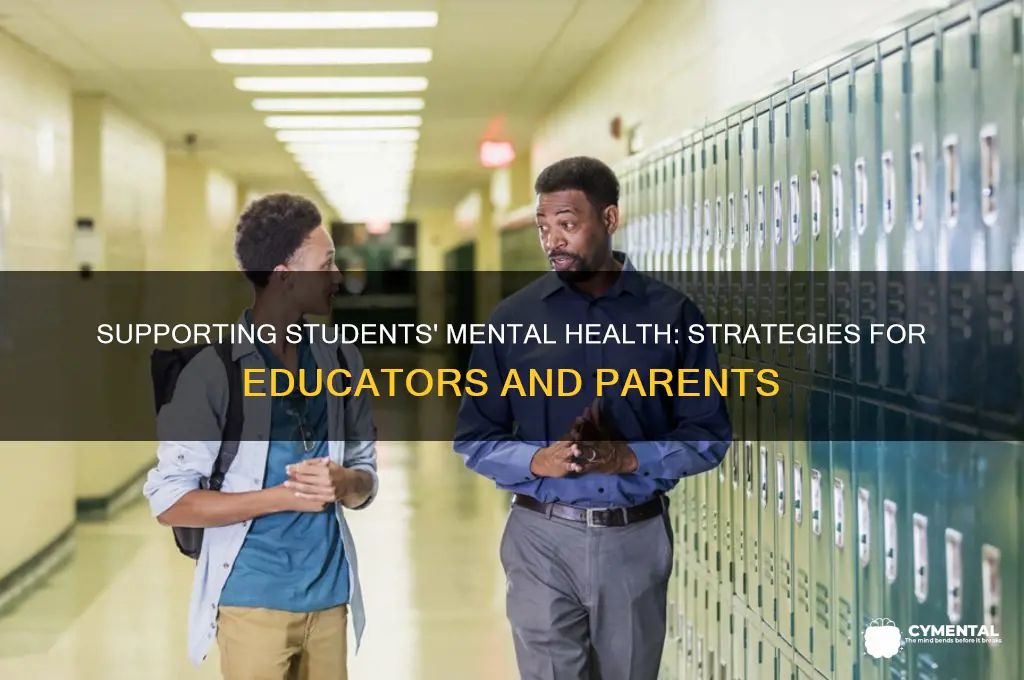
Supporting students with mental illness requires a compassionate, proactive, and holistic approach. Educators, parents, and school communities must prioritize creating a safe and inclusive environment where students feel comfortable seeking help without fear of stigma. This involves raising awareness about mental health, providing training for staff to recognize signs of distress, and ensuring access to professional resources such as counselors or therapists. Encouraging open communication, fostering resilience through emotional skills training, and implementing flexible academic accommodations can significantly alleviate the challenges students face. By addressing mental health as a critical component of overall well-being, we can empower students to thrive academically, emotionally, and socially.
Explore related products



What You'll Learn
- Early Detection Signs: Teach staff and peers to recognize subtle changes in behavior or mood
- Creating Safe Spaces: Establish supportive environments where students feel comfortable discussing their mental health
- Access to Resources: Provide clear information on counseling, hotlines, and mental health services
- Flexible Academic Policies: Implement accommodations like extended deadlines or reduced workloads for affected students
- Peer Support Programs: Train students to offer empathy, understanding, and guidance to their struggling peers

Early Detection Signs: Teach staff and peers to recognize subtle changes in behavior or mood
Subtle shifts in behavior or mood often precede more severe manifestations of mental illness, making early detection a critical skill for educators and peers alike. A student who suddenly stops participating in class discussions, for instance, might be experiencing anxiety or depression, not merely disinterest. Teaching staff and students to recognize these changes requires a structured approach that balances observation with empathy. Start by providing training on common indicators: withdrawal from social activities, changes in academic performance, or unexplained irritability. Pair this knowledge with practical tools, such as a checklist or reporting system, to ensure consistency and reduce reliance on memory.
Consider the role of peer observation, which can uncover nuances adults might miss. Adolescents aged 14–18, for example, are more likely to confide in friends than authority figures. Implement peer support programs that teach students to identify red flags—like a classmate who starts skipping meals or exhibits sudden mood swings—and report them confidentially. Use role-playing scenarios to practice conversations that encourage openness without judgment. For instance, instead of asking, “Are you okay?”, peers can say, “I’ve noticed you haven’t been yourself lately. Is there something going on?”
Staff training should emphasize the importance of context and frequency. A single instance of forgetfulness might be trivial, but repeated lapses could signal stress or ADHD. Provide educators with case studies illustrating how small changes compound over time, such as a student who gradually stops submitting homework or begins arriving late to class. Encourage teachers to document observations in a shared log, ensuring a holistic view of the student’s behavior across settings. This data-driven approach avoids overreliance on subjective impressions and facilitates timely intervention.
Finally, caution against misinterpretation or overreaction. Not every change indicates mental illness; adolescents naturally experience mood fluctuations. Train staff and peers to differentiate between typical developmental behavior and potential warning signs. For example, a teenager’s increased desire for privacy is normal, but persistent avoidance of social interactions warrants attention. Foster a culture of curiosity rather than alarmism, where observations are made with care and reported with the student’s well-being as the priority. Early detection is not about labeling but about creating a safety net that catches students before they fall.
Music Therapy: A Powerful Tool for Adult Mental Health Healing
You may want to see also
Explore related products


Creating Safe Spaces: Establish supportive environments where students feel comfortable discussing their mental health
Students struggling with mental health often face a silent battle, fearing judgment or misunderstanding if they speak up. This reluctance to seek help can exacerbate their condition, making early intervention crucial. Creating safe spaces within educational institutions is not just a supportive measure—it’s a proactive strategy to foster trust, encourage dialogue, and provide timely assistance. By designing environments where students feel heard and valued, schools can dismantle the stigma surrounding mental health and promote overall well-being.
To establish such spaces, educators and administrators must first cultivate a culture of empathy and openness. This begins with training staff to recognize signs of mental distress and respond with sensitivity. For instance, teachers can be taught to use non-judgmental language when addressing student behavior, such as saying, “I’ve noticed you seem quieter lately—is there something you’d like to talk about?” instead of, “Why are you always so moody?” Peer support programs can also be implemented, where trained student volunteers act as confidants for their classmates, bridging the gap between students and adults. These initiatives signal to students that their feelings are valid and that help is accessible without fear of ridicule or punishment.
Physical spaces play a significant role in fostering safety. Designating quiet, private areas where students can retreat during moments of overwhelm—such as sensory rooms or counseling corners—can provide immediate relief. For older students, particularly those aged 15–18, creating anonymous feedback systems or suggestion boxes allows them to voice concerns without feeling exposed. Digital platforms, like secure messaging apps or mental health forums, can extend this support beyond the classroom, ensuring students have access to resources even outside school hours. The key is to offer multiple avenues for expression, catering to diverse comfort levels and communication styles.
However, creating safe spaces isn’t without challenges. Educators must balance confidentiality with the need to intervene in high-risk situations, such as suicidal ideation. Clear protocols should outline when and how to escalate concerns to counselors or external professionals, ensuring student safety without breaching trust. Additionally, fostering inclusivity requires addressing intersectional factors—such as race, gender, or socioeconomic status—that may influence a student’s willingness to seek help. For example, LGBTQ+ students may hesitate to open up in environments where their identities are not explicitly affirmed. Schools can counteract this by displaying diversity-inclusive posters, hosting workshops on inclusive language, and integrating mental health discussions into existing curricula.
Ultimately, the goal of safe spaces is to normalize conversations about mental health, making them as commonplace as discussions about physical ailments. By embedding support structures into the fabric of school life, institutions can empower students to prioritize their well-being and seek help without hesitation. This shift not only benefits individual students but also cultivates a compassionate, resilient community where everyone feels seen and supported.
Hydration and Mind: How Drinking Water Boosts Mental Health
You may want to see also
Explore related products


Access to Resources: Provide clear information on counseling, hotlines, and mental health services
Students often struggle to find mental health resources, even when they’re available. A 2021 survey by the American College Health Association revealed that 60% of college students felt overwhelmed by anxiety, yet only 20% accessed counseling services. This gap highlights a critical issue: knowing resources exist is just as important as the resources themselves. To bridge this divide, institutions must prioritize visibility and clarity in their mental health offerings.
Step 1: Centralize Information in High-Traffic Areas
Create a dedicated, easily navigable webpage or physical bulletin board in locations students frequent—academic buildings, residence halls, and dining halls. Include a concise list of on-campus counseling services, crisis hotlines (e.g., the National Suicide Prevention Lifeline at 988), and local mental health clinics. Use clear headings, bullet points, and bolded contact details to ensure information is scannable. For example, under "Crisis Support," list the 988 hotline with a note: "Available 24/7, free, confidential."
Step 2: Leverage Technology for Accessibility
Integrate mental health resources into platforms students already use. Add a "Mental Health" tab to the student portal, embed QR codes on campus posters linking to resource pages, or send periodic emails with updated service information. Apps like Calm or Headspace can be offered at discounted rates through institutional partnerships, providing accessible tools for stress management.
Step 3: Train Staff to Direct Students Effectively
Faculty, advisors, and resident assistants are often the first point of contact for students in distress. Equip them with resource cheat sheets and scripts for directing students to help. For instance, a professor might say, "If you’re feeling overwhelmed, the counseling center offers same-day appointments—here’s their number." Consistency in messaging ensures students receive accurate, actionable guidance.
Caution: Avoid Overloading with Information
While comprehensive lists are helpful, too much detail can overwhelm. Prioritize the most critical resources—counseling services, hotlines, and emergency contacts—and provide links or referrals for additional support. For example, instead of listing every therapist in the area, offer a link to a searchable database like Psychology Today’s "Find a Therapist" tool.
Clear, accessible information acts as a lifeline for students navigating mental health challenges. By centralizing resources, leveraging technology, and training staff, institutions can ensure students not only know help exists but also feel empowered to seek it. In a landscape where stigma and confusion often prevail, clarity becomes a form of care.
Recreational Activities: Boosting Mental Health and Well-Being Naturally
You may want to see also
Explore related products

$32.99 $32.99


Flexible Academic Policies: Implement accommodations like extended deadlines or reduced workloads for affected students
Students with mental illness often face invisible barriers that traditional academic structures fail to address. Rigid deadlines and heavy workloads can exacerbate symptoms, leading to a downward spiral of stress, anxiety, and academic failure. Flexible academic policies, such as extended deadlines or reduced workloads, offer a lifeline by acknowledging these challenges and providing practical relief. For instance, a student battling depression might need an extra week to complete a research paper, not because they’re lazy, but because their condition slows their cognitive processing and energy levels. Such accommodations don’t lower standards; they level the playing field, allowing students to demonstrate their knowledge without being penalized for their illness.
Implementing these policies requires a structured yet empathetic approach. Start by establishing clear guidelines for requesting accommodations, such as requiring documentation from a mental health professional. This ensures fairness while respecting privacy. For example, a student might submit a letter from their therapist outlining their needs, which could include extending a final exam deadline by 48 hours or reducing the number of required assignments by one. Faculty should be trained to handle these requests sensitively, avoiding stigmatizing language or attitudes. Additionally, consider creating a centralized office or liaison to manage accommodations, streamlining the process for both students and instructors.
Critics might argue that flexible policies could be abused or undermine academic integrity. However, evidence suggests that when implemented thoughtfully, these accommodations benefit not only the students receiving them but also the academic community as a whole. A study from the University of Michigan found that students with mental health accommodations were more likely to stay enrolled and achieve higher grades compared to peers who received no support. The key is to balance flexibility with accountability. For instance, while a student might receive an extended deadline, they could be required to submit a progress update midway through the extension period. This ensures they’re on track without adding undue pressure.
Finally, communication is critical to the success of flexible academic policies. Instructors should proactively inform students about available accommodations at the start of the semester, perhaps during syllabus week or via an email reminder. This reduces the stigma associated with asking for help and encourages students to seek support early. Equally important is fostering a culture of understanding among peers. Workshops or panel discussions featuring students who’ve benefited from these policies can humanize the issue, dispelling myths and building empathy. By normalizing accommodations, institutions can create an environment where students with mental illness feel supported, not isolated, in their academic journey.
Supporting Undiagnosed Adults: Strategies for Mental Health Assistance
You may want to see also
Explore related products


Peer Support Programs: Train students to offer empathy, understanding, and guidance to their struggling peers
Peer support programs harness the power of shared experience, leveraging the unique ability of students to connect with one another in ways adults cannot. Unlike traditional counseling, which can feel formal and distant, peer support thrives on relatability. A trained student mentor who has navigated similar struggles—academic pressure, social anxiety, or personal loss—can offer a level of empathy and understanding that fosters trust and openness. This approach demystifies mental health challenges, normalizing conversations and reducing stigma within the student community.
Implementing a successful peer support program requires careful planning. Begin by identifying and training a diverse group of student volunteers, ensuring representation across grades, backgrounds, and experiences. Training should cover active listening, boundary-setting, confidentiality, and crisis response protocols. Mentors must learn to recognize red flags and know when to escalate concerns to professional staff. Pairing mentors with mentees based on shared interests or challenges can enhance rapport, but avoid forcing connections—organic relationships often develop naturally within the program framework.
One effective model is the "drop-in" approach, where trained peers staff a designated space during lunch or after school. This low-pressure environment allows students to seek support casually, without the formality of an appointment. For example, a high school in California implemented a "Peer Wellness Lounge," where mentors offered tea, board games, and open ears. Over time, the lounge became a safe haven for students to discuss everything from test anxiety to family issues, with mentors providing guidance rooted in shared experience.
While peer support programs are powerful, they are not a substitute for professional mental health services. Mentors must understand their role as guides, not therapists. Regular supervision by counselors or psychologists ensures mentors receive support and stay within their scope. Additionally, programs should integrate with existing mental health resources, providing a clear pathway for students who need more intensive intervention. When structured thoughtfully, peer support programs not only aid struggling students but also empower mentors, fostering leadership skills and a deeper sense of community.
Empowering Lives: Social Workers Supporting Individuals with Intellectual Disabilities
You may want to see also
Frequently asked questions
Educators can identify struggling students by observing changes in behavior, academic performance, attendance, or social interactions. Signs may include persistent sadness, withdrawal, irritability, or difficulty concentrating. Building trust and maintaining open communication with students can also encourage them to share their struggles.
Practical strategies include providing flexible deadlines, offering quiet spaces for breaks, and incorporating mindfulness or stress-reduction activities. Teachers can also use inclusive language, avoid stigmatizing mental health, and collaborate with school counselors or mental health professionals to ensure comprehensive support.
Schools can foster a supportive environment by implementing mental health education programs, training staff to recognize and respond to mental health issues, and promoting a culture of empathy and understanding. Policies that prioritize mental well-being, such as access to counseling services and peer support groups, are also essential.