Harper Lewis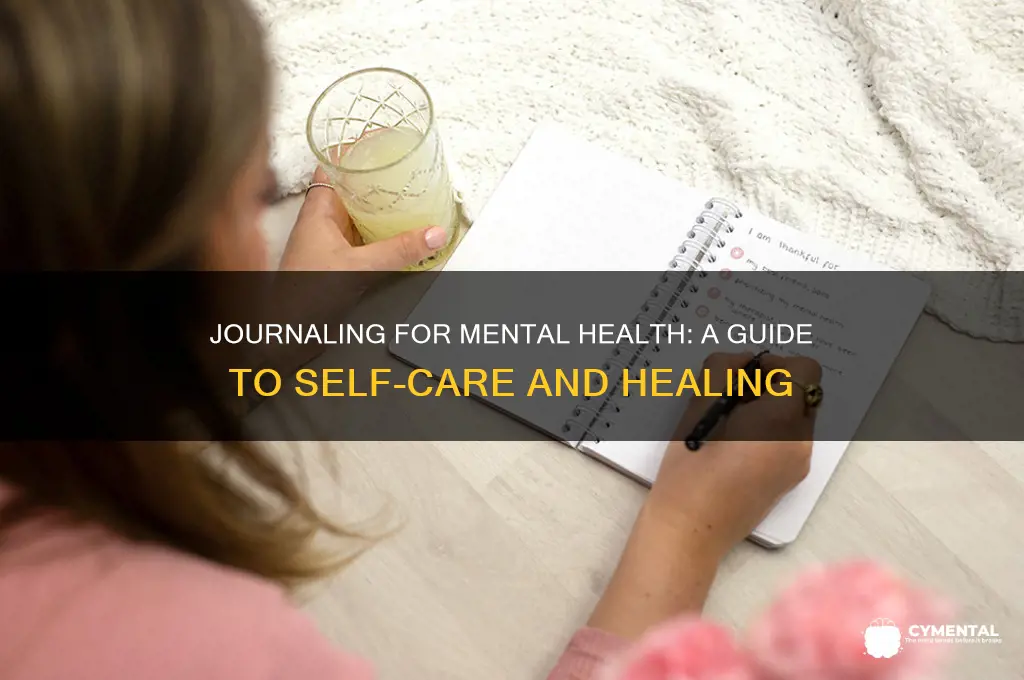
Journaling is a powerful and accessible tool for supporting mental health, offering a safe space to express thoughts, emotions, and experiences without judgment. By putting pen to paper, individuals can gain clarity, process complex feelings, and track patterns in their moods or behaviors, fostering self-awareness and emotional regulation. Whether through structured prompts, free-writing, or creative expression, journaling encourages mindfulness and reflection, helping to reduce stress, anxiety, and overwhelm. It also serves as a tangible record of personal growth, allowing individuals to celebrate progress and identify areas for improvement. Incorporating journaling into a daily or weekly routine can be a simple yet transformative practice for nurturing mental well-being.
Explore related products




$9.79 $17.99

What You'll Learn
- Set Intentions: Define journaling goals, like stress relief, self-reflection, or tracking mood patterns
- Daily Prompts: Use guided questions to overcome writer’s block and explore emotions deeply
- Gratitude Practice: Write daily appreciations to shift focus toward positivity and reduce negativity
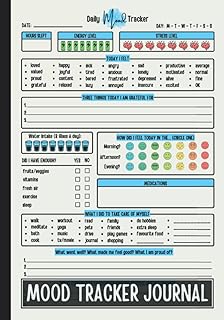
- Emotion Tracking: Log feelings to identify triggers, patterns, and progress over time
- Mindful Writing: Focus on the present moment to reduce anxiety and enhance clarity

Set Intentions: Define journaling goals, like stress relief, self-reflection, or tracking mood patterns
Journaling without a clear purpose can feel aimless, like wandering through a fog. Setting intentions transforms it into a targeted tool for mental health, ensuring each entry serves a specific need. Whether you’re seeking stress relief, deeper self-awareness, or mood pattern tracking, defining your goal sharpens focus and maximizes the practice’s impact. For instance, if stress relief is your aim, dedicating 10 minutes daily to jot down anxieties can act as a mental decluttering exercise, akin to a cognitive reset button.
Consider the *why* behind your journaling. Are you grappling with overwhelming emotions, or do you need a space to process daily experiences? For self-reflection, structured prompts like “What am I grateful for today?” or “What challenged me?” can guide entries. If tracking mood patterns, adopt a rating scale (1–10) at the start of each entry to identify triggers or trends over time. A 2020 study in *Journal of Affective Disorders* found that mood tracking via journaling helped participants recognize early signs of anxiety or depression, enabling proactive coping strategies.
Practicality matters. For stress relief, keep a notebook by your bed or desk for quick access during tense moments. For self-reflection, schedule journaling as a non-negotiable part of your morning or evening routine—consistency breeds insight. Mood tracking benefits from digital tools like apps that allow tagging entries with emotions or activities, though analog methods (e.g., color-coding entries) work equally well. Teens and young adults, who often face fluctuating emotions, may find mood tracking particularly beneficial, while older adults might prioritize self-reflection to process life transitions.
Caution: Avoid turning journaling into a chore. If stress relief is the goal, resist the urge to overanalyze entries; let the act of writing itself be therapeutic. For mood tracking, be mindful of fixation—if patterns feel overwhelming, pair journaling with professional support. Self-reflection, while powerful, can stir up difficult emotions; balance honesty with self-compassion.
Ultimately, setting intentions transforms journaling from a passive activity into an active strategy for mental health. By aligning your practice with specific goals, you create a personalized roadmap for growth, resilience, or healing. Start small, stay consistent, and let your intentions guide the way.
Seeking Mental Health Support: A Guide for Military Personnel
You may want to see also
Explore related products


Daily Prompts: Use guided questions to overcome writer’s block and explore emotions deeply
Journaling can feel daunting, especially when emotions are tangled or thoughts scattered. This is where daily prompts step in as a lifeline, offering structure and direction to transform blank pages into powerful tools for self-discovery. Think of them as gentle nudges, guiding you past the initial resistance and into the heart of your inner world.
Unlike free-flowing journaling, which relies on spontaneous thought, prompts provide a framework, making the process less intimidating and more focused. They act as emotional compasses, pointing you towards feelings that might otherwise remain hidden beneath the surface.
Consider this scenario: You're feeling overwhelmed but struggle to pinpoint why. A prompt like "What’s one small thing that brought me joy today?" shifts your focus from the overwhelming whole to a manageable detail. This specificity not only eases the pressure to produce profound insights but also encourages mindfulness, training your brain to notice the subtle positives often overlooked in the chaos. Over time, this practice cultivates gratitude and a more nuanced understanding of your emotional landscape.
For maximum benefit, aim for consistency. Dedicate 10-15 minutes daily to engage with a prompt. Keep a notebook or digital document specifically for this purpose, creating a safe space for unfiltered expression. Remember, there are no right or wrong answers; the goal is honest exploration, not literary perfection.
Not all prompts are created equal. Some are reflective, like "What am I most proud of this week?" encouraging self-acknowledgment. Others are future-oriented, such as "What’s one step I can take today towards a goal?" fostering a sense of agency. Experiment with different types to discover what resonates most with your current needs. For deeper exploration, combine prompts. Start with a broad question like "What emotions am I feeling right now?" then follow up with "What triggered these emotions?" and "How can I honor these feelings?" This layered approach allows you to peel back the layers of your experience, uncovering insights that might have remained hidden with a single prompt.
While prompts are powerful tools, they’re not a magic bullet. Be mindful of potential pitfalls. Avoid prompts that feel forced or irrelevant, as they can lead to frustration. If a prompt consistently leaves you feeling stuck, set it aside and try another. Remember, journaling is a personal journey; tailor your prompts to your unique needs and preferences. Ultimately, daily prompts are not about filling pages but about fostering a deeper connection with yourself. They provide a safe and structured space to confront difficult emotions, celebrate victories, and chart your personal growth. By embracing this practice, you unlock the transformative power of journaling, turning it from a daunting task into a cherished ritual of self-care and self-discovery.
Guiding Loved Ones to Mental Health Support: A Compassionate Approach
You may want to see also
Explore related products


Gratitude Practice: Write daily appreciations to shift focus toward positivity and reduce negativity
A simple yet powerful tool for improving mental well-being is the practice of gratitude journaling. This involves dedicating a few minutes each day to reflect on and write down the things you're grateful for. It might seem like a small task, but research suggests that this practice can significantly impact your overall outlook and mental health.
The Science Behind Gratitude
Numerous studies have explored the effects of gratitude on mental health. One consistent finding is that regularly expressing gratitude can increase happiness and life satisfaction. A study published in the *Journal of Personality and Social Psychology* found that participants who wrote down things they were grateful for each week reported significantly better mental health and well-being than those who recorded hassles or neutral events. This practice seems to work by shifting our focus away from negative thoughts and experiences, training our brains to notice and appreciate the positive aspects of life.
Implementing a Gratitude Practice
To start, set aside a specific time each day for this exercise, perhaps in the morning to set a positive tone or before bed to reflect on the day's blessings. Keep a dedicated journal or use a notes app on your phone. The key is consistency. Aim for at least three entries daily, but feel free to write more if inspired. For instance, you might appreciate a beautiful sunset, a kind gesture from a stranger, or a personal achievement, no matter how small. Be specific and detailed in your writing to make the experience more vivid and engaging.
A Comparative Perspective
Consider the alternative: not practicing gratitude. Without this intentional focus, it's easy to fall into the trap of negative thinking, where one tends to dwell on problems, setbacks, and worries. This negative bias can lead to increased stress, anxiety, and even depression. Gratitude journaling acts as a counterbalance, providing a mental shift towards positivity and helping to build resilience against life's challenges. It's a form of cognitive behavioral therapy in written form, allowing you to challenge and change negative thought patterns.
Making it a Habit
Like any new habit, consistency is key. Start small and be patient with yourself. If you miss a day, don't abandon the practice; simply resume the next day. Over time, this practice can become a natural part of your daily routine, offering a sense of calm and perspective. For added motivation, consider joining or creating a gratitude challenge with friends or family, sharing appreciations and supporting each other's mental health journeys. This social aspect can enhance the benefits and create a positive feedback loop.
Incorporating gratitude journaling into your self-care routine is a simple yet effective way to nurture your mental health. It encourages a positive mindset, helps manage stress, and fosters a deeper appreciation for life's little joys. With regular practice, you may find yourself becoming more resilient, optimistic, and content.
Lion's Mane Mushroom: A Natural Remedy for Mental Health?
You may want to see also
Explore related products
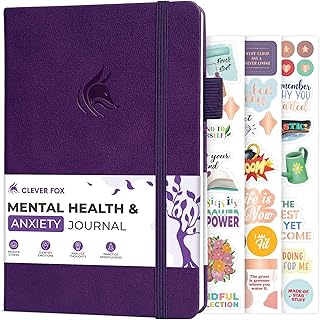


Emotion Tracking: Log feelings to identify triggers, patterns, and progress over time
Emotions, like weather patterns, ebb and flow, often influenced by unseen forces. Tracking them systematically can reveal the hidden currents shaping your mental landscape. By logging feelings alongside context—time, location, interactions, and activities—you create a data trail that highlights triggers, recurring patterns, and gradual shifts. This practice transforms abstract emotions into tangible insights, empowering you to act rather than react. For instance, noting a spike in anxiety every Monday morning might link it to work stress, while a consistent uplift after evening walks could underscore the calming effect of physical activity.
To begin emotion tracking, adopt a structured approach. Dedicate a notebook or digital app to daily entries, recording emotions on a scale of 1 to 10, with 1 being deeply distressed and 10 being euphoric. Pair each rating with a brief description of the emotion (e.g., "6, restless after a long meeting") and relevant details like time, location, and potential triggers. Consistency is key—aim for at least one entry daily, ideally at the same time, to establish a reliable baseline. Over weeks, patterns emerge: perhaps frustration peaks during commute hours, or joy spikes after creative tasks. These insights become actionable, guiding adjustments to routines or environments.
While emotion tracking is powerful, it’s not without pitfalls. Avoid over-analyzing every fluctuation; emotions are natural and transient, not always requiring intervention. Focus on trends rather than isolated incidents. For example, a single day of sadness might be insignificant, but a two-week downward trend warrants attention. Additionally, be mindful of labeling emotions as "good" or "bad"—all feelings carry information. Instead of suppressing discomfort, ask: *What is this emotion trying to tell me?* This curiosity fosters self-compassion and deeper understanding.
For those new to this practice, start small. Begin with a weekly review, identifying three recurring emotions and their common denominators. Gradually increase frequency to daily logging. Tools like color-coding or emojis can make the process engaging, while prompts like "What surprised me today?" add depth. Over time, this habit becomes a mirror, reflecting not just current states but also progress. A month-old entry of overwhelming stress, contrasted with today’s resilience, can be a testament to growth—a reminder that emotions, like seasons, change, and you have the power to navigate them.
Supporting College Athletes: Strategies for Mental Health and Well-Being
You may want to see also
Explore related products


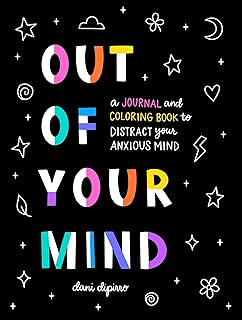
Mindful Writing: Focus on the present moment to reduce anxiety and enhance clarity
Anxiety often stems from dwelling on the past or worrying about the future. Mindful writing anchors you in the present, a technique rooted in mindfulness practices that have been shown to reduce stress and improve emotional regulation. By focusing on the here and now, you interrupt the cycle of anxious thoughts, creating a mental pause that fosters calmness and clarity. This isn’t about crafting perfect prose; it’s about observing your thoughts and feelings without judgment, translating them into words as they arise.
To begin, set aside 10–15 minutes daily in a quiet space. Start by taking three deep breaths, grounding yourself in the physical sensations of the present—the rise and fall of your chest, the air moving in and out. Then, without overthinking, write down what you notice around you: the sound of a clock ticking, the warmth of sunlight on your skin, the scent of coffee lingering in the air. Gradually, shift your focus inward. Describe your emotions as if they were weather patterns—a storm brewing, a gentle breeze, or a calm sky. Avoid analyzing or interpreting; simply record what is.
A common pitfall is slipping into narrative mode, recounting past events or predicting future outcomes. If this happens, gently redirect your attention to the present. For example, instead of writing, “I’m anxious because of that meeting yesterday,” try, “Right now, my chest feels tight, and my hands are clammy.” This specificity keeps you grounded and prevents anxiety from spiraling. Over time, this practice trains your brain to recognize when it’s drifting into worry, making it easier to return to the present.
Research suggests that consistent mindful writing can rewire neural pathways, reducing the brain’s tendency to fixate on threats. A 2018 study published in *Journal of Clinical Psychology* found that participants who engaged in daily present-moment journaling reported a 30% decrease in anxiety symptoms after four weeks. To maximize benefits, pair this practice with other mindfulness techniques, such as meditation or body scans. For those new to journaling, start small—even five minutes a day can yield noticeable results.
Incorporating prompts can enhance focus. Try, “What am I grateful for in this moment?” or “What does my body need right now?” These questions guide your attention to the present while fostering a sense of appreciation and self-care. Remember, the goal isn’t to eliminate anxiety entirely but to cultivate a healthier relationship with it. By regularly practicing mindful writing, you build resilience, learning to observe anxiety without being overwhelmed by it. The clarity gained from this practice extends beyond the page, influencing how you navigate daily challenges with greater ease and presence.
Faith and Healing: Christian Approaches to Mental Health Support
You may want to see also
Frequently asked questions
Journaling helps improve mental health by providing a safe space to express emotions, reduce stress, and gain clarity on thoughts and feelings. It can also track progress, identify patterns, and foster self-awareness.
Consistency is key, but there’s no one-size-fits-all answer. Aim for daily journaling, even if it’s just a few minutes, to build a habit. However, journaling a few times a week can still offer significant mental health benefits.
Write about your emotions, daily experiences, gratitude, goals, or challenges. Prompts like "How am I feeling today?" or "What went well today?" can guide you. Focus on what feels most relevant to your mental well-being.
Journaling is a valuable tool for self-reflection and emotional processing, but it is not a substitute for professional therapy. It can complement therapy by helping you organize thoughts and track progress, but severe mental health issues require professional support.