Ava Ramirez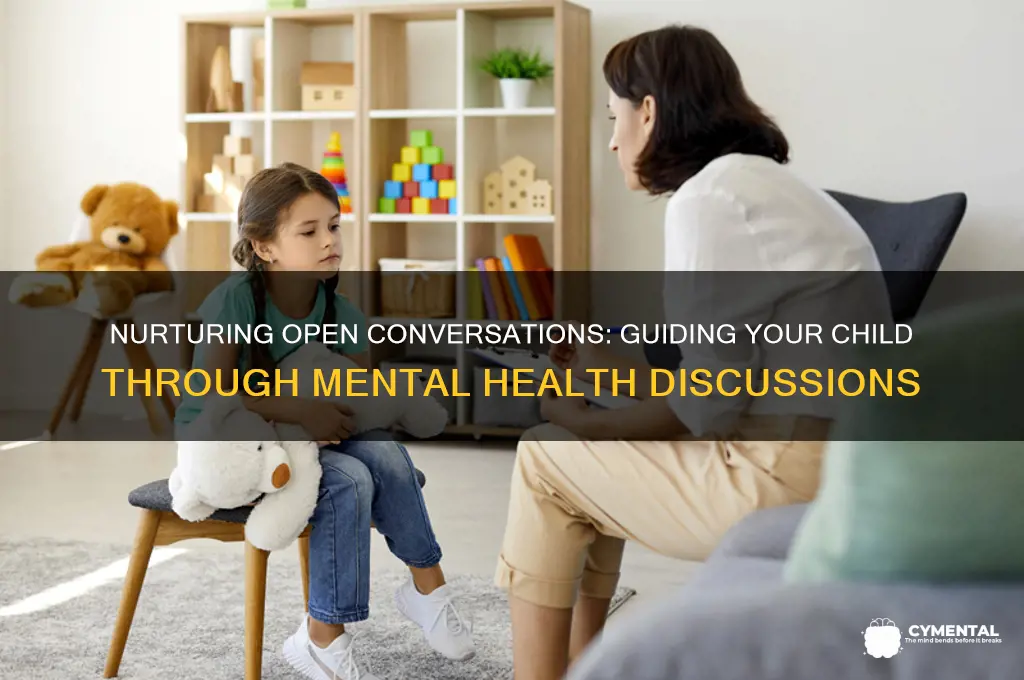
Talking to your child about mental health issues is a crucial step in fostering open communication and providing them with the support they need. It’s important to approach the conversation with empathy, patience, and age-appropriate language, ensuring they feel safe and understood. Start by creating a calm and non-judgmental environment, and use simple, clear terms to explain mental health concepts, such as emotions, stress, or anxiety. Encourage your child to share their feelings without fear of punishment or dismissal, and validate their experiences by acknowledging their emotions. Be honest about the challenges while emphasizing that seeking help is a sign of strength, not weakness. Offer reassurance that they are not alone and that you are there to support them every step of the way. By normalizing these conversations, you can help your child develop a healthy understanding of mental health and build resilience for the future.
| Characteristics | Values |
|---|---|
| Create a Safe Space | Choose a calm, private, and comfortable environment to ensure the child feels secure. |
| Use Age-Appropriate Language | Simplify concepts for younger children; use more detailed explanations for older kids/teens. |
| Be Honest and Open | Provide truthful information while being sensitive to their emotional capacity. |
| Listen Actively | Focus on their feelings, avoid interrupting, and validate their emotions. |
| Normalize Mental Health | Frame mental health as a natural part of overall well-being, reducing stigma. |
| Encourage Questions | Invite curiosity and assure them no question is "wrong" or off-limits. |
| Avoid Blame or Judgment | Refrain from criticizing or making them feel guilty about their feelings. |
| Offer Reassurance | Emphasize that they are loved, supported, and not alone in their struggles. |
| Provide Practical Tools | Teach coping strategies (e.g., deep breathing, journaling) tailored to their age. |
| Seek Professional Help if Needed | Normalize therapy and involve mental health professionals when appropriate. |
| Follow Up Regularly | Check in consistently to show ongoing support and address new concerns. |
| Model Healthy Behavior | Demonstrate self-care and open communication about your own emotions. |
| Be Patient | Understand that conversations about mental health may take time and multiple discussions. |
| Respect Their Boundaries | Allow them to share at their own pace without forcing the conversation. |
| Use Relatable Examples | Share stories or analogies (e.g., comparing emotions to weather) to make concepts relatable. |
| Focus on Strengths | Highlight their resilience and positive qualities to boost confidence. |
Explore related products


What You'll Learn
- Start Early: Begin conversations about emotions and mental health from a young age
- Use Simple Language: Explain mental health in age-appropriate, easy-to-understand terms
- Be Honest & Open: Share truths about mental health while reassuring them it’s okay to feel
- Listen Actively: Focus on their feelings without judgment; validate their emotions and experiences
- Seek Professional Help: Know when to involve a therapist or counselor for additional support

Start Early: Begin conversations about emotions and mental health from a young age
Children as young as toddlers can recognize and express basic emotions like happiness, sadness, and anger. This early emotional awareness presents a golden opportunity to lay the foundation for open communication about mental health. Starting these conversations early normalizes discussions around feelings, making it easier for children to articulate their experiences as they grow. For instance, a three-year-old who says, "I feel mad because I can't build the tower," is already engaging in emotional expression. Responding with, "It’s okay to feel mad. Let’s take a deep breath together," teaches them both vocabulary and coping strategies.
The preschool years (ages 3–5) are an ideal time to introduce more nuanced emotional concepts. Use books, cartoons, or everyday situations to discuss feelings like frustration, excitement, or worry. For example, after a character in a story feels left out, ask, "How do you think they feel? Have you ever felt that way?" This not only builds empathy but also encourages children to connect their own experiences to broader emotional themes. By age five, most children can begin to understand simple explanations of mental health, such as, "Sometimes our brains feel too busy, and that’s okay—we can talk about it."
As children enter early childhood (ages 6–8), their emotional vocabulary expands, and they become more aware of social dynamics. This stage is perfect for introducing the idea that everyone has mental health, just like physical health. Use analogies they can relate to, such as, "Just like we go to the doctor when our tummy hurts, we can talk to someone when our heart feels heavy." Encourage daily check-ins by asking, "On a scale of 1 to 5, how happy or sad are you today?" This practice fosters self-awareness and reinforces that all emotions are valid and worth discussing.
Starting early also means modeling healthy emotional behavior. Children learn by observing, so demonstrate how you manage stress, sadness, or anger. For example, saying, "I’m feeling frustrated right now, so I’m going to take a walk to calm down," shows them tangible ways to cope. Avoid dismissing their emotions with phrases like "Don’t be sad" or "It’s not a big deal." Instead, validate their feelings and guide them toward constructive solutions. By age 10, children who have grown up in such an environment are more likely to approach you with concerns about anxiety, peer pressure, or self-esteem issues.
Practical tools can further support early conversations. Create an "emotions chart" with faces representing different feelings and place it in a visible spot at home. Encourage children to point to how they feel each day. For older kids, journaling or drawing their emotions can be effective. Remember, consistency is key—make these discussions a regular part of family life, not just reactive talks during crises. By starting early, you’re not just teaching children about mental health; you’re equipping them with a lifelong skill to navigate their emotional world confidently.
Supporting Your Child’s Mental Health: Practical Strategies for Parents
You may want to see also
Explore related products




Use Simple Language: Explain mental health in age-appropriate, easy-to-understand terms
Children as young as 3 can recognize emotions like sadness or anger, but they lack the vocabulary to describe complex feelings. When discussing mental health, avoid jargon like "anxiety disorder" or "depression" with younger kids. Instead, use relatable analogies: "Sometimes our brains feel like a messy room—it’s hard to find what we need." For ages 6–9, introduce the idea of "big feelings" that everyone experiences, like a stomachache when nervous or a heavy heart when sad. Adolescents (10–14) can handle more nuanced explanations, such as comparing mental health to a battery that needs recharging. Tailor your language to their developmental stage, ensuring clarity without oversimplification.
For instance, a 5-year-old might understand, "Just like your body gets sick with a cold, your brain can feel sick too—it’s called feeling extra worried or super sad." With a 12-year-old, you could say, "Mental health is like a weather forecast for your mind—sometimes it’s sunny, sometimes stormy, and that’s okay." These age-specific metaphors bridge the gap between abstract concepts and tangible experiences. Avoid infantilizing older children or overwhelming younger ones with details. The goal is to normalize mental health conversations while respecting their cognitive abilities.
One practical tip is to use storytelling as a tool. For younger children, read books like *The Color Monster* to teach emotional identification. For preteens, share relatable scenarios: "Remember when you felt left out at school? That’s a bit like what anxiety feels like—your brain worrying too much." Encourage questions by saying, "What do you think it means to feel stressed?" This interactive approach ensures they’re not just hearing but engaging with the topic. Be prepared to repeat explanations in different ways, as children process information at varying speeds.
A common mistake is assuming simplicity means vagueness. For example, telling a 7-year-old, "You’re just being moody," can confuse or shame them. Instead, say, "Your feelings are like waves in the ocean—sometimes big, sometimes small, but they always pass." Similarly, avoid dismissing their emotions with phrases like "It’s all in your head." Acknowledge their experience: "It’s okay to feel this way, and we can figure it out together." Clarity and empathy build trust, making them more likely to open up in the future.
Finally, model the language you want them to use. If you’re stressed, say, "I’m feeling overwhelmed today, so I’m going to take a break." This teaches them emotional labeling and self-care strategies. For older children, discuss how mental health affects daily life: "When I’m anxious, I notice I forget things more easily." By integrating simple, honest language into everyday conversations, you create a safe space for them to explore their own mental health without fear or stigma.
Snapchat's Dark Side: Uncovering Its Impact on Mental Well-Being
You may want to see also
Explore related products


Be Honest & Open: Share truths about mental health while reassuring them it’s okay to feel
Children are more perceptive than we often give them credit for, and they can sense when something is amiss, especially with their parents' emotional state. If you're struggling with mental health issues, your child might already be aware that something is wrong, even if they can't articulate it. Being honest and open about your own experiences can be a powerful way to initiate a conversation about mental health. For instance, you might say, "Sometimes, I feel really sad, and it's hard for me to get out of bed. That's because I'm dealing with something called depression, and it's okay to talk about it." This approach not only validates your own feelings but also sets a precedent for your child to feel comfortable discussing their emotions.
When sharing truths about mental health, it's essential to tailor your message to your child's age and developmental stage. For younger children (ages 5-8), use simple, concrete language and analogies they can understand. For example, you might compare feelings to colors: "Sometimes, my feelings are like a storm cloud, but that doesn’t mean the sun won’t come out again." For older children and teenagers (ages 9-18), you can delve deeper into the complexities of mental health, discussing topics like anxiety, depression, or stress in more nuanced terms. Be prepared to answer questions and provide age-appropriate resources, such as books or videos, to help them better understand these concepts.
One common fear parents have is that being honest about mental health struggles will scare or overwhelm their child. However, research shows that open communication fosters resilience and emotional intelligence. A study published in the *Journal of Child Psychology and Psychiatry* found that children whose parents discussed mental health openly had better coping mechanisms and were more likely to seek help when needed. The key is to balance honesty with reassurance. After sharing your experiences, emphasize that it’s okay to feel whatever they’re feeling. Phrases like, "It’s normal to feel anxious sometimes, and we can figure out ways to handle it together," can go a long way in making your child feel safe and supported.
Practical tips can also make these conversations more effective. Start by choosing a calm, private moment when neither of you is distracted. Use "I" statements to own your feelings without projecting them onto your child, such as, "I feel overwhelmed sometimes, but I’m working on ways to feel better." Encourage questions and actively listen to their responses, validating their emotions without judgment. For example, if they say, "I feel scared when you’re sad," respond with, "It’s okay to feel scared, and I’m here to talk about it whenever you need." Finally, involve your child in creating a "feelings toolkit"—a collection of activities or strategies they can use when they’re upset, such as drawing, deep breathing, or going for a walk.
Ultimately, being honest and open about mental health isn’t just about sharing information—it’s about building a foundation of trust and understanding. By normalizing these conversations, you’re teaching your child that mental health is just as important as physical health and that it’s okay to seek help. Remember, you don’t need to have all the answers; what matters most is creating a safe space for your child to express themselves. Over time, these conversations can strengthen your relationship and equip your child with the tools they need to navigate their own emotional journey.
Police Response to Mental Health Calls: Frequency and Statistics
You may want to see also
Explore related products


Listen Actively: Focus on their feelings without judgment; validate their emotions and experiences
Children often struggle to articulate their emotions, especially when grappling with mental health challenges. As a parent, your role isn’t to fix their feelings but to create a safe space for them to express themselves. Active listening begins with silence—not the awkward, uncomfortable kind, but the intentional, receptive kind. Put away distractions like phones or screens, maintain eye contact (if culturally appropriate), and use open body language to signal your full attention. This simple act communicates, “You matter, and what you’re feeling matters.”
Consider this scenario: Your 12-year-old comes home from school visibly upset but brushes off your initial questions. Instead of pressing for details, try saying, “It seems like something’s bothering you. I’m here if you want to talk.” Notice the phrasing—it acknowledges their emotional state without demanding an immediate explanation. This approach respects their autonomy while leaving the door open for conversation. Research shows that adolescents are more likely to share when they feel in control of the dialogue, not coerced into it.
Validation is the cornerstone of active listening, but it’s often misunderstood. It doesn’t mean agreeing with their perspective or minimizing their struggles. Instead, it’s about acknowledging the *reality* of their emotions. For instance, if your teenager says, “I’m so stupid for failing that test,” resist the urge to counter with, “You’re not stupid!” Instead, respond with, “It sounds like you’re really hard on yourself right now. Failing feels terrible, doesn’t it?” This reflects their experience without judgment, fostering trust and encouraging further openness.
Practical tip: Use reflective statements to clarify and deepen understanding. For younger children (ages 6–10), simplify language: “You look really mad about that toy breaking. That’s so frustrating, isn’t it?” For teens, be more nuanced: “It seems like you’re torn between wanting independence and feeling overwhelmed by it.” These techniques not only validate their emotions but also model emotional intelligence—a skill they’ll carry into adulthood.
Finally, beware of the well-intentioned but counterproductive urge to “fix” their problems. Phrases like, “At least it’s not as bad as…” or “You’ll feel better tomorrow,” can invalidate their experience and shut down communication. Instead, focus on empathy and presence. Ask open-ended questions like, “What do you think might help right now?” or “How can I support you?” This shifts the conversation from problem-solving to connection, reinforcing the message that their feelings are valid and worthy of attention. Active listening isn’t a one-time conversation but a habit—one that strengthens your relationship and equips your child to navigate their mental health with confidence.
America's Health Care Gap: Ignoring Mental Health in the System
You may want to see also
Explore related products




Seek Professional Help: Know when to involve a therapist or counselor for additional support
Recognizing when your child needs professional mental health support is a critical skill for any parent. While open conversations and home strategies can be effective, certain signs indicate the need for a therapist or counselor. Persistent changes in behavior, such as prolonged sadness, sudden aggression, or withdrawal from social activities, often signal deeper issues. Academic decline, sleep disturbances, or frequent physical complaints without medical cause are also red flags. If these symptoms last for two weeks or more, or if they interfere with daily functioning, it’s time to consult a professional. Trust your instincts—if something feels “off” despite your efforts, seek expert guidance.
Involving a therapist isn’t a sign of failure; it’s a proactive step toward your child’s well-being. Therapists provide tools and perspectives that parents may not have, such as cognitive-behavioral techniques to reframe negative thoughts or play therapy for younger children who struggle to express themselves verbally. For adolescents, counselors can offer a neutral space to discuss issues like peer pressure, identity struggles, or anxiety without fear of judgment. Research shows that early intervention improves outcomes, so don’t delay. Start by consulting your pediatrician or school counselor for a referral, or use online directories like Psychology Today to find a specialist in child mental health.
Choosing the right professional requires consideration of your child’s age, the nature of their struggles, and their comfort level. For children under 10, look for therapists trained in play or art therapy, which use creative activities to explore emotions. Adolescents may benefit from dialectical behavior therapy (DBT) or mindfulness-based approaches to manage stress and emotional regulation. Ensure the therapist has experience with the specific issues your child faces, whether it’s anxiety, depression, or trauma. Involve your child in the process by asking their preferences—some may prefer a therapist of a certain gender or someone who shares their cultural background.
Once therapy begins, maintain open communication with the therapist while respecting your child’s privacy. Regular check-ins with the therapist can help you understand progress and ways to support your child at home. Be patient; therapy isn’t a quick fix. It may take several sessions for your child to build trust and open up. Encourage consistency by making appointments a non-negotiable part of their routine, just like school or doctor visits. If your child resists, validate their feelings while gently reinforcing the importance of the process. Remember, therapy is a partnership—your role is to provide stability and reassurance while professionals address the underlying issues.
Finally, monitor your child’s progress and be prepared to adjust the approach if needed. If after several sessions there’s no improvement, discuss this with the therapist. They may suggest a different modality, such as family therapy, or refer you to a psychiatrist for a medication evaluation if symptoms are severe. Keep in mind that mental health is dynamic; what works now may need to change later. By staying engaged and flexible, you ensure your child receives the most effective support at every stage. Seeking professional help isn’t just about addressing current challenges—it’s about equipping your child with lifelong coping skills.
Mastering Mental Health Advocacy: A Guide to Public Speaking
You may want to see also
Frequently asked questions
Begin by creating a safe, non-judgmental space. Use simple, age-appropriate language and start with open-ended questions like, "How are you feeling lately?" or "Is there anything on your mind?" Let them know it’s okay to share their thoughts and feelings.
Respect their boundaries but let them know you’re there when they’re ready. Encourage communication through other means, like writing a note or drawing, and reassure them that seeking help is a sign of strength, not weakness.
Use relatable analogies, like comparing emotions to weather (e.g., "Sometimes we feel sunny, and sometimes we feel stormy"). Focus on the idea that everyone has feelings and it’s okay to ask for help when things feel hard. Keep it simple and reassuring.