Caleb Wright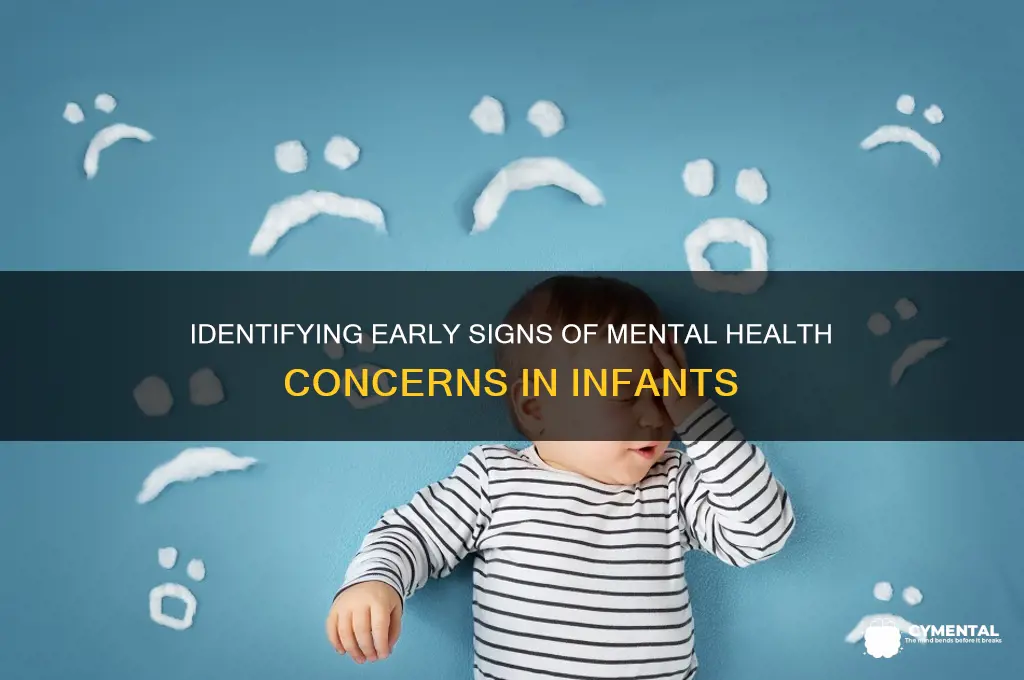
Identifying potential mental health issues in infants can be challenging, as babies cannot express their feelings verbally. However, parents and caregivers can look for certain signs and behaviors that may indicate developmental or emotional concerns. These include delays in reaching milestones such as smiling, babbling, or responding to sounds; excessive irritability or difficulty soothing; lack of eye contact or interest in social interactions; and unusual repetitive movements. Early intervention is crucial, so consulting a pediatrician or child development specialist is recommended if there are persistent concerns. Observing a baby’s behavior in various contexts and trusting parental instincts can also play a vital role in recognizing and addressing potential issues.
Explore related products


What You'll Learn

Early Signs of Developmental Delays
Babies reach milestones at their own pace, but consistent delays in key areas can signal developmental concerns. By 6 months, most infants respond to sounds, make eye contact, and bring objects to their mouths. Missing these milestones doesn’t automatically mean trouble, but it warrants attention. Tracking progress in gross motor skills (like rolling over or sitting), fine motor skills (grasping toys), and social interactions (smiling, babbling) provides a clearer picture. Early intervention hinges on recognizing these patterns, not isolated moments of lag.
Consider a 9-month-old who hasn’t started bearing weight on their legs when supported or a 12-month-old who doesn’t point at objects. These aren’t just "late bloomer" quirks—they’re red flags. The Centers for Disease Control and Prevention (CDC) offers free milestone checklists for ages 2 months to 5 years, a practical tool for parents. Pairing observation with these benchmarks helps differentiate typical variation from potential delays. If a child consistently misses milestones by 2–3 months, consult a pediatrician.
Language development offers another critical lens. By 18 months, most toddlers say 10–20 words; by 2 years, they combine two-word phrases. Absence of babbling by 12 months or lack of response to their name by 15 months could indicate issues. Speech delays often coexist with other developmental challenges, making them a key area to monitor. Apps like BabySparks or journals tracking daily progress can help parents notice subtle gaps over time.
Social and emotional cues are equally telling. A 1-year-old who doesn’t engage in peek-a-boo or a 2-year-old who avoids eye contact may struggle with social interaction. These aren’t just personality quirks—they’re potential markers of conditions like autism spectrum disorder (ASD). Early Signs, a developmental resource, emphasizes the importance of reciprocal play (e.g., rolling a ball back and forth) by age 2. Missing these interactions doesn’t guarantee a diagnosis but should prompt professional evaluation.
Finally, trust your instincts. Parents often sense something’s off before formal assessments confirm it. If a baby seems unusually stiff or floppy, doesn’t react to loud noises, or shows no interest in faces by 3 months, act swiftly. Early intervention services, available through state programs, can begin as early as infancy. The American Academy of Pediatrics recommends developmental screenings at 9, 18, and 30 months—but don’t wait for these appointments if concerns arise. Addressing delays early reshapes trajectories, turning potential barriers into manageable steps.
Supporting Student Mental Health: Strategies for Navigating COVID-19 Challenges
You may want to see also
Explore related products


Behavioral Red Flags in Infants
Infants communicate primarily through behavior, making it crucial to recognize patterns that deviate from typical developmental milestones. While every baby is unique, certain behaviors can serve as red flags for potential mental health concerns. For instance, a 6-month-old who consistently fails to make eye contact or respond to sounds may warrant closer observation, as these are foundational social engagement skills. Similarly, a 9-month-old who shows no interest in interactive games like peek-a-boo could be exhibiting early signs of social withdrawal. Tracking these behaviors against age-appropriate benchmarks is the first step in identifying potential issues.
One practical approach to monitoring behavioral red flags is to maintain a developmental journal. Note milestones such as smiling, babbling, and reaching for objects, and compare them to established timelines. For example, by 12 months, most infants say one or two words and point to objects of interest. Delays in these areas, especially when accompanied by repetitive behaviors like constant rocking or hand-flapping, may indicate underlying challenges. However, it’s essential to avoid self-diagnosis; consult a pediatrician if you notice persistent deviations, as early intervention can significantly improve outcomes.
Comparing infants to their peers can be misleading, as development varies widely. Instead, focus on individual progress and regression. A sudden loss of previously acquired skills, such as a 10-month-old who stops babbling or a 1-year-old who no longer waves goodbye, is a critical red flag. These regressions often signal developmental or sensory processing issues. Additionally, extreme irritability or inconsolable crying beyond the typical "colic" phase (usually resolving by 3–4 months) may point to discomfort or neurological concerns. Trust your instincts—if something feels off, seek professional guidance promptly.
Persuasive action is key when addressing behavioral red flags. Early intervention programs, such as those offered through state-funded developmental services, can provide tailored support for infants as young as 6 months. These programs often include speech therapy, occupational therapy, and behavioral interventions designed to address specific delays. For example, a baby who struggles with sensory processing might benefit from structured play activities that gradually introduce new textures and sounds. Proactive steps taken during infancy can mitigate long-term challenges, emphasizing the importance of timely action.
Finally, understanding the role of environment in infant behavior is vital. Factors like parental stress, inconsistent caregiving, or exposure to trauma can mimic or exacerbate mental health issues. For instance, a baby in a chaotic household may exhibit heightened anxiety or difficulty self-soothing. Creating a stable, nurturing environment is as important as monitoring developmental milestones. Practical tips include establishing consistent routines, responding promptly to cries, and engaging in daily interactive play. By combining vigilance with supportive care, parents and caregivers can foster healthy development while addressing red flags effectively.
Supporting Educators: Strategies for Teachers Managing Mental Health Challenges
You may want to see also
Explore related products




Social and Emotional Milestones to Watch
Babies develop social and emotional skills at a rapid pace during their first year, laying the foundation for future relationships and mental health. By 6 months, most infants begin to recognize familiar faces and prefer them over strangers, a sign of emerging social awareness. They also start to express a range of emotions, such as joy when playing peek-a-boo or distress when separated from caregivers. Missing these milestones, like a lack of eye contact or minimal emotional response, could signal a developmental concern. Tracking these behaviors helps parents and caregivers identify potential issues early, ensuring timely intervention.
One critical milestone is the development of attachment, typically observed between 6 and 12 months. A securely attached baby feels safe exploring their environment when a caregiver is nearby and seeks comfort from them when distressed. Insecure attachment, marked by avoidance or excessive anxiety, may indicate underlying stress or trauma. To foster secure attachment, respond consistently to your baby’s cries, engage in daily face-to-face interactions, and provide a predictable routine. Observing how your baby interacts with you during play or separation can reveal their attachment style and emotional well-being.
Between 9 and 15 months, babies begin to show empathy and self-awareness, two key emotional milestones. They might cry when hearing another child cry or bring you a toy to share, demonstrating budding empathy. Self-awareness emerges as they recognize themselves in mirrors, often smiling or touching their reflection. Delayed empathy or a lack of self-recognition could warrant further evaluation. Encourage these skills by modeling kindness, labeling emotions during interactions, and incorporating mirrors into playtime. These activities not only support development but also provide opportunities to monitor progress.
By 18 months, most toddlers engage in pretend play, a milestone reflecting cognitive and emotional growth. They might pretend to feed a doll or mimic daily activities, showcasing imagination and social understanding. Limited pretend play or repetitive behaviors, such as lining up toys instead of playing with them, could be red flags. Promote this skill by providing simple props like toy phones or kitchen sets and joining in their play to expand scenarios. Early intervention for delays in pretend play can address potential social or emotional challenges before they escalate.
Finally, observe your baby’s ability to regulate emotions, a skill that develops gradually through age 2. Toddlers should begin to calm themselves with familiar objects or gestures, like hugging a blanket when upset. Persistent difficulty soothing, extreme aggression, or prolonged tantrums may indicate emotional dysregulation. Help your child by teaching simple coping strategies, such as deep breathing or using a “calm-down corner.” Consistent support in managing emotions not only aids immediate development but also builds resilience for future mental health.
Gallbladder-Brain Connection: Uncovering Mental Health Links to Gallbladder Issues
You may want to see also
Explore related products


Communication and Language Concerns
Babies typically begin babbling around 6 months, with first words emerging by 12 months. If your child isn’t meeting these milestones, it could signal a developmental delay. Early intervention is key, so consult a pediatrician if you notice a lack of vocalization or limited attempts at communication by 15 months.
Consider the quality of their interactions. Does your baby respond to their name by 9 months? Do they point to objects or use gestures like waving by 12 months? Absence of these behaviors might indicate challenges in receptive or expressive language. Document specific examples to share with a specialist, as detailed observations aid accurate assessment.
Compare your child’s progress to peers cautiously. While some variation is normal, significant gaps warrant attention. For instance, a 16-month-old who doesn’t use any words or mimic sounds may need speech therapy. Early screening tools like the Ages and Stages Questionnaires can help identify concerns before age 2, when language development accelerates.
Encourage communication through daily routines. Narrate activities, ask simple questions, and respond to their sounds as if it’s a conversation. Limit screen time, as passive viewing doesn’t foster interaction. Instead, engage in activities like reading board books or singing songs, which promote language acquisition.
Finally, trust your instincts. If you suspect an issue, act promptly. Research shows that children who receive support before age 3 often achieve better outcomes. Programs like Early Head Start or local early intervention services offer tailored strategies to address communication delays effectively.
Supporting Mental Health: A Guide to Reporting Concerns in the UK
You may want to see also
Explore related products


When to Seek Professional Help
Babies communicate distress differently than adults, often through subtle changes in behavior or developmental milestones. While it’s normal for infants to vary in temperament and progress, persistent or severe deviations warrant attention. For instance, a 9-month-old who consistently avoids eye contact, fails to respond to their name, or shows no interest in social interaction may be exhibiting early signs of a developmental concern. Recognizing these red flags is the first step, but knowing when to involve a professional is critical to ensuring timely intervention.
Professional help should be sought if a baby’s behavior or development significantly lags behind age-appropriate norms. Key indicators include a lack of babbling by 12 months, no gestures like pointing by 18 months, or regression in skills, such as losing the ability to say words they once used. Additionally, extreme irritability, excessive crying without clear cause (e.g., colic lasting beyond 3 months), or a complete lack of responsiveness to caregivers can signal underlying issues. Parents should trust their instincts; if something feels “off,” consult a pediatrician or developmental specialist promptly.
Early intervention is most effective when initiated before age 3, as a baby’s brain is highly malleable during this period. Professionals may recommend screenings for conditions like autism spectrum disorder (ASD), attention deficit hyperactivity disorder (ADHD), or sensory processing issues. For example, a 15-month-old who doesn’t engage in pretend play or a 2-year-old who struggles with transitions may benefit from occupational therapy or behavioral interventions. Delaying assessment can hinder progress, as untreated issues may compound over time.
Practical steps include documenting specific concerns with dates and examples to share with healthcare providers. Keep a journal of behaviors, such as “Doesn’t make eye contact during feeding” or “Hasn’t rolled over by 6 months.” This data helps professionals make informed decisions. Simultaneously, avoid self-diagnosis or relying solely on online resources, as these can lead to unnecessary anxiety or missed opportunities for early support. Collaboration with experts ensures a tailored approach to addressing a baby’s unique needs.
Preparing for Mental Health Challenges: A Comprehensive Planning Guide
You may want to see also
Frequently asked questions
Look for signs such as delayed milestones (e.g., not smiling by 3 months or not babbling by 9 months), lack of eye contact, excessive irritability, or unusual repetitive behaviors. Consult a pediatrician if you have concerns, as early intervention is key.
Some mood swings are normal as babies adjust to their environment, but persistent or extreme irritability, inconsolable crying, or lack of responsiveness may warrant evaluation for underlying issues like sensory processing disorders or developmental delays.
Yes, babies can exhibit signs of anxiety or depression, such as excessive clinginess, avoidance of social interaction, or a flat affect. Persistent sadness, lack of interest in play, or changes in eating/sleeping patterns should be discussed with a healthcare provider.