Madison Cole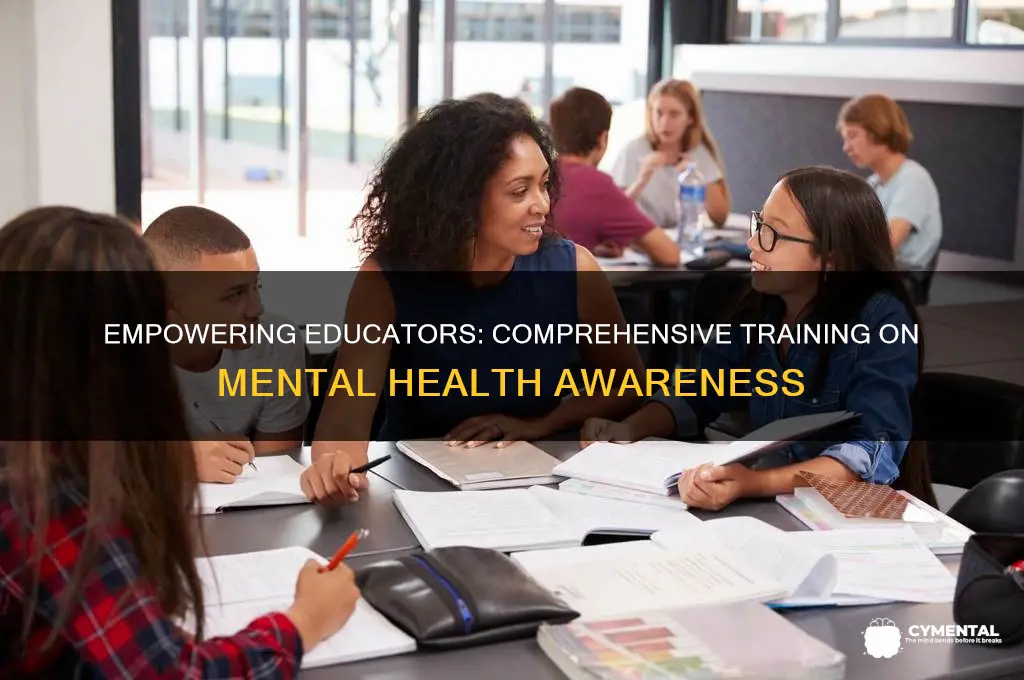
Training teachers on mental health issues is essential for creating supportive and inclusive learning environments. Educators often serve as the first line of support for students experiencing mental health challenges, making it crucial for them to recognize signs of distress, understand common disorders, and know how to respond appropriately. Comprehensive training should cover topics such as identifying warning signs, fostering open communication, and promoting self-care practices for both students and teachers. Additionally, educators need guidance on when and how to refer students to professional resources while maintaining confidentiality and empathy. By equipping teachers with the knowledge and skills to address mental health issues, schools can cultivate a culture of awareness, reduce stigma, and ensure that students receive the support they need to thrive academically and emotionally.
| Characteristics | Values |
|---|---|
| Comprehensive Curriculum | Include topics like recognizing signs of mental health issues, stigma reduction, and self-care. |
| Evidence-Based Practices | Use programs like Youth Mental Health First Aid (YMHFA) or Mental Health Literacy training. |
| Interactive Training Methods | Incorporate role-playing, case studies, and group discussions for practical learning. |
| Cultural Sensitivity | Address diverse cultural perspectives on mental health to ensure inclusivity. |
| Self-Care for Educators | Teach stress management, boundary-setting, and emotional resilience techniques. |
| Ongoing Support | Provide access to resources, mentorship, and follow-up sessions post-training. |
| Collaboration with Professionals | Partner with mental health experts, counselors, and psychologists for specialized guidance. |
| Policy Integration | Align training with school policies on mental health support and intervention. |
| Assessment and Feedback | Evaluate training effectiveness through pre/post-tests and participant feedback. |
| Digital Resources | Offer online modules, webinars, and toolkits for continuous learning and reference. |
| Legal and Ethical Considerations | Educate on confidentiality, mandatory reporting, and ethical handling of sensitive issues. |
| Peer Learning | Encourage teachers to share experiences and strategies in a supportive environment. |
| Scalability | Design training programs that can be adapted for different school sizes and contexts. |
| Data-Driven Approach | Use school-level data to tailor training to specific needs and challenges. |
| Stigma Reduction Campaigns | Include activities to challenge misconceptions and promote open conversations about mental health. |
Explore related products


What You'll Learn
- Understanding Mental Health Basics: Teach key terms, common disorders, and their impact on students
- Recognizing Warning Signs: Train teachers to identify behavioral and emotional red flags
- Effective Communication Skills: Equip teachers with strategies to approach and support struggling students
- Creating Safe Classrooms: Foster inclusive environments that promote mental well-being and reduce stigma
- Self-Care for Educators: Help teachers manage stress and maintain their own mental health

Understanding Mental Health Basics: Teach key terms, common disorders, and their impact on students
Teachers often encounter students struggling with mental health issues, yet many lack the foundational knowledge to recognize and respond effectively. Start by defining key terms such as *anxiety*, *depression*, *trauma*, and *resilience* in clear, accessible language. For instance, explain that anxiety disorders involve excessive worry or fear, while depression manifests as persistent sadness or loss of interest. Use analogies or real-life examples to make abstract concepts tangible. For example, compare anxiety to a fire alarm that goes off too often, even when there’s no fire. This foundational vocabulary equips teachers to communicate empathetically and accurately with students, parents, and professionals.
Next, focus on common mental health disorders prevalent in school-aged populations, such as ADHD, generalized anxiety disorder, and major depressive disorder. Provide statistics to highlight their prevalence: approximately 20% of adolescents experience a mental health disorder in a given year. Break down each disorder into symptoms, triggers, and potential impacts on academic performance and social behavior. For ADHD, emphasize how inattention or hyperactivity might appear in the classroom, while for depression, highlight signs like withdrawal or irritability. Pair this information with case studies or scenarios to illustrate how these disorders manifest in real students, ensuring teachers can spot red flags early.
Understanding the impact of mental health on students requires a dual lens: academic and emotional. Mentally unwell students may struggle with concentration, attendance, or motivation, leading to declining grades. Emotionally, they might exhibit behavioral issues, social isolation, or conflicts with peers. Teach teachers to recognize these patterns without jumping to conclusions. For example, a student who suddenly stops participating in class discussions might be dealing with anxiety, not disinterest. Encourage educators to track changes over time and collaborate with school counselors or psychologists for a holistic view.
Practical strategies for integrating this knowledge into daily teaching are essential. Start with self-reflection: ask teachers to consider their own biases or misconceptions about mental health. Follow with actionable steps, such as incorporating mental health lessons into existing curricula or creating safe spaces for students to express themselves. For instance, a math teacher might use statistics to teach about mental health prevalence, while an English teacher could assign readings that explore emotional resilience. Provide resources like checklists, referral protocols, and local mental health services to ensure teachers feel supported in their roles.
Finally, emphasize the importance of ongoing learning and self-care for teachers. Mental health education is not a one-time training but a continuous process. Encourage educators to attend workshops, join professional networks, or pursue certifications in mental health first aid. Equally, stress the need for teachers to prioritize their own well-being, as burnout can hinder their ability to support students effectively. By fostering a culture of awareness and compassion, schools can create environments where both teachers and students thrive.
Supporting Incarcerated Minds: Strategies for Improving Prisoner Mental Health
You may want to see also
Explore related products




Recognizing Warning Signs: Train teachers to identify behavioral and emotional red flags
Teachers are often the first to notice when a student is struggling, but without proper training, they may misinterpret or overlook critical warning signs. Recognizing behavioral and emotional red flags requires more than intuition; it demands a structured approach grounded in evidence-based practices. For instance, a sudden drop in academic performance, frequent absences, or persistent irritability could signal underlying mental health issues. Training should emphasize the importance of context—what might seem like typical teenage moodiness in one student could be a cry for help in another. By equipping teachers with a checklist of specific indicators, such as social withdrawal, drastic changes in appearance, or expressions of hopelessness, schools can ensure a more proactive response to student distress.
One effective strategy is to incorporate scenario-based training, where teachers practice identifying red flags in simulated situations. For example, a case study of a student who starts avoiding group activities and submits assignments late could prompt discussions about potential causes, from anxiety to family stress. This method not only sharpens observational skills but also fosters empathy and critical thinking. Additionally, training should highlight age-specific warning signs; younger students might exhibit physical symptoms like headaches or stomachaches, while older teens may engage in risky behaviors like substance use. Tailoring the training to different developmental stages ensures teachers can respond appropriately across grade levels.
However, recognizing warning signs is only the first step. Teachers must also understand the limitations of their role. Training should emphasize the importance of confidentiality, cultural sensitivity, and knowing when to escalate concerns to school counselors or external mental health professionals. A common pitfall is assuming that all red flags indicate a severe mental health issue; some behaviors may stem from temporary stressors or neurodivergent traits. Teachers should be taught to document observations objectively and avoid labeling students prematurely. This balanced approach ensures that interventions are both timely and respectful of the student’s dignity.
To sustain these skills, ongoing professional development is essential. Schools should provide regular refresher sessions, updates on emerging research, and opportunities for teachers to share experiences. Peer support networks can also reinforce learning, as teachers collaborate to interpret complex behaviors. For instance, a teacher noticing a student’s increased aggression might consult colleagues to determine if the behavior is isolated or part of a pattern. By embedding this training into the school’s culture, educators can create a safety net that catches students before they fall through the cracks.
Ultimately, training teachers to recognize warning signs is an investment in early intervention, which can prevent more severe mental health crises. It empowers educators to act as informed allies, bridging the gap between students in distress and the support they need. While the task may seem daunting, structured training, practical tools, and a supportive school environment can make it manageable. The goal is not to turn teachers into therapists but to give them the confidence and competence to respond effectively when a student’s well-being is at stake. In doing so, schools can foster a culture of care that prioritizes mental health as a cornerstone of education.
Empowering Connections: Strategies to Engage and Support Mental Health Struggles
You may want to see also
Explore related products



Effective Communication Skills: Equip teachers with strategies to approach and support struggling students
Teachers often find themselves on the front lines of student mental health, yet many feel ill-equipped to navigate these sensitive conversations. Effective communication skills are not innate; they require training and practice. Start by teaching educators the ACTIVE listening framework: Ask open-ended questions, Convey empathy, Think before responding, Incorporate pauses, Validate emotions, and Explore solutions collaboratively. For instance, instead of asking, "Are you okay?" (which often invites a rote "yes"), try, "How are you feeling about the changes in your schedule?" This approach encourages students to open up and fosters trust.
Role-playing scenarios can be a powerful tool to build confidence in these interactions. Design simulations that reflect common mental health challenges, such as anxiety over exams or social isolation. Pair teachers with colleagues to practice dialogues, alternating between the roles of educator and student. After each session, debrief as a group, analyzing what worked and what could be improved. For example, a teacher might realize they interrupted a student’s explanation, highlighting the need for patience and active listening. These exercises not only refine communication skills but also reduce the fear of saying the "wrong thing."
One critical yet overlooked aspect is the importance of nonverbal cues. Teachers should be trained to recognize and adjust their body language to create a safe space. Maintain eye contact (culturally appropriate), use open gestures, and adopt a calm tone. For younger students (ages 8–12), consider incorporating visual aids like emotion charts to help them articulate feelings. For older students (ages 13–18), be mindful of personal space and avoid overly formal language, which can feel alienating. Small adjustments like these can make a significant difference in how approachable a teacher appears.
Finally, equip teachers with a toolkit of phrases to use in challenging situations. For instance, when a student expresses self-doubt, respond with, "It sounds like you’re feeling overwhelmed. Let’s break this down together." Avoid dismissive statements like, "Just try harder," which can invalidate emotions. Additionally, provide resources for follow-up, such as school counselors or external mental health services. Teachers should know when to step in and when to refer, ensuring students receive the appropriate level of support. By mastering these strategies, educators can become allies in their students’ mental health journeys.
Supporting Loved Ones: Practical Ways to Aid Mental Health Struggles
You may want to see also
Explore related products


Creating Safe Classrooms: Foster inclusive environments that promote mental well-being and reduce stigma
Teachers play a pivotal role in shaping classroom cultures, and their actions can either reinforce stigma or create spaces where students feel seen, heard, and supported. To foster inclusivity, educators must first examine their own biases and assumptions about mental health. This self-reflection can be facilitated through structured training modules that include case studies, role-playing scenarios, and anonymous self-assessment tools. For instance, a study by the National Education Association found that teachers who underwent bias training were 40% more likely to intervene when stigmatizing language was used in their classrooms. By addressing their own attitudes, teachers can model empathy and openness, laying the groundwork for a stigma-free environment.
Creating a safe classroom begins with establishing clear, consistent norms that prioritize emotional safety. Teachers should co-create these norms with students, ensuring that all voices are heard and valued. For example, a daily "mood check-in" using a simple color-coded system (green for "I’m good," yellow for "I’m okay," and red for "I need help") can provide a non-intrusive way for students to express their emotional state. Pair this with a designated "calm corner" equipped with stress-relief tools like fidget toys, journals, or guided meditation scripts. Research from the American Psychological Association suggests that such proactive measures reduce classroom anxiety by up to 25% while increasing student engagement.
Language matters in dismantling stigma. Teachers should adopt person-first language and avoid pathologizing behaviors. Instead of saying, "She’s acting bipolar," reframe it as, "She’s having a hard time regulating her emotions today." Training programs can provide scripts and phrase banks to help educators communicate effectively. For instance, a simple shift from "What’s wrong with you?" to "How can I support you right now?" can make students feel less judged and more understood. A study published in *School Mental Health* found that teachers who used affirming language saw a 35% increase in students self-disclosing mental health struggles, indicating greater trust and openness.
Inclusive classrooms also require proactive strategies to address microaggressions and bullying. Teachers should be trained to recognize subtle signs of exclusion, such as students being left out of group work or mocked for their coping mechanisms (e.g., fidgeting or taking breaks). Implementing peer mentoring programs or "ally badges" can empower students to stand up for one another. For younger age groups (K-5), social-emotional learning (SEL) curricula like *Second Step* can teach foundational skills like empathy and conflict resolution. For middle and high schoolers, workshops on digital citizenship and the impact of online behavior can curb cyberbullying, a significant contributor to youth anxiety and depression.
Finally, teachers must know when and how to escalate concerns. Training should include clear protocols for referring students to school counselors or external mental health services. Educators should be familiar with local resources, such as crisis hotlines or community mental health clinics, and keep this information readily accessible in the classroom. A practical tip: create a discreet signal (e.g., a student handing in a blank sheet of paper) that allows students to request a private conversation without drawing attention. By balancing proactive support with appropriate boundaries, teachers can ensure their classrooms are both nurturing and professional spaces.
Understanding Mental Health: Compassionate Strategies to Communicate and Educate Effectively
You may want to see also
Explore related products


Self-Care for Educators: Help teachers manage stress and maintain their own mental health
Teachers, often hailed as the backbone of society, face a unique set of stressors that can erode their mental well-being over time. Long hours, heavy workloads, and the emotional toll of supporting students’ needs can lead to burnout, a state of chronic physical and emotional exhaustion. Recognizing this, self-care isn’t just a luxury for educators—it’s a necessity. By prioritizing their own mental health, teachers can sustain their passion, effectiveness, and resilience in the classroom.
One practical strategy for educators is to establish clear boundaries between work and personal life. This means setting specific times for grading, lesson planning, and responding to emails, rather than allowing these tasks to bleed into evenings and weekends. For instance, a teacher might dedicate 6:00–8:00 PM to work-related tasks and then strictly disconnect afterward. Tools like time-blocking apps or physical planners can help enforce these boundaries. Additionally, learning to say "no" to extra commitments, whether it’s chairing another committee or taking on additional students, is crucial for preventing overwhelm.
Mindfulness practices, such as meditation or deep-breathing exercises, can also be powerful tools for stress management. Research shows that just 10 minutes of mindfulness daily can reduce anxiety and improve focus. Apps like Headspace or Calm offer guided sessions tailored to busy professionals. Incorporating physical activity is equally important; even a 20-minute walk during lunch breaks can boost mood and energy levels. Educators should view these practices not as optional but as essential components of their daily routine, much like preparing lesson plans or attending meetings.
Another critical aspect of self-care is fostering a supportive professional network. Teachers should seek out colleagues, mentors, or support groups where they can share experiences, vent frustrations, and exchange coping strategies. Schools can facilitate this by organizing regular wellness workshops or peer support sessions. For example, a monthly "Wellness Wednesday" could include activities like yoga, journaling, or group discussions on mental health. Such initiatives not only provide practical tools but also normalize conversations around self-care, reducing the stigma often associated with seeking help.
Finally, educators must prioritize their physical health, as it directly impacts mental well-being. Adequate sleep (7–9 hours per night), a balanced diet, and hydration are foundational. Teachers should also schedule regular health check-ups to address any underlying issues. Small changes, like keeping a water bottle at their desk or packing nutritious snacks, can make a significant difference. By treating self-care as a holistic practice—encompassing mental, emotional, and physical health—teachers can better navigate the demands of their profession and continue to thrive in their roles.
Navigating Mental Health Conversations with Your Boss: Tips for Success
You may want to see also
Frequently asked questions
A comprehensive mental health training program for teachers should include understanding common mental health issues in students, recognizing signs and symptoms, learning effective communication strategies, knowing how to refer students to appropriate resources, and practicing self-care to manage their own mental well-being.
Schools can ensure teacher confidence by providing ongoing support, such as access to mental health professionals for consultation, regular refresher sessions, and creating a culture where teachers feel safe discussing challenges and sharing experiences related to student mental health.
Self-care is essential in mental health training for teachers as it helps them manage stress, prevent burnout, and model healthy behaviors for students. Training should include strategies for emotional regulation, work-life balance, and accessing support systems to maintain their own mental well-being.