Ava Ramirez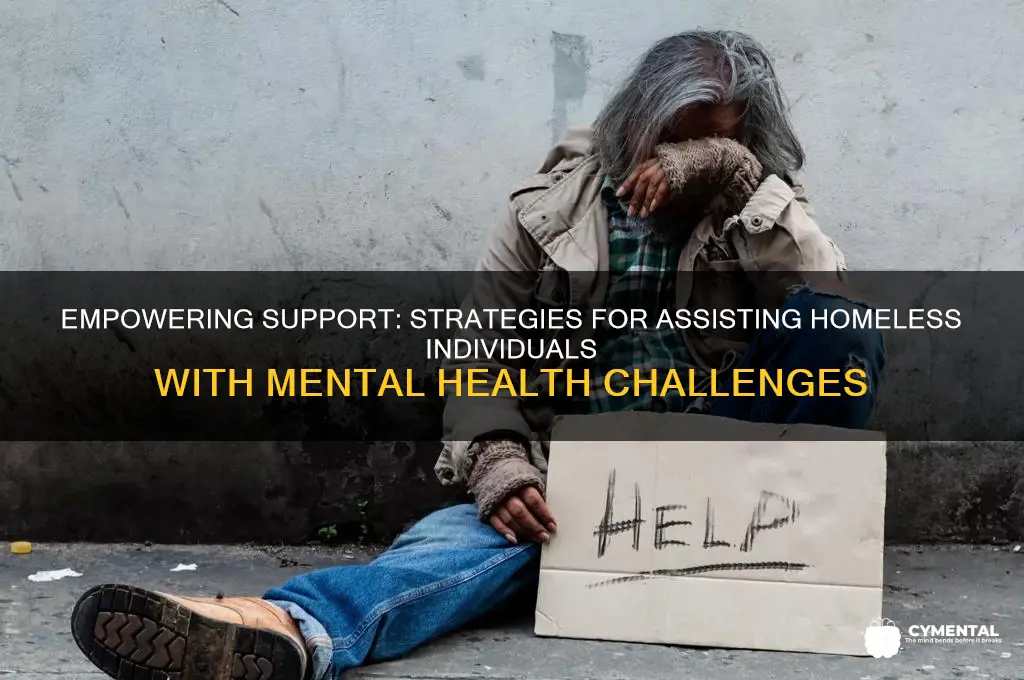
Working with homeless individuals who have mental health issues requires a compassionate, patient, and multifaceted approach. These individuals often face complex challenges, including lack of access to stable housing, healthcare, and social support, which can exacerbate their mental health conditions. Effective strategies involve building trust through consistent, non-judgmental interactions, providing immediate access to basic needs like food and shelter, and connecting them with mental health resources such as counseling, medication management, and case management services. Collaboration with community organizations, outreach programs, and healthcare providers is essential to create a supportive network. Additionally, addressing systemic barriers, such as stigma and limited funding, is crucial to ensure long-term solutions and improve outcomes for this vulnerable population.
Explore related products


What You'll Learn
- Building Trust: Use consistent, non-judgmental communication to establish rapport and foster trust with individuals
- Crisis Intervention: Learn de-escalation techniques to safely manage acute mental health episodes in homeless populations
- Resource Navigation: Connect individuals to housing, healthcare, and social services tailored to their unique needs
- Trauma-Informed Care: Approach interactions with sensitivity to past trauma and its impact on behavior
- Collaboration: Partner with local agencies, shelters, and mental health providers for comprehensive support systems

Building Trust: Use consistent, non-judgmental communication to establish rapport and foster trust with individuals
Trust is the cornerstone of any meaningful relationship, especially when working with homeless individuals facing mental health challenges. These individuals often carry a history of trauma, stigma, and broken promises, making them wary of outsiders. Building trust requires more than good intentions—it demands deliberate, consistent effort. Start by showing up regularly, whether it’s daily visits to a shelter or weekly check-ins at a community center. Consistency signals reliability, a rare commodity in their often chaotic lives. For example, if you commit to providing resources or simply listening, ensure you follow through. Broken promises erode trust faster than any other action.
Non-judgmental communication is equally critical. Homeless individuals with mental health issues are frequently met with criticism, blame, or pity. To foster trust, adopt a neutral, empathetic tone. Avoid phrases like, “Why don’t you just…?” or “You should have…,” which imply fault. Instead, use open-ended questions like, “How can I support you today?” or “What’s been on your mind lately?” This approach validates their experiences and shows respect for their autonomy. For instance, if someone shares they’ve been struggling with paranoia, respond with, “That sounds really overwhelming. How can I help you feel safer?” rather than dismissing their fears.
Practical tips can further strengthen trust-building efforts. Maintain eye contact (when culturally appropriate) and use body language that conveys openness, such as uncrossed arms and a relaxed posture. Mirroring their communication style—whether it’s formal or casual—can also create a sense of familiarity. Additionally, be mindful of your tone; a calm, steady voice can help de-escalate anxiety or agitation. For individuals with severe mental health issues, consider learning basic de-escalation techniques, such as acknowledging their emotions and offering a quiet space to regroup.
Comparing trust-building in this context to other relationships highlights its unique challenges. Unlike friendships or professional partnerships, the power dynamic here is often skewed, with service providers holding resources the individual needs. To balance this, involve them in decision-making whenever possible. For example, instead of dictating a treatment plan, ask, “What do you think would work best for you?” This shifts the focus from control to collaboration, fostering a sense of agency. Similarly, acknowledging their expertise in surviving adversity can build mutual respect, a key component of trust.
Ultimately, building trust with homeless individuals facing mental health issues is a slow, deliberate process that requires patience and humility. It’s about showing up consistently, communicating without judgment, and respecting their dignity. While progress may seem incremental, small acts of reliability and empathy accumulate over time, laying the foundation for meaningful connections. Remember, trust isn’t earned through grand gestures but through the quiet, persistent choice to honor their humanity.
Recognizing Mental Health Issues in Children: Signs and Support Strategies
You may want to see also
Explore related products


$12.99




Crisis Intervention: Learn de-escalation techniques to safely manage acute mental health episodes in homeless populations
Homeless individuals experiencing acute mental health episodes often face heightened vulnerability due to environmental stressors, lack of consistent care, and social isolation. Crisis intervention in these situations requires a nuanced approach that prioritizes safety, empathy, and de-escalation. Unlike interventions in controlled settings, working with homeless populations demands adaptability, as crises often occur in public spaces or shelters where resources are limited. Understanding this context is critical to effectively managing these episodes while respecting the individual’s dignity and autonomy.
De-escalation techniques begin with active listening and non-threatening body language. Approach the individual at a non-invasive distance, using a calm, steady tone of voice. Avoid sudden movements or loud commands, which can exacerbate agitation. For example, if a person is experiencing paranoia, acknowledge their fear without dismissing it: “I see you’re feeling unsafe right now. I’m here to help and won’t let anything happen to you.” Phrases like these validate their experience while establishing trust. Practical tools include offering a glass of water or suggesting a quiet space, as these actions signal care without coercion.
A structured de-escalation framework, such as the ABC Model (Antecedent, Behavior, Consequence), can guide interventions. Identify the Antecedent (what triggered the episode), observe the Behavior (how the individual is expressing distress), and determine the Consequence (what they need to feel safe). For instance, if a person becomes agitated after being approached by a stranger (Antecedent), they may shout or pace (Behavior). The goal is to reduce sensory overload (Consequence) by creating distance from the trigger or offering a distraction like a simple question unrelated to the crisis. This methodical approach helps maintain focus in chaotic situations.
Caution must be exercised when physical intervention is necessary. Restraint should always be a last resort, as it can retraumatize individuals already in distress. If restraint is unavoidable, use minimal force and ensure the person is monitored for signs of physical distress, such as difficulty breathing or changes in skin color. Training in Crisis Prevention Institute (CPI) techniques or similar programs can equip responders with safe, ethical methods for managing physical aggression. Always debrief after an incident to assess what worked and what could be improved, both for the individual’s care and the responder’s learning.
Finally, crisis intervention is not a standalone solution but part of a broader support system. After de-escalation, connect the individual to immediate resources like mobile crisis units, emergency shelters, or mental health clinics. Follow-up care is crucial, as acute episodes often indicate underlying, unmet needs. By combining de-escalation skills with a commitment to long-term support, responders can address both the immediate crisis and the systemic challenges faced by homeless individuals with mental health issues.
Supporting Teens: Practical Strategies for Mental Health and Well-Being
You may want to see also
Explore related products


Resource Navigation: Connect individuals to housing, healthcare, and social services tailored to their unique needs
Homeless individuals with mental health issues often face a fragmented support system, where services exist but remain inaccessible due to bureaucratic hurdles, lack of coordination, or mismatches between needs and offerings. Resource navigation acts as a bridge, mapping the complex terrain of housing, healthcare, and social services to ensure these individuals receive tailored, actionable support. Without this, even the most well-intentioned programs fail to address the unique barriers each person faces.
Consider the case of a 42-year-old man with schizophrenia who has been homeless for three years. He requires not just shelter, but a housing solution that accommodates his need for minimal sensory stimulation and regular access to psychiatric care. A resource navigator would first assess his specific needs—perhaps a quiet, single-occupancy unit in supportive housing—then connect him with programs like HUD’s Permanent Supportive Housing, which pairs housing with on-site mental health services. Simultaneously, the navigator would enroll him in Medicaid (if uninsured) to cover his antipsychotic medication (e.g., olanzapine 10–20 mg/day) and therapy sessions, ensuring continuity of care.
Effective resource navigation demands a proactive, step-by-step approach. Step 1: Conduct a comprehensive needs assessment—identify not just immediate housing needs, but also co-occurring issues like substance use, physical health conditions, or legal barriers. Step 2: Prioritize services—for instance, stabilizing mental health may precede housing placement for some, while others may need immediate shelter to address safety concerns. Step 3: Advocate and coordinate—navigators must often liaise with multiple agencies, filling out forms, scheduling appointments, and troubleshooting denials. Step 4: Follow up—regular check-ins ensure individuals remain engaged with services and address emerging challenges. Caution: Avoid overloading individuals with too many referrals at once; phased, manageable steps build trust and reduce overwhelm.
The persuasive case for resource navigation lies in its cost-effectiveness and humanitarian impact. Studies show that housing unstable individuals with mental illness reduces emergency room visits by up to 60%, lowering public healthcare costs. For example, a program in Seattle found that every $1 invested in supportive housing saved $1.50 in avoided costs. Moreover, tailored services improve long-term outcomes: individuals in coordinated care programs are 30% more likely to maintain housing stability after one year. This approach doesn’t just manage homelessness—it transforms lives by addressing root causes with precision.
In practice, resource navigation requires creativity and persistence. For a 24-year-old woman with bipolar disorder and no ID, a navigator might start by securing a temporary shelter bed, then assist her in obtaining a birth certificate (often free for homeless individuals) to access SSI benefits. They’d then connect her with a young adult-focused transitional housing program, like those offered by organizations such as Covenant House, which provide mental health counseling, job training, and education support tailored to her age group. Practical tip: Keep a directory of local services with eligibility criteria, wait times, and contact information to streamline referrals.
In conclusion, resource navigation is not merely about providing lists of services but about crafting personalized pathways to stability. It requires empathy, systems knowledge, and tenacity to dismantle barriers one step at a time. By aligning housing, healthcare, and social services with individual needs, navigators empower those experiencing homelessness and mental illness to rebuild their lives—not just survive, but thrive.
Relationship Struggles: Unraveling Their Impact on Mental Health and Well-Being
You may want to see also
Explore related products



Trauma-Informed Care: Approach interactions with sensitivity to past trauma and its impact on behavior
Homeless individuals with mental health issues often carry the invisible weight of past trauma, which profoundly shapes their behavior and responses. Trauma-informed care (TIC) recognizes this reality, urging caregivers to approach interactions with a lens of empathy and understanding. By acknowledging the role of trauma, you can foster trust, reduce triggers, and create a safe environment for healing. This approach shifts the focus from “What’s wrong with you?” to “What happened to you?”—a subtle but transformative change in perspective.
Consider the practical steps to implement TIC in your interactions. Begin by creating a predictable and non-threatening environment. Use clear, calm communication, avoiding sudden movements or loud tones that might evoke fear or anxiety. For instance, when offering assistance, phrase requests as open-ended questions like, “How can I support you today?” rather than directives that may feel controlling. Be mindful of physical space, maintaining a respectful distance unless invited closer. These small adjustments can help individuals feel more in control and less vulnerable.
A key principle of TIC is the avoidance of re-traumatization. This means recognizing that certain actions or words can unintentionally trigger distressing memories. For example, asking intrusive questions about someone’s past or insisting on eye contact can be overwhelming for trauma survivors. Instead, let the individual set the pace of disclosure and respect their boundaries. Offer choices whenever possible—such as selecting between two shelter options or deciding when to engage in conversation—to empower them and rebuild their sense of agency.
Trauma-informed care also emphasizes collaboration over coercion. Traditional approaches to homelessness often rely on mandates or ultimatums, which can exacerbate feelings of helplessness. In contrast, TIC encourages partnership, where the individual’s goals and preferences guide the support provided. For instance, if someone resists entering a shelter due to past negative experiences, explore alternative solutions like temporary housing vouchers or connections to peer support groups. This collaborative approach builds rapport and increases the likelihood of long-term engagement.
Finally, self-care is a critical component of delivering trauma-informed care. Working with traumatized individuals can be emotionally demanding, and secondary trauma is a real risk. Prioritize your own well-being by setting boundaries, seeking supervision, and practicing stress-reduction techniques like mindfulness or journaling. By modeling self-care, you not only sustain your ability to provide effective support but also demonstrate healthy coping strategies to those you serve. Trauma-informed care is not just a method—it’s a commitment to honoring the humanity of every individual, regardless of their circumstances.
Recognising Mental Health Issues: A UK Guide to Spotting Signs
You may want to see also
Explore related products


$20.49 $36.99

$18.08 $32.99


Collaboration: Partner with local agencies, shelters, and mental health providers for comprehensive support systems
Homeless individuals with mental health issues often fall through the cracks of fragmented support systems. By partnering with local agencies, shelters, and mental health providers, you create a safety net that addresses their complex needs holistically. This collaborative approach ensures that housing, healthcare, and social services are coordinated, reducing barriers to care and improving long-term outcomes.
Consider the case of a city that implemented a "Housing First" model, where homeless individuals with severe mental illness were provided permanent housing without preconditions. Local shelters identified candidates, mental health providers conducted assessments, and social service agencies connected residents to benefits and employment resources. Within a year, hospitalizations decreased by 37%, emergency room visits dropped by 35%, and 85% of participants remained stably housed. This example illustrates the power of collaboration in breaking the cycle of homelessness and mental illness.
To replicate such success, follow these steps: First, identify key stakeholders in your community, including shelters, mental health clinics, and government agencies. Second, establish a formal partnership agreement outlining roles, responsibilities, and communication protocols. Third, create a centralized referral system to streamline access to services. For instance, a shared database can track client progress and prevent duplication of efforts. Fourth, conduct regular interagency meetings to address challenges and share best practices. Finally, secure funding through grants or public-private partnerships to sustain the collaborative effort.
However, collaboration is not without challenges. Differing organizational cultures, competing priorities, and data privacy concerns can hinder progress. To mitigate these issues, foster trust through transparent communication and mutual respect. Train staff on trauma-informed care and cultural competency to ensure services are delivered with empathy and understanding. Additionally, leverage technology, such as encrypted platforms, to share client information securely while complying with HIPAA regulations.
In conclusion, collaboration among local agencies, shelters, and mental health providers is essential for addressing the multifaceted needs of homeless individuals with mental health issues. By pooling resources, expertise, and networks, these entities can create a seamless support system that promotes stability, recovery, and dignity. The success of such partnerships lies in clear communication, shared goals, and a commitment to overcoming obstacles together.
Supporting Mental Health in Individuals with Developmental Disabilities: Strategies and Insights
You may want to see also
Frequently asked questions
Approach with empathy, patience, and respect. Use clear, simple language and maintain a calm demeanor. Avoid overwhelming them with too many questions or demands. Listen actively and validate their feelings, even if their behavior seems irrational. Be mindful of personal space and non-verbal cues, as some individuals may be sensitive to perceived threats.
Prioritize safety for both yourself and the individual. Stay calm, speak softly, and avoid confrontational language or sudden movements. If possible, create distance without abandoning them. Contact local crisis services or mental health professionals trained to de-escalate situations. Do not attempt to physically restrain them unless absolutely necessary.
Familiarize yourself with local shelters, mental health clinics, and outreach programs. Offer to accompany them to appointments or resource centers if they’re willing. Provide clear, written information about available services, including contact details and locations. Build trust by consistently checking in and showing genuine concern for their well-being.