Harper Lewis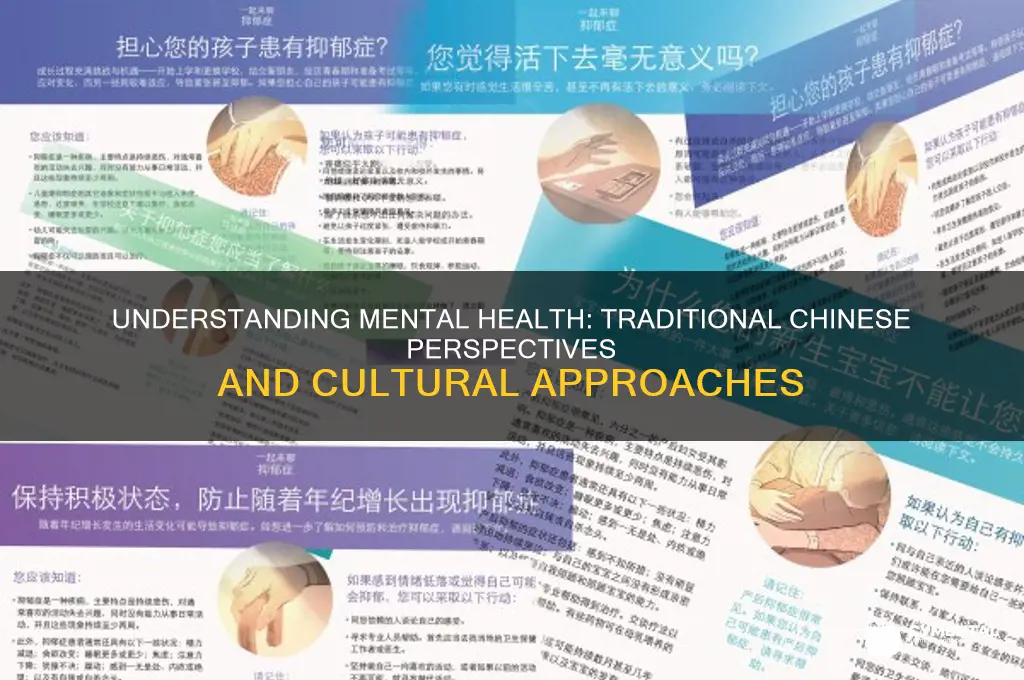
In traditional Chinese culture, mental health issues are often viewed through a holistic lens, deeply intertwined with physical health, social harmony, and spiritual balance. Rooted in philosophies like Confucianism, Taoism, and Traditional Chinese Medicine (TCM), mental well-being is seen as a reflection of internal equilibrium and external relationships. Emotional distress is frequently attributed to imbalances in *qi* (life energy), disharmony in the family or community, or unresolved ancestral influences. Historically, stigma surrounding mental illness has been significant, with conditions often perceived as a result of personal weakness, moral failing, or supernatural forces, leading many to avoid seeking help. Instead, traditional remedies such as herbal medicine, acupuncture, meditation, and practices like Tai Chi are favored over Western psychiatric approaches. However, with modernization and increasing awareness, younger generations are beginning to bridge the gap between traditional beliefs and contemporary mental health care, fostering a more nuanced understanding of psychological issues.
| Characteristics | Values |
|---|---|
| Stigma and Shame | Mental health issues are often seen as a source of shame for the individual and their family. This stigma can lead to reluctance in seeking help and a preference for keeping problems within the family. |
| Family-Centric Approach | Mental well-being is closely tied to family harmony. Problems are often viewed as a disruption to family balance and may be addressed within the family unit first. |
| Somatization | Psychological distress is frequently expressed through physical symptoms. Individuals might complain of headaches, fatigue, or stomachaches rather than directly discussing emotional struggles. |
| Face and Reputation | Maintaining "face" (reputation and social standing) is crucial. Admitting to mental health struggles can be seen as a loss of face, leading to avoidance of seeking professional help. |
| Confucian Influence | Confucian values emphasizing duty, hierarchy, and self-control can contribute to suppressing emotions and prioritizing societal expectations over individual needs. |
| Limited Professional Help-Seeking | Traditional Chinese culture often favors self-reliance and family support over seeking professional mental health services. |
| Holistic View of Health | Mental and physical health are seen as interconnected. Traditional Chinese Medicine (TCM) approaches may be preferred for addressing mental health concerns. |
| Generational Differences | Younger generations may be more open to Western concepts of mental health and seeking professional help, while older generations tend to hold more traditional views. |
| Increasing Awareness | There is a growing awareness of mental health issues in China, with efforts to reduce stigma and improve access to mental health services. |
Explore related products


What You'll Learn
- Stigma and Shame: Cultural emphasis on saving face discourages open discussion of mental health struggles
- Family Responsibility: Mental illness often seen as family burden, impacting collective reputation
- Mind-Body Connection: Traditional beliefs link mental health to physical balance (e.g., Qi, Yin-Yang)
- Alternative Therapies: Preference for acupuncture, herbal medicine, and TCM over Western psychiatry
- Spiritual Causes: Mental issues attributed to supernatural forces or ancestral curses in some beliefs

Stigma and Shame: Cultural emphasis on saving face discourages open discussion of mental health struggles
In traditional Chinese culture, the concept of "saving face" is deeply ingrained, often prioritizing social harmony and familial reputation over individual vulnerability. This cultural emphasis can create a stifling environment for those grappling with mental health issues, as admitting to such struggles is frequently viewed as a personal failure or a stain on the family’s honor. For instance, a young adult experiencing depression might hesitate to seek help, fearing that their parents will perceive it as a reflection of poor upbringing or a lack of resilience. This silence perpetuates stigma, leaving individuals isolated and untreated, even when effective therapies or medications, such as selective serotonin reuptake inhibitors (SSRIs), could offer relief.
Consider the societal expectations placed on older adults, who are often expected to embody stoicism and wisdom. When mental health issues like anxiety or dementia arise, they may be dismissed as a natural part of aging rather than a condition warranting professional intervention. This dismissal not only delays treatment but also reinforces the notion that mental health struggles are something to be endured quietly, not addressed openly. Practical steps to counteract this include encouraging intergenerational conversations about mental health, using culturally sensitive language, and promoting community workshops that normalize seeking help without attaching shame.
From a comparative perspective, Western cultures often prioritize individual expression and emotional transparency, which can facilitate earlier intervention for mental health issues. In contrast, the Chinese emphasis on collective well-being can inadvertently silence those in need. For example, a teenager in the U.S. might confide in a school counselor about suicidal thoughts, whereas a Chinese teenager might internalize such feelings to avoid burdening their family. To bridge this gap, mental health campaigns in Chinese communities could highlight success stories of individuals who sought help, emphasizing that doing so strengthens, rather than diminishes, family unity.
Persuasively, it’s essential to reframe the narrative around mental health in traditional Chinese contexts. Instead of viewing it as a source of shame, it should be seen as an opportunity to demonstrate courage and care for oneself and one’s family. For instance, parents can model this behavior by openly discussing their own experiences with stress or grief, normalizing the idea that everyone faces challenges. Additionally, integrating mental health education into school curricula and workplace training programs can gradually erode stigma, making it easier for individuals to seek support without fear of judgment.
Descriptively, imagine a family dinner where a child hesitates to mention their struggles with anxiety, fearing their grandparents’ disapproval. The tension in the air is palpable, yet no one addresses the elephant in the room. This scene illustrates how the cultural emphasis on saving face can suffocate open dialogue, leaving mental health issues to fester in silence. To break this cycle, families can adopt small but impactful practices, such as dedicating time during meals to share feelings or concerns without fear of ridicule. Over time, such habits can foster an environment where mental health is treated with the same urgency and compassion as physical health.
Breaking Stigma: Society's Complex Perception of Mental Health Struggles
You may want to see also
Explore related products


$42.26 $60


Family Responsibility: Mental illness often seen as family burden, impacting collective reputation
In traditional Chinese culture, mental illness is often viewed through the lens of family responsibility, where the individual’s condition is perceived as a collective burden rather than a personal struggle. This perspective stems from the deeply ingrained value of *jiaohua* (family harmony) and the belief that each member’s actions reflect on the entire clan. When a family member experiences mental health issues, it is not uncommon for relatives to feel a sense of shame or failure, as if they have somehow contributed to or failed to prevent the problem. This mindset can lead to reluctance in seeking professional help, as admitting to mental illness is seen as tarnishing the family’s reputation.
Consider the case of Li Wei, a 28-year-old woman diagnosed with depression. Her parents, adhering to traditional beliefs, initially dismissed her symptoms as laziness or lack of willpower. They feared that disclosing her condition would make it difficult for her younger brother to find a suitable spouse, as potential in-laws might question the family’s genetic or moral integrity. Instead of encouraging therapy or medication, they pressured her to “snap out of it” for the sake of the family’s honor. This example illustrates how mental illness is often internalized as a family responsibility, with the collective reputation prioritized over individual well-being.
To address this issue, it is crucial to educate families about the biological and environmental factors contributing to mental health conditions, emphasizing that they are not a reflection of familial failure. Practical steps include organizing community workshops that debunk stigma and provide resources for support. For instance, local health centers can offer free seminars on recognizing mental health symptoms and the importance of early intervention. Families should also be encouraged to adopt a problem-solving approach, such as creating a support plan that includes both professional treatment and emotional encouragement. A simple yet effective strategy is to assign a family member as a “mental health ally” who can accompany the affected individual to appointments and advocate for their needs.
Comparatively, Western cultures often emphasize individual autonomy in mental health, but the Chinese approach highlights the interconnectedness of family roles. While this can foster a strong support network, it also risks isolating the affected individual if the family’s focus remains on reputation rather than recovery. A balanced perspective would integrate traditional values of unity with modern understanding of mental health, allowing families to support their loved ones without viewing the illness as a stain on their legacy. For example, framing therapy as a collective effort to restore family harmony can make it more acceptable within traditional frameworks.
Ultimately, shifting the narrative from burden to shared responsibility is key. Families must recognize that addressing mental health issues openly not only benefits the individual but also strengthens the family’s resilience. By reframing mental illness as a manageable condition rather than a source of shame, traditional Chinese families can preserve their collective reputation while prioritizing the well-being of their members. This requires patience, education, and a willingness to adapt age-old beliefs to contemporary realities.
Mastering Mental Health: Effective Strategies to Manage and Thrive
You may want to see also
Explore related products


Mind-Body Connection: Traditional beliefs link mental health to physical balance (e.g., Qi, Yin-Yang)
Traditional Chinese beliefs view mental health as inextricably linked to physical balance, rooted in the concept of Qi (vital energy) and the harmony of Yin and Yang. When Qi flows freely and Yin (passive, cooling) balances Yang (active, warming), both body and mind thrive. Disruptions in this equilibrium, whether from emotional stress, lifestyle imbalances, or environmental factors, are seen as the root of mental health issues. For instance, excessive Yang, such as prolonged anger or overwork, can manifest as anxiety or insomnia, while a deficiency in Yin, like chronic worry, may lead to depression or fatigue. This holistic perspective emphasizes that treating mental health requires restoring physical harmony, not isolating the mind from the body.
To address mental health through this lens, practitioners often focus on regulating Qi and balancing Yin-Yang. Acupuncture, a cornerstone of Traditional Chinese Medicine (TCM), targets specific meridians to unblock Qi stagnation, alleviating symptoms like irritability or sadness. Herbal remedies, such as ginseng for Qi tonification or chrysanthemum to clear heat, are tailored to the individual’s imbalance. Dietary adjustments also play a role: cooling foods like cucumber or mung beans counteract excess Yang, while warming spices like ginger or cinnamon support Yin. For example, a person with anxiety due to "Liver Qi stagnation" might be advised to consume sour foods (which nourish the Liver) and avoid spicy, greasy meals that exacerbate heat.
Beyond physical interventions, lifestyle practices are crucial for maintaining the mind-body connection. Qigong and Tai Chi, gentle movements paired with mindful breathing, cultivate Qi flow and calm the spirit. Meditation, particularly practices like "Inner Smile" or "Six Healing Sounds," harmonizes emotions by directing Qi to specific organs. For instance, the sound "Xu" (associated with the Liver) is exhaled to release anger and frustration. Sleep hygiene is equally vital, as TCM views nighttime as Yin’s domain; irregular sleep disrupts this balance, contributing to mental unrest. A consistent bedtime routine, including herbal teas like chamomile or magnolia bark, supports Yin restoration.
While these practices offer profound benefits, they require patience and personalization. A one-size-fits-all approach contradicts TCM’s core principle of treating the individual, not the symptom. For example, two people with depression might have different root causes—one from Qi deficiency, another from Yin-Yang imbalance—requiring distinct treatments. Consulting a trained TCM practitioner ensures accurate diagnosis and tailored interventions. Additionally, integrating TCM with modern mental health care can provide comprehensive support, addressing both energetic imbalances and biochemical factors.
Ultimately, the mind-body connection in traditional Chinese beliefs offers a transformative framework for mental health. By viewing emotional struggles as manifestations of physical disharmony, it empowers individuals to take proactive, holistic steps toward healing. Whether through acupuncture, herbs, or mindful practices, the goal remains the same: to restore balance, allowing Qi to flow freely and Yin-Yang to coexist in harmony. This ancient wisdom reminds us that mental well-being is not just a state of mind but a reflection of the body’s vitality.
Contacting Your Precinct for Mental Health Support: A Step-by-Step Guide
You may want to see also
Explore related products


Alternative Therapies: Preference for acupuncture, herbal medicine, and TCM over Western psychiatry
In China, the preference for acupuncture, herbal medicine, and Traditional Chinese Medicine (TCM) over Western psychiatry reflects a deep-rooted cultural belief in holistic healing. Unlike Western approaches that often isolate mental health issues as brain-centric, TCM views the mind and body as interconnected. For instance, depression in TCM is frequently attributed to imbalances in *qi* (vital energy) or disharmony among the five elements (wood, fire, earth, metal, water). Acupuncture, by inserting fine needles into specific meridians, aims to restore this balance, offering a non-invasive alternative to pharmaceutical interventions. This method is particularly appealing to those wary of the side effects associated with antidepressants or antipsychotics.
Herbal medicine, another cornerstone of TCM, provides tailored remedies for mental health concerns. Formulas like *Suan Zao Ren Tang* (Ziziphus Seed Decoction) are commonly prescribed for insomnia and anxiety, often linked to *Shen* (spirit) disturbances. Unlike Western medications, which typically target single symptoms, TCM herbs are combined to address the root cause of the ailment while harmonizing the body’s systems. For example, *He Huan Pi* (Mimosa Tree Bark) is used to uplift mood, while *Long Dan Cao* (Gentian) clears heat and irritability. Dosages are highly individualized, often starting with 6-9 grams of dried herbs per day, decocted in water and consumed twice daily. This personalized approach resonates with those seeking treatments aligned with their cultural and philosophical beliefs.
The integration of TCM into mental health care is not merely a rejection of Western psychiatry but a reflection of its limitations in addressing cultural nuances. Western diagnostic frameworks, such as the DSM-5, often fail to account for somatic symptoms—like fatigue or digestive issues—that TCM associates with mental distress. For older adults, especially those over 60, TCM is often preferred due to its gentler nature and alignment with traditional health practices. Younger generations, however, may combine TCM with Western therapies, such as using acupuncture alongside cognitive-behavioral therapy, to create a hybrid approach that respects both traditions and modernity.
Practical adoption of TCM requires caution and education. While acupuncture is generally safe, it should be performed by licensed practitioners to avoid complications like infections or nerve damage. Herbal remedies, though natural, can interact with medications; for example, *Ginkgo Biloba* may enhance the effects of blood thinners. Patients should disclose all treatments to their healthcare providers to ensure safety. Additionally, TCM’s efficacy for severe mental illnesses like schizophrenia remains debated, and it should not replace evidence-based interventions in critical cases.
Ultimately, the preference for TCM over Western psychiatry highlights a broader desire for culturally sensitive, holistic mental health care. By addressing physical, emotional, and spiritual dimensions simultaneously, TCM offers a framework that resonates deeply with traditional Chinese values. For those seeking alternatives to conventional treatments, TCM provides not just a method of healing but a way to reconnect with ancestral wisdom in navigating the complexities of mental well-being.
Supporting Student Mental Health: Strategies for Schools to Foster Well-being
You may want to see also
Explore related products




Spiritual Causes: Mental issues attributed to supernatural forces or ancestral curses in some beliefs
In traditional Chinese culture, mental health issues are sometimes attributed to spiritual causes, such as supernatural forces or ancestral curses. This perspective, deeply rooted in Taoist, Buddhist, and folk beliefs, views the mind and body as interconnected with the spiritual realm. When mental disturbances arise, practitioners often consider whether an imbalance in this realm is the culprit. For instance, unexplained anxiety or depression might be linked to a disturbed spirit or an unresolved ancestral grievance. This approach contrasts sharply with Western biomedical models, which typically focus on neurological, psychological, or environmental factors.
To address these spiritual causes, traditional Chinese practices often involve rituals or interventions aimed at restoring harmony. One common method is *feng shui*, the art of arranging spaces to align with natural energies. A poorly positioned bed or cluttered home, for example, might invite negative spiritual influences, exacerbating mental distress. Practitioners may also recommend *daoist* rituals, such as burning incense or chanting, to appease restless spirits. For ancestral curses, offerings at family altars or consultations with mediums are believed to lift the burden and restore mental peace. These practices are not merely symbolic; they are seen as essential steps in healing the individual holistically.
Critics argue that attributing mental health issues to spiritual causes can delay evidence-based treatment, particularly for conditions like schizophrenia or severe depression. However, proponents emphasize the cultural relevance and psychological comfort these beliefs provide. For many, the spiritual framework offers a sense of control and meaning, which can be therapeutic in itself. A balanced approach might involve integrating these traditions with modern psychiatry, acknowledging the spiritual dimension while ensuring access to medical care. For instance, a person experiencing chronic insomnia might benefit from both cognitive-behavioral therapy and a *feng shui* consultation to address both psychological and spiritual aspects.
Practical tips for those exploring this perspective include starting with small, low-risk practices, such as decluttering living spaces or participating in family rituals to honor ancestors. Consulting a reputable *feng shui* master or spiritual healer can provide personalized guidance, but it’s crucial to verify their credibility. For those with severe symptoms, combining spiritual practices with professional mental health care is essential. Ultimately, understanding the spiritual causes of mental health issues in traditional Chinese culture requires respect for its historical context and an open mind to its potential role in healing.
Recognizing Mental Health Struggles in Your Partner: Signs and Support
You may want to see also
Frequently asked questions
Traditional Chinese views often emphasize the balance of *qi* (energy) and harmony between the body, mind, and environment, whereas Western perspectives tend to focus on psychological and biological factors, often categorizing mental health issues as distinct disorders.
Family is central in traditional Chinese culture, and mental health issues are often seen as a reflection of family disharmony. Support and intervention typically involve the entire family, with an emphasis on restoring balance and maintaining collective well-being.
Yes, mental health issues are often stigmatized due to cultural beliefs that associate them with personal weakness, lack of self-discipline, or family shame. This stigma can deter individuals from seeking professional help.
Traditional Chinese Medicine (TCM) approaches mental health by restoring balance in the body’s *yin* and *yang* and regulating *qi*. Practices like acupuncture, herbal remedies, and tai chi are used to alleviate symptoms and promote holistic well-being.
"Face" refers to reputation and social standing. Mental health issues are often kept private to avoid losing face for oneself or one’s family, which can delay or prevent individuals from seeking treatment.