Noah Parker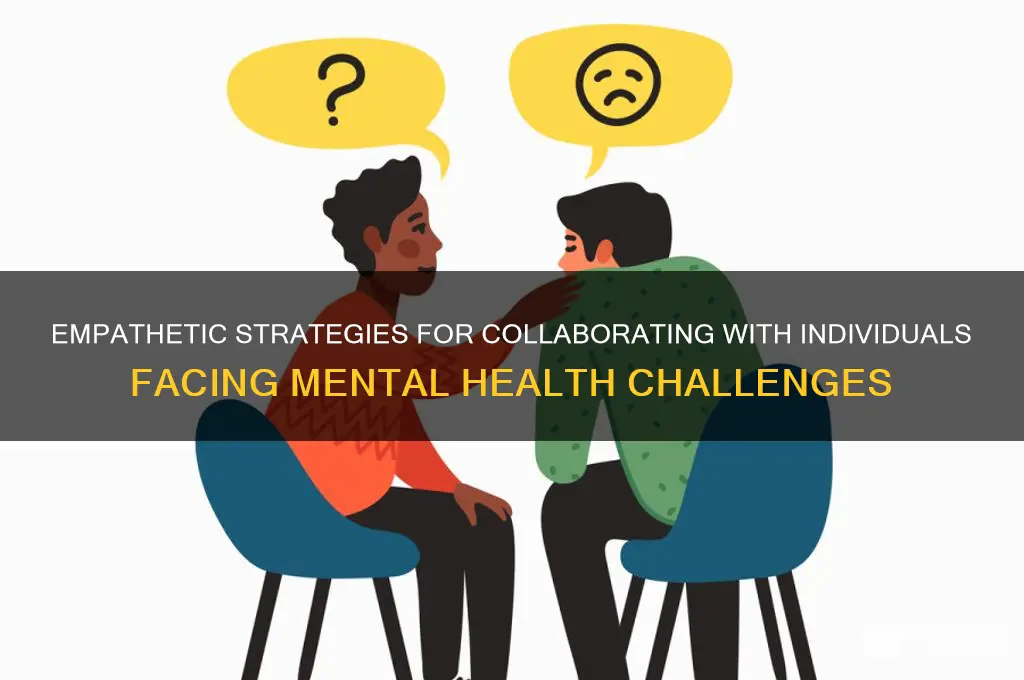
Working effectively with individuals who have mental health issues requires empathy, understanding, and a proactive approach to creating a supportive environment. It’s essential to educate oneself about common mental health challenges, such as anxiety, depression, or bipolar disorder, to reduce stigma and foster compassion. Active listening, patience, and clear communication are key, as individuals may struggle with expressing their needs or managing emotions. Setting realistic expectations, maintaining boundaries, and encouraging professional support while respecting privacy are also crucial. By promoting inclusivity, flexibility, and a non-judgmental attitude, one can build trust and help individuals feel valued and empowered in both personal and professional settings.
Explore related products


What You'll Learn
- Active Listening: Focus on understanding, avoid interrupting, and validate their feelings without judgment
- Setting Boundaries: Establish clear limits to protect your mental health while supporting them
- Encouraging Professional Help: Gently suggest therapy or medication as part of their care plan
- Patience & Empathy: Recognize their struggles, avoid rushing them, and show genuine compassion
- Avoiding Stigma: Use respectful language and treat them as equals, not their diagnosis

Active Listening: Focus on understanding, avoid interrupting, and validate their feelings without judgment
Effective communication is a cornerstone of supporting individuals with mental health issues, and active listening is a skill that can significantly impact their well-being. When engaging with someone facing mental health challenges, the way you listen can either build trust or create barriers. Consider this: a person struggling with anxiety or depression often feels misunderstood or dismissed, making every interaction crucial. Active listening involves fully concentrating, understanding, and responding thoughtfully, ensuring the speaker feels heard and valued.
To practice active listening, start by giving your undivided attention. This means no interruptions, not even to offer what you think is a helpful solution. For instance, if a colleague mentions feeling overwhelmed by their workload, resist the urge to immediately suggest time management techniques. Instead, let them finish their thought. Use non-verbal cues like nodding or maintaining eye contact to show engagement. These simple actions communicate respect and encourage the speaker to open up further.
Validation is another critical component. Acknowledge the person’s feelings without judgment or the need to "fix" them. Phrases like, "It sounds like this has been really tough for you," or "I can see why you’d feel that way," can go a long way. Validation doesn’t mean you agree with their perspective, but rather that you recognize their emotional experience as real and valid. This approach fosters a sense of safety, allowing the individual to express themselves more freely.
However, active listening isn’t without its challenges. It requires patience and self-awareness. You might feel the urge to interject with advice or share a similar experience, but doing so can shift the focus away from the speaker. A practical tip is to pause for a few seconds after they finish speaking before responding. This ensures you’ve fully processed their words and allows you to respond thoughtfully rather than reactively.
Incorporating active listening into your interactions can transform how you support someone with mental health issues. It’s not about having all the answers but about creating a space where they feel understood and accepted. By focusing on understanding, avoiding interruptions, and validating their feelings, you build a foundation of trust and empathy, which is essential for meaningful connection and support.
Police Response to Mental Health Calls: Frequency and Statistics
You may want to see also
Explore related products


Setting Boundaries: Establish clear limits to protect your mental health while supporting them
Boundaries are not barriers; they are bridges to healthier relationships, especially when working with individuals facing mental health challenges. Imagine a scenario where a colleague, let’s call them Alex, struggles with anxiety and frequently seeks reassurance about their work. Without boundaries, you might find yourself constantly interrupting your tasks to provide validation, leading to burnout. Setting a clear limit—such as designating specific times for check-ins—allows you to support Alex while preserving your own productivity and mental well-being. This approach fosters mutual respect and sustainability in your professional relationship.
To establish effective boundaries, start by identifying your limits. Reflect on what behaviors or situations drain your energy or compromise your mental health. For instance, if a coworker with depression tends to share overly personal details during lunch breaks, acknowledge that you’re not their therapist. Politely communicate that you’re available for light conversations but suggest they seek professional support for deeper issues. Use "I" statements to express your needs without sounding accusatory, such as, "I feel overwhelmed when discussions become too intense during breaks." This method ensures clarity while maintaining empathy.
A common misconception is that setting boundaries means withdrawing support. In reality, it’s about creating a framework where both parties can thrive. For example, if you manage someone with ADHD who struggles with deadlines, implement structured check-ins and clear expectations rather than micromanaging. Provide tools like task-tracking apps or visual planners to empower them while ensuring accountability. This approach not only supports their growth but also prevents you from becoming overly involved in their workflow, safeguarding your own mental space.
Caution must be exercised to avoid rigid boundaries that stifle connection. Flexibility is key, as mental health challenges can fluctuate. For instance, a peer with bipolar disorder may need more leeway during manic or depressive episodes. Regularly reassess your boundaries and adjust them collaboratively. If you notice a pattern where your limits are consistently tested, revisit the conversation with specific examples and propose actionable solutions. Remember, boundaries are not static; they evolve as circumstances change, ensuring both parties feel heard and supported.
In conclusion, setting boundaries is an act of self-preservation and care, not selfishness. It requires intentionality, communication, and adaptability. By defining clear limits, you create a safe space for both yourself and the individual you’re supporting. This balance allows you to contribute meaningfully without sacrificing your mental health, transforming potential points of conflict into opportunities for growth and understanding.
Healing Minds: Practical Strategies to Overcome Mental Health Challenges
You may want to see also
Explore related products





Encouraging Professional Help: Gently suggest therapy or medication as part of their care plan
Recognizing when someone might benefit from professional mental health support is a delicate but crucial skill. While you’re not a therapist, subtle signs like persistent mood changes, withdrawal from social activities, or difficulty performing daily tasks can signal the need for intervention. The key is to approach the conversation with empathy, framing therapy or medication not as a last resort but as a proactive step toward well-being. For instance, mentioning how therapy helped a friend manage anxiety can normalize the idea without sounding prescriptive.
Suggesting professional help requires tact and timing. Avoid confrontational language like “You need help” and instead use collaborative phrasing: “Have you considered talking to someone about this?” or “I’ve noticed you’ve been struggling—therapy might offer some tools to cope.” If medication is relevant, acknowledge its role as part of a comprehensive care plan, not a standalone solution. For example, antidepressants like SSRIs often take 4–6 weeks to show full effects, so patience and combined therapy are essential. Always emphasize that seeking help is a sign of strength, not weakness.
Comparing mental health care to physical health can be persuasive. Just as someone with diabetes manages their condition through medication and lifestyle changes, mental health often requires a similar multi-faceted approach. Therapy, like cognitive-behavioral therapy (CBT), provides coping strategies, while medication can address chemical imbalances. For adults over 18, a combination of both is often recommended for moderate to severe conditions. Sharing this perspective can help shift the narrative from stigma to self-care.
Practical tips can make the suggestion more actionable. Offer to help research therapists or psychiatrists, or suggest starting with a single session to ease anxiety. For medication, remind them that dosages are often adjusted over time—starting with a low dose (e.g., 10mg of Lexapro) and increasing under medical supervision. Encourage them to view it as an experiment in self-care, not a lifelong commitment. Small steps, like booking an appointment, can feel less overwhelming and more achievable.
Ultimately, the goal is to empower, not pressure. Respect their autonomy and avoid pushing if they’re resistant. Instead, leave the door open by saying, “I’m here if you ever want to explore this further.” Encouraging professional help is about planting a seed, not demanding immediate action. Over time, your gentle, informed approach can make a significant difference in their willingness to seek the support they need.
Navigating Job Interviews: Addressing Mental Health Questions with Confidence
You may want to see also
Explore related products


Patience & Empathy: Recognize their struggles, avoid rushing them, and show genuine compassion
Mental health struggles often manifest in ways that are invisible to the naked eye, making it easy to underestimate the effort it takes for someone to navigate daily tasks. A person with anxiety might spend hours psyching themselves up for a meeting that others perceive as routine, while someone with depression might exert monumental energy just to respond to an email. Recognizing these unseen battles is the first step in fostering patience and empathy. Without this awareness, even well-intentioned colleagues or managers might misinterpret delays or hesitations as laziness or disinterest, exacerbating the individual’s distress.
To cultivate patience, start by recalibrating your expectations. Avoid imposing rigid timelines or benchmarks that assume everyone operates at the same pace. Instead, adopt a flexible approach that allows for adjustments based on the individual’s needs. For instance, if a team member with ADHD struggles with task switching, break projects into smaller, manageable chunks and provide buffer time between assignments. Similarly, for someone with PTSD, sudden changes in plans or environments can be triggering—communicate changes in advance and offer alternatives when possible. The goal is not to lower standards but to create a framework that accommodates diverse working styles without sacrificing productivity.
Empathy, however, goes beyond logistical adjustments—it requires emotional investment. Active listening is a cornerstone of this practice. When a colleague shares their struggles, resist the urge to offer quick fixes or platitudes like “Just stay positive.” Instead, validate their feelings with phrases such as, “That sounds really challenging,” or “I can see how that would be overwhelming.” This acknowledgment communicates that their experiences are seen and valued, fostering trust and reducing the stigma often associated with mental health discussions.
A practical way to demonstrate compassion is through small, consistent gestures. For example, if a coworker with social anxiety hesitates to speak up in meetings, privately ask for their input afterward or invite them to share their thoughts via email. For someone with chronic fatigue, offer to take notes during long meetings so they can conserve energy. These actions, though seemingly minor, signal that you’re attuned to their needs and willing to adapt for their comfort. Over time, such efforts build a supportive environment where individuals feel safe to contribute without fear of judgment or burnout.
Ultimately, patience and empathy are not one-time acts but ongoing commitments. They require self-awareness to manage your own frustrations and a willingness to educate yourself about mental health challenges. Remember, the goal is not to become a therapist but to be a compassionate ally. By recognizing their struggles, avoiding the impulse to rush, and showing genuine compassion, you create a space where individuals can thrive—not despite their mental health challenges, but because their unique strengths are acknowledged and supported.
Empathetic Strategies for Communicating with Individuals Facing Mental Health Challenges
You may want to see also
Explore related products


Avoiding Stigma: Use respectful language and treat them as equals, not their diagnosis
Language is a powerful tool that can either build bridges or erect walls. When interacting with individuals facing mental health challenges, the words we choose matter immensely. Referring to someone as “a schizophrenic” or “a depressive” reduces their identity to a diagnosis, stripping them of their individuality. Instead, use person-first language: “a person living with schizophrenia” or “someone experiencing depression.” This subtle shift acknowledges their humanity before their condition, fostering dignity and respect.
Consider the impact of casual phrases like “That test was so OCD” or “I’m totally bipolar today.” Such statements trivialize serious mental health conditions, perpetuating stigma. In professional settings, avoid labeling colleagues or clients by their diagnoses during discussions. For instance, rather than saying, “John’s anxiety is acting up,” frame it as, “John is experiencing heightened anxiety today.” This approach separates the person from their symptoms, encouraging empathy rather than judgment.
Treating individuals as equals requires more than polite language—it demands active effort to see beyond their diagnosis. For example, if a coworker with PTSD struggles during a loud presentation, offer accommodations like a quiet space or written materials without making their condition the focal point. Similarly, when collaborating with someone who has bipolar disorder, focus on their skills and contributions, not their mood fluctuations. Equality means valuing their abilities while being mindful of their needs, without letting the diagnosis overshadow their worth.
Practical steps can reinforce this mindset. First, educate yourself on mental health terminology to avoid unintentional insensitivity. Second, listen actively and ask open-ended questions to understand their perspective without assumptions. Third, normalize mental health conversations by sharing your own experiences or struggles when appropriate. For instance, saying, “I’ve had days where anxiety made it hard to focus—how do you manage?” creates solidarity. Finally, advocate for inclusive policies in workplaces or communities that prioritize mental well-being without stigmatizing labels.
The takeaway is clear: respectful language and equitable treatment are not just niceties—they are essential practices for fostering inclusion. By avoiding stigmatizing language and focusing on the person, not the diagnosis, we create environments where individuals feel seen, heard, and valued. This approach not only supports their mental health but also strengthens relationships and productivity. After all, everyone deserves to be treated as a whole person, not a collection of symptoms.
Navigating Mental Health Conversations: A Guide to Discussing Issues at Work
You may want to see also
Frequently asked questions
Use clear, non-judgmental language, actively listen, and show empathy. Avoid minimizing their feelings or offering unsolicited advice. Ask open-ended questions to encourage them to share at their own pace, and respect their boundaries.
Stay calm and reassure them that you’re there to support them. Offer a quiet, safe space if possible, and ask how you can help. Avoid pressuring them to "snap out of it" and instead validate their emotions while encouraging professional help if needed.
Normalize checking in casually, such as asking, "How are you doing today?" Be consistent in your support but respect their privacy. Offer practical help if they’re open to it, and familiarize yourself with available workplace resources or mental health services to suggest if appropriate.