Noah Parker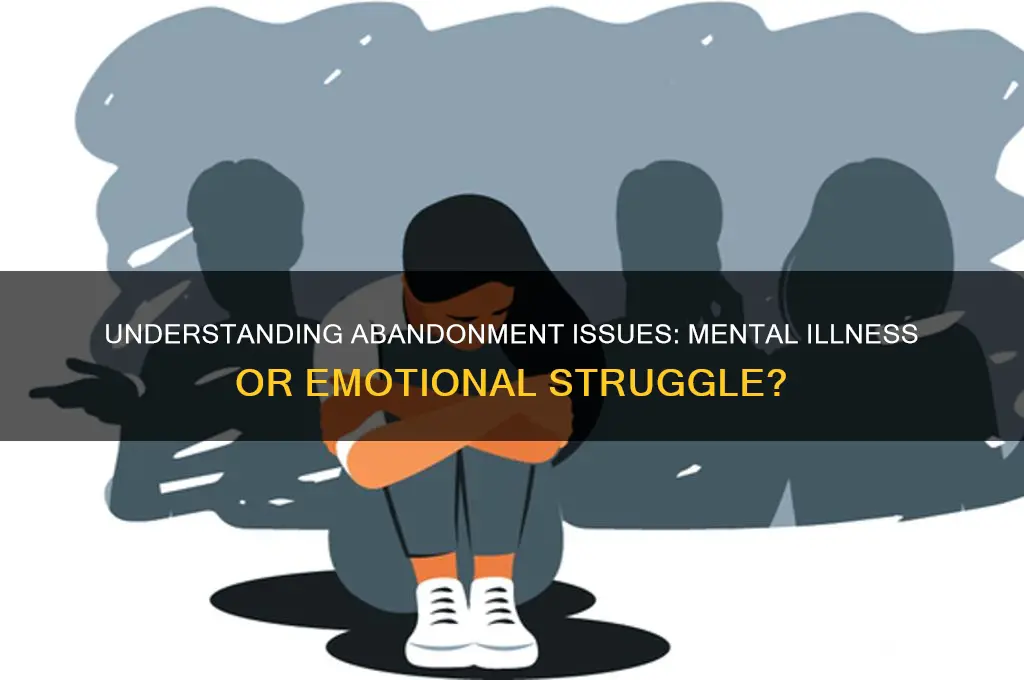
Abandonment issues, characterized by an intense fear of being left alone or rejected, are often rooted in past experiences of loss, neglect, or trauma. While not classified as a standalone mental illness in diagnostic manuals like the DSM-5 or ICD-11, these issues are frequently associated with underlying conditions such as borderline personality disorder, anxiety disorders, or depression. They can significantly impact an individual’s relationships, self-esteem, and emotional well-being, often manifesting as clinginess, insecurity, or a pervasive sense of unworthiness. Understanding whether abandonment issues constitute a mental illness requires examining their severity, persistence, and connection to broader psychological patterns, as they may be symptoms of a larger mental health concern rather than a distinct disorder.
| Characteristics | Values |
|---|---|
| Definition | Abandonment issues refer to the fear of being rejected, deserted, or abandoned by others, often stemming from past experiences. It is not a standalone mental illness but can be a symptom of underlying conditions. |
| Associated Disorders | - Borderline Personality Disorder (BPD) - Attachment Disorders - Anxiety Disorders - Depression - Post-Traumatic Stress Disorder (PTSD) |
| Common Symptoms | - Intense fear of rejection or abandonment - Need for constant reassurance - Difficulty trusting others - Overdependence on relationships - Jealousy or possessiveness - Emotional instability |
| Causes | - Childhood trauma (e.g., neglect, loss of a caregiver) - Unstable or inconsistent relationships - Emotional or physical abuse - Divorce or separation of parents |
| Treatment Options | - Therapy (e.g., Cognitive Behavioral Therapy, Dialectical Behavior Therapy) - Medication for co-occurring disorders (e.g., anxiety, depression) - Building secure attachment styles - Mindfulness and self-soothing techniques |
| Prevalence | Commonly observed in individuals with a history of trauma or insecure attachment styles, but exact prevalence is not well-defined as it is not a distinct diagnosis. |
| Impact on Relationships | Can lead to strained relationships, codependency, and difficulty forming healthy connections. |
| Diagnosis | Not diagnosed as a separate condition; identified through symptoms and associated disorders. |
| Prognosis | With proper treatment and support, individuals can manage symptoms and improve relationship dynamics. |
Explore related products

$19.33 $20.95


$17.08 $28.95


What You'll Learn
- Symptoms and Behaviors: Anxiety, clinginess, fear of rejection, and difficulty trusting others are common signs
- Causes and Triggers: Often rooted in childhood neglect, trauma, or inconsistent caregiving experiences
- Diagnosis and Criteria: Not a standalone diagnosis but linked to conditions like borderline personality disorder or anxiety
- Treatment Options: Therapy, such as CBT or attachment-based therapy, helps manage symptoms effectively
- Impact on Relationships: Can lead to codependency, insecurity, and challenges in forming healthy connections

Symptoms and Behaviors: Anxiety, clinginess, fear of rejection, and difficulty trusting others are common signs
Anxiety often manifests as the first visible symptom of abandonment issues, acting as an internal alarm system triggered by perceived threats of loss or separation. Unlike general anxiety, this type is hyper-focused on relational stability—a missed text, a delayed response, or a change in routine can spiral into catastrophic thinking. For instance, a person might interpret a partner’s busy workday as emotional withdrawal, leading to restlessness, rapid heartbeat, or obsessive checking of communication channels. This anxiety isn’t merely situational; it’s a chronic undercurrent fueled by past experiences of abandonment, whether real or imagined. Recognizing this pattern requires distinguishing between healthy concern and disproportionate distress—a task easier said than done without self-awareness or external feedback.
Clinginess, while often dismissed as neediness, is a behavioral adaptation to the fear of losing connection. It’s not about love but about control—an attempt to anchor oneself to another person as a safeguard against abandonment. This behavior can manifest in excessive calls, demands for constant reassurance, or reluctance to spend time apart. Paradoxically, clinginess often backfires, pushing others away and reinforcing the very fear it seeks to alleviate. For example, a person might insist on accompanying their partner to every social event, not out of interest but out of fear of being excluded. Breaking this cycle requires reframing attachment as interdependence rather than dependence, a shift that demands both self-work and patience.
Fear of rejection isn’t merely a dislike of criticism; it’s a paralyzing dread rooted in the belief that one is fundamentally unworthy of love or connection. This fear can lead to self-sabotage, such as withdrawing from relationships preemptively or avoiding vulnerability altogether. Consider someone who ghosts a potential partner after a few dates, not due to lack of interest but out of conviction that they’ll eventually be rejected. This behavior, while protective in intent, limits opportunities for genuine connection and perpetuates isolation. Cognitive reframing—challenging the belief that rejection defines one’s worth—is a critical step in dismantling this fear, though it often requires professional guidance to navigate effectively.
Difficulty trusting others is the emotional scar tissue of abandonment issues, formed from repeated experiences of unreliability or betrayal. This distrust isn’t selective; it extends to friends, family, and even oneself, creating a barrier to intimacy. For instance, a person might withhold personal details or test others’ loyalty through subtle provocations, all while craving the very closeness they resist. Rebuilding trust isn’t about lowering standards but about recalibrating expectations—recognizing that imperfection in others doesn’t equate to abandonment. Practical strategies include setting small, verifiable boundaries and gradually increasing vulnerability based on consistent, positive responses. This process is slow but essential for fostering healthier relationships.
These symptoms and behaviors, while interconnected, each require targeted strategies to address. Anxiety may benefit from mindfulness practices or therapy modalities like Cognitive Behavioral Therapy (CBT), which helps reframe distorted thoughts. Clinginess can be mitigated by cultivating individual interests and setting structured time apart. Fear of rejection often responds to self-compassion exercises and gradual exposure to vulnerability. Trust issues, the most entrenched, may necessitate long-term therapy to unravel and repattern. Collectively, these approaches don’t erase the pain of past abandonment but equip individuals to navigate relationships with greater resilience and authenticity.
Approaching Mental Health Conversations: Compassionate Strategies for Supportive Connections
You may want to see also
Explore related products


Causes and Triggers: Often rooted in childhood neglect, trauma, or inconsistent caregiving experiences
Childhood experiences lay the foundation for our emotional responses and coping mechanisms, and abandonment issues often trace back to early neglect, trauma, or inconsistent caregiving. These experiences create a blueprint for how individuals perceive relationships and security, shaping their fears of being left behind. For instance, a child who experiences frequent parental absence or emotional unavailability may internalize the belief that they are unworthy of love or incapable of maintaining connections. This early conditioning can manifest in adulthood as heightened anxiety, clinginess, or a persistent fear of rejection, even in stable relationships.
Consider the case of a 30-year-old individual who, despite having a supportive partner, constantly seeks reassurance of their love. This behavior may stem from a childhood where caregivers were physically present but emotionally distant, leaving the child to question their value. Such inconsistent caregiving disrupts the development of secure attachment styles, which are critical for emotional resilience. Research in attachment theory highlights that children who experience neglect or unpredictability in care are more likely to develop anxious or avoidant attachment patterns, both of which contribute to abandonment fears.
To address these triggers, it’s essential to identify the specific childhood experiences that fuel abandonment issues. For example, a person might recall a parent’s sudden departure during a divorce or a caregiver’s emotional withdrawal during stressful periods. Journaling or therapy can help uncover these patterns, allowing individuals to connect their current fears to past events. Practical steps include creating a timeline of significant childhood experiences and reflecting on how they influence present behaviors. This process fosters self-awareness and provides a starting point for healing.
However, caution must be exercised when revisiting traumatic memories, as this can exacerbate anxiety or distress. It’s advisable to work with a mental health professional, particularly one trained in trauma-focused therapies like Cognitive Behavioral Therapy (CBT) or Eye Movement Desensitization and Reprocessing (EMDR). These approaches help reframe negative beliefs and process unresolved emotions safely. Additionally, mindfulness practices, such as grounding techniques or meditation, can provide immediate relief during moments of heightened fear.
In conclusion, while abandonment issues are not classified as a standalone mental illness, they are often symptoms of underlying conditions like anxiety or attachment disorders. By understanding their roots in childhood neglect, trauma, or inconsistent caregiving, individuals can take targeted steps toward recovery. This involves acknowledging past experiences, seeking professional support, and adopting coping strategies to rebuild emotional security. Addressing these causes and triggers is not just about managing symptoms—it’s about rewriting the narrative of self-worth and connection.
Stigma Behind Bars: Society's Perception of Inmates with Mental Illness
You may want to see also
Explore related products


Diagnosis and Criteria: Not a standalone diagnosis but linked to conditions like borderline personality disorder or anxiety
Abandonment issues, while deeply distressing, are not classified as a standalone mental illness in diagnostic manuals like the DSM-5 or ICD-11. Instead, they are considered a symptom or behavioral pattern often intertwined with other recognized disorders. This distinction is crucial for clinicians, as it shapes how these issues are assessed and treated. For instance, a person experiencing intense fear of abandonment might meet criteria for borderline personality disorder (BPD), where such fears are a core diagnostic feature, or generalized anxiety disorder (GAD), where they manifest as persistent worry about rejection.
To diagnose conditions linked to abandonment issues, mental health professionals follow specific criteria. In BPD, for example, the DSM-5 requires at least five of nine symptoms, including frantic efforts to avoid real or imagined abandonment. This criterion is not merely about occasional insecurity but involves extreme behaviors like clinginess, jealousy, or panic in response to perceived threats of separation. Similarly, in GAD, abandonment fears must be part of a broader pattern of excessive, uncontrollable worry lasting at least six months, accompanied by physical symptoms like restlessness or sleep disturbances.
The absence of a standalone diagnosis for abandonment issues does not diminish their clinical significance. Instead, it underscores the importance of identifying the underlying condition driving these fears. For instance, a therapist might use evidence-based treatments like dialectical behavior therapy (DBT) for BPD, which includes skills training to manage emotional dysregulation and improve interpersonal effectiveness. Alternatively, cognitive-behavioral therapy (CBT) could address abandonment fears in the context of anxiety disorders by challenging maladaptive thought patterns and promoting healthier coping strategies.
Practical tips for individuals struggling with abandonment issues include maintaining open communication in relationships, setting realistic expectations, and practicing self-soothing techniques like mindfulness or deep breathing. It’s also essential to seek professional help early, as untreated fears of abandonment can escalate into more severe symptoms, such as depression or self-sabotaging behaviors. By framing these issues within the context of diagnosable conditions, clinicians can offer targeted interventions that address both the symptom and its root cause.
In summary, while abandonment issues are not a mental illness in themselves, they are a critical symptom linked to disorders like BPD and anxiety. Accurate diagnosis hinges on recognizing their role within broader diagnostic criteria, enabling tailored treatments that alleviate distress and improve functioning. Understanding this distinction empowers both clinicians and individuals to approach these fears with clarity and purpose.
Stigma Behind Bars: Society's Perception of Mental Health in Prisons
You may want to see also
Explore related products




Treatment Options: Therapy, such as CBT or attachment-based therapy, helps manage symptoms effectively
Abandonment issues, while not classified as a standalone mental illness in diagnostic manuals like the DSM-5, are often symptoms of underlying conditions such as borderline personality disorder, anxiety disorders, or attachment disorders. Regardless of their origin, these issues can profoundly disrupt relationships and emotional well-being. Treatment options, particularly therapy, offer effective strategies to manage symptoms and foster healthier attachment patterns. Cognitive Behavioral Therapy (CBT) and attachment-based therapy are two evidence-based approaches that have shown promise in addressing these challenges.
CBT focuses on identifying and challenging maladaptive thought patterns that contribute to abandonment fears. For instance, individuals might catastrophize minor relationship setbacks, assuming rejection is imminent. In CBT sessions, therapists work with clients to reframe these thoughts, replacing them with more balanced perspectives. A practical example: instead of thinking, "If my partner doesn’t text back immediately, they must be leaving me," a client might learn to consider, "They could be busy or distracted; it doesn’t mean they’re abandoning me." Typically, CBT is structured into 12–20 sessions, though the duration can vary based on individual needs. Homework assignments, such as journaling or thought records, reinforce progress between sessions.
Attachment-based therapy, on the other hand, delves into early relational experiences to understand how past attachments shape current behaviors. This approach is particularly useful for individuals whose abandonment fears stem from childhood trauma or inconsistent caregiving. Therapists help clients explore unresolved emotions and develop secure attachment styles through techniques like emotional regulation exercises and relational role-playing. For example, a client might practice expressing vulnerability in a controlled setting, gradually building trust in themselves and others. Unlike CBT, attachment-based therapy often requires longer-term commitment, as it addresses deep-seated patterns rather than surface-level symptoms.
Both therapies complement each other, offering a dual approach to symptom management. While CBT provides immediate tools to cope with distressing thoughts, attachment-based therapy addresses the root causes, fostering long-term emotional resilience. For optimal results, therapists often tailor treatment plans to individual needs, combining elements of both modalities. Group therapy or couples counseling can also be beneficial, providing opportunities to practice new skills in real-world relational contexts.
Practical tips for maximizing therapy outcomes include maintaining consistency in session attendance, openly communicating with the therapist about progress and challenges, and integrating learned strategies into daily life. For instance, mindfulness techniques taught in CBT can be practiced during moments of anxiety, while attachment-based insights can inform how one approaches new relationships. Ultimately, therapy is not a quick fix but a transformative process that requires patience, self-compassion, and active participation. With the right support, individuals struggling with abandonment issues can develop healthier relational patterns and reclaim emotional stability.
Navigating Mental Health Challenges in the Workplace: Strategies for Success
You may want to see also
Explore related products

$14.15 $20




Impact on Relationships: Can lead to codependency, insecurity, and challenges in forming healthy connections
Abandonment issues, while not classified as a standalone mental illness in diagnostic manuals like the DSM-5, often stem from attachment traumas or early relational disruptions. These issues manifest as a pervasive fear of being left alone, rejected, or unloved, which can profoundly distort how individuals engage in relationships. One of the most significant consequences is the development of codependency—a pattern where one person excessively relies on another for emotional validation, often at the expense of their own needs. For instance, someone with abandonment fears might tolerate unhealthy behaviors in a partner, such as emotional unavailability or manipulation, simply to avoid the perceived risk of being alone. This dynamic not only erodes self-esteem but also reinforces the very fear it seeks to escape.
Insecurity is another hallmark of how abandonment issues impact relationships. Individuals may constantly seek reassurance of their worth or the other person’s commitment, creating a cycle of anxiety and frustration. For example, a person might obsessively monitor their partner’s communication patterns, interpret neutral actions as signs of withdrawal, or avoid expressing genuine emotions for fear of driving the other person away. Over time, this hypervigilance can strain even the most patient partners, leading to resentment or emotional distance. Practical strategies to mitigate this include setting boundaries around reassurance-seeking behaviors and engaging in self-reflection to identify the root of insecurities.
Forming healthy connections becomes particularly challenging when abandonment issues are at play. Trust, a cornerstone of any relationship, is often compromised by the individual’s expectation of eventual rejection. This can lead to self-sabotaging behaviors, such as pushing others away preemptively or avoiding vulnerability altogether. For instance, someone might ghost a potential partner after a few dates, convinced that deeper involvement will only end in pain. To counteract this, therapists often recommend gradual exposure to vulnerability, starting with small, low-stakes interactions and building up to more significant emotional investments.
The interplay of codependency, insecurity, and relational challenges creates a self-perpetuating cycle that requires intentional intervention. Cognitive-behavioral therapy (CBT) and attachment-based therapies are effective tools for addressing these patterns. CBT helps individuals reframe irrational fears of abandonment, while attachment-based approaches focus on rebuilding secure relational schemas. Additionally, mindfulness practices can ground individuals in the present moment, reducing the tendency to catastrophize future abandonment. For those in relationships, couples therapy can provide a safe space to explore dynamics and develop healthier communication strategies.
Ultimately, the impact of abandonment issues on relationships is not insurmountable. With awareness, professional guidance, and consistent effort, individuals can learn to navigate their fears and cultivate connections rooted in mutual respect and security. The key lies in recognizing that the fear of abandonment, while powerful, does not have to dictate one’s relational destiny. By addressing the underlying trauma and adopting practical strategies, it is possible to break free from destructive patterns and build relationships that thrive on trust and authenticity.
Opioids and Mental Health: Unraveling the Devastating Psychological Impact
You may want to see also
Frequently asked questions
Abandonment issues are not classified as a standalone mental illness in diagnostic manuals like the DSM-5 or ICD-11. However, they are often symptoms of underlying conditions such as borderline personality disorder, anxiety disorders, or depression.
Yes, abandonment issues can contribute to or exacerbate mental health problems like anxiety, depression, low self-esteem, and relationship difficulties. They often stem from unresolved trauma or attachment issues and may require therapy to address.
Treatment for abandonment issues typically involves therapy, such as cognitive-behavioral therapy (CBT), dialectical behavior therapy (DBT), or attachment-based therapy. These approaches help individuals understand the root causes of their fears, develop healthier coping mechanisms, and improve relationships.