Ava Ramirez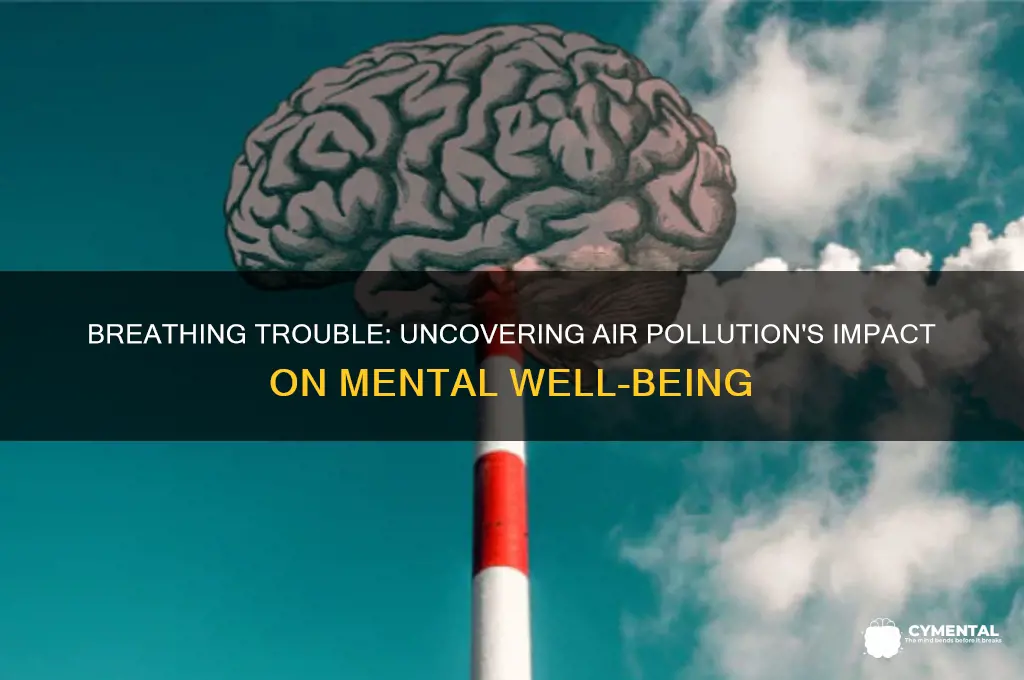
Air pollution, a pervasive environmental issue, has long been associated with physical health problems such as respiratory and cardiovascular diseases. However, emerging research suggests a potential link between air pollution and mental health issues, raising concerns about its broader impact on human well-being. Studies have indicated that exposure to pollutants like particulate matter (PM2.5), nitrogen dioxide (NO2), and ozone (O3) may contribute to an increased risk of anxiety, depression, cognitive decline, and even neurodegenerative disorders. The mechanisms behind this connection are still being explored, but hypotheses include systemic inflammation, oxidative stress, and direct neurotoxic effects. As urbanization and industrialization continue to rise, understanding the relationship between air quality and mental health becomes increasingly crucial for developing effective public health strategies and mitigating the far-reaching consequences of pollution.
| Characteristics | Values |
|---|---|
| Association with Depression | Numerous studies show a positive correlation between air pollution exposure (PM2.5, NO2) and increased risk of depression, particularly in urban areas. |
| Anxiety and Stress | Exposure to air pollutants like PM2.5 and ozone has been linked to heightened anxiety levels and increased stress markers in both adults and children. |
| Cognitive Decline | Long-term exposure to air pollution, especially fine particulate matter (PM2.5), is associated with accelerated cognitive decline and increased risk of dementia in older adults. |
| Childhood Neurodevelopment | Prenatal and early childhood exposure to air pollution may negatively impact neurodevelopment, leading to potential issues with attention, memory, and behavioral problems. |
| Suicide Risk | Some research suggests a potential link between air pollution and increased suicide risk, though more studies are needed to confirm this association. |
| Mechanisms | Proposed mechanisms include neuroinflammation, oxidative stress, and disruption of the blood-brain barrier caused by air pollutants. |
| Vulnerable Populations | Children, older adults, and individuals with pre-existing mental health conditions are considered more susceptible to the mental health effects of air pollution. |
| Global Impact | Air pollution is a significant global health concern, contributing to a substantial burden of mental health issues worldwide. |
| Policy Implications | These findings highlight the importance of implementing stricter air quality regulations and promoting sustainable practices to mitigate the mental health impacts of air pollution. |
Explore related products



What You'll Learn
- Air pollution's impact on anxiety and depression rates in urban populations
- Cognitive decline linked to long-term exposure to particulate matter
- Association between air quality and increased risk of bipolar disorder
- Effects of nitrogen dioxide on stress levels and mental well-being
- Air pollution's role in exacerbating symptoms of schizophrenia and psychosis

Air pollution's impact on anxiety and depression rates in urban populations
Air pollution is not just a respiratory hazard; it’s increasingly linked to rising anxiety and depression rates in urban populations. Studies show that prolonged exposure to fine particulate matter (PM2.5) and nitrogen dioxide (NO₂), common in city air, correlates with higher mental health disorder diagnoses. For instance, a 2019 study published in *PLOS Biology* found that individuals living in areas with PM2.5 levels above 15 µg/m³ had a 15% increased risk of developing depression compared to those in cleaner environments. This isn’t just a correlation—research suggests air pollutants trigger neuroinflammation and oxidative stress, disrupting brain function and mood regulation.
Consider the daily reality for urban dwellers: commuting through traffic-clogged streets, living near industrial zones, or residing in densely populated neighborhoods. These environments expose individuals to pollutant levels often exceeding World Health Organization (WHO) guidelines. For example, a 2021 study in *JAMA Psychiatry* revealed that adolescents aged 12–18 in highly polluted urban areas were 2.5 times more likely to report anxiety symptoms than their rural peers. The mechanism? Pollutants like NO₂ and ozone (O₃) can cross the blood-brain barrier, altering neurotransmitter activity and increasing cortisol levels, a stress hormone linked to anxiety disorders.
To mitigate these risks, practical steps can be taken. Urban planners can prioritize green spaces, which act as natural air filters, reducing PM2.5 levels by up to 30%. Individuals can invest in HEPA air purifiers for indoor spaces, especially in bedrooms, where prolonged exposure occurs during sleep. Apps like AirVisual or Breezometer provide real-time air quality data, helping users plan outdoor activities during lower pollution periods. For those with pre-existing mental health conditions, combining air quality management with therapy or medication may offer a more holistic approach to symptom control.
However, reliance on individual solutions isn’t enough. Policymakers must enforce stricter emission standards for vehicles and industries, while incentivizing public transportation and renewable energy. A comparative analysis of cities like Copenhagen and Delhi highlights the impact of such measures: Copenhagen’s focus on cycling infrastructure and clean energy has kept PM2.5 levels below 10 µg/m³, while Delhi’s reliance on fossil fuels has seen levels spike to 150 µg/m³, correlating with higher mental health disorder rates. The takeaway? Addressing air pollution requires systemic change, not just personal adaptation.
Finally, the intersection of air pollution and mental health demands interdisciplinary research. While current studies establish a link, more longitudinal research is needed to determine causality and identify vulnerable populations, such as children or the elderly. Until then, the evidence is clear: cleaner air isn’t just a physical health imperative—it’s a mental health necessity. Urban populations, already grappling with stressors like noise and overcrowding, cannot afford to ignore this invisible threat. Act now, both collectively and individually, to breathe easier—and think clearer.
Identifying Mental Health Issues in Dogs: Signs and Solutions
You may want to see also
Explore related products



Cognitive decline linked to long-term exposure to particulate matter
Long-term exposure to particulate matter (PM), especially PM2.5 (particles smaller than 2.5 micrometers), has been consistently linked to cognitive decline across multiple age groups. Studies show that individuals living in areas with high PM2.5 concentrations (above 10 μg/m³, the WHO’s recommended limit) experience accelerated brain aging, equivalent to losing an additional year of cognitive function for every 5 μg/m³ increase in exposure. This effect is particularly pronounced in older adults, where prolonged exposure correlates with a 40% higher risk of developing dementia or Alzheimer’s disease. Even in younger populations, chronic exposure to PM2.5 has been associated with reduced cognitive performance, including slower processing speeds and impaired memory.
To mitigate these risks, practical steps can be taken at both individual and community levels. For individuals, using HEPA air purifiers indoors, wearing N95 masks during high pollution days, and monitoring local air quality indices (AQI) can reduce personal exposure. For communities, advocating for stricter emission controls on vehicles and industries, expanding green spaces, and supporting policies that limit PM2.5 emissions are critical. For example, cities like Beijing have seen cognitive benefits in residents following significant reductions in PM2.5 levels, demonstrating the tangible impact of policy interventions.
Comparatively, the cognitive effects of PM exposure mirror those of other environmental toxins, such as lead or mercury, but with a more pervasive reach due to the omnipresence of air pollution. Unlike these toxins, which often require direct ingestion or contact, PM2.5 infiltrates the bloodstream via the lungs, crossing the blood-brain barrier and triggering neuroinflammation. This process damages neural pathways and reduces brain volume, particularly in regions like the hippocampus, which is essential for memory and learning. The insidious nature of PM exposure—often invisible and cumulative—makes it a silent threat to cognitive health.
A cautionary note: while reducing exposure is essential, complete avoidance of PM2.5 is nearly impossible in urban areas. Instead, focus on harm minimization. For instance, exercising in parks instead of along busy roads can lower exposure during physical activity, as traffic-related emissions are a major PM2.5 source. Additionally, dietary interventions, such as consuming antioxidant-rich foods (berries, nuts, leafy greens), may help counteract oxidative stress caused by PM exposure. However, these measures are supplementary—systemic changes to reduce pollution remain the most effective long-term solution.
In conclusion, the link between long-term PM exposure and cognitive decline is both alarming and actionable. By understanding the specific risks—such as the 10 μg/m³ threshold for PM2.5—and adopting targeted strategies, individuals and communities can protect cognitive health. While the challenge is global, the solutions are local, requiring both personal vigilance and collective advocacy to create cleaner, healthier environments.
Reporting Mental Health Concerns: A Compassionate Guide to Taking Action
You may want to see also
Explore related products


Association between air quality and increased risk of bipolar disorder
Air pollution's impact on mental health extends beyond anxiety and depression, with emerging research suggesting a potential link to bipolar disorder. Studies have identified a correlation between exposure to fine particulate matter (PM2.5) and an increased risk of developing bipolar disorder, particularly in individuals aged 15-39 years. For instance, a 2019 study published in the journal *JAMA Psychiatry* found that long-term exposure to PM2.5 concentrations above 15 μg/m³ was associated with a 15-21% higher risk of bipolar disorder diagnosis.
To mitigate this risk, it is essential to monitor air quality and take proactive measures. The World Health Organization (WHO) recommends limiting exposure to PM2.5 concentrations below 10 μg/m³ annually. Practical steps include using air purifiers with HEPA filters, wearing N95 masks during high-pollution periods, and avoiding outdoor activities near heavy traffic or industrial areas. For individuals living in urban areas, checking daily air quality indices (AQI) through apps or local environmental agencies can help plan activities to minimize exposure.
A comparative analysis of urban and rural populations highlights the disparity in risk. Urban dwellers, exposed to higher PM2.5 levels (often exceeding 20 μg/m³), face a more pronounced risk compared to rural residents, whose average exposure is closer to 10 μg/m³. This urban-rural divide underscores the need for targeted interventions in cities, such as improving public transportation, expanding green spaces, and enforcing stricter emission standards for vehicles and industries.
Persuasively, policymakers must prioritize air quality improvements as a public mental health strategy. Investing in renewable energy, promoting sustainable urban planning, and raising awareness about the mental health impacts of pollution can yield long-term benefits. For example, a 10% reduction in PM2.5 levels could potentially lower the incidence of bipolar disorder by 2-3% in high-risk populations, according to modeling studies. Such measures not only address physical health but also contribute to mental well-being, making them a critical component of holistic public health initiatives.
In conclusion, the association between air quality and bipolar disorder risk demands immediate attention. By combining individual actions, community efforts, and policy changes, it is possible to reduce exposure to harmful pollutants and mitigate the mental health risks they pose. This multifaceted approach is essential for safeguarding both physical and mental health in an increasingly polluted world.
Social Media's Impact: Rising Mental Health Issues in the Digital Age
You may want to see also
Explore related products


Effects of nitrogen dioxide on stress levels and mental well-being
Nitrogen dioxide (NO₂), a common air pollutant primarily emitted from vehicle exhaust and industrial processes, has been increasingly linked to adverse effects on mental health. Studies show that prolonged exposure to NO₂, even at levels below current regulatory standards, can elevate stress hormones like cortisol and disrupt neurotransmitter balance, contributing to heightened anxiety and reduced emotional resilience. For instance, a 2020 study published in *Environment International* found that individuals living in areas with NO₂ concentrations above 30 µg/m³ reported significantly higher stress levels compared to those in cleaner environments.
To mitigate these effects, consider practical steps such as monitoring local air quality indices and planning outdoor activities during times of lower pollution. Indoor air purifiers with HEPA filters can reduce NO₂ levels, particularly in urban homes near busy roads. For vulnerable populations, such as children and the elderly, limiting exposure during peak traffic hours (7–9 AM and 5–7 PM) can be particularly beneficial. Schools and workplaces in high-pollution zones should prioritize ventilation systems that filter out NO₂, as poor indoor air quality can exacerbate stress and cognitive fatigue.
Comparatively, while particulate matter (PM2.5) often dominates air pollution discussions, NO₂’s impact on mental well-being is distinct due to its ability to penetrate deep into the respiratory system and enter the bloodstream, potentially affecting brain function. Unlike PM2.5, which primarily causes inflammation, NO₂ is associated with oxidative stress and mitochondrial dysfunction, mechanisms directly linked to mood disorders. This highlights the need for targeted policies addressing NO₂ emissions, such as stricter vehicle emission standards and incentives for public transportation.
A persuasive argument for action lies in the economic and social costs of NO₂-induced mental health issues. Chronic stress and anxiety reduce productivity, increase healthcare expenditures, and strain social support systems. By investing in green infrastructure and clean energy, governments can not only improve air quality but also foster healthier, more resilient communities. Individuals can contribute by advocating for policy changes and adopting eco-friendly habits, such as carpooling or using electric vehicles, to collectively reduce NO₂ emissions and protect mental well-being.
In conclusion, the effects of nitrogen dioxide on stress levels and mental well-being are both significant and actionable. Through a combination of personal precautions, community awareness, and policy interventions, it is possible to mitigate the mental health impacts of NO₂ exposure. Recognizing this pollutant’s unique role in air quality and mental health underscores the urgency of addressing it as part of a broader strategy to create healthier environments for all.
Spotting Early Mental Health Signs: A Guide to Awareness and Action
You may want to see also
Explore related products


Air pollution's role in exacerbating symptoms of schizophrenia and psychosis
Air pollution's insidious reach extends beyond physical ailments, with growing evidence suggesting a troubling link to mental health disorders. Among these, schizophrenia and psychosis stand out as particularly vulnerable to the exacerbating effects of polluted air. Studies have shown that individuals exposed to higher levels of air pollutants, such as particulate matter (PM2.5) and nitrogen dioxide (NO2), exhibit a greater risk of developing or experiencing worsened symptoms of these conditions. For instance, a 2018 study published in *JAMA Psychiatry* found that long-term exposure to PM2.5 at levels above 15 µg/m³ was associated with a 19% increase in schizophrenia risk. This raises critical questions about the role of environmental factors in mental health and the need for targeted interventions.
Consider the biological mechanisms at play. Air pollutants can induce systemic inflammation and oxidative stress, both of which are implicated in the pathophysiology of schizophrenia and psychosis. Fine particulate matter, with its ability to penetrate the blood-brain barrier, may directly affect neural circuits involved in cognition and emotion regulation. For example, elevated levels of pro-inflammatory cytokines, often observed in individuals exposed to high pollution, have been linked to psychotic symptoms. Practical steps to mitigate this risk include monitoring local air quality indices (AQI) and limiting outdoor activities on high-pollution days, particularly for vulnerable populations such as adolescents and young adults, who are at a critical neurodevelopmental stage.
From a comparative perspective, urban dwellers face a disproportionate burden. Cities with heavy traffic and industrial activity often record PM2.5 levels exceeding 30 µg/m³, far above the World Health Organization’s recommended limit of 5 µg/m³. In contrast, rural areas with lower pollution levels report fewer cases of severe mental health episodes. This disparity underscores the urgency of policy interventions, such as stricter emission standards and the promotion of green spaces, which can act as natural air filters. For individuals living in high-pollution zones, investing in HEPA air purifiers and wearing N95 masks during peak pollution hours can provide immediate relief.
Persuasively, the economic and social costs of ignoring this issue are staggering. Schizophrenia and psychosis impose a significant burden on healthcare systems, with treatment costs often compounded by reduced productivity and social isolation. By addressing air pollution as a modifiable risk factor, societies can potentially reduce the incidence and severity of these disorders, yielding long-term savings and improved quality of life. Policymakers must prioritize environmental health as a cornerstone of mental health strategies, integrating air quality monitoring into public health initiatives.
In conclusion, the evidence linking air pollution to exacerbated symptoms of schizophrenia and psychosis is both compelling and actionable. From biological mechanisms to practical interventions, the pathways to mitigation are clear. By adopting a multi-faceted approach—combining individual precautions, policy reforms, and community awareness—we can safeguard mental health against the invisible threat of polluted air. The time to act is now, before the haze of pollution further clouds the minds of those already vulnerable.
Compassionate Approaches: Supporting and Treating Mental Health Challenges Effectively
You may want to see also
Frequently asked questions
Yes, numerous studies have established a link between air pollution and mental health issues. Research shows that exposure to pollutants like particulate matter (PM2.5), nitrogen dioxide (NO2), and ozone can increase the risk of conditions such as depression, anxiety, and cognitive decline, particularly in vulnerable populations like children and the elderly.
Air pollution can affect the brain through systemic inflammation, oxidative stress, and the disruption of the blood-brain barrier. Fine particulate matter can enter the bloodstream and travel to the brain, potentially causing neuroinflammation and altering neurotransmitter function, which are linked to mood disorders and cognitive impairments.
Yes, evidence suggests that reducing air pollution can lead to improved mental health outcomes. Studies have shown that areas with lower pollution levels report fewer cases of depression, anxiety, and other mental health disorders. Policies aimed at improving air quality, such as reducing emissions and promoting clean energy, can have positive effects on both physical and mental well-being.