Ava Ramirez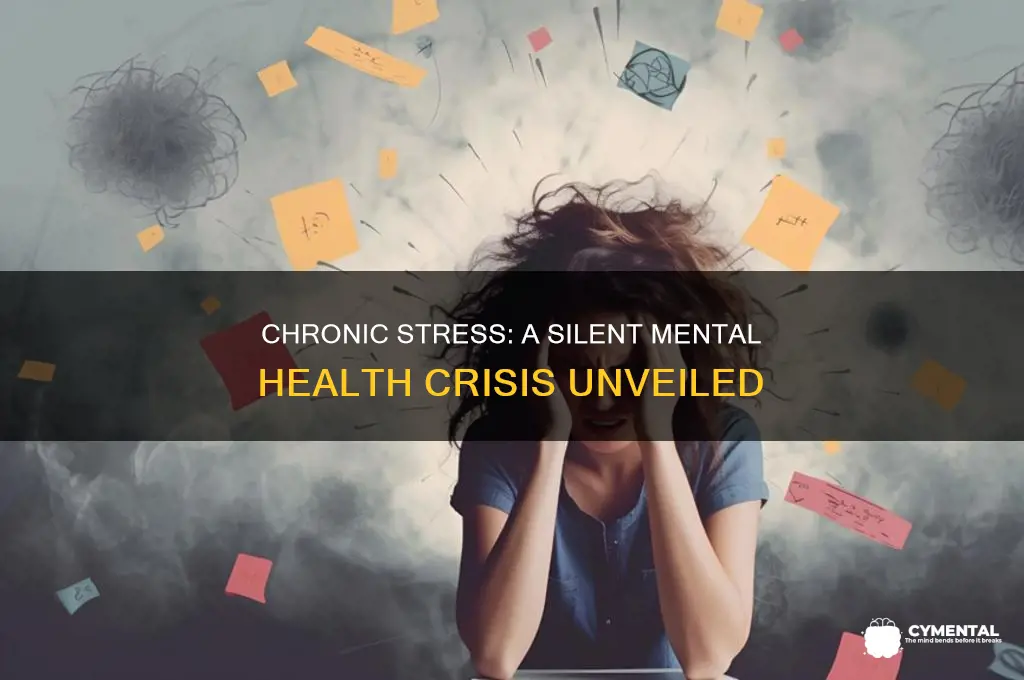
Chronic stress, characterized by prolonged exposure to stressors and the body’s continuous activation of the stress response, has increasingly been recognized as a significant mental health concern. Unlike acute stress, which is temporary and often manageable, chronic stress can lead to persistent psychological and physiological strain, contributing to conditions such as anxiety, depression, and burnout. Its impact extends beyond emotional distress, as it can disrupt cognitive function, impair decision-making, and exacerbate physical health problems like cardiovascular disease and weakened immunity. Given its pervasive effects on overall well-being, understanding chronic stress as a mental health issue is crucial for developing effective prevention and intervention strategies.
| Characteristics | Values |
|---|---|
| Definition | Chronic stress refers to the persistent and prolonged experience of stress over an extended period, often due to ongoing stressors like work, relationships, or health issues. |
| Mental Health Impact | Chronic stress is strongly linked to mental health issues, including anxiety disorders, depression, and burnout. |
| Physiological Effects | Prolonged stress can lead to physical health problems such as cardiovascular disease, weakened immune function, and gastrointestinal issues. |
| Cognitive Effects | It impairs cognitive functions like memory, attention, and decision-making, increasing the risk of mental health disorders. |
| Behavioral Changes | Chronic stress often results in unhealthy coping mechanisms, such as substance abuse, overeating, or social withdrawal, exacerbating mental health problems. |
| Neurological Impact | It alters brain structure and function, particularly in areas like the hippocampus and prefrontal cortex, contributing to mental health issues. |
| Risk Factors | Factors like genetic predisposition, lack of social support, and poor coping strategies increase the likelihood of chronic stress leading to mental health problems. |
| Treatment Options | Management includes therapy (e.g., CBT), stress reduction techniques (e.g., mindfulness, meditation), lifestyle changes, and medication when necessary. |
| Prevention | Building resilience, maintaining a healthy lifestyle, and seeking early intervention for stressors can prevent chronic stress from becoming a mental health issue. |
| Prevalence | Chronic stress is a widespread issue, affecting a significant portion of the global population and contributing to the rising prevalence of mental health disorders. |
Explore related products


What You'll Learn
- Stress vs. Mental Health: Differentiating chronic stress from diagnosable mental health disorders
- Physical Impact: How chronic stress affects the body and overall health
- Psychological Effects: Emotional and cognitive consequences of prolonged stress exposure
- Coping Mechanisms: Effective strategies to manage and reduce chronic stress
- Treatment Options: Therapies and interventions for stress-related mental health challenges

Stress vs. Mental Health: Differentiating chronic stress from diagnosable mental health disorders
Chronic stress and mental health disorders often intertwine, yet they are distinct entities requiring different approaches. Stress, by definition, is the body’s response to external pressures or demands, while mental health disorders are diagnosable conditions rooted in biological, psychological, or environmental factors. For instance, prolonged exposure to workplace stress can lead to physical symptoms like headaches or insomnia, but it does not automatically equate to anxiety disorder, which involves persistent, excessive worry without a clear external trigger. Recognizing this difference is crucial for targeted intervention.
To differentiate the two, consider the duration, intensity, and context of symptoms. Chronic stress typically arises from ongoing challenges—such as financial strain or caregiving responsibilities—and subsides when the stressor is removed. In contrast, mental health disorders like depression or PTSD persist regardless of external circumstances and often require professional treatment. For example, a person under chronic stress might feel overwhelmed during tax season but return to baseline afterward, whereas someone with generalized anxiety disorder experiences unrelenting worry across various situations.
Practical steps can help distinguish between chronic stress and a mental health disorder. Start by tracking symptoms in a journal, noting their triggers and duration. If symptoms persist for more than two weeks without a clear stressor, consult a healthcare professional. Additionally, self-care practices like mindfulness, exercise, and adequate sleep can alleviate stress but may not resolve a mental health disorder. For instance, a 30-minute daily walk can reduce stress-related cortisol levels by up to 15%, but someone with clinical depression may need therapy or medication for meaningful improvement.
A comparative analysis reveals that while chronic stress can contribute to mental health issues, it is not inherently a disorder. Stress is a normal physiological response, whereas mental health disorders involve dysregulation in brain chemistry or structure. For example, chronic stress can increase the risk of developing depression by 50%, but not everyone under stress will develop it. This distinction underscores the importance of early intervention: addressing chronic stress through lifestyle changes can prevent escalation into a diagnosable condition.
Finally, persuasive evidence highlights the need for nuanced understanding. Misidentifying chronic stress as a mental health disorder can lead to over-medicalization, while dismissing mental health symptoms as mere stress can delay necessary treatment. For instance, a 2020 study found that 40% of individuals with untreated chronic stress developed anxiety disorders within two years. By educating individuals and healthcare providers on these differences, we can foster more accurate diagnoses and effective treatment plans, ensuring that stress is managed before it evolves into a more serious condition.
Recognizing Mental Health Issues: Signs, Symptoms, and Seeking Help
You may want to see also
Explore related products


Physical Impact: How chronic stress affects the body and overall health
Chronic stress doesn't just wear down your mind—it systematically erodes your body. The constant flood of stress hormones like cortisol and adrenaline, designed for short-term survival, becomes toxic when sustained. Over time, this biochemical barrage disrupts nearly every physiological system, from your heart to your gut, often silently until symptoms become unignorable.
Consider the cardiovascular system. Prolonged stress accelerates heart rate and blood pressure, thickening arterial walls and promoting plaque buildup. A 2017 study in *The Lancet* found that individuals with chronic stress had a 27% higher risk of heart attack and stroke. Even seemingly minor stressors, when chronic, contribute cumulatively. For instance, a 40-year-old with a high-pressure job and poor stress management might experience hypertension years earlier than a peer with healthier coping mechanisms. Practical tip: Incorporate 20 minutes of daily moderate exercise, like brisk walking or cycling, to mitigate these effects by improving blood flow and reducing arterial stiffness.
The immune system, too, falls victim to chronic stress. Cortisol, while anti-inflammatory in small doses, suppresses immune function when chronically elevated. This increases susceptibility to infections and slows wound healing. A 2012 study in *Psychoneuroendocrinology* showed that stressed individuals had a 40% lower antibody response to vaccines. For those over 65, already facing age-related immune decline, chronic stress can exacerbate vulnerability to illnesses like pneumonia. To counteract this, prioritize 7–9 hours of sleep nightly, as restorative sleep boosts immune cell activity.
Digestive health is another casualty. Stress triggers the "fight or flight" response, diverting blood from the gut and disrupting digestion. Over time, this can lead to conditions like irritable bowel syndrome (IBS) or gastroesophageal reflux disease (GERD). A 2019 review in *Gut Microbes* linked chronic stress to altered gut microbiota, further impairing nutrient absorption and mental health. Simple dietary adjustments, such as increasing fiber intake (aim for 25–30 grams daily) and reducing caffeine and processed foods, can alleviate stress-induced gastrointestinal distress.
Finally, chronic stress accelerates cellular aging. Telomeres, protective caps at the ends of chromosomes, shorten more rapidly under prolonged stress, a marker of biological aging. A 2010 study in *PNAS* found that mothers of chronically ill children had telomeres equivalent to someone 9–17 years older. While telomere shortening is irreversible, mindfulness practices like meditation or yoga can slow the process. A 2018 study in *Frontiers in Psychology* demonstrated that just 12 minutes of daily meditation reduced cortisol levels by 14% in eight weeks.
In sum, chronic stress is not merely a mental health issue—it’s a full-body assault. By understanding its physical toll and adopting targeted interventions, you can interrupt its destructive cycle before it’s too late.
Supporting Adult Children: Navigating Mental Health Challenges with Compassion
You may want to see also
Explore related products


Psychological Effects: Emotional and cognitive consequences of prolonged stress exposure
Chronic stress, often dismissed as a mere byproduct of modern life, is a silent architect of psychological erosion. Prolonged exposure to stress hormones like cortisol disrupts neural pathways, particularly in the prefrontal cortex and hippocampus, regions critical for emotional regulation and memory. This biological wear and tear manifests as a cascade of emotional and cognitive consequences, blurring the line between stress and mental health disorders. For instance, individuals under chronic stress are 5 times more likely to develop anxiety or depressive symptoms compared to those with manageable stress levels, according to a 2021 study published in *The Lancet*.
Consider the emotional toll: chronic stress fosters a state of hypervigilance, where the brain remains perpetually on edge. This heightened arousal depletes emotional resilience, leading to irritability, mood swings, and an inability to experience joy. Over time, the brain’s reward system becomes desensitized, making even previously pleasurable activities feel hollow. A 35-year-old professional, for example, might find themselves snapping at colleagues over minor issues or feeling numb during family gatherings—symptoms often mistaken for personality flaws rather than stress-induced emotional dysregulation.
Cognitively, chronic stress acts as a double-edged sword. While short-term stress can enhance focus, prolonged exposure impairs executive functions such as decision-making, attention, and working memory. The hippocampus, responsible for consolidating memories, shrinks under chronic stress, leading to forgetfulness and difficulty learning new information. A student preparing for exams under constant pressure might experience "brain fog," struggling to retain material despite hours of study. Practical strategies, like the Pomodoro Technique (25 minutes of work followed by a 5-minute break), can mitigate cognitive overload, but they are often insufficient without addressing the root cause of stress.
The interplay between emotional and cognitive effects creates a vicious cycle. Emotional distress exacerbates cognitive impairments, while cognitive deficits heighten feelings of inadequacy and despair. For instance, a 45-year-old caregiver juggling work and family responsibilities might experience both memory lapses and overwhelming guilt, further intensifying their stress. Breaking this cycle requires targeted interventions, such as mindfulness-based stress reduction (MBSR), which has been shown to reduce cortisol levels by 14% in 8 weeks, according to a study in *Psychosomatic Medicine*.
Ultimately, recognizing chronic stress as a mental health issue is not just a semantic shift but a call to action. Its emotional and cognitive consequences are not inevitable; they are preventable and treatable. By integrating stress management techniques—such as progressive muscle relaxation, cognitive reframing, and consistent sleep hygiene—individuals can rebuild emotional resilience and cognitive clarity. Ignoring these effects, however, risks their progression into chronic mental health conditions, underscoring the urgency of addressing stress not as a lifestyle inconvenience but as a psychological imperative.
Addiction and Mental Health: Understanding the Frequent Co-Occurrence
You may want to see also
Explore related products


Coping Mechanisms: Effective strategies to manage and reduce chronic stress
Chronic stress, often described as the body’s prolonged response to unrelenting pressures, is increasingly recognized as a significant mental health issue. It can lead to anxiety, depression, and even physical ailments like heart disease. Managing it requires deliberate, evidence-based strategies that address both its psychological and physiological roots. Below are effective coping mechanisms to mitigate its impact and restore balance.
Step 1: Prioritize Sleep Hygiene
Sleep deprivation amplifies stress by disrupting cortisol regulation, the body’s primary stress hormone. Adults aged 18–64 should aim for 7–9 hours of sleep nightly. Practical tips include maintaining a consistent sleep schedule, limiting screen time an hour before bed, and creating a dark, quiet environment. A 2020 study in *Nature* found that even a 30-minute reduction in sleep can elevate stress markers by 15% the following day. Pair this with a bedtime ritual—reading, meditation, or herbal tea—to signal to your body that it’s time to unwind.
Step 2: Incorporate Mindfulness and Movement
Mindfulness practices, such as meditation or deep breathing, reduce stress by activating the parasympathetic nervous system. Apps like Headspace or Calm offer guided sessions as short as 5 minutes, proven effective even for beginners. Pair this with physical activity: a 30-minute walk or yoga session can lower cortisol levels by up to 25%, according to the *Journal of Physical Activity and Health*. Consistency is key—aim for 150 minutes of moderate exercise weekly, breaking it into manageable chunks like 10-minute intervals if time is scarce.
Step 3: Leverage Social Support and Boundaries
Human connection is a powerful buffer against chronic stress. A 2019 study in *Psychosomatic Medicine* found that individuals with strong social networks exhibited 30% lower stress levels. Schedule regular check-ins with friends or family, even if it’s a 10-minute call. Equally important is setting boundaries—learn to say no to commitments that overextend you. Tools like time-blocking in calendars or journaling priorities can help identify and protect personal limits.
Caution: Avoid Maladaptive Coping Mechanisms
While alcohol, overeating, or excessive screen time may provide temporary relief, they exacerbate stress long-term. For instance, alcohol disrupts REM sleep, intensifying fatigue and anxiety. Instead, replace these habits with healthier alternatives: swap a glass of wine for chamomile tea, or trade binge-watching for a short walk. If cravings persist, consult a therapist to address underlying emotional triggers.
No single strategy works for everyone. Experiment with these techniques, tracking their impact on your stress levels over 2–4 weeks. Digital tools like stress-tracking apps (e.g., StressTracker) can provide objective feedback. Remember, managing chronic stress is a marathon, not a sprint. Small, consistent changes yield the most enduring results. By integrating these mechanisms into daily life, you can reclaim control and foster resilience against life’s inevitable pressures.
Navigating Allyship: Supporting Racial Justice While Managing Mental Health
You may want to see also
Explore related products


Treatment Options: Therapies and interventions for stress-related mental health challenges
Chronic stress, often a precursor to more severe mental health issues, demands targeted interventions to mitigate its long-term impact. Among the most effective treatment options are evidence-based therapies designed to reframe stress responses and build resilience. Cognitive Behavioral Therapy (CBT), for instance, is a cornerstone in this domain. By identifying and challenging maladaptive thought patterns, CBT helps individuals replace stress-inducing beliefs with constructive coping mechanisms. A typical course involves 12 to 20 sessions, each lasting 45 to 60 minutes, tailored to the individual’s needs. For adolescents and adults alike, this structured approach has proven particularly effective in reducing symptoms of anxiety and depression linked to chronic stress.
Beyond traditional talk therapy, mindfulness-based interventions offer a complementary pathway to stress management. Mindfulness-Based Stress Reduction (MBSR), developed by Jon Kabat-Zinn, teaches participants to cultivate present-moment awareness through meditation, yoga, and body scans. An 8-week program, with weekly 2.5-hour sessions and a full-day retreat, equips individuals with tools to observe stress without reacting impulsively. Research indicates that MBSR can lower cortisol levels and improve emotional regulation, making it a valuable adjunct to other therapies. For those hesitant to commit to a full program, even 10 minutes of daily mindfulness practice can yield noticeable benefits, particularly in reducing stress-related physical symptoms like headaches or muscle tension.
Pharmacological interventions, while not a first-line treatment for stress, can play a role in managing co-occurring conditions such as insomnia or severe anxiety. Selective serotonin reuptake inhibitors (SSRIs), for example, are often prescribed at dosages ranging from 10 to 40 mg daily, depending on the medication and individual response. However, medication should be paired with therapy to address the root causes of stress rather than merely alleviating symptoms. It’s crucial for patients to consult a psychiatrist to weigh the benefits against potential side effects, such as weight gain or decreased libido, especially in long-term use.
Lifestyle modifications, though often overlooked, are integral to any stress management plan. Regular physical activity, such as 150 minutes of moderate aerobic exercise weekly, has been shown to reduce stress hormones and boost endorphin production. Dietary changes, like increasing intake of omega-3 fatty acids and reducing caffeine and sugar, can stabilize mood and energy levels. Sleep hygiene practices—maintaining a consistent sleep schedule, limiting screen time before bed, and creating a restful environment—are equally vital. These interventions, while simple, require consistency and often benefit from the support of a health coach or accountability partner.
Finally, emerging therapies like biofeedback and neurofeedback offer innovative approaches to stress management. Biofeedback uses real-time data on physiological functions, such as heart rate and muscle tension, to teach individuals how to control their body’s stress response. Neurofeedback, on the other hand, focuses on brainwave patterns, helping users achieve a more balanced mental state. While these methods are still gaining traction, early studies suggest they can be particularly effective for individuals with stress-related conditions like PTSD or chronic pain. Sessions typically range from 30 to 60 minutes, with noticeable improvements after 10 to 20 sessions. As with all interventions, combining these techniques with traditional therapies often yields the best outcomes.
Mental Breakdowns: A Serious Health Crisis or Temporary Struggle?
You may want to see also
Frequently asked questions
Yes, chronic stress is recognized as a mental health issue because it can lead to long-term psychological and emotional strain, increasing the risk of conditions like anxiety, depression, and burnout.
Chronic stress affects mental health by disrupting brain chemistry, impairing cognitive function, and contributing to mood disorders, sleep disturbances, and reduced resilience to emotional challenges.
Yes, prolonged exposure to chronic stress can lead to long-term mental health problems, including generalized anxiety disorder, major depressive disorder, and post-traumatic stress disorder (PTSD).
Signs include persistent feelings of overwhelm, irritability, difficulty concentrating, changes in appetite or sleep, and physical symptoms like headaches or digestive issues, all of which indicate mental health strain.
Managing chronic stress involves practices like mindfulness, regular exercise, adequate sleep, seeking social support, and professional interventions such as therapy or stress management techniques to safeguard mental well-being.