Lucas Bennett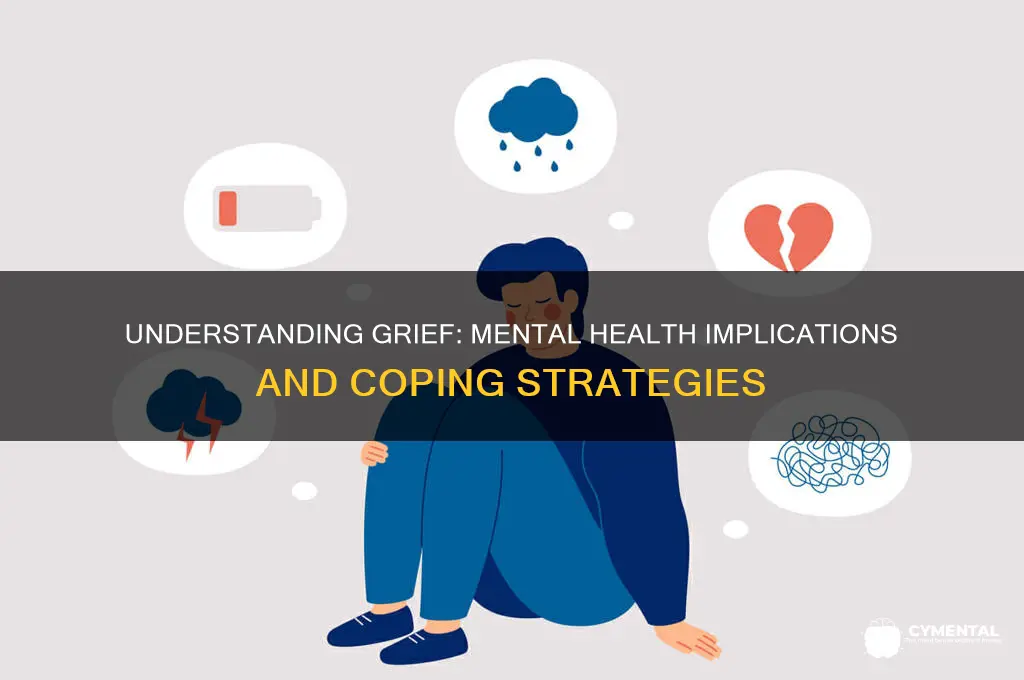
Grief, often described as a natural and universal response to loss, has long been considered a normal part of the human experience rather than a mental health issue. However, its profound emotional, physical, and psychological impact raises questions about its boundaries and when it may cross into the realm of mental health concerns. While grief is not classified as a mental disorder in diagnostic manuals like the DSM-5, prolonged or complicated grief—characterized by intense, persistent, and debilitating symptoms that interfere with daily functioning—can resemble conditions such as depression or anxiety. This distinction highlights the importance of understanding when grief becomes a clinical concern, as untreated complicated grief can lead to significant distress and impairment, necessitating professional intervention and support.
| Characteristics | Values |
|---|---|
| Definition | Grief is a natural, emotional response to loss, not inherently a mental health issue. |
| Duration | Normal grief can last months to years, but prolonged grief disorder (PGD) is diagnosed if intense grief persists beyond 12 months (6 months in children). |
| Symptoms | Intense sorrow, preoccupation with the deceased, difficulty accepting the loss, avoidance of reminders, and functional impairment. |
| Diagnosis | Prolonged Grief Disorder (PGD) is recognized in DSM-5-TR (Diagnostic and Statistical Manual of Mental Disorders, 5th edition, Text Revision). |
| Mental Health Link | Grief can exacerbate or trigger mental health issues like depression, anxiety, or PTSD, but it is not classified as a mental illness itself. |
| Treatment | Therapy (e.g., cognitive-behavioral therapy), support groups, and, in cases of PGD, medication may be recommended. |
| Cultural Factors | Expressions of grief vary culturally, influencing how it is perceived and addressed. |
| Normal vs. Pathological | Normal grief is adaptive; pathological grief (PGD) is maladaptive and requires intervention. |
| Prevalence | PGD affects approximately 7-10% of bereaved individuals. |
| Risk Factors | Traumatic death, lack of social support, pre-existing mental health conditions, and complicated relationships with the deceased. |
Explore related products


What You'll Learn

Grief vs. Depression: Key Differences
Grief and depression often intertwine, yet they are distinct experiences with unique characteristics. While both involve profound emotional pain, understanding their differences is crucial for appropriate support and intervention. Grief, a natural response to loss, is typically triggered by a specific event, such as the death of a loved one, the end of a relationship, or a significant life change. Depression, on the other hand, is a mental health disorder characterized by persistent feelings of sadness, hopelessness, and a lack of interest in activities, often without a clear external cause. Recognizing these distinctions can help individuals and caregivers navigate the complexities of emotional suffering.
One key difference lies in the duration and trajectory of the emotional experience. Grief follows a nonlinear path, with waves of intense emotion interspersed with moments of calm. It may last for months or even years, but over time, most individuals find a way to integrate the loss into their lives and experience a gradual lessening of pain. Depression, however, tends to be more persistent and pervasive, with symptoms often lasting for weeks, months, or longer if left untreated. While grief can feel all-consuming, it typically does not impair daily functioning to the same extent as depression, which can severely disrupt work, relationships, and self-care routines.
Another critical distinction is the presence of self-perception and hope. In grief, individuals often maintain a sense of self-worth and the belief that life can improve, even if they feel overwhelmed by sorrow. Depression, conversely, frequently distorts self-perception, leading to feelings of worthlessness, guilt, or despair. A person experiencing depression may struggle to envision a future where they feel better, whereas someone grieving can often hold onto the idea that healing is possible. This difference in outlook is a vital clue in differentiating between the two.
Practical strategies for managing grief and depression also vary. For grief, supportive measures such as talking with loved ones, joining support groups, or engaging in rituals to honor the loss can be deeply healing. Mindfulness practices, journaling, and gentle exercise can also help individuals process their emotions. Depression, however, often requires a more structured approach, including professional intervention. Cognitive-behavioral therapy (CBT), medication (e.g., antidepressants like SSRIs, typically prescribed at 10–20 mg/day for adults), and lifestyle changes (e.g., regular sleep, balanced nutrition) are evidence-based treatments. While self-care is essential for both, depression may necessitate a more proactive and multifaceted strategy.
In conclusion, while grief and depression share commonalities in emotional intensity, their origins, trajectories, and treatment approaches differ significantly. Grief is a natural, time-bound response to loss, whereas depression is a clinical condition requiring targeted intervention. By understanding these distinctions, individuals can seek appropriate support and foster compassion for themselves and others navigating these challenging experiences. Recognizing the unique nature of each allows for more effective coping and, ultimately, a path toward healing.
Understanding Gender Dysphoria: Mental Health or Identity Affirmation?
You may want to see also
Explore related products


When Grief Becomes Complicated
Grief, in its typical form, is a natural and expected response to loss, but when it evolves into complicated grief, it transforms into a debilitating condition that demands attention. This occurs when the intensity of grief does not fade over time, instead persisting or worsening, often interfering with daily functioning. Unlike normal grief, which gradually lessens, complicated grief can last for years, trapping individuals in a cycle of profound sorrow and emotional pain. Recognizing the signs—such as persistent longing, bitterness, or an inability to accept the loss—is crucial for early intervention.
Consider the case of a 45-year-old woman who lost her spouse to cancer. While her peers gradually returned to their routines, she remained unable to work, withdrew from social activities, and experienced intrusive thoughts about her partner’s death. This example illustrates how complicated grief can manifest as a mental health issue, requiring targeted treatment. Research shows that approximately 7% of bereaved individuals develop complicated grief, with higher rates among those who lost a spouse or child. Age, pre-existing mental health conditions, and lack of social support are significant risk factors.
Treating complicated grief often involves a combination of psychotherapy and, in some cases, medication. Cognitive-behavioral therapy (CBT) tailored for grief, such as Complicated Grief Treatment (CGT), has proven effective. CGT typically spans 16 sessions, focusing on helping individuals process the loss, challenge maladaptive thoughts, and re-engage with life. For severe cases, antidepressants like selective serotonin reuptake inhibitors (SSRIs) may be prescribed, though their efficacy is limited compared to therapy. Practical tips for managing symptoms include maintaining a routine, seeking support groups, and avoiding isolation.
Comparatively, complicated grief differs from major depressive disorder (MDD) in its focus on the loss itself rather than a broader range of symptoms. While MDD involves feelings of worthlessness or guilt unrelated to the loss, complicated grief centers on persistent yearning and preoccupation with the deceased. This distinction is critical for accurate diagnosis and treatment planning. For instance, a therapist might use grief-specific assessments like the Inventory of Complicated Grief to differentiate between the two conditions.
In conclusion, complicated grief is not merely an extension of normal grieving but a distinct mental health issue requiring specialized care. By understanding its signs, risk factors, and treatment options, individuals and caregivers can take proactive steps to address it. Early recognition and intervention are key to preventing long-term suffering and restoring emotional well-being. Whether through therapy, medication, or supportive strategies, there is hope for those trapped in the grip of complicated grief.
Navigating Mental Health Challenges in the Workplace: Strategies for Success
You may want to see also
Explore related products


Grief’s Impact on Mental Health
Grief, often misunderstood as a linear process, is a complex emotional response to loss that can significantly impact mental health. While it is a natural and universal experience, its effects can vary widely, sometimes blurring the lines between a normal reaction and a clinical concern. The question of whether grief itself is a mental health issue is nuanced; it is not classified as a disorder in diagnostic manuals like the DSM-5, but its prolonged or intense manifestations can lead to conditions such as depression, anxiety, or complicated grief disorder. Understanding this distinction is crucial for recognizing when grief transitions from a personal struggle to a mental health challenge requiring intervention.
Consider the case of prolonged grief disorder (PGD), a condition characterized by persistent, severe grief symptoms lasting more than 12 months that impair daily functioning. Unlike typical grief, which gradually lessens over time, PGD involves intense longing, preoccupation with the loss, and difficulty moving forward. Research indicates that approximately 7% of bereaved individuals develop PGD, with higher rates among those who lose a spouse or child. This condition is now recognized as a distinct mental health issue, highlighting how grief can evolve into a diagnosable disorder. Early identification and treatment, such as cognitive-behavioral therapy or medication, can mitigate its long-term impact.
From a physiological perspective, grief triggers stress responses that can exacerbate mental health issues. The body’s "fight or flight" mechanism, activated during grief, releases cortisol and adrenaline, which, in excess, can lead to physical symptoms like insomnia, fatigue, and weakened immunity. Over time, chronic stress from unresolved grief may contribute to conditions like hypertension, cardiovascular disease, and even cognitive decline. For instance, studies show that widowed individuals have a 41% higher risk of developing depression within the first year of loss. Managing these physical manifestations through mindfulness, exercise, or therapy can help prevent the compounding effects of grief on mental and physical health.
Practical strategies for navigating grief’s impact on mental health include establishing routines, seeking social support, and allowing oneself to feel emotions without judgment. For children and adolescents, grief can manifest differently—often through behavioral changes like withdrawal or aggression. Parents and caregivers should encourage open communication, provide age-appropriate explanations of loss, and consider professional counseling if symptoms persist. Adults may benefit from joining support groups or engaging in creative outlets like journaling or art, which can provide a sense of control and emotional release.
Ultimately, while grief itself is not a mental health issue, its profound and sometimes enduring effects demand attention. Recognizing when grief becomes complicated or contributes to other mental health conditions is essential for timely intervention. By understanding its mechanisms, physiological impacts, and practical management strategies, individuals and caregivers can navigate the complexities of grief with greater resilience and support. Grief may be inevitable, but its transformation into a mental health crisis is not.
Bullying and Mental Health: Unraveling the Complex Connection and Impact
You may want to see also
Explore related products


Is Prolonged Grief a Disorder?
Grief, a universal human experience, has long been understood as a natural response to loss. However, the question of whether prolonged grief constitutes a mental health disorder has sparked considerable debate among clinicians, researchers, and bereaved individuals. The Diagnostic and Statistical Manual of Mental Disorders (DSM-5) introduced Prolonged Grief Disorder (PGD) in 2013, defining it as intense, persistent grief lasting more than 12 months that impairs daily functioning. This classification marked a shift from viewing grief as a normal process to recognizing its potential to become a diagnosable condition. But is this categorization justified, or does it pathologize a fundamental aspect of the human experience?
Consider the case of a 45-year-old widow who, three years after her husband’s death, remains unable to return to work, withdraws from social activities, and experiences persistent feelings of guilt and emptiness. Her symptoms align with PGD criteria, yet some argue that her grief, though prolonged, is a valid expression of her deep love and loss. This example highlights the tension between clinical thresholds and the subjective nature of grief. Proponents of PGD argue that formal recognition allows for targeted interventions, such as complicated grief treatment (CGT), which has shown efficacy in reducing symptoms. Critics, however, fear that medicalizing grief may stigmatize mourners and overlook cultural and individual variations in grieving processes.
From a clinical perspective, distinguishing between normal grief and PGD is crucial for appropriate care. PGD is characterized by specific symptoms, including preoccupation with the deceased, intense emotional pain, and difficulty accepting the loss. These symptoms must be present for at least 12 months in adults (6 months in children) and cause significant distress or impairment. Treatment options, such as CGT, involve exposure therapy and cognitive restructuring to help individuals adapt to life without their loved one. For instance, a study published in *JAMA Psychiatry* found that CGT reduced symptoms in 70% of participants, compared to 30% in the control group, underscoring its effectiveness.
Yet, the debate extends beyond clinical efficacy. Grief is deeply intertwined with cultural, spiritual, and personal contexts. In some cultures, prolonged mourning is not only accepted but expected. For example, in certain Indigenous communities, grief is viewed as a lifelong process of honoring the deceased. Applying a Western diagnostic framework to such contexts risks dismissing these practices as pathological. Moreover, the 12-month threshold for PGD may be arbitrary, as grief timelines vary widely. A one-size-fits-all approach could lead to overdiagnosis or underdiagnosis, depending on individual circumstances.
Ultimately, the question of whether prolonged grief is a disorder hinges on balancing clinical utility with respect for the human experience. Recognizing PGD can provide relief for those whose lives are severely disrupted by grief, offering validated treatments and validation of their suffering. However, it is essential to approach diagnosis with nuance, considering cultural, personal, and contextual factors. Rather than viewing grief as a disorder to be cured, perhaps it should be seen as a complex, multifaceted response that, in some cases, requires support and intervention. This perspective honors both the universality of grief and the individuality of those who experience it.
Supporting Your Partner: Navigating Mental Health Challenges in Relationships
You may want to see also
Explore related products


$44.22 $80



Treatment Options for Grief-Related Issues
Grief, while a natural response to loss, can escalate into a mental health issue when it becomes prolonged, severe, or debilitating. Recognizing this, treatment options for grief-related issues focus on alleviating distress, restoring functioning, and fostering emotional healing. These interventions range from therapeutic approaches to pharmacological support, tailored to the individual’s needs and the intensity of their grief.
Therapeutic Interventions: The Foundation of Healing
Cognitive Behavioral Therapy (CBT) is a cornerstone in treating grief-related issues, particularly when complicated grief disrupts daily life. CBT helps individuals identify and reframe maladaptive thoughts about the loss, such as guilt or self-blame, while teaching coping strategies to manage emotional pain. For example, a therapist might guide a client through structured exercises to gradually confront memories of the deceased without becoming overwhelmed. Another evidence-based approach is Complicated Grief Treatment (CGT), which focuses on accepting the reality of the loss and rebuilding a sense of identity without the deceased. CGT typically involves 16 sessions, combining exposure therapy with motivational interviewing to encourage engagement in life activities. Group therapy and support groups also play a vital role, offering a sense of community and shared understanding that can reduce feelings of isolation.
Pharmacological Support: When Therapy Alone Isn’t Enough
While medication is not a first-line treatment for grief, it can be beneficial for co-occurring conditions like depression or anxiety. Selective serotonin reuptake inhibitors (SSRIs), such as sertraline (25–50 mg/day) or fluoxetine (20 mg/day), are commonly prescribed to alleviate symptoms of persistent sadness or insomnia. It’s crucial, however, to use medication judiciously, as it does not address the underlying grief process. For older adults or individuals with cardiovascular concerns, alternatives like mirtazapine (15–30 mg/day) may be considered due to its sedative effects and lower risk of drug interactions. Always consult a psychiatrist to weigh the benefits and risks, as medication should complement, not replace, therapeutic interventions.
Mind-Body Practices: Holistic Approaches to Healing
Integrative therapies can provide additional support for individuals navigating grief. Mindfulness-based stress reduction (MBSR) programs, for instance, teach techniques like meditation and body awareness to help individuals stay present and manage emotional overwhelm. Yoga and tai chi, practiced 2–3 times weekly, can reduce stress hormones like cortisol while promoting physical well-being. Creative arts therapies, such as journaling or painting, offer a non-verbal outlet for expressing emotions that may feel too complex to articulate. These practices are particularly beneficial for adolescents and young adults, who may struggle to verbalize their grief but find solace in creative expression.
Practical Tips for Self-Care and Support
Beyond formal treatments, self-care plays a critical role in managing grief-related issues. Establishing a routine that includes regular sleep, balanced nutrition, and gentle exercise can stabilize mood and energy levels. Limiting alcohol and caffeine intake is essential, as both can exacerbate anxiety and disrupt sleep. Engaging in meaningful activities, even when motivation is low, helps rebuild a sense of purpose. For caregivers or parents grieving while supporting others, setting boundaries and seeking respite care is vital to prevent burnout. Finally, leveraging technology, such as grief-focused apps or virtual support groups, can provide accessible resources for those unable to attend in-person sessions.
By combining evidence-based therapies, targeted pharmacological support, holistic practices, and practical self-care strategies, individuals can navigate grief-related issues with resilience and hope. The key lies in personalized, compassionate care that acknowledges the uniqueness of each person’s journey through loss.
Supporting Teens: Navigating Mental Health Challenges with Compassion and Care
You may want to see also
Frequently asked questions
Grief itself is not classified as a mental health issue; it is a natural and normal response to loss. However, prolonged or severe grief can develop into a mental health condition, such as prolonged grief disorder (PGD).
If grief persists intensely for over a year, significantly impairs daily functioning, or includes symptoms like severe depression, suicidal thoughts, or detachment from reality, it may indicate a mental health issue like prolonged grief disorder or major depressive disorder.
Yes, unresolved or intense grief can contribute to mental health issues such as depression, anxiety, or post-traumatic stress disorder (PTSD), especially if the loss was traumatic or sudden.
If grief is overwhelming, persists for an extended period, or interferes with your ability to function, seeking professional help from a therapist or counselor can be beneficial. They can provide support and strategies to cope with the loss.