Caleb Wright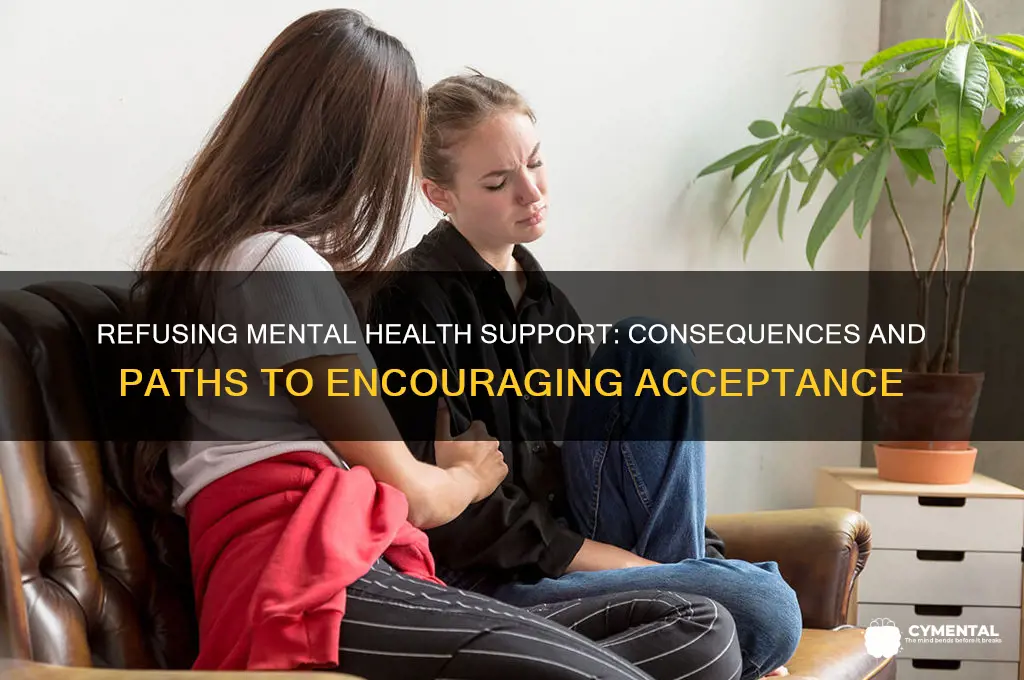
When individuals refuse help for their mental illness, it can lead to a worsening of symptoms, increased isolation, and a diminished quality of life. Without intervention, untreated mental health conditions may escalate, potentially resulting in severe consequences such as self-harm, substance abuse, or even suicidal ideation. Loved ones may feel helpless and frustrated, as the person struggling may not recognize the severity of their condition or fear the stigma associated with seeking treatment. This refusal can strain relationships and create barriers to effective communication, making it crucial to approach the situation with empathy, patience, and a focus on building trust while exploring alternative ways to encourage acceptance of support.
Explore related products


What You'll Learn
- Impact on Relationships: Strained connections with family, friends, and colleagues due to untreated symptoms and behaviors
- Worsening Symptoms: Untreated mental illness often leads to severe, escalating symptoms over time
- Physical Health Risks: Increased risk of chronic illnesses, substance abuse, and self-harm behaviors
- Social Isolation: Withdrawal from social activities, leading to loneliness and reduced support networks
- Professional Consequences: Poor work performance, job loss, or inability to maintain employment stability

Impact on Relationships: Strained connections with family, friends, and colleagues due to untreated symptoms and behaviors
Untreated mental illness doesn't exist in a vacuum. Its symptoms and behaviors ripple outward, often straining the very relationships that could offer support. Imagine a friend withdrawing from social gatherings, a colleague lashing out under pressure, or a family member struggling with unpredictable mood swings. These are just a few examples of how untreated mental illness can erode the foundation of even the strongest connections.
Frustration, confusion, and even resentment can build in those closest to the individual. Loved ones may feel helpless, unsure how to navigate the unpredictable terrain of someone else's mental health struggle. This can lead to a cycle of conflict, distance, and ultimately, isolation for both parties.
Consider the case of Sarah, whose untreated anxiety manifested as constant worry and irritability. Her partner, initially understanding, grew increasingly frustrated by her inability to relax and enjoy shared activities. Arguments became frequent, and their once-close bond frayed under the weight of unaddressed anxiety. This scenario highlights the corrosive effect untreated mental illness can have on intimate relationships, where emotional intimacy and mutual support are crucial.
In the workplace, untreated mental illness can manifest as missed deadlines, difficulty collaborating, or inappropriate outbursts. Colleagues may misinterpret these behaviors as laziness, incompetence, or even hostility, leading to strained professional relationships and potential career setbacks. For example, John, struggling with depression, found it increasingly difficult to concentrate at work. His colleagues, unaware of his struggle, perceived his decreased productivity as a lack of commitment, leading to tension and exclusion from team projects.
The impact extends beyond immediate circles. Family dynamics can become strained as well. Parents may feel guilt and worry, siblings may feel neglected or burdened, and children may experience confusion and fear. The emotional toll on family members can be significant, often leading to a breakdown in communication and a sense of helplessness.
The takeaway is clear: untreated mental illness doesn't just affect the individual; it reverberates through their entire support network. Recognizing the signs and encouraging professional help is not just about the individual's well-being, but about preserving the health and stability of the relationships that matter most.
Unplug to Recharge: How Phone Breaks Boost Mental Well-Being
You may want to see also
Explore related products


Worsening Symptoms: Untreated mental illness often leads to severe, escalating symptoms over time
Untreated mental illness rarely remains static. Like a physical wound left untended, it festers and spreads, manifesting in increasingly severe and disruptive symptoms over time. This escalation isn't linear; it's a compounding process, where each untreated episode weakens coping mechanisms and deepens neurological grooves associated with the illness.
Anxiety, for instance, might begin as occasional worry but, without intervention, can morph into debilitating panic attacks, agoraphobia, and even physical symptoms like chronic headaches or gastrointestinal distress. Similarly, untreated depression often progresses from feelings of sadness to suicidal ideation, psychomotor retardation, and a complete loss of interest in previously enjoyed activities.
This worsening isn't merely a matter of feeling worse; it's a tangible neurological and physiological decline. Studies show that prolonged exposure to stress hormones, common in untreated anxiety and depression, can shrink the hippocampus, a brain region crucial for memory and emotional regulation. This physical alteration further exacerbates symptoms, creating a vicious cycle of deterioration.
Think of it as a snowball effect: a small, manageable concern, when ignored, gathers momentum, accumulating more problems and complications until it becomes an avalanche, threatening to overwhelm the individual and those around them.
The consequences extend beyond the individual. Untreated mental illness often leads to social isolation, strained relationships, and difficulties in work or academic settings. A person struggling with escalating symptoms might withdraw from social activities, neglect responsibilities, and experience conflicts with loved ones due to irritability, mood swings, or difficulty communicating their needs. This isolation further fuels the illness, creating a self-perpetuating cycle of decline.
Breaking this cycle requires intervention. Early diagnosis and treatment are crucial in preventing the escalation of symptoms and minimizing long-term damage. Therapy, medication, lifestyle changes, and social support networks can all play a vital role in managing mental illness and promoting recovery. While seeking help can be daunting, it's essential to remember that untreated mental illness is not a sign of weakness but a medical condition that requires professional attention. Just as we wouldn't ignore a broken bone, we mustn't neglect the health of our minds.
Supporting Your Daughter's Mental Health: A Guide for Parents
You may want to see also
Explore related products


$5.95


![Denial [Blu-ray]](https://m.media-amazon.com/images/I/91utvUPEG-L._AC_UY218_.jpg)
Physical Health Risks: Increased risk of chronic illnesses, substance abuse, and self-harm behaviors
Untreated mental illness doesn't just stay confined to the mind. It spills over into the body, increasing the risk of chronic physical ailments. Research shows a stark correlation: individuals with depression, for instance, are 64% more likely to develop coronary artery disease. Anxiety disorders elevate the risk of gastrointestinal problems like irritable bowel syndrome (IBS) by 40%. These aren't mere coincidences. Chronic stress, a hallmark of mental illness, triggers inflammation, disrupts hormonal balance, and weakens the immune system, creating fertile ground for conditions like diabetes, hypertension, and even certain cancers.
Consider substance abuse as a dangerous coping mechanism. Roughly 50% of individuals with severe mental illness struggle with substance use disorders. Alcohol, often used to self-medicate anxiety or depression, damages the liver, increases the risk of pancreatitis, and contributes to cardiovascular problems. Opioids, sought for their temporary escape from emotional pain, lead to respiratory depression, constipation, and increased susceptibility to infectious diseases like HIV/AIDS due to needle sharing. Even seemingly "safer" substances like nicotine, commonly used to manage stress, significantly elevate the risk of lung cancer, heart disease, and stroke.
Self-harm behaviors, another alarming consequence of untreated mental illness, carry immediate and long-term physical risks. Cutting, burning, or hitting oneself can lead to infections, nerve damage, and permanent scarring. Ingesting toxic substances in suicide attempts often results in organ failure, internal bleeding, or irreversible brain damage. Even non-suicidal self-injury, like hair pulling (trichotillomania) or skin picking (dermatillomania), can cause tissue damage, infections, and disfigurement. These behaviors, while often misunderstood as attention-seeking, are desperate cries for help from individuals overwhelmed by emotional pain.
Breaking this cycle requires a two-pronged approach. First, destigmatizing mental illness is crucial. Encouraging open conversations and providing accessible resources can empower individuals to seek help before physical health deteriorates. Second, integrating mental and physical healthcare is essential. Primary care physicians should routinely screen for mental health issues, while mental health professionals must consider the physical health implications of their patients’ conditions. Early intervention, whether through therapy, medication, or lifestyle changes, can mitigate these risks and pave the way for holistic healing.
Finding Support: Mental Health Resources and Strategies for Recovery
You may want to see also
Explore related products
![Denial [DVD]](https://m.media-amazon.com/images/I/814T677Cs0L._AC_UY218_.jpg)



Social Isolation: Withdrawal from social activities, leading to loneliness and reduced support networks
Social isolation often begins subtly—skipping a weekly coffee date, declining invitations to gatherings, or avoiding phone calls from friends. Over time, these small withdrawals compound, creating a self-perpetuating cycle. For individuals struggling with mental illness, this retreat from social activities can feel like a protective measure, a way to shield themselves from perceived judgment or overwhelm. However, the immediate relief it provides comes at a steep cost: loneliness deepens, and the very support networks that could offer solace begin to fray.
Consider the case of a 28-year-old graphic designer who, after experiencing severe anxiety, stopped attending industry meetups and responding to colleagues’ messages. Within months, she found herself working in silence, her once-vibrant professional circle reduced to a handful of transactional emails. This isolation not only exacerbated her anxiety but also limited her access to opportunities for collaboration and growth. Research shows that social disconnection can increase stress hormone levels, impair cognitive function, and even weaken the immune system, creating a biological feedback loop that worsens mental health.
Breaking this cycle requires intentional steps. Start by identifying one low-stakes social activity—a 10-minute call with a trusted friend, a walk in a public park, or joining an online forum related to a hobby. Set a specific, achievable goal, such as engaging in this activity twice a week. Caution against overcommitting; small, consistent efforts are more sustainable than sporadic, exhausting attempts. For those supporting someone in this situation, avoid pressuring them to "just get out there." Instead, offer to accompany them to an event or suggest activities that align with their interests.
A comparative perspective highlights the importance of cultural context. In collectivist societies, social isolation may carry greater stigma, while individualistic cultures might normalize solitude to a fault. Regardless of cultural norms, the human need for connection remains universal. Practical tools, such as journaling to track social interactions or using apps that encourage accountability, can help rebuild habits. For severe cases, professional intervention—such as cognitive-behavioral therapy focused on social skills—may be necessary to address underlying fears and barriers.
The takeaway is clear: social isolation is not merely a symptom of mental illness but a compounding factor that demands proactive intervention. By recognizing the early signs, taking incremental steps, and leveraging support systems, individuals can begin to reverse the cycle. The path back to connection is rarely linear, but each small effort rebuilds the foundation for resilience and recovery.
Free Mental Health Support: Accessible Resources for Emotional Well-Being
You may want to see also
Explore related products


Professional Consequences: Poor work performance, job loss, or inability to maintain employment stability
Untreated mental illness can erode professional competence like a silent termite, often unnoticed until the foundation cracks. Consider the case of Sarah, a 32-year-old graphic designer whose untreated depression led to missed deadlines, client complaints, and ultimately, termination. Her story isn’t unique. Studies show that employees with unmanaged mental health conditions are 2-3 times more likely to experience reduced productivity, with absenteeism and presenteeism (being present but unproductive) costing employers billions annually. For Sarah, the refusal of therapy or medication meant her creativity waned, her focus fragmented, and her once-stellar portfolio became a relic of her past. This isn’t just about individual failure—it’s a systemic issue where untreated illness becomes a professional liability.
To mitigate this, employers can implement structured interventions, such as offering confidential Employee Assistance Programs (EAPs) or flexible work schedules. However, the onus isn’t solely on organizations. Individuals must recognize the early signs of decline: persistent fatigue, irritability, or disengagement. A practical tip? Track productivity metrics weekly. If output drops by 20% or more over a month, it’s a red flag. Seeking help isn’t weakness—it’s a strategic move to preserve career longevity. For instance, cognitive-behavioral therapy (CBT) has been shown to improve workplace functioning by 40% in individuals with anxiety or depression, often within 12-16 sessions. Ignoring these tools risks turning a temporary slump into a permanent career stall.
Compare this to John, a 45-year-old accountant who, after years of refusing treatment for his anxiety, cycled through five jobs in three years. Each position ended with the same pattern: initial competence, gradual decline, and eventual dismissal. His refusal to address his panic attacks—which often left him unable to complete tax filings during peak season—made him a high-risk hire. Employers, wary of instability, began screening him out. This isn’t just about job loss; it’s about reputational damage. In industries where networking is key, a history of instability can blacklist individuals faster than they realize. The takeaway? Mental health isn’t a private matter when it becomes a professional liability.
For those in high-stakes roles—surgeons, pilots, or executives—the stakes are even higher. A pilot with untreated bipolar disorder, for instance, might experience manic episodes that impair judgment, risking not just their career but public safety. Here, refusal of treatment isn’t merely unwise—it’s unethical. Regulatory bodies are increasingly mandating mental health screenings for such roles, but self-awareness must come first. A proactive step? Annual mental health check-ins, akin to physical exams, can catch issues before they escalate. Employers can incentivize this by offering wellness stipends for therapy or medication, which often cost less than replacing a skilled employee.
Finally, consider the long-term impact on employability. A resume with frequent job changes or unexplained gaps raises red flags for hiring managers. In a 2022 survey, 68% of HR professionals admitted to hesitating before hiring candidates with erratic work histories. For someone like Mark, a 28-year-old software engineer whose schizophrenia went untreated, this meant settling for freelance gigs at half his previous salary. His talent was undeniable, but his inability to sustain employment stability made him a risky investment. The solution? Early intervention paired with vocational rehabilitation programs, which have been shown to improve job retention rates by up to 50% in individuals with severe mental illness. Refusing help doesn’t just pause a career—it can permanently alter its trajectory.
Breaking Barriers: Overcoming Stigma for Men Seeking Mental Health Support
You may want to see also
Frequently asked questions
If someone refuses help, their mental health condition may worsen over time, leading to increased symptoms, reduced quality of life, and potential risks such as self-harm, social isolation, or difficulty functioning in daily activities.
In most cases, adults cannot be forced into treatment unless they pose an immediate danger to themselves or others. Laws vary by region, but involuntary treatment is typically a last resort and requires legal intervention.
Family and friends can encourage open communication, educate themselves about the condition, offer support without judgment, and seek guidance from mental health professionals. In severe cases, they may need to involve crisis intervention services.
Untreated mental illness can lead to severe consequences, including chronic distress, physical health problems, strained relationships, and in extreme cases, harm to oneself or others. Early intervention is crucial to prevent these risks.