Madison Cole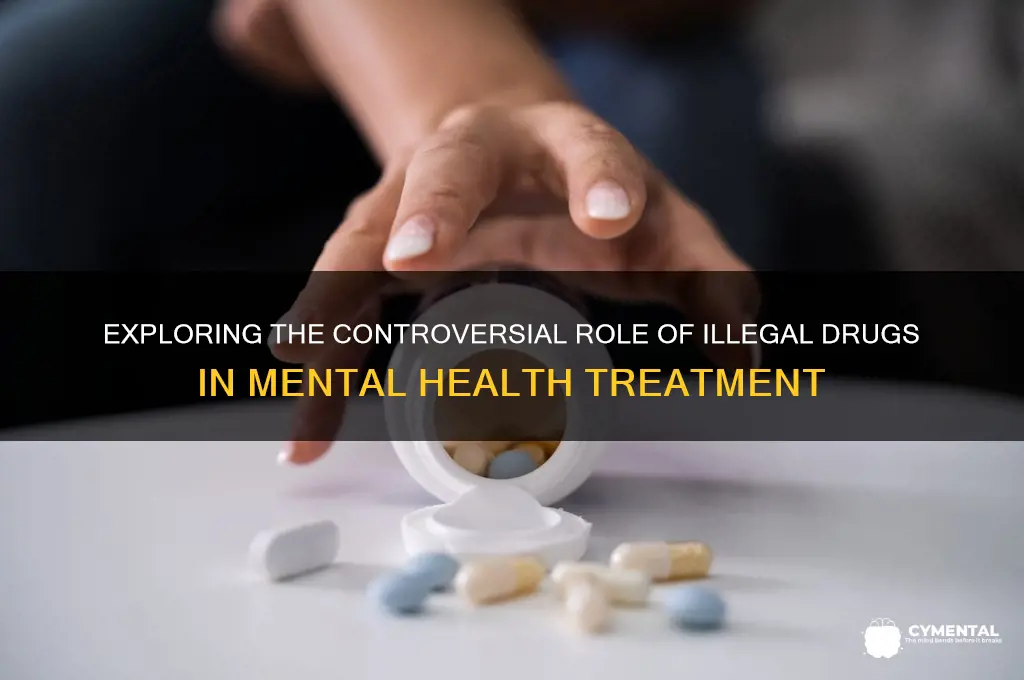
Exploring the relationship between illegal drugs and mental illness is a complex and controversial topic. While some substances, such as psychedelics (e.g., psilocybin, MDMA) and cannabis, have shown potential therapeutic benefits in controlled, clinical settings for conditions like depression, PTSD, and anxiety, their use remains illegal in many jurisdictions due to risks of misuse, addiction, and adverse effects. It is crucial to distinguish between supervised medical applications and recreational or unsupervised use, as the latter can exacerbate mental health issues. Research in this area is ongoing, but self-medication with illegal drugs is strongly discouraged, as it lacks professional oversight and can lead to severe health consequences. Always consult healthcare professionals for safe and evidence-based treatments.
What You'll Learn
- Psychedelics for Depression: Studies explore LSD, psylocibin’s potential to alleviate treatment-resistant depression symptoms
- MDMA for PTSD: MDMA-assisted therapy shows promise in reducing PTSD severity in clinical trials
- Ketamine for Suicidality: Ketamine provides rapid relief from suicidal thoughts in some patients
- Cannabis for Anxiety: THC and CBD’s role in managing anxiety disorders remains debated
- Ayahuasca for Addiction: Traditional brew ayahuasca is studied for treating substance abuse disorders

Psychedelics for Depression: Studies explore LSD, psylocibin’s potential to alleviate treatment-resistant depression symptoms
Depression, a pervasive and often debilitating condition, affects millions worldwide, with a significant portion of patients experiencing treatment-resistant symptoms. Recent studies have turned to psychedelics, once stigmatized as purely recreational substances, as potential therapeutic agents. Among these, LSD (lysergic acid diethylamide) and psilocybin, the active compound in magic mushrooms, have emerged as promising candidates for alleviating severe depression. These substances, illegal in most jurisdictions, are now being re-evaluated for their profound psychological effects, which may offer a breakthrough for those who have exhausted conventional treatments.
Consider the mechanism: psychedelics like LSD and psilocybin are believed to reset the brain’s neural pathways by binding to serotonin receptors, particularly the 5-HT2A receptor. This interaction can lead to heightened neuroplasticity, allowing individuals to break free from entrenched negative thought patterns. Clinical trials have shown that a single dose of psilocybin, administered in a controlled therapeutic setting, can produce significant and lasting reductions in depressive symptoms. For instance, a 2021 study published in *JAMA Psychiatry* found that two doses of psilocybin, combined with psychotherapy, led to substantial improvements in patients with treatment-resistant depression, with effects lasting up to 12 months. Dosage is critical: typical therapeutic doses range from 10 to 25 milligrams of psilocybin, far below recreational amounts, and are always paired with psychological support to ensure safety and efficacy.
However, the use of psychedelics for depression is not without risks. Patients must be carefully screened to exclude those with a history of psychosis or severe cardiovascular conditions, as these substances can exacerbate such issues. The experience itself, often referred to as a "trip," can be intensely emotional or even distressing, underscoring the need for a supportive environment. Trained therapists guide patients through the session, helping them process the experience and integrate insights into their daily lives. This structured approach is essential, as unsupervised use can lead to adverse outcomes, including anxiety, paranoia, or prolonged psychological distress.
Comparatively, traditional antidepressants often require weeks or months to take effect and may lose efficacy over time. Psychedelics, on the other hand, can produce rapid and profound changes after just one or two sessions. This efficiency is particularly appealing for individuals suffering from severe, persistent depression. However, the legal and regulatory hurdles remain significant. While some jurisdictions, like Oregon and parts of Europe, have begun to decriminalize or approve psilocybin for therapeutic use, widespread adoption is still years away. For now, participation in clinical trials remains the primary avenue for accessing these treatments.
In conclusion, the exploration of psychedelics like LSD and psilocybin for depression represents a paradigm shift in mental health care. While challenges remain, the potential to transform lives is undeniable. For those with treatment-resistant depression, these substances offer a glimmer of hope where conventional therapies have failed. As research progresses, it is crucial to balance scientific rigor with compassion, ensuring that these powerful tools are accessible to those who need them most while minimizing risks. The journey is complex, but the destination—relief from the grip of depression—is worth the effort.
Music's Healing Power: Boosting Mental Health and Well-being
You may want to see also
MDMA for PTSD: MDMA-assisted therapy shows promise in reducing PTSD severity in clinical trials
MDMA, commonly known as ecstasy or molly, is being reevaluated for its therapeutic potential, particularly in treating post-traumatic stress disorder (PTSD). Clinical trials have demonstrated that MDMA-assisted therapy can significantly reduce PTSD symptoms, offering hope to those who have not found relief through traditional treatments. This approach combines controlled doses of MDMA with psychotherapy sessions, creating a unique therapeutic window that fosters emotional openness and processing of traumatic memories.
In these trials, participants typically receive 80–120 mg of MDMA during a single session, followed by a supplemental half-dose 1–2 hours later if needed. The drug is administered in a controlled, clinical setting under the supervision of trained therapists. Sessions last approximately 6–8 hours, during which patients explore their trauma in a heightened state of emotional receptivity. The therapy is not about the drug alone but the synergy between the pharmacological effects of MDMA and the therapeutic process, allowing individuals to confront and reframe traumatic experiences with reduced fear and anxiety.
One of the most compelling aspects of MDMA-assisted therapy is its efficacy in treatment-resistant cases. Studies have shown that after just three sessions, a significant percentage of participants no longer meet the diagnostic criteria for PTSD. This is particularly notable given that many of these individuals had previously tried and failed with conventional treatments like SSRIs or cognitive-behavioral therapy. The rapid and profound impact of MDMA-assisted therapy has led to its designation as a "breakthrough therapy" by the FDA, expediting its path toward potential approval for clinical use.
However, this approach is not without challenges. MDMA’s legal status as a Schedule I substance complicates research and accessibility. Additionally, while the drug is generally safe in controlled settings, potential side effects such as increased heart rate, hypertension, and transient anxiety must be carefully monitored. Therapists must also be highly trained to navigate the intense emotional experiences that MDMA can induce, ensuring patient safety and maximizing therapeutic benefit.
For those considering MDMA-assisted therapy, it’s crucial to approach it as a structured, medically supervised treatment rather than self-medication. Clinical trials have strict inclusion criteria, often excluding individuals with certain medical conditions or those under 18. Patients should seek out reputable research institutions or clinics conducting FDA-approved trials. As the field advances, this innovative treatment could redefine how we address PTSD, offering a new pathway to healing for millions.
Green Tea's Impact on Mental Health: Benefits and Scientific Insights
You may want to see also
Ketamine for Suicidality: Ketamine provides rapid relief from suicidal thoughts in some patients
Ketamine, a drug historically known for its use as an anesthetic and its recreational misuse, has emerged as a groundbreaking treatment for suicidality. Clinical trials have demonstrated that a single, low-dose intravenous infusion of ketamine (typically 0.5 mg/kg over 40 minutes) can alleviate suicidal thoughts within hours, a stark contrast to traditional antidepressants that often take weeks to show effects. This rapid action is particularly critical for individuals in acute crisis, offering a lifeline when time is of the essence.
The mechanism behind ketamine’s efficacy lies in its ability to modulate glutamate, a key neurotransmitter in the brain, and rapidly increase synaptic connections in areas associated with mood regulation. Unlike SSRIs or SNRIs, which target serotonin or norepinephrine, ketamine’s unique pathway provides a novel approach to treating treatment-resistant depression and suicidality. However, its use is not without caution: repeated doses can lead to tolerance, psychological dependence, or cognitive side effects, emphasizing the need for controlled administration in clinical settings.
For practitioners considering ketamine as a treatment option, protocols typically involve a series of infusions (e.g., 6 sessions over 2–3 weeks) followed by booster sessions as needed. Patients are monitored closely during and after treatment, with particular attention to those with a history of substance abuse or psychosis, as ketamine can exacerbate these conditions. While not a first-line treatment, it is increasingly recognized as a viable option for individuals who have not responded to conventional therapies.
From a patient perspective, the experience of ketamine treatment can be transformative. Many report a dissociative state during infusion, often described as a "dream-like" experience, followed by a profound shift in perspective and reduction in suicidal ideation. Practical tips for patients include arranging transportation post-treatment, as the dissociative effects can impair coordination, and maintaining open communication with their care team to monitor progress and side effects.
In the broader context of mental health treatment, ketamine’s role is both promising and complex. Its off-label use for suicidality highlights the urgent need for innovative treatments in psychiatry, but it also underscores the importance of balancing accessibility with safety. As research continues, ketamine stands as a testament to the potential of repurposing existing substances to address one of the most pressing challenges in mental health care.
Nurturing Tiny Minds: Essential Tips for Baby and Toddler Mental Health
You may want to see also
Cannabis for Anxiety: THC and CBD’s role in managing anxiety disorders remains debated
The use of cannabis for anxiety relief is a double-edged sword, with its efficacy hinging on the delicate balance between THC and CBD. While some users report immediate calming effects, others experience heightened paranoia, underscoring the complexity of this plant’s interaction with the brain. THC, the psychoactive compound, can induce anxiety in high doses, particularly in individuals predisposed to panic disorders. Conversely, CBD, a non-psychoactive component, has shown promise in reducing anxiety symptoms without the intoxicating side effects. This dichotomy raises critical questions about dosage, strain selection, and individual susceptibility.
To navigate this terrain, consider starting with a low-THC, high-CBD product, such as a 1:20 THC-to-CBD ratio tincture. For instance, a 5mg THC and 100mg CBD dose may provide anxiety relief without overwhelming psychoactive effects. Microdosing—taking small, controlled amounts—is another strategy to minimize risks. For example, inhaling a single puff of a CBD-dominant vape pen (around 2.5mg CBD) every 2–3 hours can help maintain a steady, calming effect. Always begin with the lowest possible dose and gradually increase based on your body’s response, a principle known as "start low, go slow."
Age and medical history play a pivotal role in cannabis’s effectiveness and safety. Younger individuals, particularly those under 25, may be more susceptible to THC-induced anxiety due to the developing brain’s heightened sensitivity. Older adults, on the other hand, should monitor potential drug interactions, especially with medications like benzodiazepines. Consulting a healthcare provider is essential, particularly for those with a history of mental health disorders or substance use.
Practical tips for using cannabis to manage anxiety include choosing consumption methods that allow for precise dosing, such as edibles or tinctures, over smoking or vaping. Keeping a journal to track dosage, strain, and effects can help identify patterns and optimize treatment. Additionally, pairing cannabis use with mindfulness practices, such as deep breathing or meditation, can enhance its anxiolytic properties. While the debate over THC and CBD’s role in anxiety management persists, informed, cautious use can unlock its potential benefits for some individuals.
Supporting Mental Health: Strategies to End Homelessness and Foster Recovery
You may want to see also
Ayahuasca for Addiction: Traditional brew ayahuasca is studied for treating substance abuse disorders
Ayahuasca, a traditional Amazonian brew, has emerged as a subject of scientific inquiry for its potential in treating substance abuse disorders. This psychoactive concoction, typically made from the Banisteriopsis caapi vine and the leaves of the Psychotria viridis shrub, contains DMT (dimethyltryptamine), a powerful hallucinogen. While illegal in many countries due to its psychoactive properties, ayahuasca is being studied in controlled settings for its therapeutic effects on addiction. Researchers hypothesize that its ability to induce profound emotional and psychological experiences may help individuals confront and resolve underlying issues driving addictive behaviors.
One of the most compelling aspects of ayahuasca’s potential lies in its mechanism of action. Unlike conventional addiction treatments, which often focus on symptom management or pharmacological substitution, ayahuasca appears to address the root causes of addiction. Users frequently report intense introspective experiences, including reliving traumatic memories or gaining new perspectives on their behaviors. These experiences, facilitated by the brew’s psychoactive components, can lead to profound personal insights and a renewed sense of purpose. For instance, a 2019 study published in *Psychopharmacology* found that participants who underwent ayahuasca-assisted therapy showed significant reductions in alcohol and drug cravings compared to control groups.
However, integrating ayahuasca into addiction treatment is not without challenges. Dosage is a critical factor, as the brew’s potency can vary widely depending on preparation methods. Traditional ceremonies often involve consuming 30–50 ml of ayahuasca, but therapeutic settings may require precise measurements to ensure safety. Additionally, the experience can be physically and emotionally demanding, with common side effects including nausea, vomiting, and intense psychological distress. This underscores the importance of administering ayahuasca in a controlled environment with trained professionals who can provide medical and psychological support.
Practical considerations also extend to the legal and ethical dimensions of using ayahuasca for addiction treatment. In countries like Brazil and Peru, ayahuasca is legally used in religious and cultural contexts, but its therapeutic use remains unregulated in most parts of the world. Individuals seeking ayahuasca treatment often travel to countries where it is permitted, such as Costa Rica or the Netherlands, where retreats offer structured programs. However, these programs can be costly, ranging from $1,000 to $3,000 per session, limiting accessibility for many. Prospective participants should thoroughly research retreat centers, ensuring they adhere to safety protocols and employ experienced facilitators.
In conclusion, while ayahuasca shows promise as a treatment for substance abuse disorders, its use requires careful consideration of risks, benefits, and practicalities. As research continues, it may pave the way for innovative approaches to addiction therapy, blending traditional practices with modern scientific understanding. For those exploring this option, informed decision-making and professional guidance are essential to maximize potential benefits while minimizing harm.
Mental Health Awareness: A Powerful Tool to Prevent ER Crises
You may want to see also
Frequently asked questions
While some individuals report temporary relief from symptoms of anxiety or depression when using marijuana, it is not a safe or effective treatment. Marijuana use can worsen mental health issues over time, leading to increased anxiety, paranoia, or dependency. Professional treatment options, such as therapy and prescribed medications, are recommended for managing mental illness.
Some studies suggest that psychedelics like psilocybin (found in magic mushrooms) or LSD may have potential therapeutic benefits for conditions like depression, PTSD, or anxiety when used in controlled, clinical settings. However, these substances are illegal in most places and can cause severe psychological risks, including hallucinations, panic attacks, or long-term mental health issues when used recreationally or without professional supervision.
Stimulants like cocaine or methamphetamine may provide temporary feelings of euphoria or increased energy, but they are highly addictive and extremely harmful. These drugs can exacerbate mental health issues, leading to severe anxiety, paranoia, psychosis, or depression. They also cause long-term damage to the brain and body, making them dangerous and ineffective for treating mental illness.