Caleb Wright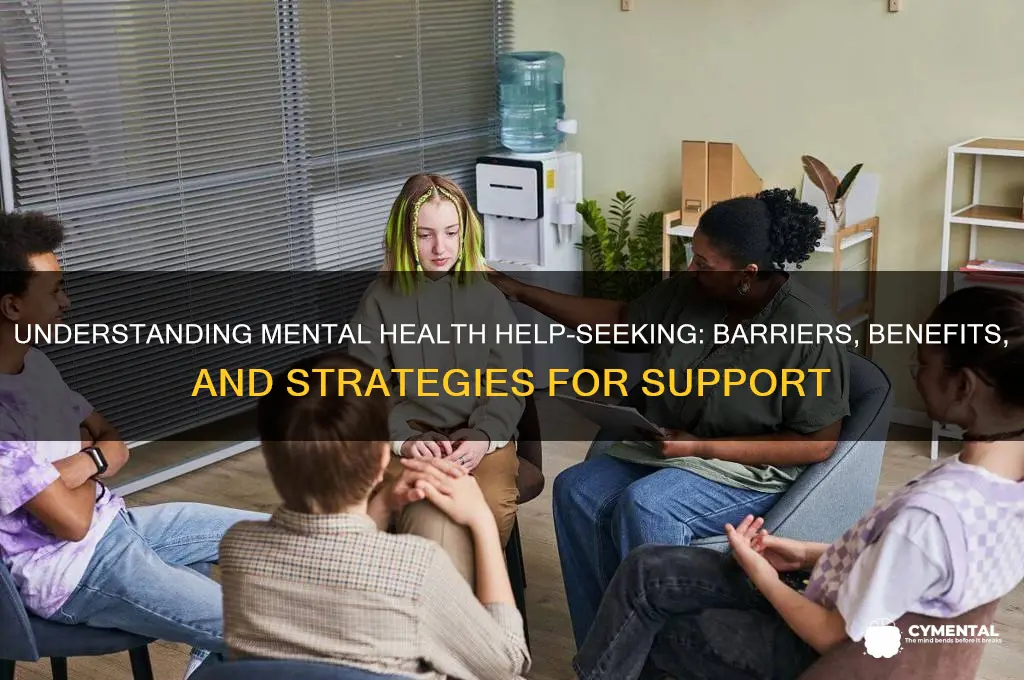
Mental health help-seeking refers to the process by which individuals recognize their emotional or psychological distress and actively pursue support or treatment to address it. This can involve reaching out to professionals such as therapists, counselors, or psychiatrists, as well as utilizing community resources, self-help strategies, or peer support networks. Help-seeking behavior is influenced by various factors, including cultural beliefs, stigma surrounding mental health, personal attitudes, and accessibility to services. Understanding and promoting effective help-seeking is crucial, as it plays a vital role in early intervention, recovery, and overall well-being, ultimately reducing the burden of untreated mental health issues.
Explore related products


What You'll Learn
- Barriers to Seeking Help: Stigma, lack of awareness, fear, cost, and cultural beliefs hinder mental health help-seeking
- Facilitators of Help-Seeking: Supportive relationships, accessibility, education, and positive attitudes encourage seeking mental health care
- Types of Help Available: Therapy, medication, support groups, helplines, and self-help resources are common options
- Role of Technology: Online therapy, apps, and virtual support expand access to mental health services
- Cultural Influences: Cultural norms, beliefs, and community attitudes shape help-seeking behaviors and preferences

Barriers to Seeking Help: Stigma, lack of awareness, fear, cost, and cultural beliefs hinder mental health help-seeking
Stigma remains one of the most formidable barriers to mental health help-seeking, silencing individuals who fear judgment or discrimination. Consider this: a 2021 study found that 40% of people experiencing mental health issues avoided seeking help due to concerns about being labeled as "weak" or "unstable." This societal stigma perpetuates the myth that mental health struggles are a personal failing rather than a legitimate health issue. To combat this, organizations like the World Health Organization (WHO) advocate for campaigns that normalize conversations about mental health, using real-life stories to humanize the experience. Practical steps include sharing personal narratives on social media or participating in awareness events like Mental Health Awareness Month. By reframing mental health as a universal concern, we can dismantle the stigma that keeps people from reaching out.
Lack of awareness about available resources is another significant barrier, particularly in underserved communities. For instance, a survey in rural areas revealed that 60% of respondents were unaware of local mental health services, while 30% did not know how to access them. This knowledge gap often stems from inadequate public education and limited outreach efforts. To address this, governments and NGOs should invest in community-based programs that provide clear, accessible information about mental health services. Practical tips include distributing multilingual brochures, hosting workshops in schools and workplaces, and leveraging digital platforms to reach younger audiences. Awareness is the first step toward action, and without it, even the most robust support systems remain underutilized.
Fear of the unknown—whether it’s fear of diagnosis, treatment, or losing control—paralyzes many individuals from seeking help. For example, a 2019 study highlighted that 55% of participants delayed seeking mental health care because they feared being prescribed medication or hospitalized against their will. This fear is often exacerbated by misinformation and sensationalized media portrayals of mental health treatment. To alleviate this, mental health professionals should prioritize transparency, explaining treatment options in simple, non-threatening terms. Individuals can also take proactive steps, such as researching therapists or counselors beforehand and bringing a trusted friend or family member to appointments for support. Understanding that therapy is a collaborative process, not a one-size-fits-all solution, can empower people to take that first step.
Cost is a tangible barrier that disproportionately affects low-income individuals and those without insurance. In the U.S., for instance, nearly 1 in 4 adults with mental illness report being unable to afford treatment. Even in countries with universal healthcare, long wait times and limited coverage for specialized services create additional hurdles. To mitigate this, policymakers should expand access to affordable mental health care, such as subsidizing therapy sessions or integrating mental health services into primary care. On an individual level, exploring low-cost options like community health centers, sliding-scale therapists, or online counseling platforms can make a difference. Financial constraints should never be a reason to forgo mental health care, and advocating for systemic change is crucial to ensuring equitable access.
Cultural beliefs often clash with Western models of mental health care, creating a barrier for many individuals from diverse backgrounds. For example, in some cultures, mental health issues are attributed to spiritual causes or seen as a source of shame for the family, discouraging help-seeking. A study among Asian American communities found that 70% of participants felt cultural stigma prevented them from discussing mental health openly. To bridge this gap, mental health services must be culturally sensitive, incorporating traditional healing practices and involving community leaders in outreach efforts. Individuals can also seek providers who share their cultural background or specialize in culturally responsive care. By respecting and integrating cultural perspectives, we can make mental health support more inclusive and effective.
Boost Mental Health: Twice-Daily Grape Intake for Mind Wellness
You may want to see also
Explore related products




Facilitators of Help-Seeking: Supportive relationships, accessibility, education, and positive attitudes encourage seeking mental health care
Supportive relationships act as a cornerstone for mental health help-seeking, transforming isolation into actionable steps toward care. When individuals have trusted friends, family, or mentors who normalize vulnerability and actively listen without judgment, they are 60% more likely to seek professional help, according to a 2021 study in *Psychological Services*. These relationships provide emotional scaffolding, reducing the stigma that often paralyzes individuals. For instance, a peer who shares their own therapy experience can demystify the process, making it feel less daunting. Practical tip: Encourage open conversations about mental health within your social circle, using phrases like, “How are you, really?” to signal safety and acceptance.
Accessibility is not just a logistical concern—it’s a determinant of whether help-seeking translates into actual care. Barriers like cost, transportation, and long wait times disproportionately affect marginalized communities, with 40% of low-income individuals citing affordability as a primary obstacle. Telehealth services, sliding-scale fees, and community mental health clinics have emerged as solutions, increasing access by up to 35% in rural areas. For example, apps like BetterHelp and Talkspace offer therapy sessions starting at $65/week, while organizations like Open Path Collective provide sessions as low as $30–60. Takeaway: Advocate for policies that integrate mental health services into primary care and schools, ensuring care is as reachable as physical health treatment.
Education dismantles misconceptions, replacing fear with informed decision-making. Only 25% of individuals with mental health symptoms can accurately identify their condition, often delaying help-seeking by years. Workshops, social media campaigns, and school curricula that teach symptoms, treatment options, and local resources empower individuals to act early. For instance, the *Mental Health First Aid* program has trained over 3 million people globally to recognize crises and guide others to support. Instruction: Incorporate mental health literacy into workplace training and community events, using relatable scenarios to illustrate when and how to seek help.
Positive attitudes toward mental health care, cultivated culturally and personally, are a catalyst for action. In societies where therapy is viewed as a sign of strength rather than weakness, help-seeking rates double. Celebrities like Simone Biles and Prince Harry have played pivotal roles in shifting narratives, with a 2020 survey showing a 45% increase in therapy inquiries after high-profile disclosures. On a personal level, reframing therapy as a proactive tool for growth—not a last resort—can reduce hesitancy. Comparative insight: Just as regular exercise maintains physical health, therapy can be positioned as routine maintenance for mental well-being. Practical tip: Share stories of resilience and recovery to normalize help-seeking in your community.
Combining these facilitators creates a synergistic effect, turning passive awareness into active engagement. For example, a college student with a supportive roommate (relationship), access to free campus counseling (accessibility), a mental health workshop (education), and a campus culture that celebrates therapy (positive attitudes) is far more likely to seek help than one lacking these elements. Caution: Avoid assuming one facilitator is enough; a holistic approach addresses the multifaceted nature of help-seeking barriers. Conclusion: By fostering supportive relationships, advocating for accessibility, promoting education, and nurturing positive attitudes, we can build a society where seeking mental health care is as natural as seeking care for a broken bone.
Mental Imagery: Accelerating Recovery and Performance for Injured Athletes
You may want to see also
Explore related products


$7.84 $14.99

Types of Help Available: Therapy, medication, support groups, helplines, and self-help resources are common options
Mental health help-seeking is a proactive step toward managing and improving one’s emotional and psychological well-being. When considering the types of help available, it’s crucial to recognize that no single approach fits all. Therapy, medication, support groups, helplines, and self-help resources each serve distinct purposes, often complementing one another. For instance, therapy provides a structured environment to explore underlying issues, while medication can address chemical imbalances that therapy alone may not resolve. Understanding these options empowers individuals to make informed decisions tailored to their unique needs.
Therapy stands as one of the most recognized forms of mental health support, with modalities like cognitive-behavioral therapy (CBT) and dialectical behavior therapy (DBT) widely used. CBT, for example, typically involves 12 to 20 sessions focused on identifying and changing negative thought patterns. It’s particularly effective for anxiety and depression, with studies showing significant improvement in 50–75% of cases. DBT, on the other hand, emphasizes emotional regulation and is often recommended for borderline personality disorder. When choosing therapy, consider the therapist’s specialization, your comfort level, and the specific goals you aim to achieve.
Medication can be a vital component of mental health treatment, especially for conditions like severe depression, bipolar disorder, or schizophrenia. Antidepressants such as selective serotonin reuptake inhibitors (SSRIs) are commonly prescribed, often starting at a low dose (e.g., 10 mg of fluoxetine) and adjusted based on response. It’s important to note that medication is not a standalone solution; it works best when paired with therapy or other interventions. Side effects, such as weight gain or drowsiness, should be monitored, and any concerns discussed with a healthcare provider. Always follow prescribed dosages and never discontinue medication abruptly without medical advice.
Support groups and helplines offer immediate emotional relief and a sense of community. Organizations like the National Alliance on Mental Illness (NAMI) provide peer-led support groups where individuals share experiences and coping strategies. Helplines, such as the National Suicide Prevention Lifeline (988 in the U.S.), are available 24/7 for crisis intervention. These resources are particularly valuable for those who feel isolated or need urgent assistance. While not a replacement for professional treatment, they can bridge gaps in care and provide ongoing encouragement.
Self-help resources, including books, apps, and online courses, empower individuals to take an active role in their mental health. Apps like Headspace and Calm offer guided meditation and mindfulness exercises, which can reduce stress and improve focus. Books such as *Feeling Good* by David Burns provide practical tools for managing depression and anxiety. However, self-help should be approached critically; not all resources are evidence-based, and they may not address complex issues adequately. Combining self-help with professional guidance often yields the best results, ensuring a balanced and effective approach to mental health care.
Crying and Mental Health: Unlocking Emotional Release for Well-Being
You may want to see also
Explore related products




Role of Technology: Online therapy, apps, and virtual support expand access to mental health services
Technology has revolutionized mental health help-seeking by breaking down barriers of geography, stigma, and cost. Online therapy platforms like BetterHelp and Talkspace connect individuals with licensed therapists via video, chat, or phone, eliminating the need for in-person visits. This is particularly transformative for those in rural areas, where mental health professionals are scarce. For instance, a study published in the *Journal of Affective Disorders* found that online cognitive-behavioral therapy (CBT) reduced symptoms of depression and anxiety in 70% of participants, comparable to traditional face-to-face therapy.
Mental health apps, such as Calm and Headspace, offer accessible tools for stress reduction, meditation, and mood tracking. These apps often use evidence-based techniques like mindfulness and CBT, delivering them in bite-sized formats ideal for busy lifestyles. For example, Headspace’s "SOS" sessions provide immediate relief during moments of acute anxiety, while Moodpath offers a two-week self-assessment to screen for symptoms of depression. However, it’s crucial to note that apps are not a substitute for professional therapy but rather complementary tools. Users should look for apps backed by clinical research and avoid those making unverified claims.
Virtual support groups and communities, facilitated through platforms like 7 Cups and Supportiv, provide peer-to-peer assistance in real time. These spaces foster a sense of belonging and reduce feelings of isolation, particularly for individuals dealing with specific challenges like grief, addiction, or chronic illness. For instance, a 2021 study in *JMIR Mental Health* highlighted that participants in online support groups reported significant improvements in emotional well-being and coping skills. Moderation is key in these spaces; reputable platforms ensure trained volunteers or professionals oversee discussions to maintain safety and accuracy.
While technology expands access, it’s not without challenges. Privacy concerns, such as data security on mental health apps, and the digital divide, which excludes those without reliable internet or devices, must be addressed. Additionally, the absence of non-verbal cues in online therapy can sometimes hinder rapport-building. To maximize benefits, individuals should choose platforms with strong encryption, verify therapist credentials, and combine virtual tools with offline practices like journaling or exercise. Technology, when used thoughtfully, democratizes mental health care, making support more flexible, affordable, and stigma-free.
Soccer's Mental Benefits: Boosting Mind, Mood, and Resilience Effectively
You may want to see also
Explore related products


Cultural Influences: Cultural norms, beliefs, and community attitudes shape help-seeking behaviors and preferences
Cultural norms act as silent gatekeepers, dictating who seeks mental health support and how. In collectivist societies, where family honor and unity are paramount, individuals may prioritize suppressing personal struggles to avoid bringing shame upon their kin. For instance, in many Asian cultures, mental health issues are often viewed as a private matter, best handled within the family, rather than discussed with outsiders, including professionals. This reluctance stems from the fear of stigmatizing the family name, not personal weakness. Conversely, individualistic cultures, like those in North America or Western Europe, may encourage self-disclosure and professional intervention, framing help-seeking as a sign of self-awareness and strength. Such contrasting norms highlight how cultural frameworks can either facilitate or hinder access to mental health resources.
Consider the role of religious beliefs in shaping help-seeking behaviors. In communities where faith is central, mental health struggles may be interpreted through a spiritual lens—as tests of faith, demonic possession, or consequences of sin. For example, in some Christian or Islamic communities, prayer, exorcisms, or consultations with religious leaders may precede or replace clinical interventions. While these practices can offer comfort and community support, they may also delay evidence-based treatments, particularly for conditions like depression or anxiety. Understanding these intersections is crucial for mental health professionals aiming to provide culturally sensitive care that respects spiritual beliefs while addressing clinical needs.
Language barriers and cultural misunderstandings further complicate help-seeking. A 2018 study found that Hispanic immigrants in the U.S. were 50% less likely to seek mental health services compared to their U.S.-born counterparts, often due to linguistic isolation and fear of discrimination. Even when services are available, culturally inappropriate communication—such as direct questioning about trauma or emotions, which may be considered intrusive in some cultures—can deter engagement. To bridge this gap, providers can employ bilingual therapists, incorporate culturally relevant metaphors in therapy, or involve community leaders as intermediaries. For instance, in Somali communities, where mental health is often discussed in terms of "disturbance of the heart," therapists might use similar phrasing to build rapport and trust.
Finally, community attitudes toward mental health professionals themselves play a pivotal role. In some cultures, psychiatrists or psychologists are viewed with skepticism, seen as agents of Western medicine disconnected from local realities. In rural African or Indigenous communities, traditional healers are often the first—and sometimes only—point of contact for mental health concerns. These healers use rituals, herbal remedies, and communal support systems that align with cultural values, making them more accessible and acceptable than clinical alternatives. Integrating traditional and modern practices, such as collaborative care models where healers and clinicians work together, can enhance help-seeking by validating cultural preferences while ensuring comprehensive care.
To navigate these cultural complexities, mental health initiatives must be tailored to local contexts. For example, in schools serving immigrant populations, incorporating mental health education into cultural storytelling or art projects can reduce stigma and normalize help-seeking. Employers can offer workshops that address mental health through the lens of cultural values, such as framing self-care as a duty to one’s community rather than individual indulgence. By acknowledging and adapting to cultural norms, beliefs, and attitudes, we can create pathways to mental health support that feel safe, relevant, and respectful for all.
Unwind and Thrive: How Hobbies Boost Mental Health Naturally
You may want to see also
Frequently asked questions
Mental health help-seeking refers to the process of actively looking for and accessing support, resources, or professional services to address mental health concerns, such as stress, anxiety, depression, or other emotional challenges.
Mental health help-seeking is crucial because it allows individuals to receive timely and appropriate support, preventing minor issues from escalating into more severe mental health problems, and promoting overall well-being and recovery.
Common barriers include stigma surrounding mental health, lack of awareness about available resources, fear of judgment or discrimination, financial constraints, and difficulty finding suitable or accessible services.
You can seek help from mental health professionals like therapists, counselors, psychologists, or psychiatrists, as well as support groups, helplines, primary care doctors, or trusted friends and family members.
Consider seeking help if you experience persistent feelings of sadness, anxiety, or hopelessness; difficulty functioning in daily life; changes in sleep or appetite; or thoughts of self-harm. Trust your instincts—if something feels off, reaching out is a positive step.