Noah Parker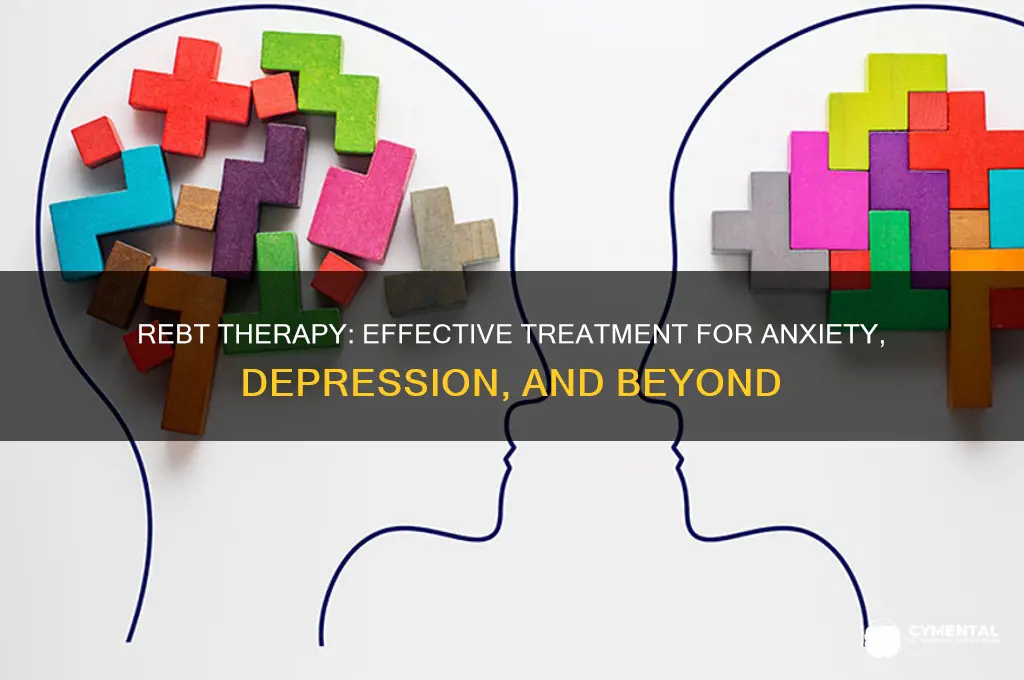
Rational Emotive Behavior Therapy (REBT) is a highly effective therapeutic approach designed to address a wide range of mental health disorders by focusing on identifying and challenging irrational beliefs that contribute to emotional distress. Developed by Albert Ellis, REBT helps individuals with conditions such as anxiety disorders, depression, obsessive-compulsive disorder (OCD), post-traumatic stress disorder (PTSD), and anger issues by promoting healthier thought patterns and behaviors. It is particularly beneficial for those struggling with generalized anxiety disorder, social anxiety, and panic disorder, as it equips them with practical tools to manage and overcome their symptoms. Additionally, REBT has shown promise in treating personality disorders, such as borderline personality disorder, and substance abuse issues by fostering self-awareness and emotional resilience. By targeting the core cognitive distortions that underlie these disorders, REBT empowers individuals to achieve lasting mental well-being and improved quality of life.
Explore related products




What You'll Learn
- Anxiety Disorders: REBT reduces anxiety by challenging irrational beliefs and promoting rational thinking
- Depression: Helps reframe negative thought patterns to alleviate depressive symptoms effectively
- Anger Issues: Teaches control by addressing underlying irrational beliefs driving anger responses
- Phobias: Targets irrational fears, replacing them with logical, constructive beliefs for coping
- Obsessive-Compulsive Disorder (OCD): Focuses on disputing obsessive thoughts and reducing compulsive behaviors

Anxiety Disorders: REBT reduces anxiety by challenging irrational beliefs and promoting rational thinking
Anxiety disorders, characterized by excessive worry, fear, and physiological symptoms, often stem from irrational beliefs that distort reality. Rational Emotive Behavior Therapy (REBT) directly targets these cognitive distortions by identifying and disputing them. For instance, a common irrational belief in generalized anxiety disorder (GAD) is “I must always be in control, or something terrible will happen.” REBT helps individuals recognize this as an absolute demand rather than a realistic expectation, reducing the emotional intensity tied to it. By fostering flexibility in thinking, REBT empowers clients to replace catastrophic predictions with more balanced perspectives, such as “It’s uncomfortable to lose control, but I can handle it.”
The process of challenging irrational beliefs in REBT involves three core steps: detection, disputation, and replacement. First, clients learn to detect their automatic thoughts through self-monitoring techniques, such as journaling or cognitive logs. For example, someone with social anxiety might note the thought, “Everyone will judge me if I speak up.” Next, disputation involves questioning the validity of these thoughts using empirical evidence, logical analysis, and pragmatic consequences. A therapist might ask, “What proof do you have that everyone will judge you? Is it possible some might agree?” Finally, replacement encourages the adoption of rational beliefs, like “Some people might judge me, but most are focused on themselves, and I can cope with criticism.”
Practical application of REBT for anxiety often includes homework assignments to reinforce new thinking patterns. For instance, a client with panic disorder might practice exposing themselves to feared situations while applying REBT principles. Instead of thinking, “I’m having a heart attack,” they could reframe it as, “My heart is racing, but this is anxiety, not a medical emergency.” Such exercises, when practiced consistently over 8–12 sessions, have been shown to reduce anxiety symptoms significantly, according to studies in the *Journal of Clinical Psychology*. For adolescents, simplified language and role-playing exercises can make REBT more accessible, while older adults may benefit from focusing on acceptance and resilience.
One of the strengths of REBT in treating anxiety is its emphasis on self-help and long-term resilience. Clients are taught to become their own therapists by internalizing the ABC model: Activating event (A), Belief (B), and Consequence (C). For example, a work presentation (A) triggers the belief “I must perform perfectly” (B), leading to anxiety (C). By modifying B to “I’d prefer to perform well, but imperfection is acceptable,” clients can change C to manageable nervousness. This proactive approach not only alleviates immediate anxiety but also equips individuals with tools to handle future stressors independently.
While REBT is effective for anxiety, it’s not a one-size-fits-all solution. Clients resistant to self-reflection or those with severe trauma may require adjunct therapies like CBT or exposure therapy. Additionally, REBT’s confrontational style can feel challenging for some, making it essential for therapists to balance firmness with empathy. Despite these considerations, REBT remains a powerful tool for dismantling the cognitive foundations of anxiety, offering a pathway to greater emotional freedom and rational living.
Probiotics and Mental Health: Can Gut Bacteria Boost Your Mood?
You may want to see also
Explore related products




Depression: Helps reframe negative thought patterns to alleviate depressive symptoms effectively
Depression often stems from entrenched negative thought patterns that distort reality, amplifying feelings of hopelessness and self-worthlessness. Rational Emotive Behavior Therapy (REBT) targets these cognitive distortions by challenging their validity and replacing them with more adaptive, rational beliefs. For instance, a depressed individual might think, "I always fail at everything," a global and absolute statement that REBT dissects to reveal its irrationality. By reframing this thought to, "I’ve faced setbacks, but I’ve also succeeded in some areas," REBT helps break the cycle of despair, fostering a more balanced perspective.
The process begins with identifying irrational beliefs, often rooted in demands like "I must be perfect" or "Others must always treat me fairly." These rigid expectations fuel emotional distress. REBT employs the ABC model—Activating event, Belief, and Consequence—to illustrate how events trigger beliefs, which then lead to emotional and behavioral outcomes. For example, losing a job (Activating event) might trigger the belief "I’m unemployable" (Belief), resulting in depression (Consequence). Therapists guide clients in disputing these beliefs, using evidence from their own experiences or logical reasoning to prove their inaccuracy.
Practical application of REBT for depression involves homework assignments, such as keeping a thought diary to track negative patterns and actively challenging them. For instance, if someone writes, "No one cares about me," they’re prompted to find counter-evidence, like a friend’s recent supportive message. Over time, this practice rewires neural pathways, reducing the automaticity of depressive thoughts. Research suggests that consistent application of REBT techniques can lead to significant symptom reduction within 12–16 sessions, though individual timelines vary.
One of REBT’s strengths is its focus on actionable change, empowering clients to take control of their mental health. Unlike therapies that dwell on past traumas, REBT is future-oriented, emphasizing what can be done now to improve well-being. For example, a therapist might encourage a client to engage in activities they once enjoyed, even if they don’t feel like it, to challenge the belief "I’ll never feel happy again." This behavioral activation complements cognitive reframing, creating a two-pronged approach to alleviating depression.
While REBT is effective, it requires active participation and a willingness to confront uncomfortable truths. Clients must be prepared to question deeply held beliefs, which can be emotionally taxing. However, the payoff is substantial: studies show that REBT not only reduces depressive symptoms but also enhances resilience, equipping individuals to better handle future stressors. For those struggling with depression, REBT offers a structured, evidence-based path to reclaiming joy and purpose in life.
Naturopathic Approaches to Mental Health: Effective Support or Alternative?
You may want to see also
Explore related products




Anger Issues: Teaches control by addressing underlying irrational beliefs driving anger responses
Anger, when unchecked, can be a destructive force, straining relationships, impairing judgment, and even leading to physical health issues. Rational Emotive Behavior Therapy (REBT) offers a structured approach to managing anger by targeting the irrational beliefs that fuel it. Unlike traditional venting or suppression techniques, REBT digs deeper, challenging the cognitive distortions that transform frustration into rage. For instance, the belief "I must always be treated fairly, and if I’m not, it’s catastrophic" often underpins explosive anger. REBT helps individuals reframe such demands into preferences, fostering emotional flexibility and control.
Consider a practical scenario: a 35-year-old professional repeatedly loses their temper during team meetings, convinced their colleagues are intentionally undermining them. REBT would first identify the irrational belief—perhaps "Everyone must respect my ideas at all times"—and then dispute it through reality-testing. The therapist might ask, "Is it *absolutely* true that everyone must respect your ideas? What evidence supports or contradicts this belief?" By systematically challenging these rigid thoughts, the individual learns to respond to perceived slights with measured frustration rather than explosive anger. This process often involves homework assignments, such as journaling irrational beliefs and their alternatives, to reinforce new thought patterns.
One of the strengths of REBT in addressing anger issues is its emphasis on actionable change. Clients are taught the ABC model: Activating event (A), Belief (B), and Consequence (C). For example, a coworker criticizes a report (A), triggering the belief "I’m a failure" (B), which leads to anger (C). By altering the belief to "Feedback is an opportunity to improve," the emotional response shifts from anger to constructive engagement. This model is particularly effective for adults aged 18–65, as it requires cognitive flexibility and self-reflection, skills that develop with maturity.
However, REBT is not a quick fix. It demands commitment and self-awareness. Clients must be willing to confront uncomfortable truths about their thinking patterns and practice new behaviors consistently. For those with severe anger issues, combining REBT with mindfulness techniques or medication (e.g., low-dose SSRIs for co-occurring anxiety) can enhance outcomes. A typical REBT program for anger management spans 12–16 weekly sessions, though progress varies based on individual effort and the complexity of underlying beliefs.
In conclusion, REBT provides a powerful toolkit for managing anger by addressing its root cause—irrational beliefs. Through structured exercises, cognitive disputation, and real-world practice, individuals can transform destructive anger into manageable emotions. While the process requires dedication, the long-term benefits—improved relationships, reduced stress, and greater emotional resilience—make it a worthwhile investment for anyone struggling with anger issues.
Walking Wonders: Boosting Mental Health One Step at a Time
You may want to see also
Explore related products


Phobias: Targets irrational fears, replacing them with logical, constructive beliefs for coping
Phobias, by definition, are persistent and irrational fears that can cripple daily functioning. Whether it’s a fear of spiders (arachnophobia), heights (acrophobia), or public speaking (glossophobia), these anxieties often stem from distorted thinking patterns. Rational Emotive Behavior Therapy (REBT) directly confronts these distortions by identifying the illogical beliefs fueling the fear. For instance, someone with arachnophobia might believe, “All spiders are deadly and will harm me.” REBT challenges this by asking, “What evidence supports this belief? How likely is it that every spider poses a threat?” This analytical approach dismantles the irrational foundation of the phobia.
The process begins with awareness. Clients are taught to recognize their automatic thoughts when confronted with the feared object or situation. A person with acrophobia, for example, might think, “If I go near the edge, I’ll fall and die.” REBT therapists guide clients to dispute these thoughts by introducing logical alternatives: “Balconies are designed to be safe. Millions of people stand on them daily without falling.” This step-by-step cognitive restructuring is paired with behavioral experiments, such as gradual exposure to heights, to reinforce new, rational beliefs. Over time, the fear loses its grip as the mind adopts more constructive coping mechanisms.
One of the strengths of REBT in treating phobias is its emphasis on self-help tools. Clients are not merely passive recipients of therapy but active participants in their recovery. Techniques like the ABC model (Activating event, Belief, Consequence) empower individuals to analyze their fears independently. For a child with a phobia of dogs, the activating event might be seeing a dog, the belief could be “It will bite me,” and the consequence is panic. REBT teaches the child to challenge the belief: “Most dogs are friendly, and I can stay calm if I keep a safe distance.” This structured approach is particularly effective for younger age groups, as it simplifies complex emotions into manageable steps.
However, REBT is not a one-size-fits-all solution. While it works well for specific phobias, it may require adaptation for more complex cases, such as agoraphobia, which often co-occurs with panic disorder. In such instances, therapists might integrate relaxation techniques or mindfulness practices to address the physiological symptoms of anxiety. Additionally, the success of REBT depends on the client’s willingness to confront their fears, which can be challenging for those deeply entrenched in avoidance behaviors. Patience and persistence are key, as progress often occurs in small, incremental steps rather than sudden breakthroughs.
In conclusion, REBT offers a targeted and practical approach to overcoming phobias by replacing irrational fears with logical, constructive beliefs. Its focus on cognitive restructuring, combined with behavioral exposure, equips individuals with the tools to manage and eventually conquer their anxieties. While it demands active participation and may require supplementary techniques for complex cases, its effectiveness in treating specific phobias is well-documented. For those trapped by irrational fears, REBT provides a clear pathway to reclaiming control over their lives.
Finding Support: Where to Go for Help in Difficult Times
You may want to see also
Explore related products


Obsessive-Compulsive Disorder (OCD): Focuses on disputing obsessive thoughts and reducing compulsive behaviors
Obsessive-Compulsive Disorder (OCD) traps individuals in cycles of intrusive thoughts and repetitive behaviors, often leaving them feeling powerless. Rational Emotive Behavior Therapy (REBT) offers a structured approach to break this cycle by targeting the core cognitive distortions that fuel OCD. Unlike traditional exposure therapy, which primarily focuses on behavioral modification, REBT delves into the underlying irrational beliefs that amplify anxiety and drive compulsions. For instance, a person with contamination fears might hold the belief, "If I touch a doorknob, I will definitely get sick." REBT challenges this absolutist thinking, encouraging the individual to consider more realistic probabilities and tolerate uncertainty.
The process begins with identifying the specific obsessive thoughts and the compulsive behaviors they trigger. A therapist might ask, "What’s the worst-case scenario you imagine when you have this thought?" and "What do you do to prevent that scenario?" Once these patterns are clear, the therapist guides the client in disputing the irrational beliefs. This involves examining evidence for and against the belief, exploring alternative explanations, and practicing more flexible, realistic self-talk. For example, instead of "I must wash my hands 10 times to be safe," the client learns to say, "Washing my hands once is sufficient, and some risk is acceptable."
Practical exercises are a cornerstone of REBT for OCD. One technique is the "thought record," where clients write down obsessive thoughts, the emotions they evoke, and the compulsive behaviors they lead to. Next, they dispute these thoughts by asking questions like, "Is there any evidence this will actually happen?" or "What’s the likelihood of this outcome?" Over time, clients practice delaying or reducing compulsive behaviors, gradually exposing themselves to feared situations without engaging in rituals. For example, someone with checking compulsions might start by leaving the house without double-checking the stove, tolerating the anxiety until it naturally subsides.
While REBT is effective, it requires commitment and patience. Clients often face resistance, as challenging deeply ingrained beliefs can be uncomfortable. Therapists emphasize that progress is not linear; setbacks are normal and part of the learning process. For adolescents and adults alike, combining REBT with mindfulness techniques can enhance outcomes, as mindfulness helps individuals observe their thoughts without judgment, reducing the urgency to act on them. Parents of younger clients can support the process by encouraging flexibility and praising small victories, such as completing homework without excessive erasing.
In conclusion, REBT provides a powerful framework for managing OCD by addressing the cognitive roots of the disorder. By disputing irrational beliefs and gradually reducing compulsive behaviors, individuals can regain control over their lives. While the journey is challenging, the structured, evidence-based approach of REBT offers hope for lasting change. For those struggling with OCD, REBT is not just about symptom management—it’s about transforming the way they relate to their thoughts and fears.
Move to Thrive: How Physical Activity Boosts Mental Well-Being
You may want to see also
Frequently asked questions
REBT (Rational Emotive Behavior Therapy) is a form of cognitive-behavioral therapy developed by Albert Ellis. It focuses on identifying and challenging irrational beliefs that contribute to emotional and behavioral problems. By replacing these irrational beliefs with rational ones, REBT helps individuals manage mental disorders more effectively.
REBT therapy is effective in treating a range of mental disorders, including anxiety disorders, depression, anger issues, obsessive-compulsive disorder (OCD), post-traumatic stress disorder (PTSD), and phobias. It is also beneficial for addressing self-esteem issues, procrastination, and relationship problems.
REBT therapy differs from other therapies by emphasizing the role of irrational beliefs in causing emotional distress. It is more direct and action-oriented, focusing on disputing and changing these beliefs quickly. Unlike some therapies that explore past experiences extensively, REBT prioritizes present-moment change and practical problem-solving.