Ava Ramirez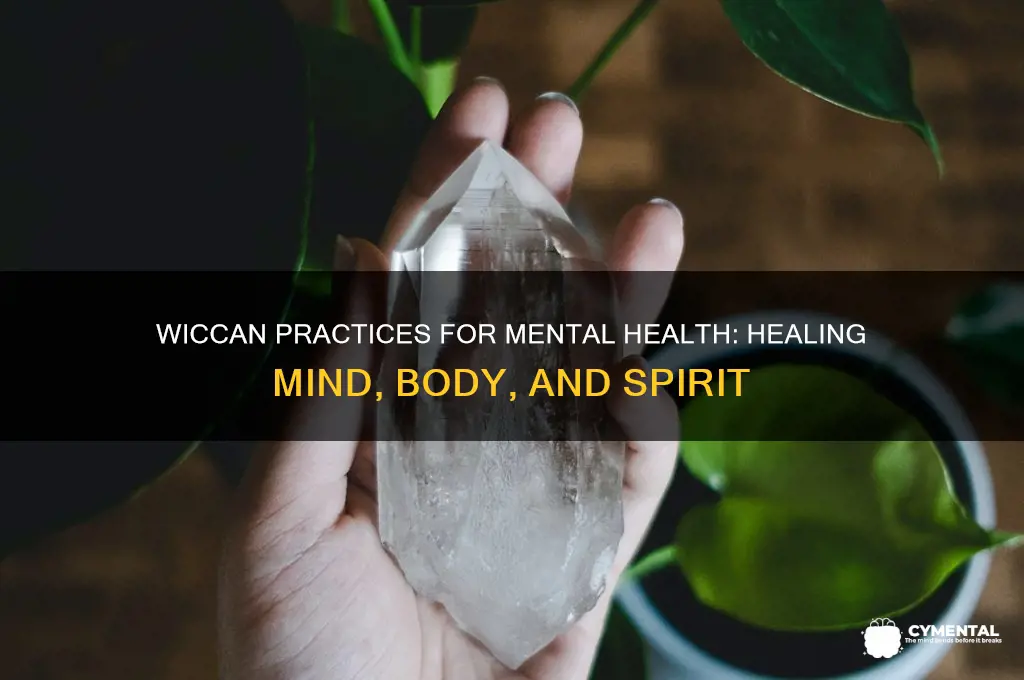
Wiccans, practitioners of a modern pagan witchcraft tradition, often incorporate spiritual and holistic practices to support mental health and well-being. Drawing from their connection to nature, deities, and personal empowerment, Wiccans may use rituals, meditation, herbal remedies, and energy work to address mental illness. Practices such as grounding, which involves connecting with the earth to stabilize emotions, or crafting spells for healing and protection, are common. Additionally, Wiccans emphasize self-reflection, mindfulness, and the balance of mind, body, and spirit, often integrating these principles into their daily lives to foster resilience and emotional healing. While not a replacement for professional mental health care, these practices can complement traditional therapies by offering a sense of purpose, community, and spiritual solace.
Explore related products


What You'll Learn
- Meditation and mindfulness practices for stress reduction and emotional balance
- Herbal remedies and natural therapies to support mental well-being
- Rituals for grounding and releasing negative energy or anxiety
- Connecting with nature to foster healing and inner peace
- Using crystals and energy work to promote emotional stability

Meditation and mindfulness practices for stress reduction and emotional balance
Wiccans often integrate meditation and mindfulness into their spiritual practices to foster mental well-being, drawing on both ancient traditions and modern psychological insights. These techniques are not exclusive to Wicca but are adapted to align with its emphasis on nature, energy, and personal growth. For instance, grounding meditations—a staple in Wiccan practice—involve visualizing roots extending from the body into the earth, a method proven to reduce anxiety by reconnecting individuals with the stabilizing force of nature. This blend of spiritual symbolism and practical mindfulness makes these practices particularly effective for stress reduction.
To begin a Wiccan-inspired mindfulness routine, start with a simple 5- to 10-minute daily practice. Find a quiet space, preferably outdoors or near a window, and focus on your breath. Inhale deeply, imagining you’re drawing in the earth’s energy, and exhale slowly, releasing tension. Incorporate sensory awareness by noting the sounds, smells, and textures around you—a technique known as "earthing" that enhances presence and calms the mind. For those new to meditation, guided visualizations or apps with nature-based themes can provide structure, though traditional Wiccan practitioners often prefer silence or the sound of wind, water, or drumming to deepen their connection.
One unique aspect of Wiccan mindfulness is its emphasis on emotional balance through elemental associations. For example, when feeling overwhelmed, visualize water to evoke calmness, or fire to burn away anger. This symbolic approach not only addresses immediate emotional states but also aligns with Wiccan beliefs about the interconnectedness of all things. Studies show that such symbolic practices can enhance emotional regulation by engaging the brain’s creative and logical centers simultaneously. Pairing these visualizations with physical gestures, like holding a smooth stone (earth) or lighting a candle (fire), can amplify their grounding effects.
However, it’s crucial to approach these practices with caution, especially for individuals with trauma or severe mental health conditions. While meditation is generally beneficial, intense focus on symbolic elements like fire or darkness can trigger distress in some cases. Always prioritize comfort and consult a mental health professional if uncertainty arises. For children or beginners, start with shorter sessions (2–3 minutes) and gradually increase duration as focus improves. Consistency is key—even brief daily practice can yield significant long-term benefits, from reduced cortisol levels to improved mood stability.
In conclusion, Wiccan meditation and mindfulness practices offer a holistic approach to stress reduction and emotional balance, blending spiritual symbolism with evidence-based techniques. By incorporating nature, elemental associations, and sensory awareness, these methods provide a unique toolkit for mental well-being. Whether you’re a seasoned practitioner or a newcomer, adapting these practices to your needs can foster resilience, clarity, and a deeper connection to both self and the natural world. Start small, stay consistent, and let the wisdom of Wicca guide your journey toward inner peace.
Gestalt Therapy: Healing Anxiety, Depression, and Trauma Effectively
You may want to see also
Explore related products


Herbal remedies and natural therapies to support mental well-being
Wiccans often turn to nature for healing, and herbal remedies are a cornerstone of their approach to mental well-being. These remedies, rooted in ancient traditions, are chosen not only for their therapeutic properties but also for their spiritual significance. For instance, lavender, a staple in Wiccan practice, is revered for its calming effects on the mind and its ability to induce relaxation. A few drops of lavender essential oil in a diffuser or a warm bath can significantly reduce anxiety and promote better sleep, making it a simple yet effective tool for managing stress.
One of the most accessible and widely used herbs in Wiccan mental health practices is St. John’s Wort. Known for its mood-stabilizing properties, it is often used to alleviate symptoms of mild depression and seasonal affective disorder (SAD). However, caution is advised, as it can interact with certain medications, such as antidepressants and birth control pills. The typical dosage is 300 mg three times daily, but consulting a healthcare provider is essential before starting any herbal regimen. This herb’s effectiveness lies not only in its biochemical action but also in its association with the sun, symbolizing light and positivity in Wiccan belief systems.
Another powerful natural therapy in the Wiccan toolkit is the use of chamomile, both as a tea and in topical applications. Chamomile’s mild sedative properties make it ideal for reducing anxiety and improving sleep quality. Drinking a cup of chamomile tea before bed can help calm the mind and prepare the body for rest. For children or those sensitive to strong flavors, a diluted version can be equally effective. Beyond its physical benefits, chamomile is often used in rituals to invoke peace and purification, aligning the mind, body, and spirit.
Aromatherapy, a practice deeply intertwined with Wiccan traditions, leverages essential oils to influence emotional and mental states. Oils like frankincense, ylang-ylang, and bergamot are particularly prized for their ability to reduce stress and enhance mood. For example, frankincense, often used in meditation, is believed to deepen spiritual connection and promote mental clarity. A blend of 2-3 drops of these oils in a carrier oil can be applied topically or used in a diffuser to create a soothing atmosphere. This method not only addresses mental health but also integrates seamlessly into Wiccan rituals, enhancing their therapeutic impact.
Finally, the practice of herbal baths combines physical and spiritual healing, offering a holistic approach to mental well-being. Adding herbs like rosemary, sage, or rose petals to bathwater can create a transformative experience. Rosemary, for instance, is known to improve focus and memory, while sage is used for its cleansing properties, both physically and energetically. For a more personalized experience, Wiccans often incorporate intentions or affirmations during the bath, turning it into a ritual of self-care and renewal. This blend of physical remedy and spiritual practice underscores the Wiccan belief in the interconnectedness of all things, offering a unique and effective way to support mental health.
Laughter as Therapy: How Humor Boosts Mental Health and Resilience
You may want to see also
Explore related products


Rituals for grounding and releasing negative energy or anxiety
Wiccans often turn to rituals as a means of managing mental health, particularly for grounding and releasing negative energy or anxiety. These practices are rooted in the belief that spiritual balance can significantly impact emotional well-being. By engaging with nature, intention, and symbolic actions, individuals can create a sense of calm and clarity. Here’s how these rituals work and why they might be effective.
One common grounding ritual involves the use of earth elements, such as soil, stones, or plants. For instance, practitioners might sit or stand barefoot on the ground, a practice known as "earthing," to reconnect with the earth’s energy. This physical connection is believed to stabilize emotions and reduce anxiety by anchoring the individual in the present moment. To enhance this ritual, some Wiccans incorporate deep breathing exercises, inhaling for a count of four, holding for four, and exhaling for eight, while visualizing roots growing from their feet into the earth. This combination of tactile sensation and mindful breathing can provide immediate relief from overwhelming emotions.
Another effective ritual for releasing negative energy is the creation of a "release jar." This involves writing down anxieties, fears, or negative thoughts on small pieces of paper and placing them into a jar filled with salt or black tourmaline, both of which are believed to absorb negativity. Once the jar is sealed, it can be buried or placed in a body of water, symbolizing the physical and spiritual release of these burdens. This ritual not only provides a tangible way to externalize emotional weight but also encourages reflection on the sources of anxiety, fostering a sense of control and closure.
For those seeking a more dynamic approach, movement-based rituals can be particularly powerful. Dancing under the moonlight, for example, is a practice that combines physical activity with spiritual intention. Wiccans often perform this ritual during the full moon, believed to be a time of heightened energy and release. The act of dancing allows for the physical expression of pent-up emotions, while the moon’s energy is thought to amplify the cleansing process. To make this ritual more accessible, it can be adapted to any form of movement, such as yoga or tai chi, as long as it is performed with the intention of releasing negativity.
While these rituals are deeply personal and vary widely among practitioners, their effectiveness often lies in their ability to engage multiple senses and foster a sense of purpose. Whether through earth connection, symbolic release, or physical movement, these practices offer a holistic approach to managing anxiety and negative energy. By incorporating such rituals into their mental health toolkit, individuals can find unique and meaningful ways to achieve emotional balance.
Swimming's Soothing Effect: Reducing Stress and Boosting Mental Health
You may want to see also
Explore related products

$18.99 $19.99

$8.71 $22.95

$6.75 $16.99


Connecting with nature to foster healing and inner peace
Wiccans often turn to nature as a sanctuary for mental and emotional healing, recognizing its innate ability to restore balance and clarity. Unlike clinical environments, natural settings offer a sensory experience—the rustle of leaves, the warmth of sunlight, the scent of earth after rain—that engages the mind and body in a holistic way. Studies in ecotherapy suggest that even 20–30 minutes daily in green spaces can reduce cortisol levels, the stress hormone, by up to 15%. For Wiccans, this connection is not just physical but spiritual, as nature is seen as a living, sacred entity that mirrors the cycles of the self.
To begin fostering inner peace through nature, start with a grounding practice. Find a quiet spot outdoors, sit or stand barefoot on the earth, and focus on your breath. Inhale deeply, imagining roots growing from your feet into the soil, anchoring you to the earth’s energy. Exhale slowly, releasing tension and negativity. This simple ritual, practiced for 5–10 minutes daily, can help stabilize emotions and reduce anxiety. Wiccans often pair this with a silent acknowledgment of the elements—earth, air, fire, and water—to deepen their connection to the natural world.
For those seeking more active engagement, consider a nature-based meditation or ritual. Walking meditations in forests or along waterways allow you to observe the rhythms of nature while reflecting inward. Carry a small pouch of herbs like lavender or rosemary to enhance focus and calm. Alternatively, create a mandala using leaves, stones, or flowers as a symbolic act of aligning your inner chaos with the order of the natural world. These practices not only quiet the mind but also reinforce the Wiccan belief in the interconnectedness of all life.
However, connecting with nature for healing is not without its challenges. Urban dwellers may struggle to find accessible green spaces, and seasonal changes can limit outdoor activities. In such cases, bring nature indoors with potted plants, essential oils, or a small altar featuring natural elements like crystals or feathers. Even listening to nature sounds or gazing at a houseplant can provide a mental respite. The key is consistency—small, regular interactions with nature yield cumulative benefits over time.
Ultimately, the Wiccan approach to nature as a healer emphasizes mindfulness and reverence. It’s not about escaping mental illness but about embracing nature as a partner in the journey toward wholeness. By integrating these practices into daily life, individuals can cultivate resilience, clarity, and a profound sense of peace rooted in the timeless wisdom of the natural world. Whether through a walk in the woods or a moment with a potted herb, nature offers a sanctuary for the soul.
Supporting Your Child's Mental Development: Finding the Right Help
You may want to see also
Explore related products

$13.06 $14.99


Using crystals and energy work to promote emotional stability
Crystals have long been revered in Wiccan practices for their ability to channel and balance energy, making them a powerful tool for emotional stability. Each crystal vibrates at a unique frequency, aligning with specific emotional needs. For instance, amethyst is often used to calm anxiety and promote mental clarity, while rose quartz fosters self-love and emotional healing. By placing these stones on the body or carrying them throughout the day, individuals can tap into their stabilizing energies, creating a sense of grounding and peace.
To effectively use crystals for emotional stability, start by selecting stones that resonate with your current emotional state. For example, black tourmaline is ideal for protection against negative energy, while lepidolite contains lithium, a natural mood stabilizer. Cleanse your crystals under moonlight or with sage smoke to clear any residual energy, then program them with your intention. Hold the crystal in your dominant hand, close your eyes, and visualize your desired emotional state. Place the crystal on your heart chakra during meditation or keep it in your pocket as a tangible reminder of your intention.
Energy work, such as Reiki or chakra balancing, complements crystal use by clearing blockages and restoring emotional equilibrium. Begin by identifying which chakras are imbalanced—for instance, an overactive solar plexus chakra may manifest as anxiety. Use crystals like citrine to activate this chakra or blue lace agate to soothe it. During energy sessions, lay corresponding crystals on the chakra points while visualizing healing light flowing through your body. Regular practice can help maintain emotional balance and resilience.
While crystals and energy work are not substitutes for professional mental health treatment, they offer a holistic approach to emotional well-being. Incorporate these practices into a daily routine for maximum benefit. For example, spend 10–15 minutes each morning meditating with a crystal, focusing on your breath and intention. Keep a journal to track how your emotional state evolves over time. Remember, consistency is key—small, intentional practices can lead to significant emotional shifts. By combining the earth’s natural energies with mindful intention, you can cultivate a deeper sense of stability and harmony.
Relaxation's Power: Boosting Mental Health and Reducing Stress Naturally
You may want to see also
Frequently asked questions
Yes, many Wiccans use meditation, grounding techniques, and rituals to promote relaxation and reduce anxiety. Practices like connecting with nature, mindfulness, and energy work can help manage stress.
Some Wiccans perform rituals or spells to uplift their mood, bring positivity, or seek emotional healing. These practices often involve candles, herbs, or crystals to symbolize transformation and renewal.
Wiccans often spend time in nature to heal and recharge, believing it helps balance their mental and emotional well-being. Activities like forest bathing, gardening, or simply being outdoors are common practices.
Wiccan practices are generally complementary to professional mental health care. Most Wiccans view their spiritual practices as a supplement to therapy, medication, or other treatments, not a replacement.
Yes, many Wiccans use crystals like amethyst for calmness or herbs like lavender for relaxation. These tools are often incorporated into rituals or carried as talismans to promote mental clarity and emotional stability.