Ava Ramirez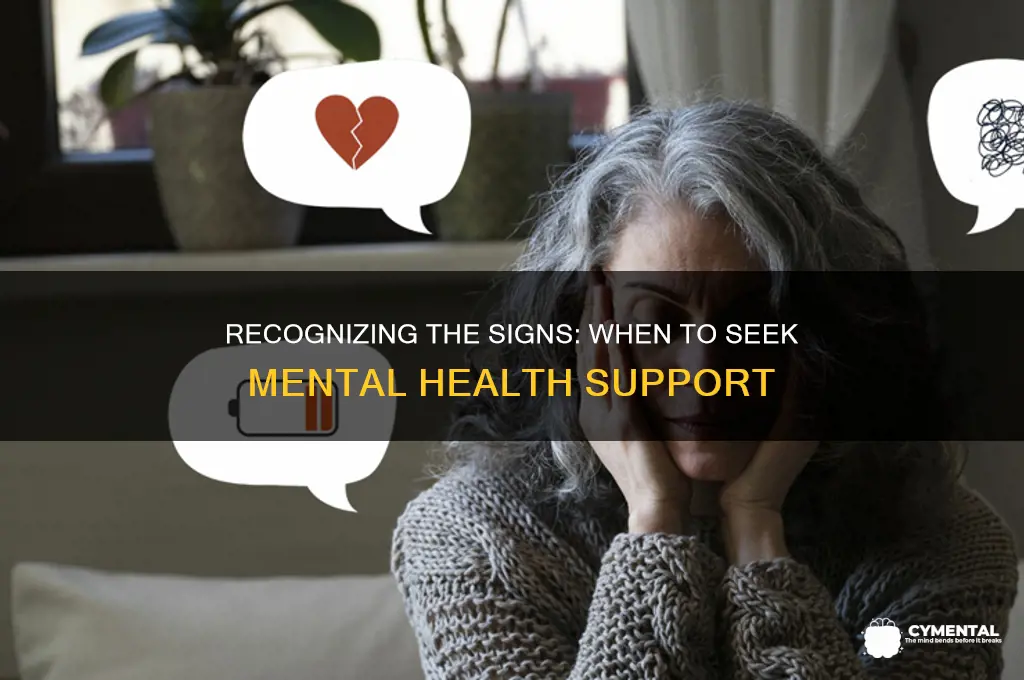
Recognizing when it’s time to seek mental health support is crucial for overall well-being, yet many struggle to identify the signs. Persistent feelings of sadness, anxiety, or hopelessness that interfere with daily life, such as work, relationships, or self-care, are clear indicators that professional help may be needed. Other red flags include significant changes in sleep or appetite, withdrawal from social activities, overwhelming stress, or thoughts of self-harm. It’s important to understand that seeking help is a sign of strength, not weakness, and early intervention can prevent more serious issues. If you or someone you know is experiencing these symptoms, reaching out to a mental health professional can provide the guidance and support necessary to navigate challenges and improve mental health.
Explore related products


What You'll Learn
- Recognizing persistent sadness or hopelessness lasting more than two weeks
- Experiencing severe anxiety disrupting daily activities and relationships
- Noticeable changes in eating, sleeping, or energy levels
- Thoughts of self-harm or harming others, even fleetingly
- Difficulty functioning at work, school, or in social situations

Recognizing persistent sadness or hopelessness lasting more than two weeks
Persistent sadness or hopelessness that lingers for more than two weeks is a red flag signaling the need for mental health intervention. This duration is not arbitrary; it aligns with clinical criteria for diagnosing conditions like major depressive disorder. While fleeting feelings of sadness are a normal part of life, their prolonged presence can disrupt daily functioning, relationships, and overall well-being. Recognizing this pattern is the first step toward addressing a potentially serious mental health issue.
Consider this scenario: A 28-year-old professional begins feeling unmotivated and down after a major work project ends. Initially, they attribute it to burnout, but after three weeks, the sadness deepens, accompanied by a sense of hopelessness about their career and future. They withdraw from friends, lose interest in hobbies, and struggle to concentrate at work. This is not merely a rough patch; it’s a persistent emotional state that warrants attention. Practical steps include tracking mood changes in a journal to identify patterns and consulting a mental health professional for a thorough assessment.
Analytically, prolonged sadness often stems from a combination of biological, psychological, and environmental factors. Neurochemically, it may involve imbalances in serotonin, dopamine, or norepinephrine. Psychologically, unresolved trauma or chronic stress can contribute. Environmentally, factors like social isolation or significant life changes play a role. Understanding these underlying causes can demystify the experience and reduce stigma, encouraging individuals to seek help without self-judgment.
Persuasively, ignoring persistent sadness can lead to worsening symptoms, including physical health issues like insomnia, chronic pain, or even cardiovascular problems. It can also increase the risk of self-harm or suicidal ideation. Early intervention, such as therapy or medication, can prevent these outcomes. For instance, cognitive-behavioral therapy (CBT) has been shown to be effective in reshaping negative thought patterns, while antidepressants like SSRIs may be prescribed for moderate to severe cases. The key is not to wait for symptoms to escalate.
Comparatively, while occasional sadness is universal, persistent hopelessness distinguishes clinical depression from normal emotional fluctuations. For example, a teenager feeling down after a breakup may recover within days, whereas a college student experiencing unrelenting despair for weeks, coupled with thoughts like “nothing will ever get better,” likely meets the criteria for depression. This distinction highlights the importance of duration and intensity in assessing mental health needs.
In conclusion, recognizing persistent sadness or hopelessness lasting more than two weeks is crucial for timely mental health intervention. By understanding the signs, potential causes, and consequences, individuals can take proactive steps toward recovery. Whether through self-monitoring, professional consultation, or evidence-based treatments, addressing this issue early can prevent long-term harm and restore emotional balance.
Comic Books and Cartoons: Unlocking Mental Health Benefits Through Art
You may want to see also
Explore related products


Experiencing severe anxiety disrupting daily activities and relationships
Severe anxiety isn’t just feeling stressed before a big presentation or nervous about a first date. It’s a relentless, overwhelming force that hijacks your ability to function. Imagine trying to focus on a work task while your heart races, your mind floods with catastrophic thoughts, and your body feels paralyzed by fear. Or consider the strain on relationships when anxiety makes you cancel plans repeatedly, snap at loved ones, or withdraw entirely. These aren’t minor inconveniences—they’re red flags signaling that anxiety has crossed the line from occasional discomfort to a debilitating condition.
Let’s break this down practically. If you’re spending more than 30 minutes a day consumed by worry, or if anxiety prevents you from completing tasks like paying bills, attending meetings, or even leaving the house, it’s time to act. For example, a 32-year-old professional might notice they’re missing deadlines due to panic attacks, while a college student could find themselves skipping classes because of overwhelming social anxiety. These disruptions aren’t just frustrating—they’re indicators that anxiety is dictating your life, not you.
Here’s a step-by-step approach to addressing this: First, track your symptoms for a week. Note when anxiety peaks, how long it lasts, and its impact on your day. Second, consult a mental health professional. Therapies like Cognitive Behavioral Therapy (CBT) have proven effective, often paired with medication such as SSRIs (e.g., 10–20 mg of Lexapro daily, as prescribed by a doctor). Third, incorporate daily practices like mindfulness or exercise, which studies show can reduce anxiety by up to 40%. Caution: Avoid self-medicating with alcohol or substances, as this worsens symptoms over time.
Comparatively, untreated anxiety often spirals into depression or physical health issues like hypertension. For instance, a study in the *Journal of Clinical Psychology* found that individuals with unmanaged anxiety are three times more likely to develop chronic illnesses. Conversely, those who seek help early report significant improvements in both mental and physical well-being within 3–6 months of consistent treatment.
Finally, consider the relational toll. Anxiety doesn’t just isolate you—it strains the people around you. A partner might feel rejected after being turned down for intimacy due to anxiety, or friends may grow frustrated by repeated cancellations. Addressing your anxiety isn’t just about reclaiming your life; it’s about preserving the connections that matter most. The takeaway? Severe anxiety disrupting daily activities and relationships isn’t something to endure—it’s a call to action. Seek help, not just for yourself, but for the life you deserve to live.
Effective Strategies and Support Systems for Managing Mental Illness
You may want to see also
Explore related products





Noticeable changes in eating, sleeping, or energy levels
Analyzing these symptoms requires a nuanced approach. Changes in eating patterns, such as overeating or loss of appetite, can stem from stress, trauma, or mood disorders. Sleep disturbances—whether difficulty falling asleep, staying asleep, or oversleeping—often correlate with conditions like depression, PTSD, or bipolar disorder. Energy level fluctuations, from relentless restlessness to paralyzing lethargy, can disrupt work, relationships, and self-care. For example, a 30% reduction in daily activity or a 50% increase in sleep duration over two weeks warrants attention. Monitoring these metrics alongside emotional states provides a clearer picture of mental health.
Practical steps can help address these changes before they escalate. Keep a daily log of meals, sleep duration, and energy levels to identify patterns. Adults should aim for 7–9 hours of sleep per night, while adolescents require 8–10 hours. If appetite changes persist for over two weeks, consult a healthcare provider to rule out physical causes. Incorporate routines like a consistent bedtime, balanced meals, and light exercise to stabilize energy levels. Apps like Sleep Cycle or MyFitnessPal can assist in tracking, but avoid self-diagnosis—professional guidance is essential for tailored solutions.
Comparing these symptoms to baseline behavior is key. What constitutes a "noticeable change" varies by individual. A naturally energetic person experiencing sudden lethargy or a food enthusiast losing interest in cooking may signal distress. Similarly, a night owl struggling with insomnia or an early riser sleeping through the day should take note. These deviations, especially when accompanied by mood swings or withdrawal, are red flags. Unlike fleeting stress responses, persistent alterations in these areas often reflect deeper mental health challenges that require attention.
The takeaway is clear: ignore these changes at your peril. Untreated disruptions in eating, sleeping, or energy levels can exacerbate mental health conditions and impair physical health. For instance, chronic sleep deprivation increases the risk of depression by 50%, while erratic eating habits can lead to malnutrition or disordered eating. Seeking help—whether through therapy, medication, or lifestyle adjustments—is not a sign of weakness but a proactive step toward recovery. Early action not only alleviates suffering but also restores balance to daily life, enabling individuals to thrive rather than merely survive.
Nurturing Mental Well-Being: Practical Home Strategies for Emotional Resilience
You may want to see also
Explore related products

$12.99

$14.15 $20

$12.14 $19.99


Thoughts of self-harm or harming others, even fleetingly
Fleeting thoughts of self-harm or harming others can feel like a taboo topic, but they’re more common than you might think. Research suggests that up to 1 in 5 people experience these intrusive thoughts at some point in their lives. The key distinction lies in frequency, intensity, and your ability to dismiss them. Occasional, fleeting thoughts without accompanying plans or urges may reflect normal stress responses or overactive imaginations. However, if these thoughts persist, escalate in vividness, or begin to feel compelling, they signal a critical need for professional intervention.
Analyzing the nature of these thoughts reveals important nuances. For instance, a fleeting thought like, “What if I jumped in front of that car?” differs significantly from recurrent fantasies about self-injury or detailed plans to harm someone. The latter indicates a breakdown in emotional regulation and impulse control, often linked to underlying conditions like depression, anxiety, PTSD, or borderline personality disorder. If you notice these thoughts becoming more frequent, lasting longer, or triggering emotional distress, it’s time to seek help. Practical steps include contacting a mental health hotline, scheduling an emergency therapy session, or confiding in a trusted friend while you arrange professional support.
Persuasively, ignoring these thoughts can have dire consequences. Studies show that untreated intrusive thoughts of harm are strongly correlated with increased risk of suicide attempts or violent behavior. The brain’s threat response system may misinterpret these thoughts as actionable urges, especially in states of heightened stress or substance use. For example, alcohol lowers inhibitions and impairs judgment, making it easier to act on impulses. If you’re experiencing these thoughts alongside substance use, prioritize dual-diagnosis treatment, which addresses both mental health and addiction simultaneously. Remember, seeking help isn’t a sign of weakness—it’s a proactive step toward safety and recovery.
Comparatively, consider how society treats physical vs. mental health emergencies. If someone had recurring chest pains, they’d rush to the ER without hesitation. Thoughts of self-harm or harming others are equally urgent. Yet, stigma often delays action. To bridge this gap, think of these thoughts as “mental pain signals”—your brain’s way of alerting you to unresolved trauma, overwhelming stress, or chemical imbalances. Just as you’d treat a broken bone, these symptoms require professional care. Start with a psychiatrist or psychologist who can assess for conditions like major depressive disorder or OCD, which often underlie intrusive thoughts. Medications like SSRIs or therapies like Cognitive Behavioral Therapy (CBT) can effectively reduce their frequency and impact.
Descriptively, imagine these thoughts as uninvited guests in your mind—uncomfortable, unsettling, but not inherently dangerous unless they overstay their welcome. Picture a mental health professional as a skilled mediator, helping you set boundaries with these intrusive visitors. Through techniques like mindfulness or dialectical behavior therapy (DBT), you’ll learn to observe these thoughts without judgment, reducing their power over you. For immediate relief, ground yourself in the present using the 5-4-3-2-1 technique: name five things you see, four you can touch, three you hear, two you smell, and one you taste. This simple practice disrupts the thought’s momentum, giving you space to breathe and seek help.
Mental Health First Aid: Impact, Effectiveness, and Real-World Outcomes
You may want to see also
Explore related products


Difficulty functioning at work, school, or in social situations
Struggling to meet deadlines, forgetting assignments, or avoiding social gatherings altogether—these aren’t just minor inconveniences. When difficulty functioning at work, school, or in social situations becomes a persistent pattern, it’s a red flag signaling deeper mental health challenges. For instance, a once high-performing employee might start missing meetings, a student might drop grades dramatically, or someone who once thrived in social settings might isolate themselves. These changes often reflect underlying issues like anxiety, depression, or burnout, which can erode one’s ability to cope with daily demands.
Consider the case of a 28-year-old marketing professional who began arriving late to work, missing client calls, and withdrawing from team lunches. Initially dismissed as stress, her decline in performance and social withdrawal persisted for months. This example illustrates how mental health struggles can manifest subtly at first but escalate into significant functional impairment. If left unaddressed, such difficulties can lead to job loss, academic failure, or strained relationships, making early intervention critical.
To assess whether it’s time to seek help, ask yourself these questions: Are you consistently unable to complete tasks that were once manageable? Do you feel overwhelmed or paralyzed by anxiety in social or professional settings? Have others expressed concern about your behavior or performance? If the answer is yes, it’s time to consult a mental health professional. Practical steps include scheduling an appointment with a therapist, reaching out to your workplace’s Employee Assistance Program (EAP), or utilizing school counseling services. For immediate support, apps like Calm or Headspace can provide temporary coping tools, but they are not substitutes for professional care.
Comparing mental health to physical health can be illuminating. Just as you’d seek medical help for a persistent injury affecting your ability to walk, mental health issues impairing your ability to function deserve the same urgency. For example, cognitive-behavioral therapy (CBT) has been shown to improve workplace productivity by 50–60% in individuals with anxiety or depression, according to a study by the World Health Organization. Similarly, schools offering mental health resources see a 30% reduction in student dropout rates. These statistics underscore the effectiveness of early intervention.
Finally, remember that seeking help is not a sign of weakness but a proactive step toward reclaiming your life. Start by acknowledging the problem, then take small, actionable steps like journaling daily stressors, setting realistic goals, or confiding in a trusted friend. Mental health is a journey, and addressing functional difficulties early can prevent long-term consequences. As the saying goes, “You don’t have to see the whole staircase; just take the first step.”
Supporting Celiac Patients: Mental Health Strategies for Gluten-Free Living
You may want to see also
Frequently asked questions
It’s time to seek help if you’re experiencing persistent feelings of sadness, anxiety, or hopelessness; if your emotions are interfering with daily life, work, or relationships; or if you’re having thoughts of self-harm or suicide. Other signs include significant changes in sleep, appetite, or energy levels.
Yes, mental health support can be beneficial for anyone, regardless of whether they have a diagnosed condition. Therapy, counseling, or other resources can help with stress, life transitions, relationship issues, or personal growth, even if you’re not experiencing severe symptoms.
It’s normal to feel hesitant, but taking the first step is often the hardest part. Start by talking to a trusted friend, family member, or healthcare provider for guidance. Many mental health professionals offer consultations to help you determine if their services are right for you. Remember, seeking help is a sign of strength, not weakness.