Noah Parker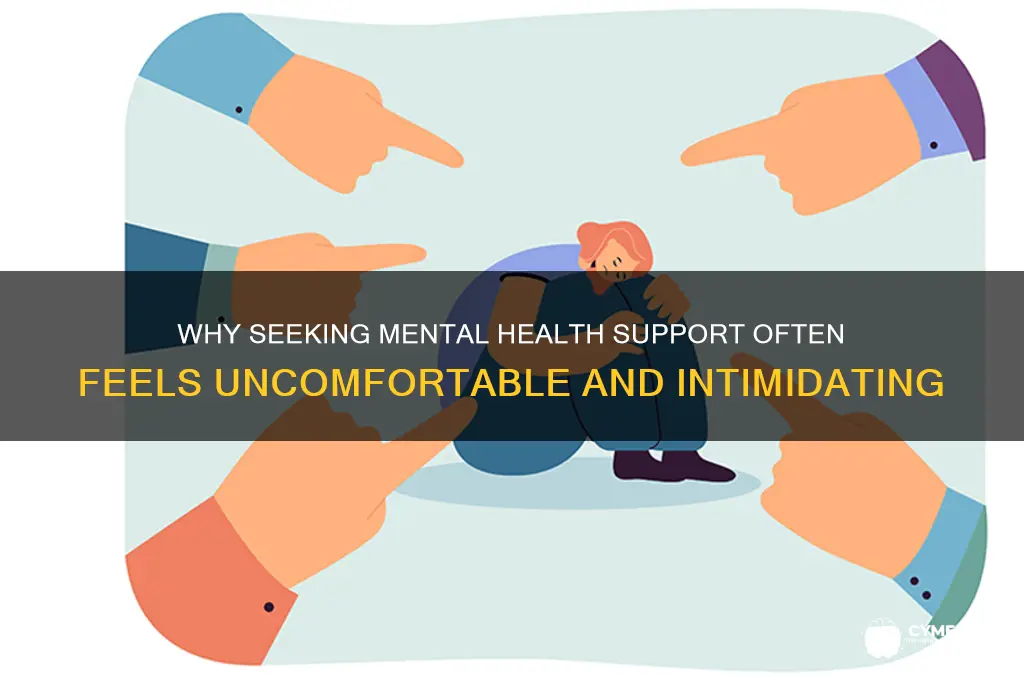
Mental health help often faces resistance due to a complex interplay of societal stigma, personal fears, and systemic barriers. Many individuals associate seeking support with weakness or failure, perpetuating a culture of silence and avoidance. Fear of judgment, concerns about confidentiality, and the perceived cost or inaccessibility of services further deter people from reaching out. Additionally, historical mistrust of mental health systems, particularly among marginalized communities, contributes to aversion. Misconceptions about therapy or medication, coupled with a lack of awareness about effective treatments, also play a role. Addressing these barriers requires destigmatizing conversations, improving accessibility, and fostering trust in mental health resources to encourage individuals to seek the help they need.
Explore related products


What You'll Learn

Stigma and shame surrounding mental illness
To dismantle stigma, start by examining your own language and beliefs. Phrases like “just snap out of it” or “you’re overreacting” minimize the experiences of those with mental illness. Instead, practice empathy and educate yourself about the realities of conditions like anxiety, depression, or PTSD. For parents and educators, normalize conversations about mental health from a young age. Teach children that emotions are valid and seeking help is a sign of strength, not failure. Practical steps include incorporating mental health discussions into school curricula or family dinners. For workplaces, implement policies that prioritize mental well-being, such as offering confidential counseling services or flexible schedules during difficult periods.
Compare the treatment of physical and mental health to highlight the disparity. Imagine if someone with diabetes were told their condition was “all in their head” or that they should “tough it out.” Yet, this is the reality for many with mental illness. This double standard stems from centuries of misinformation and fear. Historically, mental illness was attributed to demonic possession or personal flaws, and remnants of these beliefs persist today. To shift this narrative, advocate for equal representation of mental health in media and public discourse. Share stories of recovery and resilience to humanize the issue. For example, public figures like Simone Biles and Prince Harry have openly discussed their mental health struggles, reducing stigma by showing vulnerability is universal.
Finally, address the internalized shame that often accompanies mental illness. Many individuals blame themselves for their struggles, believing they should be able to “fix” themselves. This self-stigma is particularly insidious because it comes from within, making it harder to challenge. To combat this, encourage self-compassion and reframe mental illness as a health condition, not a personal defect. Therapists can play a crucial role here by helping clients separate their identity from their diagnosis. For instance, cognitive-behavioral therapy (CBT) techniques can help individuals challenge negative self-beliefs and replace them with more balanced perspectives. Additionally, peer support groups provide a safe space for individuals to share their experiences without fear of judgment, fostering a sense of belonging and hope.
In conclusion, stigma and shame are not insurmountable obstacles but deeply ingrained patterns that require intentional effort to change. By reevaluating our language, challenging societal norms, and fostering self-compassion, we can create an environment where seeking mental health help is not only accepted but encouraged. Remember: mental illness is no different from any other health condition—it deserves understanding, support, and treatment. Your actions, no matter how small, can contribute to a cultural shift that saves lives.
Seeking Support: Who Can Help Navigate Mental Illness Challenges?
You may want to see also
Explore related products


Fear of judgment or discrimination from others
The fear of judgment or discrimination is a powerful deterrent to seeking mental health support, often rooted in societal stigma and personal vulnerability. Imagine confessing your deepest struggles only to be met with skepticism, pity, or worse, ridicule. This fear is not irrational; it’s a reflection of real-world consequences. Studies show that individuals who disclose mental health issues frequently face social exclusion, workplace discrimination, and strained relationships. For instance, a 2019 survey by the American Psychiatric Association revealed that 45% of respondents believed employers would be less likely to hire someone with a history of mental illness. Such statistics underscore why many choose silence over support.
Consider the practical steps to mitigate this fear. Start by identifying safe spaces—trusted friends, family, or professionals who have demonstrated empathy. Practice disclosing small vulnerabilities first, gauging reactions before sharing more. For example, mentioning occasional stress before discussing anxiety disorders can test the waters. Additionally, educate yourself and others about mental health to normalize the conversation. Tools like anonymous helplines or online support groups (e.g., 7 Cups or Reddit’s r/mentalhealth) offer judgment-free zones to begin. Remember, gradual exposure to openness reduces fear over time.
From a comparative perspective, cultural norms play a significant role in shaping this fear. In collectivist societies, where family reputation is paramount, mental health struggles are often seen as a private shame rather than a collective concern. Contrast this with individualistic cultures, where self-disclosure is more accepted but still carries risks of being labeled "weak" or "unstable." For instance, in Japan, the term *ame* (rain) is sometimes used metaphorically to describe depression, reflecting the reluctance to name the condition directly. Understanding these cultural nuances can help tailor strategies to overcome fear, such as leveraging community-based support systems in collectivist settings.
Persuasively, it’s critical to reframe the narrative around seeking help. Fear of judgment often stems from internalized stigma—the belief that needing help is a personal failure. Challenge this by recognizing that mental health is as valid as physical health. Would you hesitate to see a doctor for a broken leg? Similarly, therapists and counselors are trained professionals, not judges. By shifting perspective, the act of seeking help becomes an act of self-care, not a confession of inadequacy. This mindset shift can empower individuals to prioritize their well-being over others’ opinions.
Finally, a descriptive approach highlights the emotional toll of this fear. Picture someone battling anxiety, their chest tight with dread, yet too terrified to reach out. They envision whispers in the office, friends distancing, or family expressing disappointment. This internal monologue—*What if they think I’m crazy? What if I lose my job?*—paralyzes them. The irony is that isolation often exacerbates mental health issues, creating a vicious cycle. Breaking free requires acknowledging these fears, not as truths, but as barriers to dismantle. With each small step toward openness, the grip of fear loosens, replaced by the relief of being heard and understood.
Art's Healing Power: Painting's Impact on Mental Well-Being and Self-Care
You may want to see also
Explore related products


Misconceptions about therapy and treatment effectiveness
Therapy is often misunderstood as a quick fix, a misconception that can deter individuals from seeking help. Many believe that a few sessions will magically resolve deep-seated issues, akin to taking an antibiotic for an infection. However, mental health treatment is more like physical therapy for a chronic injury—it requires consistent effort, patience, and time. For instance, cognitive-behavioral therapy (CBT), one of the most evidence-based approaches, typically spans 12 to 20 sessions over several months. Expecting immediate results can lead to frustration and premature abandonment of treatment, reinforcing the aversion to seeking help.
Another pervasive myth is that therapy is only for "serious" mental illnesses like schizophrenia or bipolar disorder. This misconception minimizes the value of therapy for common struggles such as anxiety, grief, or relationship issues. In reality, therapy is a versatile tool that can benefit anyone seeking personal growth or coping strategies. For example, mindfulness-based stress reduction (MBSR), a structured 8-week program, has been shown to reduce symptoms of anxiety and depression in individuals without clinical diagnoses. By dismissing therapy as unnecessary for "mild" concerns, people miss out on preventive care that could avert more severe issues later.
The effectiveness of therapy is also often questioned due to the belief that it relies solely on the therapist’s expertise. While a skilled therapist is crucial, the client’s active participation is equally vital. Therapy is a collaborative process, not a passive experience. For instance, homework assignments in CBT, such as journaling or practicing new behaviors, are essential for progress. Clients who view therapy as something "done to them" rather than a partnership may feel disempowered and disengaged, undermining the treatment’s potential.
Lastly, the stigma surrounding medication as a "crutch" or sign of weakness discourages many from exploring pharmacological options. This misconception ignores the biological basis of many mental health conditions. For example, selective serotonin reuptake inhibitors (SSRIs) are often prescribed for depression and anxiety, but they require 4 to 6 weeks to take full effect. Discontinuing medication prematurely or refusing it altogether can exacerbate symptoms, reinforcing the belief that treatment is ineffective. Education about the role of medication as one tool in a comprehensive treatment plan can help shift this perspective.
In summary, misconceptions about therapy and treatment effectiveness—such as expecting quick fixes, underestimating its versatility, overlooking the client’s role, and stigmatizing medication—create barriers to seeking mental health help. By understanding therapy as a gradual, collaborative process and recognizing the diversity of treatment options, individuals can approach mental health care with more realistic expectations and greater openness. This shift in perspective could reduce aversion and encourage more people to take the first step toward healing.
Lady Gaga's Mental Health Journey: When She Sought Support
You may want to see also
Explore related products


Cultural or societal barriers to seeking help
Stigma remains the silent sentinel guarding the gates of mental health care, particularly in cultures where emotional vulnerability is equated with weakness. In many Asian societies, for instance, the concept of "saving face" discourages individuals from admitting psychological struggles, fearing it might tarnish familial or personal reputations. This cultural narrative often frames mental health issues as a failure of character rather than a medical condition, leaving sufferers isolated and reluctant to seek help. Even in Western contexts, where openness about mental health has grown, residual stigma persists in professional environments, where employees worry that disclosing mental health concerns could jeopardize career advancement. The result? A pervasive silence that delays treatment and exacerbates conditions.
Consider the role of language in shaping societal attitudes. In some Latin American communities, mental health issues are colloquially dismissed as *"locura"* (craziness), a term laden with judgment and fear. Such linguistic framing not only minimizes the validity of mental health struggles but also reinforces the idea that seeking help is an admission of being "crazy." This linguistic barrier extends to formal settings, where mental health terminology may lack cultural relevance or sensitivity, further alienating potential seekers of care. To dismantle this, mental health campaigns must adopt culturally resonant language—for example, using phrases like *"cuidado emocional"* (emotional care) in Spanish-speaking regions to destigmatize the conversation.
Religious beliefs often intersect with cultural norms to create additional barriers. In some African and Middle Eastern cultures, mental health issues are attributed to spiritual causes, such as curses or possession, rather than biological or psychological factors. While faith can provide comfort, it can also divert individuals from evidence-based treatments. For instance, a 2018 study found that 60% of participants in a Nigerian community preferred prayer over professional intervention for depression. Bridging this gap requires collaboration between religious leaders and mental health professionals to integrate spiritual practices with clinical care, ensuring that faith becomes a complement, not a substitute, for treatment.
Finally, generational divides play a critical role in perpetuating aversion to mental health help. Older generations, shaped by eras of silence and self-reliance, often view therapy as unnecessary or indulgent. This skepticism is then passed down, creating a cycle where younger individuals internalize the belief that seeking help is a sign of inadequacy. Breaking this cycle demands intergenerational dialogue—workshops, family counseling, or community forums where elders and youth can openly discuss mental health. For example, programs like *"Mental Health First Aid"* have successfully educated older adults in the U.S. and Australia, fostering empathy and reducing stigma across age groups.
In addressing these cultural and societal barriers, specificity is key. Tailored interventions—whether linguistic, religious, or generational—must replace one-size-fits-all approaches. By acknowledging and respecting cultural contexts, we can transform aversion into acceptance, ensuring that mental health care becomes a universal right, not a privilege.
Boost Your Memory: Effective Mental Exercises for Enhanced Recall
You may want to see also
Explore related products


Personal beliefs about self-reliance and vulnerability
Personal beliefs about self-reliance often stem from cultural narratives that equate asking for help with weakness. From a young age, phrases like "pull yourself up by your bootstraps" or "tough it out" reinforce the idea that independence is the ultimate virtue. This mindset can be particularly entrenched in individualistic societies, where self-sufficiency is celebrated as a core value. For instance, a study published in the *Journal of Counseling Psychology* found that individuals who scored high on self-reliance scales were significantly less likely to seek therapy, even when experiencing severe symptoms of anxiety or depression. The internalized belief that "I should be able to handle this on my own" creates an invisible barrier, turning mental health support into a perceived admission of failure rather than a step toward healing.
Consider the paradox of vulnerability: while it is the birthplace of connection, creativity, and growth, it is often misconstrued as a liability. Brené Brown’s research highlights that vulnerability is essential for emotional well-being, yet many view it as a risk to their self-image. For someone who prides themselves on being "strong," admitting to struggling with mental health can feel like surrendering a hard-earned identity. This fear of vulnerability is compounded by societal stigma, where seeking help is sometimes met with judgment or dismissal. For example, a 30-year-old professional might avoid therapy because they worry colleagues will perceive them as unstable, even though research shows that untreated mental health issues can reduce workplace productivity by up to 35%. The cost of hiding vulnerability, however, is far greater—chronic stress, isolation, and worsening symptoms.
To dismantle these beliefs, start by reframing self-reliance as a tool, not a dogma. Self-reliance can mean taking responsibility for your well-being, which includes knowing when to ask for help. A practical first step is to set small, manageable goals, such as scheduling a single consultation with a mental health professional or joining a support group. For those hesitant to seek formal help, journaling or mindfulness practices can serve as a bridge, fostering self-awareness without feeling overwhelming. It’s also crucial to challenge the narrative that vulnerability equals weakness. Instead, view it as an act of courage—a deliberate choice to prioritize your mental health. For parents or mentors, modeling this behavior can be transformative; openly discussing therapy or self-care normalizes it for younger generations.
Comparing the aversion to mental health help with physical health care can provide clarity. No one would hesitate to see a doctor for a broken leg, yet the same urgency is rarely applied to mental health. This double standard is rooted in the intangible nature of psychological pain, which is often dismissed as "all in your head." To shift this perspective, consider that mental health is just as vital to overall functioning as physical health. For instance, untreated depression increases the risk of cardiovascular disease by 67%, according to the *American Heart Association*. By aligning mental and physical health in importance, the act of seeking help becomes less about vulnerability and more about self-preservation.
Ultimately, the aversion to mental health help rooted in personal beliefs about self-reliance and vulnerability is a learned behavior—and learned behaviors can be unlearned. Start by questioning the origins of these beliefs: Are they truly yours, or are they inherited from societal expectations? Engage in conversations that challenge stigma, whether with friends, family, or online communities. For those aged 18–25, peer support groups can be particularly effective, as they provide a safe space to share experiences without judgment. Remember, seeking help is not a sign of defeat but a testament to resilience. As the saying goes, "You don’t have to see the whole staircase; just take the first step." In this case, that step might just lead to a healthier, more authentic version of yourself.
Is Mental Health Counseling Effective? Exploring Benefits and Real-Life Impact
You may want to see also
Frequently asked questions
Some people avoid seeking mental health help due to stigma, fear of judgment, lack of awareness about available resources, or concerns about the cost and accessibility of services.
Stigma around mental health treatment often stems from societal misconceptions, cultural beliefs that view mental illness as a weakness, and historical associations of mental health issues with shame or danger.
People fear being labeled because mental health diagnoses are often misunderstood or oversimplified, leading to potential discrimination in personal, professional, or social settings.
Some individuals feel uncomfortable discussing their mental health due to personal privacy concerns, fear of vulnerability, or a belief that they should handle their struggles independently without external support.
People may believe mental health issues should be resolved independently due to self-reliance, mistrust of professionals, or the misconception that seeking help is an admission of failure rather than a step toward healing.