Ava Ramirez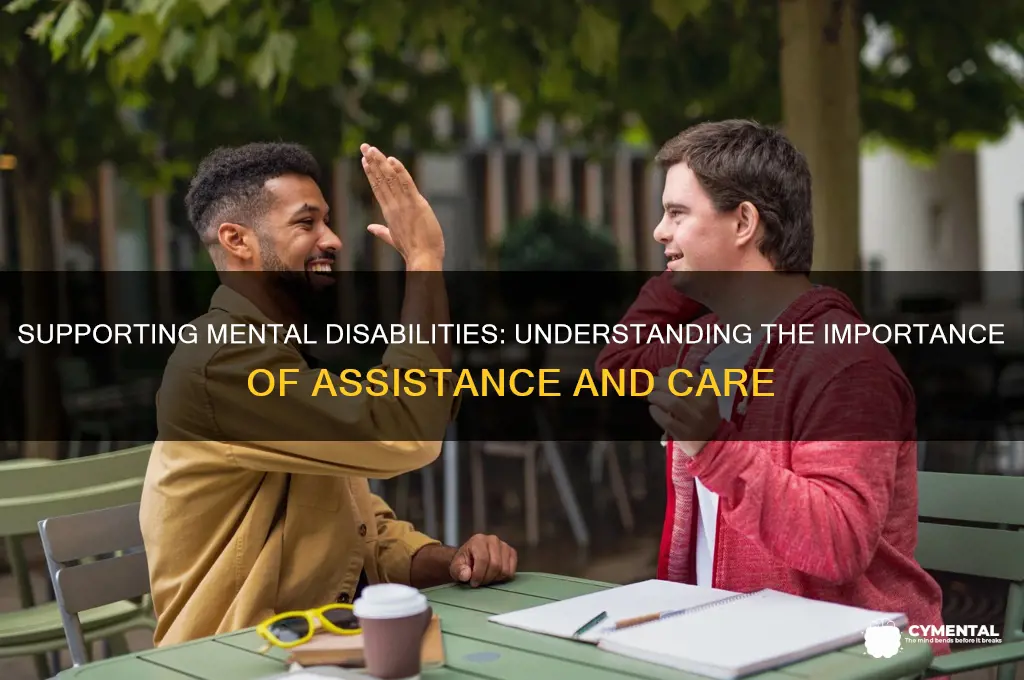
People with mental disabilities often face unique challenges that can significantly impact their daily lives, making it essential for them to receive support and assistance. These challenges may include difficulties with cognitive functioning, emotional regulation, social interactions, and independent living skills, which can hinder their ability to fully participate in society. Providing help, whether through therapy, education, vocational training, or community resources, empowers individuals with mental disabilities to overcome barriers, develop coping strategies, and lead fulfilling lives. Support systems not only enhance their quality of life but also foster inclusivity, reduce stigma, and ensure they have equal opportunities to thrive alongside their peers. Recognizing and addressing their needs is crucial for building a compassionate and equitable society.
Explore related products


What You'll Learn
- Access to Healthcare: Ensuring affordable, specialized care for mental health conditions and disabilities
- Social Inclusion: Promoting acceptance, reducing stigma, and fostering community participation
- Education Support: Providing tailored learning resources and accommodations for academic success
- Employment Opportunities: Creating inclusive workplaces with reasonable adjustments and equal chances
- Legal Protections: Enforcing rights against discrimination and ensuring equal access to services

Access to Healthcare: Ensuring affordable, specialized care for mental health conditions and disabilities
People with mental disabilities often face significant barriers to accessing healthcare, a critical issue that exacerbates their challenges. For instance, individuals with schizophrenia are 3.5 times more likely to die prematurely, often due to untreated physical health conditions that arise from a lack of coordinated care. This disparity highlights the urgent need for affordable, specialized healthcare tailored to their unique needs.
Consider the steps required to bridge this gap. First, integrate mental health services into primary care settings to reduce stigma and improve accessibility. For example, clinics could employ psychiatric nurse practitioners who can prescribe medications like olanzapine (5–20 mg/day for adults) or fluoxetine (20–60 mg/day) while coordinating with general practitioners. Second, implement sliding-scale fee structures for therapy and medication, ensuring that a single session of cognitive-behavioral therapy doesn’t cost more than $50 for low-income individuals. Third, train healthcare providers in disability-specific communication strategies, such as using visual aids for patients with intellectual disabilities or offering longer appointment times for those with processing delays.
However, these solutions come with cautions. Over-reliance on medication without therapy can lead to dependency or side effects, such as weight gain from antipsychotics. Additionally, sliding-scale models may strain underfunded clinics, requiring government subsidies or partnerships with nonprofits. Lastly, training programs must avoid tokenism; providers need ongoing education, not one-time workshops, to effectively serve this population.
The takeaway is clear: accessible healthcare for people with mental disabilities isn’t just a moral imperative—it’s a practical necessity. By combining integrated care models, financial accommodations, and specialized training, we can dismantle barriers and improve outcomes. For instance, a pilot program in Oregon reduced hospital readmissions by 40% after implementing these strategies, proving that systemic change is both possible and impactful. Prioritizing this issue isn’t just about healthcare—it’s about restoring dignity and autonomy to millions.
B12 and Mental Calmness: Unlocking Serenity Through Nutrition
You may want to see also
Explore related products


Social Inclusion: Promoting acceptance, reducing stigma, and fostering community participation
People with mental disabilities often face social exclusion, a barrier that perpetuates stigma and limits their opportunities for meaningful community engagement. This exclusion is not merely a byproduct of their disabilities but a complex interplay of societal attitudes, systemic failures, and individual biases. To dismantle these barriers, we must actively promote social inclusion, a process that involves fostering acceptance, reducing stigma, and encouraging community participation.
Consider the following scenario: a young adult with autism spectrum disorder (ASD) struggles to find employment due to employers' misconceptions about their abilities. This individual possesses exceptional skills in data analysis but is often overlooked during interviews because of their difficulty with social interactions. By educating employers about the strengths and unique perspectives of individuals with ASD, we can challenge stereotypes and create more inclusive hiring practices. For instance, providing training sessions on neurodiversity and offering tailored interview formats, such as allowing candidates to showcase their skills through practical tests rather than solely relying on traditional interviews, can significantly improve their chances of securing employment.
Strategies for Social Inclusion:
- Community Education and Awareness: Organize workshops, seminars, and public campaigns to educate the community about mental disabilities, challenging misconceptions and promoting empathy. Share success stories of individuals with mental disabilities who have made significant contributions to society, highlighting their abilities rather than focusing on limitations.
- Inclusive Social Activities: Develop social programs and events that actively involve people with mental disabilities. For example, local sports clubs can offer adapted sports programs, ensuring that individuals with physical or intellectual disabilities can participate. These activities not only promote physical health but also provide a platform for social interaction, friendship-building, and a sense of belonging.
- Peer Support Networks: Facilitate the creation of peer support groups where individuals with mental disabilities can connect, share experiences, and offer mutual encouragement. These networks can be particularly powerful in reducing feelings of isolation and stigma. For instance, a weekly book club or art therapy group can provide a safe space for expression and social bonding.
Reducing Stigma through Media and Representation:
The media plays a pivotal role in shaping public perception. Encourage media outlets to portray characters with mental disabilities accurately and positively, avoiding sensationalism or pity-inducing narratives. Authentic representation can humanize these experiences, fostering understanding and empathy. For instance, a popular TV series featuring a protagonist with schizophrenia who successfully manages their condition while pursuing a fulfilling career can challenge stereotypes and inspire viewers.
Fostering Community Participation:
- Volunteer Programs: Engage people with mental disabilities in community volunteer work, allowing them to contribute their skills and time. This not only benefits the community but also enhances their self-esteem and sense of purpose.
- Accessible Public Spaces: Advocate for the design and adaptation of public spaces to be inclusive. This includes ensuring physical accessibility, providing clear signage, and offering quiet areas for individuals who may become overwhelmed in busy environments.
- Mentorship Initiatives: Establish mentorship programs where experienced professionals or community leaders guide and support individuals with mental disabilities in pursuing their goals, whether in education, employment, or personal development.
By implementing these strategies, we can create a more inclusive society, where people with mental disabilities are not only accepted but also valued for their unique contributions. Social inclusion is a powerful tool to combat stigma, empower individuals, and build stronger, more cohesive communities. It requires a collective effort, but the rewards are immeasurable, leading to a more equitable and compassionate world for all.
Supporting Your Mentally Ill Sibling: Compassionate Strategies for Families
You may want to see also
Explore related products


Education Support: Providing tailored learning resources and accommodations for academic success
Students with mental disabilities often face unique challenges in traditional educational settings, where one-size-fits-all teaching methods can leave them struggling to keep up. Tailored learning resources and accommodations are not just beneficial—they are essential for leveling the academic playing field. For instance, a student with ADHD may require extended time on exams to compensate for difficulty with sustained focus, while a student with dyslexia might benefit from audiobooks or text-to-speech software to access written materials. These adjustments ensure that their disabilities do not become barriers to learning but rather opportunities to demonstrate their true capabilities.
Consider the process of implementing such support as a three-step framework. First, assessment: educators and specialists must identify the specific needs of each student through evaluations like psychoeducational testing or functional behavior assessments. Second, customization: based on these findings, create individualized education plans (IEPs) that outline tailored strategies, such as visual aids for students with processing disorders or sensory breaks for those with autism. Third, monitoring: regularly review progress and adjust accommodations as needed to ensure ongoing effectiveness. For example, a 10-year-old with anxiety might start with a 5-minute mindfulness exercise daily, which could be increased or modified based on their response.
Critics might argue that providing extensive accommodations could lower academic standards or create dependency. However, the goal is not to simplify content but to remove unnecessary obstacles. A comparative analysis shows that students with well-implemented IEPs often achieve parity with their peers in core subjects, proving that accommodations foster independence rather than hinder it. For instance, a study found that students with learning disabilities who received tailored support scored 15% higher on standardized tests compared to those without such resources. This data underscores the transformative impact of targeted educational interventions.
Finally, practical tips can make a significant difference in daily implementation. Teachers can use color-coded organizers for students with executive functioning challenges or provide noise-canceling headphones for those sensitive to auditory distractions. Parents can advocate for their children by familiarizing themselves with legal rights under the Individuals with Disabilities Education Act (IDEA) and collaborating closely with schools. By combining these strategies, educators and families can create an environment where students with mental disabilities not only survive but thrive academically. The takeaway is clear: tailored education support is not an act of charity but a cornerstone of equitable learning.
Supporting Your Spouse: Strategies to Address Mental Abuse and Heal
You may want to see also
Explore related products


Employment Opportunities: Creating inclusive workplaces with reasonable adjustments and equal chances
People with mental disabilities often face significant barriers to employment, not due to their abilities, but because of societal misconceptions and workplace environments ill-equipped to accommodate their needs. Creating inclusive workplaces with reasonable adjustments and equal chances is not just a moral imperative—it’s a practical strategy to tap into a diverse talent pool and foster innovation. For instance, a study by the National Organization on Disability found that companies prioritizing disability inclusion outperform their peers in revenue and profitability. Yet, only 19% of people with disabilities are employed in the U.S., compared to 66% of those without disabilities. This disparity highlights the urgent need for actionable change.
To begin fostering inclusivity, employers must first identify and implement reasonable adjustments tailored to individual needs. These adjustments are often simpler and more cost-effective than assumed. For example, providing flexible work hours for someone with anxiety or offering noise-canceling headphones for an employee with sensory sensitivities can significantly improve productivity. A 2021 report by the International Labour Organization (ILO) emphasized that 70% of workplace adjustments cost nothing, while the rest typically cost less than $500. Employers should also leverage technology, such as screen readers for visually impaired employees or task management apps for those with ADHD, to create a more accessible environment.
However, creating an inclusive workplace goes beyond physical or technological adjustments—it requires a cultural shift. Training programs that educate employees about mental disabilities and reduce stigma are essential. For instance, a company like Microsoft has implemented mandatory disability awareness training for all employees, leading to a 30% increase in disability inclusion metrics within two years. Additionally, mentorship programs pairing employees with disabilities with experienced colleagues can provide invaluable support and career guidance. Such initiatives not only empower individuals but also cultivate a culture of empathy and understanding.
Critics might argue that prioritizing disability inclusion places an undue burden on businesses, but the evidence suggests otherwise. Companies like Starbucks and Walgreens have demonstrated that inclusive hiring practices lead to higher retention rates, reduced turnover costs, and enhanced brand reputation. For example, Walgreens’ distribution centers, which employ a significant number of people with disabilities, report a 20% higher retention rate compared to industry averages. By reframing inclusion as a strategic advantage rather than a compliance requirement, businesses can unlock long-term benefits while making a meaningful social impact.
In conclusion, creating inclusive workplaces for people with mental disabilities is both achievable and advantageous. By implementing reasonable adjustments, fostering a supportive culture, and leveraging success stories from industry leaders, employers can break down barriers and provide equal opportunities. The key lies in recognizing that inclusion is not a one-size-fits-all approach but a commitment to understanding and addressing individual needs. As businesses take these steps, they not only transform lives but also position themselves as leaders in a more equitable and innovative future.
Recognizing Mental Health Red Flags: When to Seek Professional Support
You may want to see also
Explore related products



Legal Protections: Enforcing rights against discrimination and ensuring equal access to services
People with mental disabilities often face systemic barriers that limit their access to essential services and opportunities. Legal protections are crucial to dismantling these barriers, ensuring that individuals receive fair treatment under the law. Laws such as the Americans with Disabilities Act (ADA) in the United States and the Equality Act in the UK explicitly prohibit discrimination based on mental health conditions. These frameworks mandate reasonable accommodations in workplaces, schools, and public spaces, enabling individuals to participate fully in society. Without such protections, many would be excluded from employment, education, and healthcare, perpetuating cycles of marginalization.
Consider the practical implications of enforcing these rights. For instance, a person with severe anxiety may require flexible work hours or a quiet workspace to perform effectively. Under the ADA, employers are legally obligated to provide such accommodations unless they cause undue hardship. Similarly, students with mental disabilities may need extended exam times or access to counseling services. Schools and universities must comply with these requirements to ensure equal educational opportunities. Failure to enforce these protections not only violates legal standards but also undermines the potential of individuals to thrive in their respective environments.
However, legal protections alone are insufficient without robust mechanisms for enforcement. Individuals often face challenges in asserting their rights due to lack of awareness, fear of retaliation, or inadequate legal support. Advocacy organizations play a critical role in bridging this gap, offering resources and representation to those navigating discrimination claims. For example, the National Disability Rights Network in the U.S. provides legal assistance to individuals with disabilities, including those with mental health conditions. Similarly, helplines and online platforms can educate people about their rights and guide them through the process of filing complaints.
A comparative analysis reveals that countries with stronger enforcement mechanisms tend to have better outcomes for people with mental disabilities. In Canada, the Canadian Human Rights Act and provincial laws provide a comprehensive framework for addressing discrimination, complemented by accessible complaint processes. In contrast, regions with weaker enforcement often see higher rates of exclusion and stigma. This highlights the importance of not only enacting laws but also investing in systems that ensure their effective implementation. Governments, employers, and institutions must prioritize training and awareness programs to foster a culture of compliance and inclusivity.
Ultimately, legal protections serve as a cornerstone for safeguarding the rights of people with mental disabilities. They provide a foundation for challenging discrimination and securing equal access to services, but their success depends on proactive enforcement and community engagement. By understanding and utilizing these protections, individuals can advocate for themselves and others, while policymakers can work toward creating more equitable societies. The fight for equality is ongoing, but with strong legal frameworks and collective effort, meaningful progress is within reach.
Supporting Student Mental Health: Practical Strategies for Educators and Parents
You may want to see also
Frequently asked questions
People with mental disabilities often need help because their conditions can affect their ability to perform daily tasks, manage emotions, or make decisions independently. Support can improve their quality of life, foster independence, and ensure they receive necessary care.
The type of help varies depending on the individual’s needs. It can include therapy, medication management, vocational training, social skills development, emotional support, and assistance with daily living activities like cooking, cleaning, or budgeting.
Supporting individuals with mental disabilities promotes inclusivity, reduces stigma, and enhances societal well-being. It enables them to contribute to their communities, reduces the burden on healthcare systems, and fosters a more compassionate and equitable society.