Lucas Bennett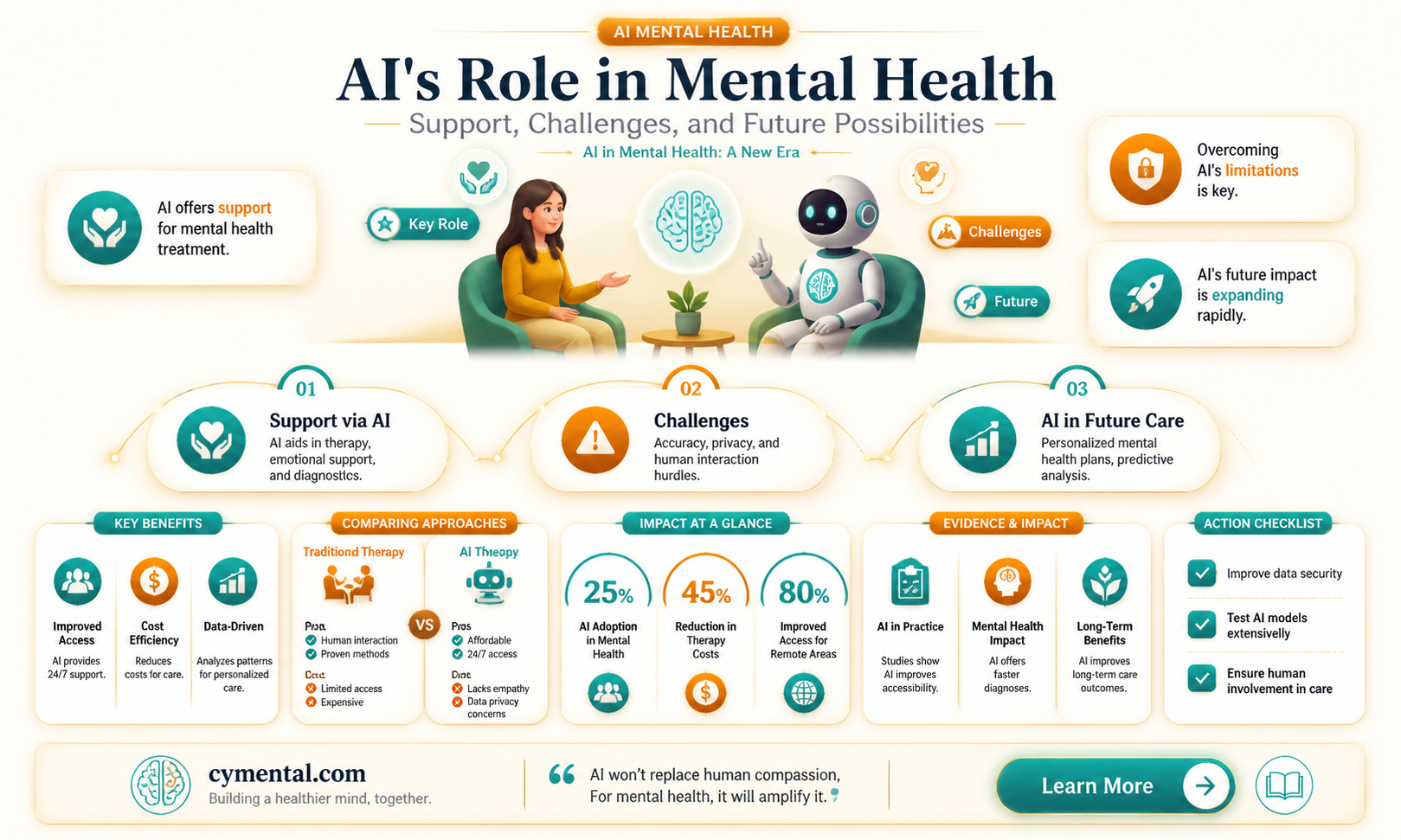
Artificial intelligence (AI) is increasingly being explored as a tool to support mental health, offering innovative solutions to address the growing global demand for accessible and effective care. From chatbots providing immediate emotional support to machine learning algorithms analyzing patterns in patient data to predict and prevent crises, AI has the potential to revolutionize how mental health services are delivered. While concerns about privacy, ethical implications, and the human touch remain, AI’s ability to bridge gaps in access, personalize treatment, and augment professional care suggests it could play a transformative role in improving mental well-being for individuals worldwide.
| Characteristics | Values |
|---|---|
| Accessibility | AI-powered mental health tools are available 24/7, reducing barriers to care, especially in underserved areas. |
| Personalization | AI can tailor interventions based on individual user data, preferences, and progress. |
| Early Detection | AI algorithms can analyze patterns in behavior, speech, or text to identify early signs of mental health issues. |
| Cost-Effectiveness | AI tools can reduce costs compared to traditional therapy by providing scalable solutions. |
| Anonymity and Stigma Reduction | Users can seek help without fear of judgment, as AI interactions are anonymous. |
| Data-Driven Insights | AI can analyze large datasets to identify trends and improve treatment strategies. |
| Chatbots and Virtual Therapists | AI-driven chatbots like Woebot and Wysa provide real-time emotional support and coping strategies. |
| Wearable Integration | AI can analyze data from wearables (e.g., heart rate, sleep patterns) to monitor mental health. |
| Limitations | AI lacks human empathy, cannot replace professional therapists, and may have biases in algorithms. |
| Privacy Concerns | Sensitive mental health data collected by AI tools raises concerns about data security and misuse. |
| Regulatory Challenges | Lack of clear regulations for AI in mental health may hinder widespread adoption. |
| User Engagement | AI tools rely on consistent user engagement, which can be a challenge for some individuals. |
| Supplementary Role | AI is best used as a complement to, not a replacement for, professional mental health care. |
| Research and Development | Ongoing research is exploring AI's potential in diagnosing and treating conditions like depression and anxiety. |
| Cultural Sensitivity | AI tools need to be culturally sensitive and adaptable to diverse populations. |
| Ethical Considerations | Ethical concerns include informed consent, transparency, and avoiding harm in AI-driven interventions. |
Explore related products


What You'll Learn

AI-powered chatbots for therapy and emotional support
AI-powered chatbots are redefining the landscape of mental health support by offering immediate, accessible, and stigma-free conversations to those in need. Unlike traditional therapy, which often requires scheduling weeks in advance, chatbots like Woebot and Wysa provide 24/7 availability, making them ideal for individuals facing sudden emotional distress or those in time zones with limited mental health resources. These tools use evidence-based techniques such as cognitive-behavioral therapy (CBT) and mindfulness exercises, delivering structured interventions in real-time. For instance, Woebot engages users in daily check-ins, tracks mood patterns, and offers personalized coping strategies, while Wysa uses gamified interactions to make mental health exercises more engaging. Their constant presence ensures users have a reliable outlet for expression, even when human support is unavailable.
However, the effectiveness of AI chatbots hinges on their ability to mimic human empathy and understand nuanced emotional contexts. While advancements in natural language processing (NLP) have enabled chatbots to recognize keywords and sentiment, they often struggle with sarcasm, cultural nuances, or complex emotional states. For example, a user expressing "I’m fine" after a series of negative statements might be missed by an AI, whereas a human therapist would probe deeper. To mitigate this, developers are integrating machine learning algorithms that analyze conversation patterns over time, improving the chatbot’s ability to detect subtle cues. Users should approach these tools as supplements to, rather than replacements for, professional therapy, especially for severe conditions like depression or PTSD.
One of the most compelling advantages of AI chatbots is their ability to scale mental health support globally, particularly in underserved regions. In countries with limited mental health infrastructure, chatbots can bridge the gap by providing basic therapeutic interventions in local languages. For instance, SimSensei, an AI therapist developed by the University of Southern California, has been deployed in military settings to offer preliminary mental health screenings. Similarly, in India, Wysa has been integrated into corporate wellness programs to address workplace stress. These applications demonstrate how AI can democratize access to mental health care, though cultural adaptation and ethical considerations, such as data privacy, remain critical challenges.
Despite their potential, AI chatbots are not without limitations. They lack the ability to provide physical presence, non-verbal cues, or the deep, trusting relationship that often forms the foundation of traditional therapy. Additionally, concerns about data security and the potential for misuse of sensitive information persist. Users should be cautious about sharing highly personal details and ensure the chatbot they use complies with regulations like GDPR or HIPAA. For optimal results, individuals should combine chatbot interactions with other self-care practices, such as journaling, exercise, or joining support groups. When used thoughtfully, AI-powered chatbots can serve as valuable tools in a comprehensive mental health toolkit, offering immediate relief and guiding users toward long-term well-being.
Seeking Support: Effective Ways to Get Help When You Need It Most
You may want to see also
Explore related products


Predictive analytics to identify mental health risks early
Early detection of mental health risks can be transformative, and predictive analytics powered by AI is emerging as a game-changer in this domain. By analyzing vast datasets—ranging from electronic health records to social media activity—AI algorithms can identify patterns that precede mental health crises. For instance, a study published in *Nature* demonstrated that machine learning models could predict suicidal ideation with 80% accuracy by analyzing language patterns in social media posts. This capability allows healthcare providers to intervene before symptoms escalate, potentially saving lives.
Implementing predictive analytics in mental health requires a structured approach. First, collect diverse data sources, including medical histories, wearable device metrics (e.g., sleep patterns, heart rate variability), and digital behavior (e.g., screen time, communication frequency). Next, train AI models on this data to recognize risk indicators, such as sudden changes in sleep quality or increased social withdrawal. For example, a 2021 pilot program at a U.S. university used AI to monitor students’ academic performance and social engagement, flagging those at risk of depression with 75% accuracy. Finally, integrate these insights into clinical workflows, ensuring alerts are actionable and privacy-compliant.
While the potential is immense, ethical and practical challenges must be addressed. False positives can lead to unnecessary interventions, while false negatives may leave individuals at risk. For instance, a model trained primarily on data from one demographic may underperform for others, exacerbating health disparities. To mitigate this, ensure datasets are diverse and representative, and involve multidisciplinary teams—including ethicists and mental health professionals—in model development. Additionally, transparency is key: patients should understand how their data is used and have the option to opt out.
The real-world impact of predictive analytics is already evident. In the UK, the NHS is piloting AI tools to identify patients at risk of self-harm by analyzing hospital records and emergency department visits. Similarly, startups like *Mindstrong* use smartphone typing patterns to detect early signs of schizophrenia and depression. These examples highlight the scalability of AI solutions, which can reach populations underserved by traditional mental health services. However, success hinges on collaboration between technologists, clinicians, and policymakers to ensure these tools are both effective and equitable.
To maximize the benefits of predictive analytics in mental health, focus on actionable insights rather than mere predictions. For example, if an AI flags a teenager at risk of anxiety, the system should recommend specific interventions, such as cognitive-behavioral therapy or mindfulness apps. Pairing predictions with personalized resources empowers individuals and clinicians alike. As AI continues to evolve, its role in mental health will likely expand, but its success will depend on balancing innovation with ethical rigor and human-centered design.
Finding Mental Health Support: A Guide to Accessible Resources and Services
You may want to see also
Explore related products


Personalized mental health treatment plans using AI algorithms
AI algorithms are revolutionizing personalized mental health treatment by analyzing vast datasets to tailor interventions to individual needs. Unlike one-size-fits-all approaches, these algorithms consider factors like genetic predispositions, lifestyle, and symptom severity to recommend therapies, medications, or coping strategies. For instance, AI can identify patterns in a patient’s speech or text to detect early signs of depression or anxiety, enabling timely interventions. This precision not only improves outcomes but also reduces trial-and-error periods common in traditional treatment methods.
Consider a 28-year-old with treatment-resistant depression. An AI-driven platform could analyze their medical history, genetic markers, and real-time mood data from wearable devices to suggest a combination of cognitive-behavioral therapy (CBT) and a specific SSRI medication at a dosage optimized for their metabolism. The algorithm might also recommend mindfulness exercises tailored to their stress triggers, such as guided meditations for insomnia. This level of personalization ensures the treatment aligns with the patient’s unique biology and circumstances, increasing adherence and efficacy.
However, implementing AI in mental health isn’t without challenges. Data privacy concerns arise when sensitive health information is fed into algorithms, requiring robust encryption and compliance with regulations like HIPAA. Additionally, AI systems must be trained on diverse datasets to avoid biases that could disproportionately affect certain demographics. For example, an algorithm trained primarily on data from young adults might misdiagnose symptoms in older populations. Clinicians must also remain central to the process, interpreting AI insights and ensuring ethical use.
To integrate AI into personalized treatment plans effectively, start by selecting platforms validated by peer-reviewed research. Patients should be educated on how their data is used and protected, fostering trust. Clinicians can use AI-generated insights as a supplement to their expertise, not a replacement. For instance, if an AI tool flags a patient’s risk of relapse, the therapist can proactively adjust the treatment plan. Regularly updating the algorithm with new data ensures it evolves with the patient’s progress, creating a dynamic and responsive care model.
The ultimate takeaway is that AI-driven personalized treatment plans hold immense potential to transform mental health care. By combining data analytics with clinical judgment, these tools can deliver targeted, effective interventions that adapt to individual needs. While challenges like privacy and bias must be addressed, the benefits—faster symptom relief, reduced treatment costs, and improved quality of life—make AI a valuable ally in the fight against mental health disorders. As technology advances, its role in crafting bespoke care pathways will only grow more indispensable.
Supporting Reluctant Loved Ones: Strategies for Accessing Mental Health Care
You may want to see also
Explore related products



AI tools for stress and anxiety management techniques
AI-powered chatbots are becoming frontline allies in stress and anxiety management, offering 24/7 accessibility and personalized support. Unlike traditional therapy, which often requires scheduling and financial commitment, these tools provide immediate assistance through conversational interfaces. For instance, apps like Woebot and Wysa use cognitive-behavioral therapy (CBT) techniques to guide users through mindfulness exercises, mood tracking, and reframing negative thoughts. A study published in *JMIR Mental Health* found that users interacting with Woebot reported significant reductions in anxiety symptoms after just two weeks. To maximize effectiveness, engage with these chatbots daily for 10–15 minutes, treating them as a complementary tool rather than a replacement for professional care.
While chatbots excel in accessibility, AI-driven biofeedback devices take a more physiological approach to stress management. Wearables like the Muse headband and the Oura Ring monitor biometric data such as heart rate variability (HRV) and sleep patterns, providing real-time feedback to help users regulate their stress responses. For example, Muse uses EEG technology to guide users through meditation, alerting them when their mind wanders. Pairing these devices with breathing exercises—inhale for 4 seconds, hold for 4 seconds, exhale for 6 seconds—can enhance their efficacy. However, reliance on data alone may lead to anxiety for some users, so it’s crucial to interpret metrics as trends rather than absolute judgments.
Virtual reality (VR) is another innovative AI application transforming anxiety management, particularly for phobia-related disorders. VR platforms like Oxford VR expose users to controlled, immersive environments that simulate anxiety triggers, such as public speaking or flying. AI algorithms tailor these scenarios to individual thresholds, gradually increasing exposure to desensitize users. A randomized controlled trial in *The Lancet Psychiatry* demonstrated that VR therapy reduced fear of heights by 68% in participants. For optimal results, sessions should be 30–45 minutes long, conducted 2–3 times per week under professional supervision. While promising, VR therapy requires significant investment in equipment and may not be suitable for individuals prone to motion sickness.
AI-powered journaling apps like Reflectly and Moodpath leverage natural language processing (NLP) to analyze written entries, identifying patterns in emotions and behaviors. These tools prompt users with reflective questions and offer actionable insights, such as suggesting activities to improve mood based on past data. For instance, if entries frequently mention sleep disturbances, the app might recommend establishing a bedtime routine. To enhance benefits, write in these apps daily, focusing on specific emotions rather than general statements. While insightful, these tools lack human empathy, so they’re best used as self-awareness aids rather than diagnostic instruments.
Despite their potential, AI tools for stress and anxiety management are not without limitations. They often lack cultural sensitivity, relying on Western psychological frameworks that may not resonate globally. Additionally, data privacy concerns arise as these tools collect sensitive personal information. Users should prioritize platforms with robust encryption and transparent data policies. Ultimately, AI serves as a valuable adjunct to traditional mental health care, offering scalable, personalized support. However, it cannot replace the nuanced understanding and empathy of human therapists. Combine these tools with professional guidance for a holistic approach to mental well-being.
Art's Healing Power: Boosting Mental Health Through Creativity
You may want to see also
Explore related products


$8.99 $19.99


$14.49 $44.99


Monitoring mental health trends via social media data analysis
Social media platforms have become digital diaries, with users sharing their thoughts, emotions, and experiences openly. This vast reservoir of data offers a unique opportunity to monitor mental health trends on a population scale. By analyzing posts, comments, and even emojis, AI algorithms can detect patterns indicative of rising anxiety, depression, or other mental health concerns. For instance, a sudden spike in the use of words like "lonely," "overwhelmed," or "hopeless" across a region could signal a collective increase in distress, allowing for targeted interventions.
However, leveraging social media data for mental health monitoring requires a delicate balance between insight and ethics. Privacy concerns are paramount; anonymization techniques and strict data protection protocols must be employed to safeguard user identities. Additionally, the nuances of language and context pose challenges. A sarcastic post about stress might be misinterpreted as genuine distress, highlighting the need for sophisticated natural language processing models that can discern tone and intent.
To implement this approach effectively, a multi-step process is essential. First, data collection should focus on publicly available content, avoiding private messages or profiles. Second, AI models must be trained on diverse datasets to minimize bias and ensure accuracy across demographics. Third, findings should be interpreted in collaboration with mental health professionals to avoid misdiagnosis or alarmism. Finally, insights should inform proactive measures, such as public awareness campaigns or increased access to mental health resources in affected areas.
Despite its potential, this method is not a silver bullet. Social media data reflects only a subset of the population, often skewing toward younger, tech-savvy users. It also cannot replace clinical assessments or personalized care. However, as a supplementary tool, it can provide early warnings of emerging mental health crises, enabling societies to respond swiftly and compassionately. By combining AI’s analytical power with human expertise, we can transform social media from a passive platform into an active ally in the fight for mental well-being.
Sleep's Role in Boosting Mental Health and Emotional Well-Being
You may want to see also
Frequently asked questions
AI can assist in identifying patterns and symptoms of mental health conditions by analyzing data such as speech, text, or behavioral cues, but it cannot replace a professional diagnosis. It serves as a tool to support clinicians in making more informed decisions.
AI-powered chatbots and virtual therapists can provide immediate support, deliver evidence-based interventions like cognitive-behavioral therapy (CBT), and offer personalized coping strategies. However, they are best used as supplements to human therapists, not replacements.
Yes, AI can increase accessibility by providing 24/7 support, reducing costs, and reaching underserved populations, such as those in remote areas or with limited access to mental health professionals.
Yes, privacy is a significant concern. AI systems must comply with data protection regulations like GDPR or HIPAA to ensure sensitive mental health information is securely stored and processed. Users should be aware of how their data is being used.