Madison Cole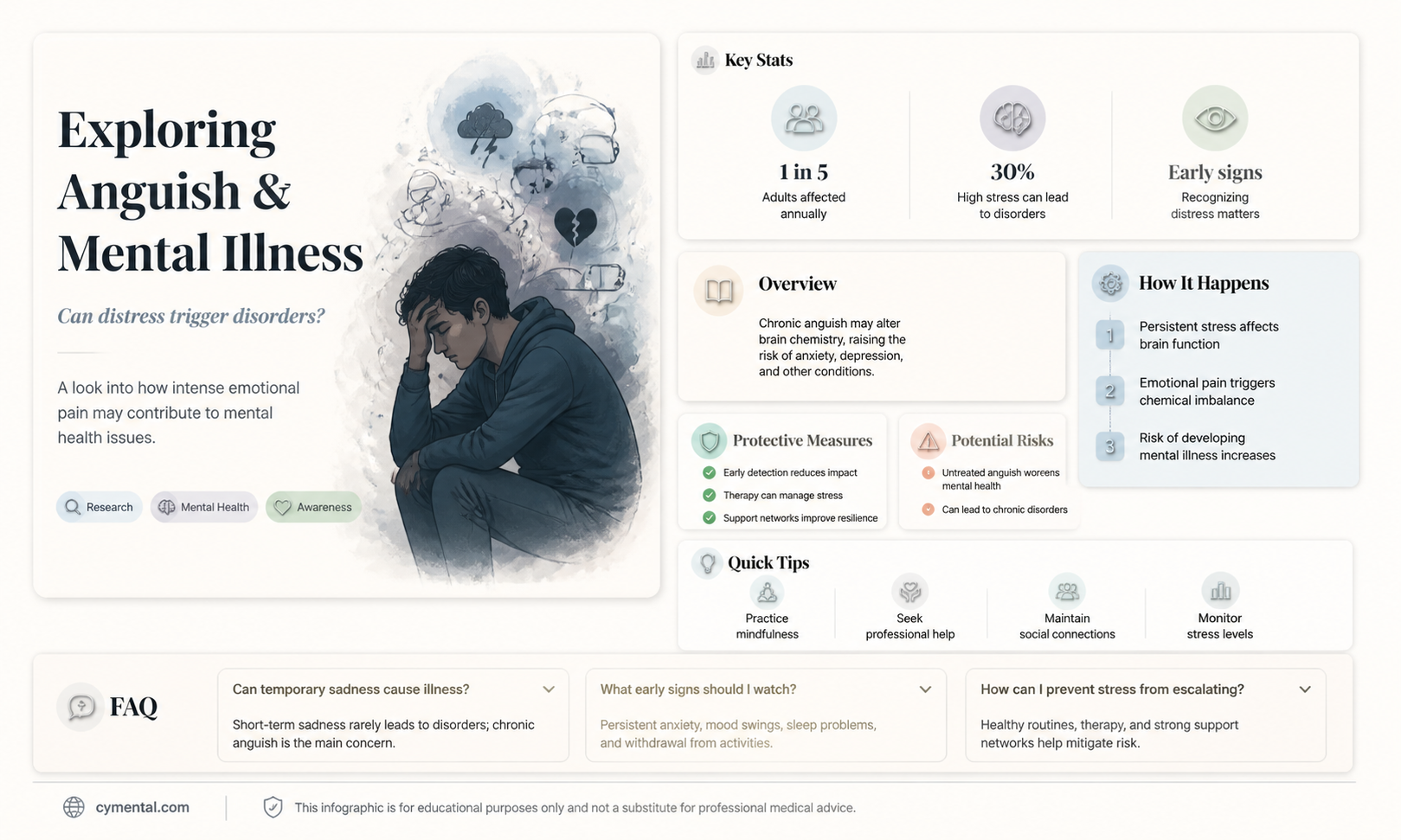
Anguish, characterized by intense emotional pain or distress, can have profound effects on an individual's mental health. While it is a natural human emotion often triggered by traumatic events, loss, or severe stress, prolonged or intense anguish can contribute to the development of mental illnesses. Conditions such as depression, anxiety disorders, and post-traumatic stress disorder (PTSD) can arise or worsen due to sustained feelings of anguish. Understanding the relationship between anguish and mental illness is crucial for developing effective coping strategies and interventions to mitigate its impact on psychological well-being.
| Characteristics | Values |
|---|---|
| Definition | Anguish is a state of severe distress or suffering, often accompanied by physical symptoms such as headaches, stomachaches, or muscle tension. |
| Symptoms | Intense emotional pain, feelings of hopelessness, helplessness, worthlessness, or guilt, physical symptoms like headaches, stomachaches, or muscle tension. |
| Duration | Can be acute (short-term) or chronic (long-term), depending on the underlying cause and individual factors. |
| Causes | Trauma, loss, chronic stress, physical illness, mental health conditions, substance abuse, or social isolation. |
| Impact on Mental Health | Can lead to or exacerbate mental health conditions such as depression, anxiety, post-traumatic stress disorder (PTSD), or suicidal ideation. |
| Treatment Options | Therapy (cognitive-behavioral therapy, trauma-focused therapy), medication (antidepressants, anti-anxiety drugs), support groups, self-care practices (exercise, meditation, relaxation techniques). |
| Prognosis | With appropriate treatment and support, individuals can learn to manage their symptoms and improve their overall mental health and well-being. |
| Prevention | Building resilience, developing healthy coping mechanisms, maintaining social connections, seeking professional help when needed. |
| Comorbidities | Often occurs alongside other mental health conditions such as depression, anxiety, or substance use disorders. |
| Epidemiology | Affects individuals of all ages, genders, and backgrounds, with varying prevalence rates depending on the population and diagnostic criteria. |
| Neurobiology | Involves complex interactions between brain regions, neurotransmitters, and hormones, leading to changes in mood, behavior, and physical sensations. |
| Psychosocial Factors | Social support, economic stability, and access to healthcare can influence the experience and treatment of anguish. |
| Cultural Perspectives | Different cultures may have varying definitions, symptoms, and treatments for anguish, reflecting diverse understandings of mental health and well-being. |
| Research and Future Directions | Ongoing research aims to better understand the underlying mechanisms of anguish and develop more effective prevention and treatment strategies. |
Explore related products


What You'll Learn
- Biological Linkages: Explore how chronic anguish affects brain chemistry and neural pathways, potentially leading to mental health disorders
- Psychological Impact: Discuss the cognitive distortions and negative thought patterns that can arise from prolonged emotional pain
- Social Isolation: Examine the correlation between persistent anguish and social withdrawal, and its effect on mental wellbeing
- Trauma Connection: Investigate the relationship between traumatic experiences, ongoing anguish, and the development of mental illnesses
- Coping Mechanisms: Analyze the role of maladaptive coping strategies in exacerbating mental health issues stemming from anguish

Biological Linkages: Explore how chronic anguish affects brain chemistry and neural pathways, potentially leading to mental health disorders
Chronic anguish has a profound impact on brain chemistry and neural pathways, potentially leading to mental health disorders. This is due to the complex interplay between emotional states and biological processes. When an individual experiences prolonged periods of anguish, their brain undergoes significant changes in the production and regulation of neurotransmitters, such as serotonin and dopamine, which are crucial for maintaining emotional balance and cognitive function.
One of the key biological linkages between chronic anguish and mental health disorders is the activation of the body's stress response system. This system, which includes the hypothalamic-pituitary-adrenal (HPA) axis, is designed to help the body cope with short-term stressors. However, when it is chronically activated due to ongoing anguish, it can lead to a range of negative effects on the brain and body. For example, elevated levels of cortisol, a hormone produced by the adrenal glands in response to stress, can impair cognitive function, disrupt sleep patterns, and contribute to the development of anxiety and depressive disorders.
Furthermore, chronic anguish can lead to changes in the structure and function of neural pathways in the brain. This is particularly evident in the amygdala, a region of the brain that is involved in the processing of emotions, including fear and anxiety. In individuals who experience chronic anguish, the amygdala can become hyperactive, leading to an exaggerated response to stressors and an increased risk of developing anxiety disorders. Additionally, the prefrontal cortex, a region of the brain that is involved in executive function and emotional regulation, can become less active, further exacerbating the negative effects of chronic anguish on mental health.
The impact of chronic anguish on brain chemistry and neural pathways can also have long-term consequences for mental health. For example, individuals who experience chronic anguish during childhood or adolescence may be at an increased risk of developing mental health disorders later in life. This is due to the fact that the brain is still developing during these critical periods, and chronic anguish can disrupt the normal maturation of neural pathways and brain structures.
In conclusion, the biological linkages between chronic anguish and mental health disorders are complex and multifaceted. Chronic anguish can lead to significant changes in brain chemistry and neural pathways, which can have a profound impact on an individual's mental health and well-being. Understanding these linkages is crucial for the development of effective treatments and interventions for mental health disorders.
Unraveling the Roots of Mental Fatigue: A Comprehensive Guide
You may want to see also
Psychological Impact: Discuss the cognitive distortions and negative thought patterns that can arise from prolonged emotional pain
Prolonged emotional pain can significantly alter an individual's cognitive landscape, fostering an environment ripe for cognitive distortions and negative thought patterns. One of the primary distortions that can emerge is catastrophizing, where the individual begins to perceive minor setbacks as major disasters, amplifying the emotional impact of everyday occurrences. This can lead to a pervasive sense of helplessness and hopelessness, further entrenching the cycle of emotional pain.
Another common cognitive distortion is rumination, where the person becomes trapped in a repetitive cycle of negative thoughts, replaying past hurts and imagined future failures. This mental rehearsal not only intensifies the emotional distress but also impairs problem-solving abilities, as the individual becomes fixated on the problem rather than seeking solutions. Rumination can be particularly debilitating, as it often occurs without conscious awareness, making it challenging to interrupt and redirect.
Furthermore, prolonged emotional pain can lead to a phenomenon known as emotional numbing, where the individual begins to disconnect from their feelings in an attempt to cope with the overwhelming emotional burden. While this may provide temporary relief, it can also result in a diminished capacity for experiencing positive emotions, leading to a flat, monotonous emotional state. This can have far-reaching consequences, impacting relationships, motivation, and overall quality of life.
In addition to these cognitive distortions, prolonged emotional pain can also foster negative thought patterns such as self-blame, self-criticism, and self-pity. These patterns can erode self-esteem and self-worth, creating a fertile ground for the development of mental health disorders such as depression and anxiety. It is crucial to recognize and address these cognitive distortions and negative thought patterns, as they can significantly impede the healing process and perpetuate the cycle of emotional pain.
Effective interventions for addressing these issues often involve cognitive-behavioral therapy (CBT), which aims to identify and challenge negative thought patterns and replace them with more adaptive, realistic ones. Mindfulness practices can also be beneficial, helping individuals to become more aware of their thoughts and emotions and learn to respond to them in a more skillful manner. By addressing these cognitive distortions and negative thought patterns, individuals can begin to break free from the cycle of emotional pain and move towards a more balanced and fulfilling life.
Unraveling the Link: Opioid Addiction and Mental Illness
You may want to see also
Social Isolation: Examine the correlation between persistent anguish and social withdrawal, and its effect on mental wellbeing
Persistent anguish can lead to social withdrawal, creating a cycle that exacerbates mental wellbeing issues. When individuals experience prolonged periods of emotional distress, they may become increasingly isolated from their social networks. This isolation can stem from a variety of factors, including feelings of shame, fear of judgment, or a lack of energy to engage in social activities. As social connections dwindle, the support system that could help alleviate feelings of anguish becomes weaker, leading to a further decline in mental health.
Research has shown that social isolation can have a profound impact on mental wellbeing. A study published in the American Psychological Association found that prolonged social isolation can lead to increased levels of stress, anxiety, and depression. Furthermore, the lack of social interaction can impair cognitive function and reduce the ability to cope with stressors. This can create a vicious cycle where feelings of anguish lead to social withdrawal, which in turn worsens mental health outcomes.
Breaking this cycle requires a multifaceted approach. One strategy is to encourage individuals experiencing anguish to seek out social support, whether through friends, family, or mental health professionals. This can help to rebuild social connections and provide a sense of community. Additionally, engaging in activities that promote social interaction, such as joining a club or volunteering, can help to combat feelings of isolation.
It is also important to address the underlying causes of anguish. This may involve seeking professional help to work through traumatic experiences, developing coping mechanisms for stress, or improving self-esteem. By addressing the root causes of anguish, individuals can begin to break free from the cycle of social isolation and improve their overall mental wellbeing.
In conclusion, the correlation between persistent anguish and social withdrawal is a complex issue that requires a comprehensive approach. By understanding the impact of social isolation on mental health and taking steps to rebuild social connections and address underlying causes of anguish, individuals can begin to improve their mental wellbeing and break free from the cycle of isolation.
Exploring the Link: Malnutrition and Mental Health Concerns
You may want to see also
Trauma Connection: Investigate the relationship between traumatic experiences, ongoing anguish, and the development of mental illnesses
Traumatic experiences can significantly impact an individual's mental health, often leading to ongoing anguish and, in some cases, the development of mental illnesses. This connection is complex and multifaceted, involving a range of psychological, biological, and social factors. Understanding this relationship is crucial for developing effective interventions and support systems for those affected by trauma.
One key aspect of this connection is the role of stress in exacerbating mental health issues. Traumatic events can trigger a heightened stress response, which, if prolonged, can lead to changes in brain chemistry and function. This, in turn, can contribute to the development of conditions such as anxiety, depression, and post-traumatic stress disorder (PTSD). Research has shown that individuals who experience chronic stress are more likely to develop mental health problems, highlighting the importance of addressing stress as a potential risk factor.
Another important factor is the impact of trauma on emotional regulation. Traumatic experiences can disrupt the normal emotional response, leading to difficulties in managing emotions and coping with stress. This can result in a range of mental health issues, including mood disorders and personality disorders. Therapies that focus on emotional regulation, such as dialectical behavior therapy (DBT), have been shown to be effective in helping individuals manage the emotional aftermath of trauma.
Social support also plays a critical role in the relationship between trauma, anguish, and mental illness. Individuals who have strong social support networks are more likely to recover from traumatic experiences without developing mental health problems. Conversely, those who lack social support may be more vulnerable to the negative effects of trauma. This underscores the importance of fostering supportive relationships and community connections as part of a comprehensive approach to mental health care.
In conclusion, the connection between traumatic experiences, ongoing anguish, and the development of mental illnesses is a complex one, involving a range of psychological, biological, and social factors. By understanding this relationship, we can develop more effective interventions and support systems to help individuals affected by trauma. Addressing stress, emotional regulation, and social support are all critical components of this approach, and can help to mitigate the negative effects of trauma on mental health.
Exploring the Link: Bladder Infections and Mental Confusion
You may want to see also
Coping Mechanisms: Analyze the role of maladaptive coping strategies in exacerbating mental health issues stemming from anguish
Maladaptive coping strategies can significantly exacerbate mental health issues stemming from anguish. These strategies, while initially providing temporary relief, can lead to long-term negative consequences. For instance, substance abuse, a common maladaptive coping mechanism, may offer short-term respite from emotional pain but can result in addiction, further psychological distress, and physical health problems. Similarly, avoidance behaviors, such as social withdrawal or denial, can prevent individuals from confronting and resolving the underlying causes of their anguish, leading to prolonged suffering and potential social isolation.
Another maladaptive strategy is rumination, where individuals repetitively focus on negative thoughts and emotions without actively seeking solutions. This can deepen feelings of despair and hopelessness, contributing to the development of depressive disorders. Furthermore, self-harm, including physical injury or neglect, can be a dangerous coping mechanism that provides a temporary sense of control or emotional release but can lead to severe physical and psychological harm.
It is crucial to recognize these maladaptive strategies and encourage healthier coping mechanisms, such as seeking social support, engaging in physical activity, practicing mindfulness, or pursuing therapy. By addressing maladaptive coping strategies, individuals can better manage their anguish and reduce the risk of developing or worsening mental health issues.
In summary, maladaptive coping strategies can play a detrimental role in mental health, particularly when dealing with anguish. Identifying and replacing these strategies with healthier alternatives is essential for promoting emotional well-being and preventing the escalation of mental health problems.
Exploring the Link: Stroke and Mental Confusion
You may want to see also
Frequently asked questions
Anguish, characterized by severe emotional distress, can contribute to the development of mental illnesses such as anxiety disorders, depression, and post-traumatic stress disorder (PTSD). Prolonged exposure to anguish can exacerbate existing mental health conditions and lead to new ones if not properly addressed.
Anguish can manifest in various ways, including intense feelings of sadness, fear, or despair. Physical symptoms may include rapid heartbeat, sweating, trembling, and shortness of breath. Behavioral changes, such as withdrawal from social activities or changes in appetite and sleep patterns, can also be indicators of anguish.
Effective coping mechanisms for dealing with anguish include seeking support from friends and family, engaging in therapy or counseling, practicing relaxation techniques such as deep breathing or meditation, and maintaining a healthy lifestyle with regular exercise and balanced nutrition. It's important to address the underlying causes of anguish and develop strategies to manage and reduce stress.
Someone should seek professional help for anguish if they experience persistent and intense emotional distress that interferes with their daily life and well-being. If symptoms of anguish lead to thoughts of self-harm or suicide, it is crucial to seek immediate assistance from a mental health professional or emergency services. Early intervention can improve outcomes and provide necessary support and treatment.