Madison Cole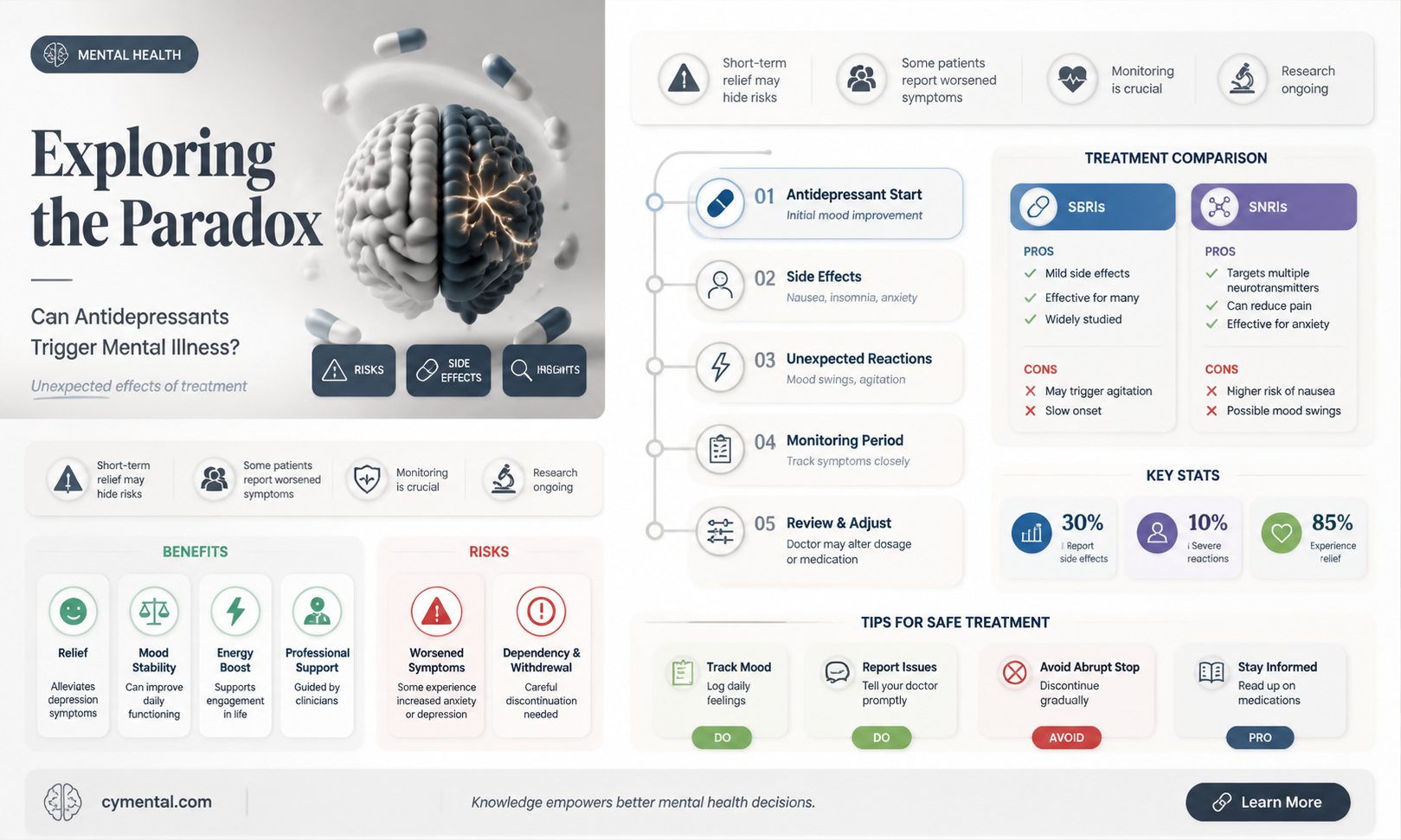
Antidepressants are commonly prescribed medications intended to alleviate symptoms of depression and other mental health conditions. However, there is ongoing debate and research regarding whether these medications can, in some cases, contribute to the development or worsening of mental illness. This complex topic involves examining the potential side effects of antidepressants, the individual differences in how people respond to these medications, and the broader implications for mental health treatment. It is crucial to approach this discussion with a nuanced understanding of the available evidence and expert opinions.
| Characteristics | Values |
|---|---|
| Definition | Antidepressants are medications used to treat depression and other mental health conditions. They work by balancing chemicals in the brain that affect mood and emotions. |
| Types | Selective Serotonin Reuptake Inhibitors (SSRIs), Tricyclic Antidepressants (TCAs), Monoamine Oxidase Inhibitors (MAOIs), Atypical Antidepressants |
| Common Side Effects | Nausea, headache, dry mouth, sleep disturbances, weight changes, sexual dysfunction |
| Serious Side Effects | Increased risk of suicidal thoughts and behaviors, especially in children and young adults; serotonin syndrome; allergic reactions |
| Contraindications | Should not be used in combination with MAOIs or within 14 days of stopping an MAOI; not recommended for children under 12 years old; caution in patients with a history of suicidal thoughts or behaviors |
| Mechanism of Action | SSRIs increase the levels of serotonin in the brain by blocking its reabsorption. TCAs affect the levels of serotonin and norepinephrine. MAOIs prevent the breakdown of serotonin, norepinephrine, and dopamine. Atypical antidepressants work in various ways, often affecting multiple neurotransmitters. |
| Efficacy | Generally effective in treating depression, with response rates varying between 50-70%. May take several weeks to see full effects. |
| Dependency | Can cause physical dependence, leading to withdrawal symptoms if stopped abruptly. Psychological dependence is also possible. |
| Interactions | Can interact with other medications, including blood thinners, antihistamines, and medications for heart conditions. Alcohol should be avoided while taking antidepressants. |
| Pregnancy and Lactation | Some antidepressants are considered safe during pregnancy, but others may pose risks. Consult a healthcare provider for individualized advice. Antidepressants can pass into breast milk, so caution is advised for breastfeeding mothers. |
| Overdose | Symptoms of overdose can include nausea, vomiting, rapid heartbeat, seizures, and coma. Immediate medical attention is necessary if an overdose is suspected. |
| Misuse | Antidepressants can be misused for non-medical purposes, such as to induce sleep or for recreational use. This can lead to dependence and other serious health consequences. |
| Cost | Varies depending on the specific medication, dosage, and insurance coverage. Generic versions are often less expensive than brand-name medications. |
| Availability | Widely available by prescription from healthcare providers. Some online pharmacies offer antidepressants, but caution is advised to ensure legitimacy and safety. |
| Patient Education | Patients should be informed about the potential risks and benefits of antidepressants, including side effects, interactions, and the importance of following the prescribed dosage and instructions. |
Explore related products


$12.18 $17.99


What You'll Learn
- Potential Side Effects: Antidepressants may cause side effects that mimic mental illness symptoms, such as anxiety or agitation
- Medication Interactions: Interactions with other medications can lead to adverse effects, including those resembling mental health issues
- Dosage and Withdrawal: Improper dosage or abrupt withdrawal from antidepressants can result in mental health deterioration or mimic illness
- Individual Sensitivity: Some individuals may be more susceptible to adverse effects from antidepressants, potentially leading to mental illness symptoms
- Underlying Conditions: Antidepressants may exacerbate or unmask underlying mental health conditions, complicating diagnosis and treatment

Potential Side Effects: Antidepressants may cause side effects that mimic mental illness symptoms, such as anxiety or agitation
Antidepressants, while often effective in treating mental health conditions, can sometimes cause side effects that paradoxically mimic the very symptoms they are intended to alleviate. This phenomenon can be particularly concerning for patients who may already be experiencing heightened anxiety or agitation due to their underlying condition.
One of the most common side effects of antidepressants that can exacerbate mental illness symptoms is increased anxiety. This can manifest as restlessness, nervousness, or even panic attacks. For individuals already struggling with anxiety disorders, this side effect can be especially debilitating, making it difficult to determine whether the symptoms are a result of the medication or their condition.
Agitation is another side effect that can be particularly problematic. This may present as irritability, restlessness, or even aggressive behavior. In patients with conditions such as bipolar disorder or ADHD, agitation can be a significant concern, as it may lead to impulsive actions or worsen existing mood instability.
It is crucial for healthcare providers to carefully monitor patients for these side effects, especially during the initial stages of treatment. Adjusting the dosage or switching to a different medication may be necessary to mitigate these adverse reactions. Additionally, patients should be educated about the potential for these side effects and encouraged to report any changes in their symptoms to their healthcare provider.
In some cases, the side effects of antidepressants can be more severe and may even lead to the development of new mental health symptoms. For example, some antidepressants have been linked to an increased risk of suicidal thoughts or behaviors, particularly in young adults. This highlights the importance of close monitoring and ongoing communication between patients and their healthcare providers.
Ultimately, while antidepressants can be a valuable tool in managing mental health conditions, it is essential to be aware of their potential side effects and to take steps to minimize these risks. By working closely with healthcare providers and staying informed about the possible adverse reactions, patients can make more informed decisions about their treatment options and better manage their mental health.
Exploring the Complex Link: Drugs and Mental Illness
You may want to see also
Explore related products

$17.99 $17.99


Medication Interactions: Interactions with other medications can lead to adverse effects, including those resembling mental health issues
Medication interactions can significantly impact mental health, often in ways that are overlooked or misunderstood. For instance, combining antidepressants with certain medications can lead to adverse effects that mimic or exacerbate mental health issues. This is particularly concerning given the prevalence of polypharmacy, where individuals may be prescribed multiple medications by different healthcare providers.
One common scenario involves the interaction between selective serotonin reuptake inhibitors (SSRIs) and nonsteroidal anti-inflammatory drugs (NSAIDs). SSRIs, such as fluoxetine and sertraline, are widely prescribed for depression and anxiety. However, when taken concurrently with NSAIDs like ibuprofen or naproxen, there is an increased risk of serotonin syndrome. This condition can present with symptoms such as agitation, confusion, rapid heart rate, and even seizures, which can be mistaken for a worsening of the underlying mental health condition.
Another example is the interaction between tricyclic antidepressants (TCAs) and antihistamines. TCAs, such as amitriptyline, are often used to treat depression and chronic pain. When combined with antihistamines, which are commonly found in over-the-counter allergy medications, there is a risk of anticholinergic effects. These can manifest as dry mouth, blurred vision, urinary retention, and cognitive impairment, potentially leading to a misdiagnosis of dementia or other cognitive disorders.
To mitigate these risks, it is crucial for healthcare providers to conduct thorough medication reviews and for patients to communicate openly about all medications they are taking, including over-the-counter drugs and supplements. Additionally, patients should be educated about the potential interactions and adverse effects of their medications, enabling them to recognize and report any concerning symptoms promptly.
In conclusion, medication interactions can have a profound impact on mental health, leading to adverse effects that may be misconstrued as a worsening of the underlying condition. By increasing awareness and promoting open communication between patients and healthcare providers, we can work towards reducing these risks and improving overall patient outcomes.
Exploring the Link: Chest Infections and Mental Confusion
You may want to see also
Explore related products


Dosage and Withdrawal: Improper dosage or abrupt withdrawal from antidepressants can result in mental health deterioration or mimic illness
Antidepressants, when used correctly, can be effective in managing mental health conditions. However, improper dosage or abrupt withdrawal can have serious consequences. It is crucial to understand the potential risks associated with these medications and to use them as directed by a healthcare professional.
One of the primary concerns with antidepressants is the risk of mental health deterioration if the dosage is too high or too low. When the dosage is too high, it can lead to side effects such as agitation, restlessness, and increased heart rate. In some cases, it can also cause a condition known as serotonin syndrome, which can be life-threatening. On the other hand, if the dosage is too low, it may not be effective in treating the underlying condition, leading to a worsening of symptoms.
Abrupt withdrawal from antidepressants can also result in mental health deterioration. This is because the brain has become accustomed to the presence of the medication and may experience a rebound effect when it is suddenly removed. Symptoms of withdrawal can include anxiety, depression, irritability, and sleep disturbances. In some cases, it can also lead to a condition known as antidepressant discontinuation syndrome, which can be severe and prolonged.
To minimize the risks associated with antidepressants, it is important to follow the dosage instructions provided by a healthcare professional. This may involve starting with a low dose and gradually increasing it over time, or tapering off the medication slowly if it is time to stop taking it. It is also important to be aware of potential drug interactions and to avoid taking antidepressants with other medications that may affect their metabolism or efficacy.
In addition to following dosage instructions, it is important to monitor for any signs of mental health deterioration or withdrawal symptoms. If these symptoms occur, it is crucial to seek medical attention immediately. A healthcare professional may need to adjust the dosage or provide additional support to help manage the symptoms.
Overall, while antidepressants can be an effective tool in managing mental health conditions, it is important to use them responsibly and to be aware of the potential risks associated with improper dosage or abrupt withdrawal. By following the guidance of a healthcare professional and monitoring for any signs of adverse effects, individuals can minimize the risks and maximize the benefits of these medications.
Exploring the Complex Link Between Abortion and Mental Health
You may want to see also
Explore related products


Individual Sensitivity: Some individuals may be more susceptible to adverse effects from antidepressants, potentially leading to mental illness symptoms
Certain individuals may exhibit heightened sensitivity to antidepressants, which can paradoxically exacerbate mental illness symptoms. This phenomenon is often rooted in genetic variations that affect drug metabolism. For instance, some people may have a genetic predisposition to slower metabolism of serotonin reuptake inhibitors (SSRIs), leading to elevated levels of the drug in their bloodstream. This can increase the risk of adverse effects such as mania, psychosis, or serotonin syndrome.
Age is another critical factor influencing individual sensitivity. Elderly patients, for example, may experience more pronounced side effects due to age-related changes in drug metabolism and increased likelihood of polypharmacy. Conversely, children and adolescents may be more susceptible to adverse effects due to their developing brains and bodies. In this age group, antidepressants can sometimes precipitate suicidal thoughts or behaviors, a risk that is carefully monitored by healthcare providers.
Environmental factors also play a role in individual sensitivity. Stressful life events, such as the loss of a loved one or a significant change in living circumstances, can impact how an individual responds to antidepressant medication. Additionally, interactions with other medications or substances, such as alcohol or illicit drugs, can alter the effects of antidepressants and increase the risk of adverse reactions.
Healthcare providers must consider these factors when prescribing antidepressants to ensure that the benefits outweigh the risks. Personalized medicine approaches, which take into account an individual's genetic makeup, age, and environmental factors, are increasingly being used to tailor antidepressant treatment and minimize the potential for adverse effects.
Exploring the Link: Can a Common Cold Cause Mental Confusion?
You may want to see also
Explore related products



Underlying Conditions: Antidepressants may exacerbate or unmask underlying mental health conditions, complicating diagnosis and treatment
Antidepressants are often prescribed to manage symptoms of depression and anxiety, but their impact on underlying mental health conditions is a critical area of concern. While these medications can be effective in alleviating symptoms, they may also exacerbate or unmask pre-existing conditions, leading to a more complex diagnostic and treatment landscape.
One significant issue is that antidepressants can interact with other mental health conditions in unpredictable ways. For instance, selective serotonin reuptake inhibitors (SSRIs) may worsen symptoms of bipolar disorder, particularly if the individual is not on a mood stabilizer. This can lead to rapid cycling between manic and depressive episodes, making it challenging for clinicians to manage the condition effectively.
In some cases, antidepressants may also unmask underlying conditions that were previously asymptomatic. For example, an individual taking an antidepressant may experience a sudden onset of psychotic symptoms, revealing an underlying schizophrenia or schizoaffective disorder. This can be particularly concerning if the individual has no prior history of psychosis, as it may lead to a delayed diagnosis and inappropriate treatment.
Furthermore, antidepressants can complicate the treatment of co-occurring disorders. For instance, if an individual has both depression and substance use disorder, the antidepressant may interact with medications used to treat the substance use disorder, or it may exacerbate cravings and withdrawal symptoms. This can make it more difficult for the individual to achieve and maintain sobriety.
To mitigate these risks, it is essential for clinicians to conduct a thorough assessment of an individual's mental health history and current symptoms before prescribing antidepressants. This may involve consulting with other mental health professionals, such as psychiatrists or psychologists, to ensure a comprehensive understanding of the individual's condition. Additionally, clinicians should closely monitor individuals taking antidepressants for any changes in symptoms or behavior, and be prepared to adjust treatment plans as needed.
In conclusion, while antidepressants can be a valuable tool in managing symptoms of depression and anxiety, their potential to exacerbate or unmask underlying mental health conditions must be carefully considered. By taking a thoughtful and individualized approach to treatment, clinicians can help minimize these risks and ensure that individuals receive the most appropriate care for their unique needs.
Feline Frenzy: Unraveling the Myth of Cats and Mental Health
You may want to see also
Frequently asked questions
Antidepressants are designed to treat mental illness, not cause it. However, like any medication, they can have side effects. It's important to consult with a healthcare professional to discuss potential risks and benefits.
Common side effects of antidepressants may include nausea, headache, dry mouth, sleep disturbances, and changes in appetite. These side effects are usually temporary and can be managed with adjustments to the medication or dosage.
Antidepressants are effective for many people, but they may not work for everyone. Individual responses to medication can vary, and it may take some trial and error to find the right treatment plan.
It can take several weeks for antidepressants to start working. It's important to be patient and consistent with taking the medication as prescribed. If you have concerns about the effectiveness of your treatment, talk to your healthcare provider.