Madison Cole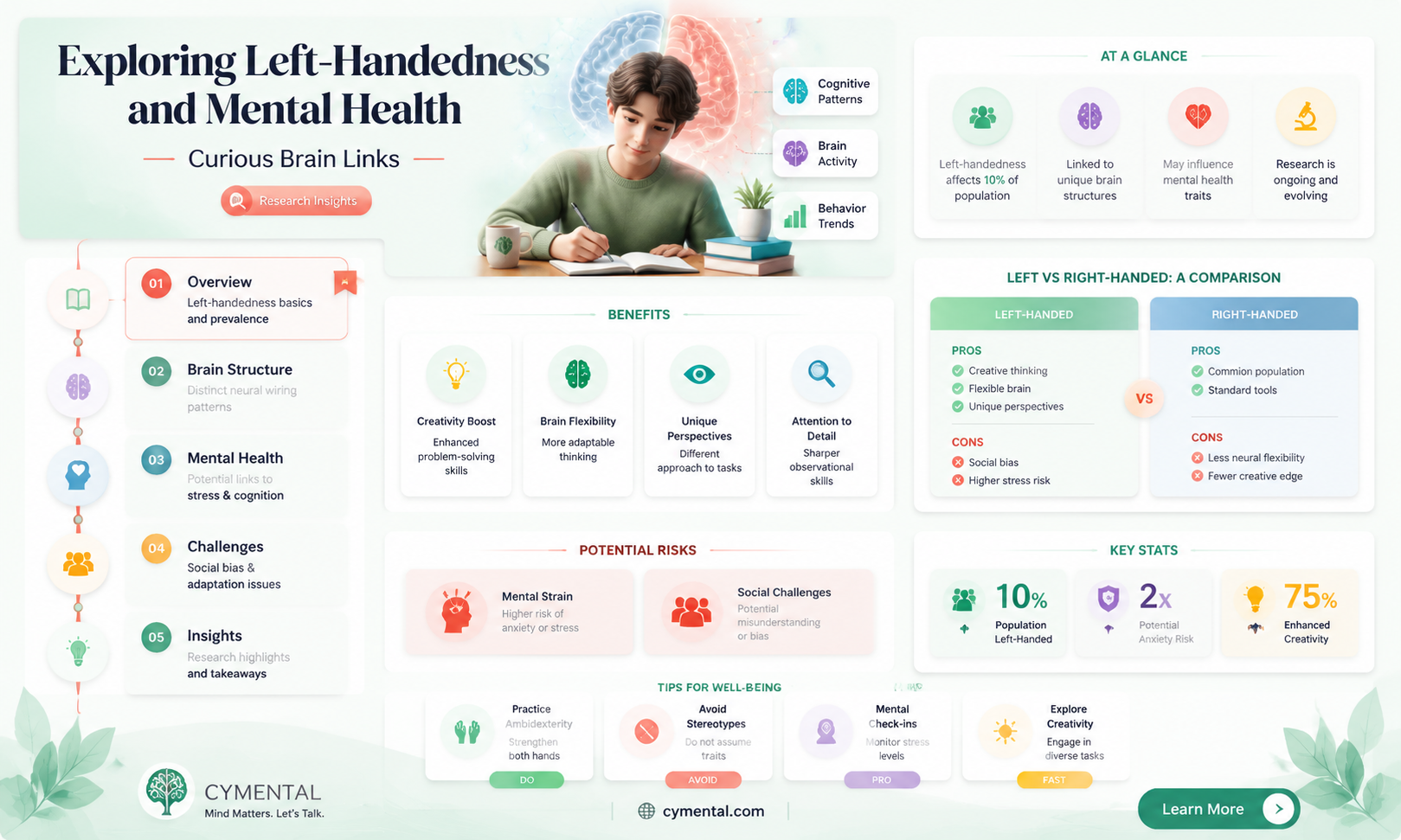
Recent studies have suggested a potential link between left-handedness and mental health, sparking intriguing discussions in the scientific community. While being left-handed is generally considered a benign trait, researchers have begun to explore whether there might be underlying neurological differences that could influence mental well-being. Some studies have indicated that left-handed individuals may be more prone to certain mental health conditions, such as depression and anxiety, due to differences in brain structure and function. However, it is essential to approach this topic with caution, as the findings are still preliminary and more research is needed to fully understand the relationship between left-handedness and mental health.
Explore related products




What You'll Learn
- Myths and Stigmas: Explore common misconceptions and societal attitudes towards left-handedness and their impact on mental well-being
- Brain Structure and Function: Discuss potential differences in brain lateralization and cognitive processes between left-handed and right-handed individuals
- Environmental Factors: Examine how environmental influences, such as family dynamics and educational settings, might affect the mental health of left-handed people
- Coping Mechanisms: Highlight strategies and support systems that can help left-handed individuals navigate a predominantly right-handed world
- Research Findings: Summarize existing studies on the relationship between left-handedness and mental health, including any correlations or causative factors identified

Myths and Stigmas: Explore common misconceptions and societal attitudes towards left-handedness and their impact on mental well-being
Left-handedness has long been shrouded in myths and stigmas, which can have a profound impact on the mental well-being of those who identify as left-handed. One common misconception is that left-handed individuals are more prone to mental health issues such as schizophrenia and depression. This myth may have originated from a 1983 study that found a higher prevalence of schizophrenia among left-handed individuals. However, subsequent research has failed to replicate these findings, and the link between left-handedness and mental health issues remains inconclusive.
Another pervasive stigma is that left-handed individuals are less intelligent or less capable than their right-handed counterparts. This myth may stem from the fact that left-handedness is less common, and therefore, left-handed individuals may be perceived as "different" or "odd." However, research has shown that left-handed individuals are just as intelligent and capable as right-handed individuals. In fact, some studies have suggested that left-handed individuals may have an advantage in certain cognitive tasks, such as spatial reasoning and creativity.
The impact of these myths and stigmas on the mental well-being of left-handed individuals should not be underestimated. Left-handed individuals may experience feelings of isolation, shame, and low self-esteem as a result of these negative societal attitudes. They may also be more likely to experience discrimination and prejudice in various aspects of their lives, including education, employment, and social interactions.
It is essential to challenge and debunk these myths and stigmas surrounding left-handedness. By promoting a more accurate and positive understanding of left-handedness, we can help to improve the mental well-being of left-handed individuals and create a more inclusive and accepting society for all.
Exploring the Link: Antibiotics and Their Impact on Mental Health
You may want to see also
Explore related products


Brain Structure and Function: Discuss potential differences in brain lateralization and cognitive processes between left-handed and right-handed individuals
Recent studies have suggested that there may be differences in brain lateralization and cognitive processes between left-handed and right-handed individuals. Brain lateralization refers to the idea that certain cognitive functions are more dominant in one hemisphere of the brain than the other. For example, language processing is typically more dominant in the left hemisphere of the brain for right-handed individuals. However, research has shown that left-handed individuals may have a more symmetrical distribution of language processing across both hemispheres.
One potential implication of this difference in brain lateralization is that left-handed individuals may be more susceptible to certain mental health conditions, such as schizophrenia and depression. This is because these conditions have been linked to abnormalities in brain lateralization. Additionally, left-handed individuals may be more likely to experience cognitive difficulties, such as dyslexia and ADHD.
However, it is important to note that the relationship between handedness and mental health is complex and not fully understood. While there may be some differences in brain lateralization and cognitive processes between left-handed and right-handed individuals, these differences do not necessarily translate to significant differences in mental health outcomes. More research is needed to fully understand the relationship between handedness and mental health.
In conclusion, while there may be some differences in brain lateralization and cognitive processes between left-handed and right-handed individuals, these differences do not necessarily have a significant impact on mental health outcomes. It is important to approach the topic of handedness and mental health with caution and to avoid making sweeping generalizations based on limited research.
Unveiling the Impact: Nicotine's Effects on Mental Health Explored
You may want to see also
Explore related products


Environmental Factors: Examine how environmental influences, such as family dynamics and educational settings, might affect the mental health of left-handed people
Research suggests that left-handed individuals may face unique environmental challenges that could impact their mental health. For instance, studies have shown that left-handed children are more likely to experience difficulties in school settings, where right-handedness is often the norm. This can lead to feelings of isolation, frustration, and low self-esteem, which may contribute to mental health issues such as anxiety and depression.
Family dynamics can also play a role in the mental health of left-handed individuals. Parents and caregivers may unintentionally reinforce negative stereotypes about left-handedness, such as the belief that left-handed people are clumsy or less intelligent. This can lead to internalized stigma and a negative self-image, which may increase the risk of mental health problems.
In addition to these factors, left-handed individuals may also face challenges in the workplace. Many jobs and industries are designed with right-handedness in mind, which can make it difficult for left-handed people to perform tasks efficiently and effectively. This can lead to stress, burnout, and feelings of inadequacy, which may further contribute to mental health issues.
It is important to note that while these environmental factors may pose challenges for left-handed individuals, they do not necessarily determine their mental health outcomes. Many left-handed people are able to overcome these challenges and lead happy, healthy lives. However, it is crucial to raise awareness about the potential impact of environmental factors on the mental health of left-handed individuals and to provide support and resources to help them thrive.
Unraveling the Complex Web: Addiction's Impact on Mental Health
You may want to see also
Explore related products


Coping Mechanisms: Highlight strategies and support systems that can help left-handed individuals navigate a predominantly right-handed world
Left-handed individuals often face unique challenges in a world predominantly designed for right-handed people. From using scissors to writing in notebooks, these daily obstacles can lead to frustration and stress. However, there are several coping mechanisms and support systems available to help left-handers navigate these challenges more effectively.
One key strategy is to seek out specialized tools and equipment designed specifically for left-handed use. This can include left-handed scissors, pens, and even computer mice. By using tools that are tailored to their needs, left-handers can perform tasks more efficiently and with less discomfort. Additionally, many online communities and forums provide a platform for left-handers to connect, share experiences, and offer advice to one another. These virtual support systems can be invaluable in helping individuals feel less isolated and more understood.
Another important coping mechanism is to develop problem-solving skills and adaptability. Left-handers may need to think creatively to find solutions to everyday challenges, such as using a right-handed can opener or tying shoelaces. By cultivating a mindset of resilience and resourcefulness, left-handers can better navigate a right-handed world. Furthermore, it is crucial for left-handers to communicate their needs to others, whether it be in the workplace, classroom, or social settings. By advocating for themselves and educating others about the challenges they face, left-handers can create a more inclusive and supportive environment.
In conclusion, while being left-handed can present unique challenges, there are several coping mechanisms and support systems available to help individuals navigate these obstacles. By seeking out specialized tools, connecting with online communities, developing problem-solving skills, and advocating for themselves, left-handers can thrive in a predominantly right-handed world.
The Surprising Link Between Dental Health and Mental Well-being
You may want to see also
Research Findings: Summarize existing studies on the relationship between left-handedness and mental health, including any correlations or causative factors identified
Recent studies have explored the intriguing link between left-handedness and mental health, shedding light on potential correlations and causative factors. One notable finding is the higher prevalence of left-handedness among individuals with certain mental health conditions, such as schizophrenia and bipolar disorder. This correlation has sparked interest in understanding whether left-handedness is a risk factor for these conditions or if there are underlying genetic or environmental factors at play.
Research has also delved into the possible reasons behind this correlation. Some studies suggest that left-handedness may be associated with differences in brain structure and function, particularly in regions related to language processing and emotion regulation. These differences could potentially contribute to the development of mental health conditions. Additionally, left-handed individuals may face unique challenges in a predominantly right-handed world, such as social stigma and difficulty with certain tasks, which could impact their mental well-being.
Furthermore, studies have investigated the role of genetics in the relationship between left-handedness and mental health. While the exact genetic mechanisms are still being explored, research suggests that there may be shared genetic factors that influence both left-handedness and susceptibility to certain mental health conditions. This finding has implications for understanding the complex interplay between genetics and environment in shaping mental health outcomes.
In conclusion, the research findings on the relationship between left-handedness and mental health highlight the need for further investigation into the underlying mechanisms and potential implications for prevention and treatment strategies. By unraveling the complexities of this relationship, we can gain valuable insights into the factors that contribute to mental health conditions and develop more targeted interventions.
Exploring the Impact of Environment on Mental Well-being
You may want to see also
Frequently asked questions
While being left-handed itself does not directly cause mental health issues, left-handers may face unique challenges that could indirectly impact their mental well-being. These challenges include living in a predominantly right-handed world, which can lead to feelings of isolation or frustration. Additionally, left-handers may be more prone to certain neurological conditions, such as dyslexia or ADHD, which can have associated mental health implications.
Research has suggested a possible link between left-handedness and schizophrenia, with some studies indicating that left-handers may have a slightly higher risk of developing the condition. However, it is essential to note that the relationship is not definitive, and many other factors contribute to the development of schizophrenia.
Some studies have found that left-handers may be more likely to experience anxiety and depression compared to right-handers. This could be due to the unique challenges left-handers face in a right-handed world, leading to increased stress and feelings of inadequacy. However, more research is needed to fully understand the relationship between left-handedness and these mental health conditions.
Yes, there is evidence to suggest that left-handers may have an advantage when it comes to creativity. Studies have shown that left-handers tend to have higher scores on creativity tests and are more likely to pursue creative careers. This may be due to differences in brain structure and function between left- and right-handers, which could influence cognitive processes related to creativity.
To support left-handers and promote their mental well-being, it is essential to create an inclusive environment that accommodates their unique needs. This can include providing left-handed tools and resources, offering support groups or counseling services, and raising awareness about the challenges left-handers face. Additionally, encouraging left-handers to embrace their creativity and strengths can help foster a positive self-image and improve their overall mental health.