Caleb Wright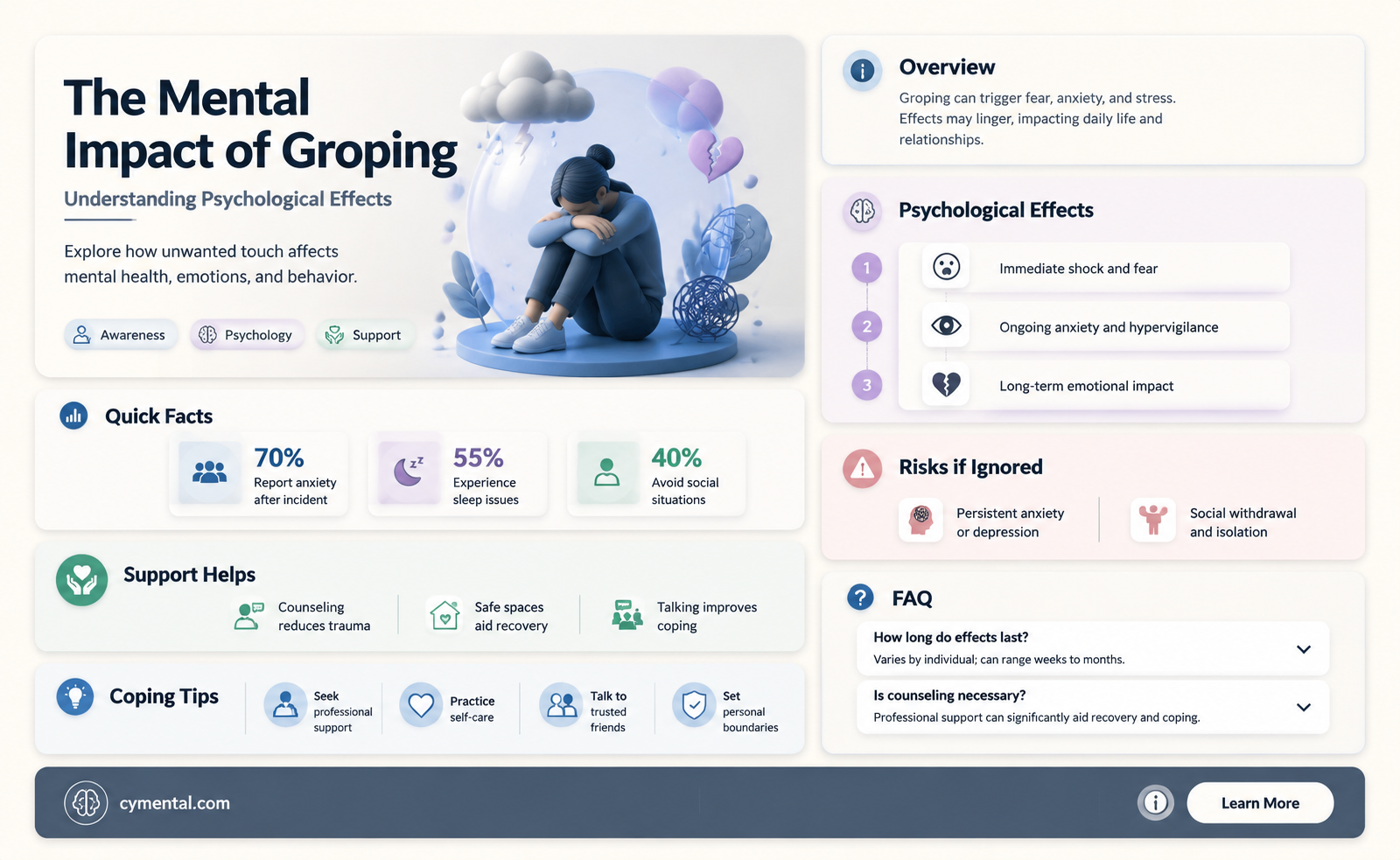
Being groped can have profound mental and emotional impacts on an individual. It is a form of sexual assault that violates personal boundaries and can lead to feelings of fear, anxiety, and helplessness. The experience can trigger a range of psychological responses, including depression, post-traumatic stress disorder (PTSD), and a heightened sense of vulnerability. Victims may also struggle with trust issues and social withdrawal as they process the trauma. It's important to recognize that the effects of groping can be long-lasting and that seeking support from mental health professionals, friends, and family is crucial for healing and recovery.
| Characteristics | Values |
|---|---|
| Definition | Groping is a form of sexual harassment that involves unwanted physical contact, typically touching or grabbing someone's body without their consent. |
| Mental Health Impact | Being groped can have significant mental health effects, including anxiety, depression, post-traumatic stress disorder (PTSD), and emotional distress. |
| Immediate Reactions | Victims may experience shock, fear, anger, or a sense of helplessness immediately after the incident. |
| Long-term Effects | Long-term psychological impacts can include chronic anxiety, avoidance behaviors, difficulty trusting others, and flashbacks or nightmares. |
| Self-Esteem | Groping can lead to feelings of shame and guilt, negatively affecting a person's self-esteem and body image. |
| Social Withdrawal | Victims may withdraw from social situations or public places to avoid potential triggers or further incidents. |
| Sleep Disturbances | Anxiety and stress related to the incident can cause insomnia or other sleep disturbances. |
| Physical Symptoms | Mental stress can manifest physically, leading to symptoms like headaches, stomachaches, or muscle tension. |
| Coping Mechanisms | Healthy coping strategies include seeking support from friends and family, engaging in therapy, practicing self-care, and reporting the incident to authorities if desired. |
| Prevention | Education and awareness campaigns can help prevent groping by promoting respectful behavior and consent. |
| Legal Consequences | Groping is illegal in many jurisdictions and can result in criminal charges, fines, or imprisonment for the perpetrator. |
| Support Resources | Various resources are available for victims, including hotlines, counseling services, and support groups. |
| Healing Process | Healing from the mental effects of groping can be a long and challenging process, often requiring professional help and a strong support system. |
| Empowerment | Speaking out against groping and seeking justice can empower victims and help them regain a sense of control over their lives. |
| Education | Educating oneself about sexual harassment and assault can help individuals recognize the signs and take appropriate action to protect themselves and others. |
What You'll Learn
- Immediate Emotional Impact: Groping can cause instant feelings of fear, anger, and disgust
- Long-term Psychological Effects: It may lead to anxiety, depression, and post-traumatic stress disorder
- Trust Issues: Victims might struggle with trust in others, affecting relationships
- Self-Esteem and Body Image: Groping can negatively alter self-perception and body image
- Coping Mechanisms: Individuals may develop unhealthy coping strategies like avoidance or substance abuse

Immediate Emotional Impact: Groping can cause instant feelings of fear, anger, and disgust
The immediate emotional impact of groping can be profound and multifaceted. Victims often report a surge of fear, as the sudden and unwanted physical contact can trigger a fight-or-flight response. This fear may be compounded by the uncertainty of the situation and the potential for further harm. Anger is another common reaction, stemming from the violation of personal boundaries and the assertion of power by the perpetrator. The victim may feel a sense of injustice and a desire to retaliate or seek help. Disgust is also a prevalent emotion, as the invasive nature of groping can evoke strong negative feelings towards the perpetrator and the act itself.
These emotions can manifest physically, with victims experiencing symptoms such as increased heart rate, sweating, trembling, and nausea. The intensity of these reactions can vary depending on factors such as the severity of the groping, the victim's prior experiences with trauma, and their individual coping mechanisms. In some cases, the emotional impact may be so overwhelming that it leads to dissociation, where the victim feels detached from their body or the surrounding environment.
The long-term mental health effects of groping can be equally devastating. Victims may develop anxiety disorders, depression, or post-traumatic stress disorder (PTSD) as a result of the trauma. They may also experience difficulties with trust, intimacy, and self-esteem. The emotional impact of groping can extend to various aspects of a victim's life, affecting their relationships, work, and overall well-being.
It is crucial for victims of groping to seek support and resources to help them process their emotions and begin the healing process. This may include therapy, counseling, or joining support groups. Friends and family can also play a vital role in providing emotional support and helping the victim feel safe and validated. By addressing the immediate emotional impact of groping and providing ongoing support, victims can begin to rebuild their lives and regain a sense of control and empowerment.
The Silent Struggle: Sleep Deprivation's Impact on Mental Health
You may want to see also
Long-term Psychological Effects: It may lead to anxiety, depression, and post-traumatic stress disorder
The long-term psychological effects of being groped can be profound and debilitating. Research indicates that individuals who have experienced unwanted touching may develop a range of mental health issues, including anxiety, depression, and post-traumatic stress disorder (PTSD). These conditions can manifest in various ways, such as persistent feelings of fear, avoidance of certain situations or places, and difficulty maintaining relationships.
Anxiety may arise as a result of the heightened sense of vulnerability and loss of control that often accompanies being groped. Individuals may become hypervigilant, constantly on the lookout for potential threats, and may experience panic attacks or other anxiety-related symptoms. Depression can also develop, as the trauma of being groped may lead to feelings of worthlessness, shame, and guilt. These negative emotions can be overwhelming and may interfere with daily functioning and overall well-being.
PTSD is another potential long-term effect of being groped. This condition can occur when an individual experiences or witnesses a traumatic event and subsequently develops symptoms such as flashbacks, nightmares, and intrusive thoughts. People with PTSD may also exhibit avoidance behaviors, emotional numbing, and heightened arousal, which can significantly impact their quality of life.
It is essential to recognize that the psychological effects of being groped can vary widely from person to person. Factors such as the severity of the incident, the individual's prior mental health history, and the availability of support can all influence the development and persistence of symptoms. Therefore, it is crucial to approach each case with sensitivity and to provide access to appropriate mental health resources and support.
In conclusion, the long-term psychological effects of being groped can be severe and far-reaching. Understanding these effects and providing adequate support and resources is essential for helping individuals recover and regain their sense of safety and well-being.
Unveiling the Impact: Mental Illness and Brain Function Explored
You may want to see also
Trust Issues: Victims might struggle with trust in others, affecting relationships
Victims of groping often grapple with profound trust issues, which can significantly impact their ability to form and maintain healthy relationships. This struggle with trust is a complex and multifaceted aspect of the psychological aftermath of such an experience. It stems from the violation of personal boundaries and the resulting feelings of vulnerability and powerlessness. When someone is groped, their sense of safety and control over their own body is shattered, leading to a deep-seated mistrust of others.
This mistrust can manifest in various ways, affecting different aspects of a victim's life. In romantic relationships, victims may find it challenging to engage in physical intimacy, fearing that their partner may cross boundaries or that they themselves may be unable to set and enforce healthy limits. In friendships and professional relationships, victims might struggle to confide in others or to believe that their boundaries will be respected. This can lead to social isolation, as victims may withdraw from relationships to avoid the risk of further harm.
Moreover, trust issues can also impact a victim's mental health, contributing to anxiety, depression, and post-traumatic stress disorder (PTSD). The constant fear of being violated again can create a state of hypervigilance, where victims are always on guard, scanning their environment for potential threats. This heightened state of alertness can be exhausting and debilitating, further eroding their ability to trust and connect with others.
Rebuilding trust after being groped is a challenging and often lengthy process. It requires a great deal of patience, self-compassion, and support from understanding friends, family, or mental health professionals. Victims may need to work through their trauma, learning to recognize and assert their boundaries, and gradually rebuilding their sense of safety and control. This process can involve therapy, support groups, or other forms of counseling, as well as practical steps such as setting clear boundaries with others and practicing self-care.
Ultimately, the journey towards healing and rebuilding trust is a deeply personal one, unique to each individual's experiences and needs. However, with the right support and resources, victims of groping can learn to overcome their trust issues and forge healthy, fulfilling relationships.
The Impact of Cyberbullying on Mental Health: A Growing Concern
You may want to see also
Self-Esteem and Body Image: Groping can negatively alter self-perception and body image
Groping can have profound and lasting effects on an individual's mental health, particularly in the realm of self-esteem and body image. When someone is groped, it can lead to a significant shift in how they perceive themselves and their bodies. This unwanted and invasive act can make individuals feel objectified, disrespected, and violated, which in turn can erode their sense of self-worth and confidence.
One of the most insidious ways in which groping can affect self-esteem is by creating a sense of shame and guilt. Victims may feel as though they are somehow responsible for the incident, or that they should have done something to prevent it. This can lead to a cycle of negative self-talk and self-blame, which can be incredibly damaging to one's mental health. Additionally, groping can cause individuals to feel uncomfortable in their own skin, leading to a negative body image and a desire to change their appearance in order to feel more "safe" or "acceptable."
The impact of groping on self-esteem and body image can be particularly severe for young people, who are still developing their sense of self and their understanding of healthy relationships. When groping occurs during adolescence or early adulthood, it can interfere with the normal process of self-discovery and identity formation, leading to long-term difficulties with self-acceptance and self-confidence.
It is important to note that the effects of groping on self-esteem and body image can be complex and multifaceted. While some individuals may experience a significant decline in their mental health following a groping incident, others may exhibit more subtle changes in their self-perception and body image. Additionally, the impact of groping can vary depending on factors such as the severity of the incident, the relationship between the victim and the perpetrator, and the victim's pre-existing mental health status.
In conclusion, groping can have a devastating impact on an individual's self-esteem and body image, leading to feelings of shame, guilt, and self-blame. It can also interfere with the normal process of self-discovery and identity formation, particularly in young people. The effects of groping on mental health are complex and multifaceted, and can vary depending on a number of factors.
The Impact of Obesity on Mental Health: A Comprehensive Overview
You may want to see also
Coping Mechanisms: Individuals may develop unhealthy coping strategies like avoidance or substance abuse
Individuals who have experienced being groped may develop a range of coping mechanisms to deal with the emotional aftermath. While some may seek support from friends, family, or professionals, others may turn to less healthy strategies to manage their feelings. Avoidance is a common unhealthy coping mechanism, where individuals may try to steer clear of situations, places, or people that remind them of the incident. This can lead to social isolation and a decreased quality of life.
Substance abuse is another maladaptive coping strategy that some individuals may resort to. Drugs and alcohol can provide a temporary escape from the emotional pain and anxiety associated with being groped. However, this can quickly spiral into addiction, further exacerbating mental health issues and creating new problems in various areas of life, such as work, relationships, and physical health.
Unhealthy coping mechanisms can have long-term negative consequences on an individual's mental well-being. They may lead to the development of anxiety disorders, depression, post-traumatic stress disorder (PTSD), or other mental health conditions. It is crucial for individuals to recognize the signs of unhealthy coping and seek professional help if needed.
Healthy coping strategies, on the other hand, can help individuals process their emotions and move forward from the trauma. These may include talking to a therapist, engaging in self-care activities, practicing mindfulness and meditation, or participating in support groups. By adopting healthy coping mechanisms, individuals can better manage their emotions, reduce the risk of mental health issues, and improve their overall well-being.
In conclusion, while unhealthy coping mechanisms like avoidance and substance abuse may provide temporary relief from the emotional pain of being groped, they can ultimately lead to more significant problems. It is essential for individuals to be aware of these risks and to seek out healthier ways of coping with their emotions. With the right support and strategies, individuals can overcome the mental impact of being groped and regain control of their lives.
The Unseen Impact: How Car Accidents Can Affect Your Mental Health
You may want to see also
Frequently asked questions
Yes, being groped can have significant long-term mental health effects. It can lead to anxiety, depression, post-traumatic stress disorder (PTSD), and other psychological issues. The violation of personal boundaries and the traumatic nature of such an experience can deeply impact an individual's mental well-being.
Immediate reactions to being groped can vary widely. Some individuals may feel shock, fear, or anger. Others might freeze or feel numb. It's also common to experience a fight-or-flight response, where the person either confronts the aggressor or tries to escape the situation.
Coping mechanisms can include seeking support from friends and family, talking to a therapist or counselor, engaging in self-care activities like exercise or meditation, and practicing grounding techniques to manage anxiety and flashbacks. It's important for survivors to find healthy ways to process their emotions and rebuild a sense of safety and control.
While it's unfortunately common for survivors of groping to feel guilty or ashamed, these feelings are not a reflection of their actions or character. The responsibility for the assault lies solely with the perpetrator. Survivors should be encouraged to recognize that their feelings are a natural response to trauma and that they are not to blame for what happened to them.