Madison Cole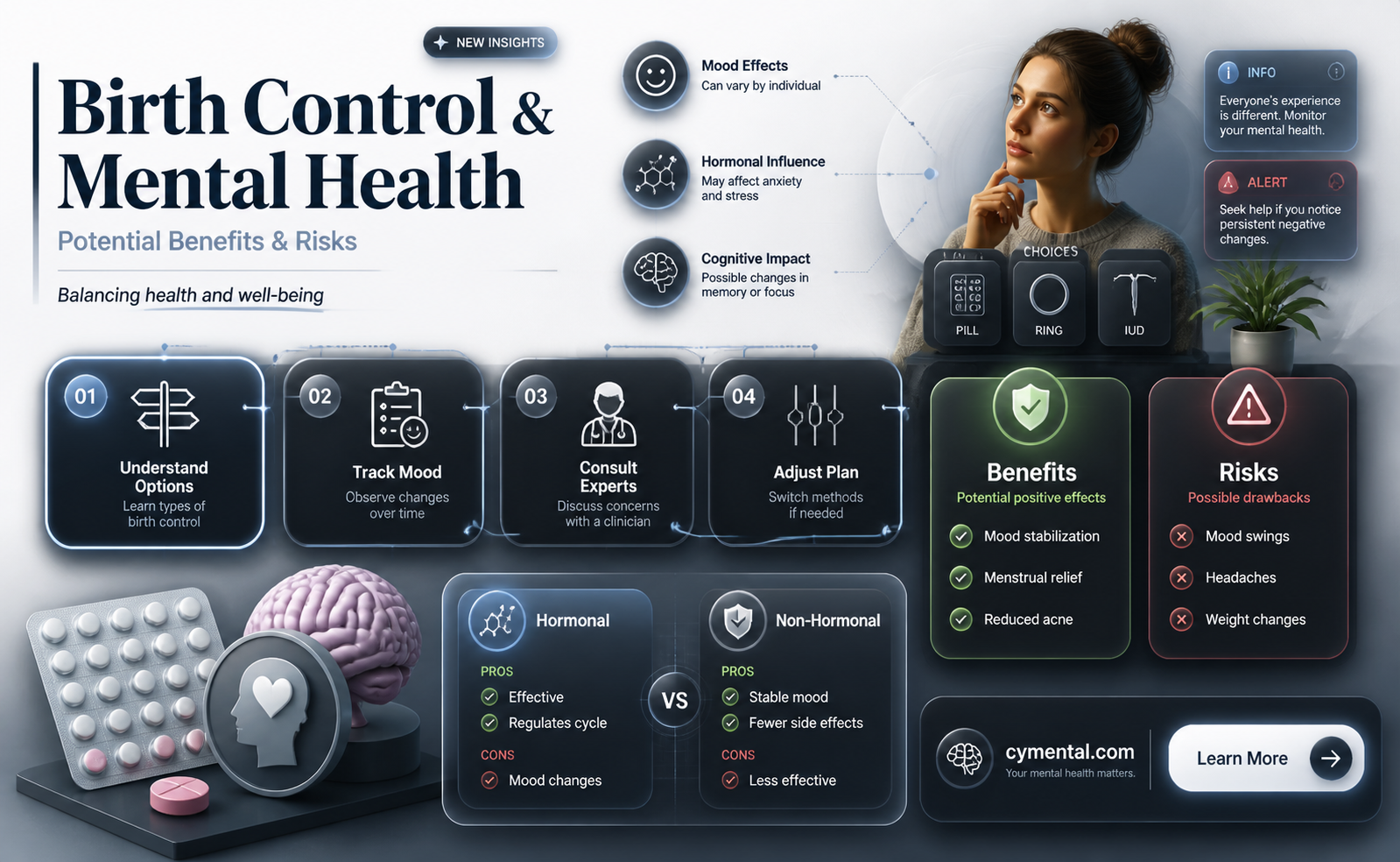
Birth control, primarily known for its role in preventing pregnancy, has also been studied for its potential impact on mental health. Research suggests that hormonal contraceptives, such as the pill, patch, or implant, may influence mood and emotional well-being due to their effects on hormone regulation, particularly estrogen and progesterone. While some individuals report improvements in symptoms of conditions like premenstrual dysphoric disorder (PMDD) or menstrual-related mood swings, others experience adverse effects, including increased anxiety or depression. The relationship between birth control and mental disorders is complex, as individual responses vary widely based on genetic, hormonal, and environmental factors. As such, exploring whether birth control can help or exacerbate mental health conditions requires a nuanced understanding of its mechanisms and personalized considerations for each user.
Explore related products


What You'll Learn
- Hormonal impact on mood regulation and mental health stability
- Birth control's role in reducing PMDD symptoms effectively
- Potential alleviation of anxiety and depression symptoms
- Risks of hormonal methods exacerbating mental health conditions
- Non-hormonal alternatives for mental health-conscious individuals

Hormonal impact on mood regulation and mental health stability
Hormonal fluctuations are a biological reality, yet their profound impact on mood and mental health often remains under-discussed. The brain’s limbic system, responsible for emotional regulation, is highly sensitive to estrogen and progesterone levels. During menstrual cycles, pregnancy, or menopause, shifts in these hormones can trigger mood swings, anxiety, or depressive symptoms. For instance, a 2019 study published in *Frontiers in Behavioral Neuroscience* found that estrogen modulates serotonin, a neurotransmitter critical for mood stability, explaining why some individuals experience premenstrual dysphoric disorder (PMDD). Birth control, by stabilizing hormone levels, can mitigate these fluctuations, offering a potential tool for mood regulation.
Consider the mechanism: combined oral contraceptives (COCs) contain synthetic estrogen and progestin, which suppress the body’s natural hormone production. This suppression creates a more consistent hormonal environment, reducing the peaks and valleys that disrupt emotional equilibrium. For example, a woman with severe PMS may find that a COC containing 20-35 mcg of ethinyl estradiol and 0.5-1 mg of norethindrone acetate alleviates irritability and mood lability. However, individual responses vary, and not all formulations are equally effective. Progestin-only pills or non-oral methods like the hormonal IUD may be better suited for those sensitive to estrogen’s side effects, such as headaches or breast tenderness.
Critics argue that hormonal birth control can exacerbate mental health issues, citing studies linking certain formulations to increased depression risk. A 2016 study in *JAMA Psychiatry* found a correlation between hormonal contraceptive use and first-time antidepressant prescriptions, particularly in adolescents. This highlights the importance of personalized treatment. Clinicians should assess a patient’s mental health history before prescribing hormonal methods. For instance, a woman with a history of depression might benefit from a low-dose estrogen pill or a non-hormonal option like the copper IUD. Monitoring mood changes during the first 3-6 months of use is critical, as this is when side effects are most likely to manifest.
Practical tips for optimizing hormonal birth control’s impact on mental health include maintaining a consistent dosing schedule to avoid hormone level dips, pairing it with lifestyle interventions like regular exercise and a balanced diet, and tracking mood symptoms using apps like Clue or Moodpath. For those with pre-existing mental health conditions, combining hormonal methods with psychotherapy or medication may yield better outcomes. For example, cognitive-behavioral therapy (CBT) can help individuals manage stress responses that hormonal fluctuations might amplify. Ultimately, while hormonal birth control isn’t a cure-all for mental disorders, its role in stabilizing mood for certain individuals is undeniable—when used thoughtfully and tailored to the individual.
Strategies to Foster Mental Resilience and Prevent Psychological Disorders
You may want to see also
Explore related products


Birth control's role in reducing PMDD symptoms effectively
Premenstrual Dysphoric Disorder (PMDD) is a severe, cyclical mood disorder affecting 3–8% of menstruating individuals, causing debilitating emotional and physical symptoms in the luteal phase. Unlike milder PMS, PMDD’s symptoms—such as extreme irritability, anxiety, and hopelessness—can disrupt daily life, often requiring targeted intervention. Birth control, specifically hormonal contraceptives, has emerged as a frontline treatment by suppressing ovulation and stabilizing hormone fluctuations. For instance, combined oral contraceptives containing ethinyl estradiol (20–30 µg) and a progestin like drospirenone (3 mg) are commonly prescribed to reduce PMDD symptoms effectively. This approach directly addresses the hormonal underpinnings of the disorder, offering relief for many.
The mechanism behind birth control’s efficacy lies in its ability to suppress ovarian activity, thereby eliminating the monthly hormone fluctuations that trigger PMDD. Continuous dosing regimens, such as skipping placebo pills or using extended-cycle pills, further minimize symptom recurrence by maintaining hormonal stability. A 2019 study in *The American Journal of Psychiatry* found that 60% of PMDD patients experienced significant symptom reduction with continuous hormonal contraceptive use. However, individual responses vary, and some may require trial-and-error to find the optimal formulation. For example, progestin-only methods like the levonorgestrel IUD (52 mg) may be less effective due to their inability to fully suppress ovulation, highlighting the importance of personalized treatment plans.
While birth control is a powerful tool, its use in PMDD management requires careful consideration of side effects and contraindications. Common concerns include mood changes, weight gain, and thromboembolic risks, particularly in smokers or those over 35. To mitigate these, healthcare providers often start with low-dose estrogen formulations and monitor patients closely. Practical tips for users include maintaining a symptom diary to track effectiveness, staying hydrated to reduce bloating, and pairing hormonal treatment with non-pharmacological strategies like cognitive-behavioral therapy (CBT) for holistic symptom management.
Comparatively, birth control stands out as a more accessible and cost-effective option than alternatives like selective serotonin reuptake inhibitors (SSRIs), which are also used to treat PMDD. While SSRIs target neurotransmitter imbalances, they may take weeks to show effects and carry their own side effect profiles. Birth control, in contrast, often provides symptom relief within the first cycle, making it a preferred choice for those seeking rapid improvement. However, it’s not a one-size-fits-all solution; some individuals may require combination therapy or non-hormonal interventions. Ultimately, birth control’s role in PMDD management underscores its dual utility as both a contraceptive and a therapeutic agent, offering a practical, evidence-based approach to a complex disorder.
School Nurses: Prepared to Address Student Mental Health Challenges?
You may want to see also
Explore related products


Potential alleviation of anxiety and depression symptoms
Hormonal birth control methods, such as the pill, patch, or hormonal IUD, have been studied for their potential to alleviate symptoms of anxiety and depression in some individuals. The key lies in how these methods stabilize hormone fluctuations, particularly estrogen and progesterone, which are known to influence mood regulation. For women whose mental health is sensitive to hormonal shifts—like those experiencing premenstrual dysphoric disorder (PDD) or perimenopausal mood changes—birth control can act as a hormonal balancer, reducing the severity of anxiety and depressive episodes. However, this effect is not universal; some users report worsened symptoms, underscoring the need for personalized approaches.
Consider the case of combined oral contraceptives, which contain both estrogen and progestin. A 2016 study published in *JAMA Psychiatry* found that women using these pills had a 23% lower risk of developing depression compared to non-users. The mechanism? Estrogen has been shown to enhance serotonin activity, a neurotransmitter critical for mood stability. For women aged 18–35, starting with a low-dose estrogen pill (20–30 mcg ethinyl estradiol) under medical supervision may offer a starting point. Pairing this with consistent sleep patterns and stress management techniques can amplify potential mental health benefits.
Conversely, progestin-only methods, like the hormonal IUD or mini-pill, present a different profile. While they avoid the estrogen-related risks (e.g., blood clots), some users report increased anxiety or mood swings due to progestin’s potential to lower serotonin levels. For those with a history of depression, a trial of progestin-only methods should be closely monitored. Combining these methods with lifestyle adjustments—such as regular exercise, which boosts endorphins, or mindfulness practices—can help mitigate adverse effects.
A comparative analysis reveals that the impact of birth control on mental health often depends on individual hormone sensitivity and baseline conditions. For instance, women with PDD may experience significant relief from combined pills, as they suppress ovulation and stabilize hormone levels. In contrast, those with generalized anxiety disorder might benefit more from non-hormonal interventions, like cognitive-behavioral therapy, alongside hormonal management. Consulting a psychiatrist or gynecologist to tailor the approach is crucial, as is tracking mood changes via journaling or apps to identify patterns.
In practice, starting birth control for mental health purposes requires a strategic plan. Begin with a thorough evaluation of hormonal history, including menstrual cycle regularity and previous responses to hormonal medications. Gradually introduce the chosen method, starting with the lowest effective dose, and monitor symptoms for 3–6 months. If anxiety or depression worsens, consider switching to a different formulation or exploring non-hormonal alternatives. Ultimately, while birth control can be a valuable tool for some, it is not a one-size-fits-all solution—its effectiveness hinges on individualized care and holistic management.
Gratitude's Power: Enhancing Mental Health and Emotional Well-being
You may want to see also
Explore related products


Risks of hormonal methods exacerbating mental health conditions
Hormonal birth control methods, while effective in preventing pregnancy, can sometimes act as a double-edged sword for individuals with pre-existing mental health conditions. The intricate dance between hormones and neurotransmitters in the brain means that altering one can significantly impact the other. For instance, estrogen and progesterone, the primary hormones in many contraceptives, influence serotonin levels—a neurotransmitter crucial for mood regulation. A 2018 study published in *JAMA Psychiatry* found that adolescents using hormonal birth control had a higher likelihood of being prescribed antidepressants, suggesting a potential link between these methods and mood disorders. This raises a critical question: could the very tool meant to empower individuals with reproductive control inadvertently worsen their mental health?
Consider the case of combined oral contraceptive pills (COCs), which contain both estrogen and progestin. While these pills are often prescribed to regulate menstrual cycles and manage conditions like polycystic ovary syndrome (PCOS), they can also disrupt the delicate hormonal balance in the brain. Women with a history of depression or anxiety may experience heightened symptoms due to the synthetic hormones in COCs. For example, a 2020 study in *Frontiers in Psychiatry* noted that some users reported increased feelings of sadness, irritability, and even suicidal ideation within the first few months of starting hormonal birth control. These risks are particularly pronounced in individuals under 25, whose brains are still developing and more susceptible to hormonal fluctuations.
It’s not just pills—other hormonal methods like the implant, injection, and hormonal IUDs carry similar risks. The hormonal IUD, for instance, releases a localized dose of progestin, which can still enter the bloodstream and affect mood. While the dosage is lower compared to pills, the cumulative effect over time can be significant for sensitive individuals. The injectable contraceptive Depo-Provera, which contains a high dose of progestin, has been associated with depression in up to 4.5% of users, according to a 2017 review in *Contraception*. These findings underscore the importance of personalized risk assessment before prescribing hormonal methods, especially for those with mental health histories.
Practical steps can mitigate these risks. For individuals considering hormonal birth control, a thorough discussion with a healthcare provider about mental health history is essential. Monitoring mood changes during the first three months of use is critical, as this is when symptoms are most likely to emerge. If adverse effects occur, switching to non-hormonal methods like copper IUDs or barrier methods may be advisable. Additionally, integrating mood-stabilizing strategies such as regular exercise, mindfulness practices, and therapy can provide a buffer against potential hormonal impacts. While hormonal birth control remains a valuable option for many, its prescription should be approached with caution, particularly for those already navigating mental health challenges.
Finding Support: Where to Get Help for Depression and Healing
You may want to see also
Explore related products


Non-hormonal alternatives for mental health-conscious individuals
For individuals wary of hormonal birth control's potential impact on mental health, non-hormonal alternatives offer a compelling solution. These methods, ranging from barrier devices to fertility awareness, prioritize physical prevention without altering hormone levels, a key concern for those with mood disorders or sensitivities.
Copper IUDs, for instance, provide long-term protection (up to 10 years) by releasing copper ions that immobilize sperm. While effective, they can increase menstrual bleeding and cramping, requiring careful consideration for those with pre-existing conditions like anemia or endometriosis.
Fertility awareness methods (FAM) empower individuals to track their menstrual cycle's fertile window, avoiding intercourse or using barriers during this time. This approach demands diligence and consistency, involving daily monitoring of basal body temperature, cervical mucus changes, and menstrual cycle length. Apps like Natural Cycles and Kindara assist in data tracking, but accuracy relies heavily on user commitment and understanding of fertility signals.
Barrier methods like condoms and diaphragms offer on-demand protection without hormonal intervention. Male condoms, when used correctly, boast a 98% effectiveness rate, while female condoms provide a slightly lower 95%. Diaphragms, fitted by a healthcare provider, require spermicide use and must be left in place for 6-8 hours post-intercourse. These methods, though effective, necessitate consistent use and may not suit those seeking set-it-and-forget-it solutions.
For those seeking a middle ground, spermicide-only methods like foams, gels, or suppositories offer a non-hormonal option. However, their effectiveness is lower (78-85%) and requires precise application within an hour before intercourse. Combining spermicides with barrier methods significantly boosts protection, making them a viable adjunctive strategy for mental health-conscious individuals prioritizing non-hormonal approaches.
Empowering Actions: Simple Ways to Make a Positive Impact Today
You may want to see also
Frequently asked questions
Birth control may affect mental health differently in individuals. Some people report improved mood due to hormonal regulation, while others may experience worsened symptoms. Research is mixed, and effects vary based on the type of birth control and individual sensitivity to hormones.
Hormonal birth control can potentially trigger or exacerbate mental health issues in some individuals, particularly those predisposed to conditions like depression or anxiety. Hormonal fluctuations from birth control may impact neurotransmitters linked to mood.
Birth control is not a primary treatment for mental disorders, but it may help manage symptoms in certain cases, such as hormone-related mood swings. It should be used in conjunction with evidence-based treatments like therapy or medication, under professional guidance.