Lucas Bennett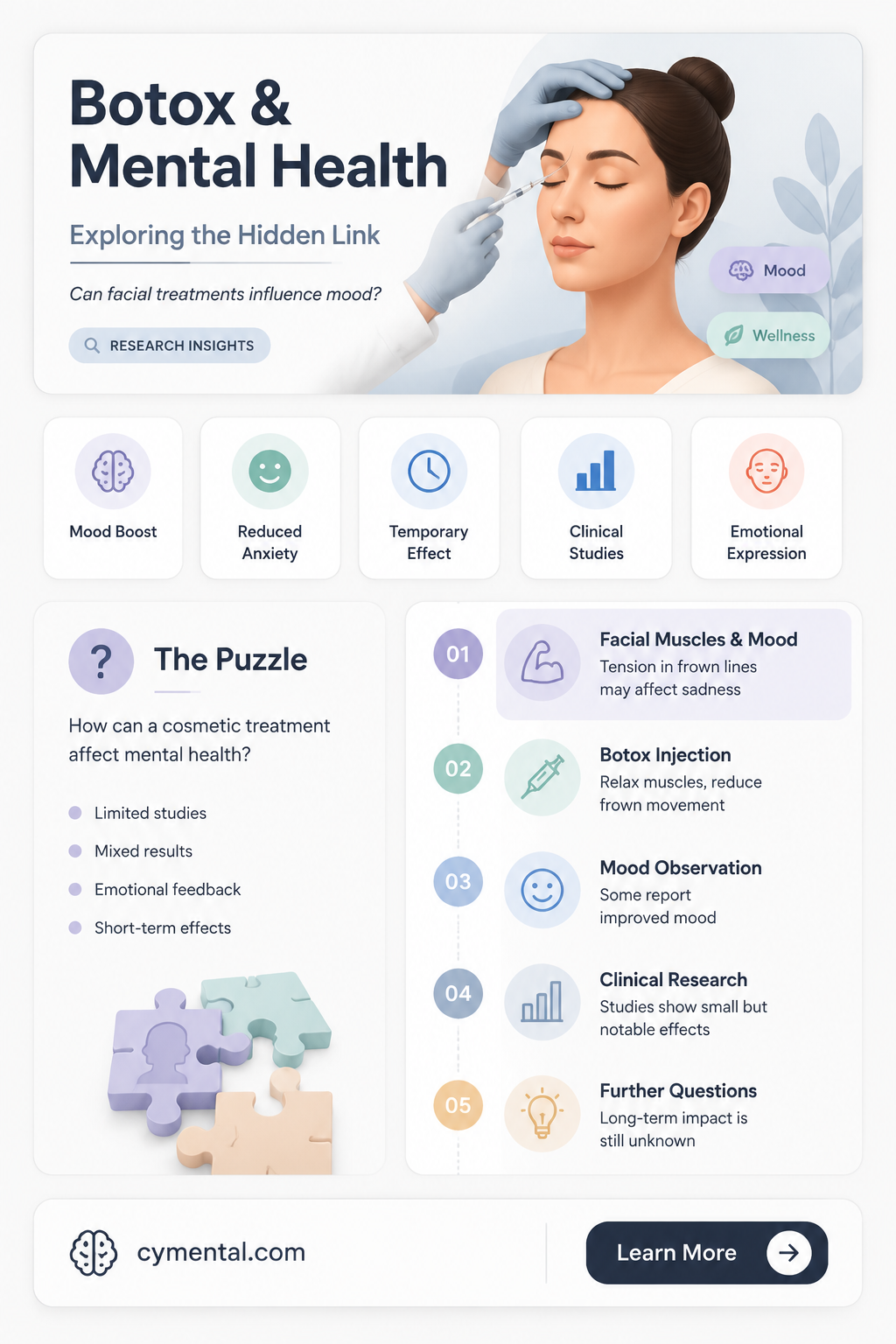
Botox, a popular cosmetic treatment known for its ability to reduce wrinkles and fine lines, has been a subject of interest in the realm of mental health. While its physical effects are well-documented, there is ongoing research and debate about its potential impact on psychological well-being. Some studies suggest that Botox injections may lead to improvements in mood and self-esteem, possibly due to the reduction in visible signs of aging. However, other research indicates that the toxin could potentially interfere with emotional expression and processing, raising concerns about its long-term effects on mental health. As the use of Botox continues to grow, it is essential to explore these potential connections to better understand the full implications of this cosmetic treatment.
| Characteristics | Values |
|---|---|
| Potential Impact | Botox, a cosmetic treatment, may have indirect effects on mental health. While it's primarily used to reduce wrinkles, some studies suggest it could influence mood and self-perception. |
| Mechanism of Action | Botox works by temporarily paralyzing facial muscles, which can lead to a smoother appearance of the skin. The psychological effects are thought to be related to changes in facial expressions and the perception of aging. |
| Positive Effects | Some users report improved self-esteem and reduced anxiety related to their appearance. The physical act of looking younger might contribute to feeling more youthful and confident. |
| Negative Effects | There is limited research on negative psychological impacts, but some individuals might experience adverse effects such as increased anxiety, depression, or dissatisfaction with their appearance post-treatment. |
| Duration of Effects | The effects of Botox on mental health are not long-lasting and typically align with the duration of the cosmetic effects, which usually last between 3 to 6 months. |
| Individual Variability | Responses to Botox can vary greatly among individuals. Factors such as personal expectations, previous experiences with cosmetic treatments, and underlying mental health conditions can influence the psychological impact. |
| Research Findings | Studies on the mental health effects of Botox are relatively sparse and often inconclusive. More research is needed to fully understand the relationship between Botox use and psychological well-being. |
| Safety Considerations | While Botox is generally considered safe for cosmetic use, it's essential for individuals to consult with a qualified healthcare provider to discuss potential risks and benefits, including any possible mental health implications. |
| Alternatives and Complementary Treatments | Other cosmetic treatments, such as fillers or laser therapy, might also impact mental health similarly to Botox. Additionally, psychological interventions like cognitive-behavioral therapy can help address underlying issues related to self-esteem and body image. |
| Societal and Cultural Factors | The societal emphasis on youth and beauty can contribute to the desire for cosmetic treatments like Botox. Cultural norms and personal values play a significant role in how individuals perceive the effects of such treatments on their mental health. |
Explore related products


What You'll Learn
- Potential Psychological Side Effects: Explore reported cases of depression, anxiety, or mood swings post-Botox
- Neurological Impact: Discuss how Botox might influence neurotransmitter function and brain activity
- Emotional Expression and Well-being: Analyze the link between facial expressions, emotional suppression, and mental health
- Body Image and Self-Esteem: Examine the psychological effects of altered appearance on self-perception
- Long-term Mental Health Studies: Review existing research on the long-term psychological impact of Botox use

Potential Psychological Side Effects: Explore reported cases of depression, anxiety, or mood swings post-Botox
While Botox is widely recognized for its cosmetic benefits, a growing body of research suggests that it may also have psychological side effects. Reports have emerged of individuals experiencing depression, anxiety, and mood swings following Botox injections. These cases raise important questions about the safety and implications of cosmetic procedures on mental health.
One notable study published in the Journal of Cosmetic Dermatology found that a small percentage of patients reported symptoms of depression and anxiety after receiving Botox injections. The study's authors hypothesized that these psychological changes could be linked to the temporary paralysis of facial muscles, which may disrupt normal emotional expression and feedback.
Further research is needed to fully understand the relationship between Botox and mental health. However, these reported cases highlight the importance of considering the potential psychological risks associated with cosmetic procedures. Individuals contemplating Botox injections should be aware of these possible side effects and consult with a healthcare professional to discuss their concerns.
In addition to the potential psychological impacts, it is also crucial to consider the broader societal implications of cosmetic procedures like Botox. The increasing popularity of these treatments may contribute to unrealistic beauty standards and body image issues, which can have negative effects on mental health and self-esteem.
Ultimately, while Botox may offer cosmetic benefits, it is essential to approach these procedures with caution and awareness of their potential risks. By understanding the possible psychological side effects and societal implications, individuals can make informed decisions about whether Botox is right for them.
Nourishing Your Mind: The Profound Impact of Diet on Mental Health
You may want to see also
Explore related products


Neurological Impact: Discuss how Botox might influence neurotransmitter function and brain activity
Botox, a neurotoxin derived from the bacterium Clostridium botulinum, primarily functions by blocking the release of acetylcholine, a neurotransmitter responsible for muscle contractions. This action leads to the temporary paralysis of muscles, which is utilized in cosmetic treatments to reduce the appearance of wrinkles. However, the neurological impact of Botox extends beyond its localized effects on muscles. Research suggests that Botox can influence neurotransmitter function and brain activity, potentially affecting mental health.
Studies have shown that Botox injections can lead to changes in brain activity, particularly in regions associated with emotional processing and mood regulation. For instance, a study published in the Journal of Psychiatric Research found that Botox treatment resulted in increased activity in the prefrontal cortex and decreased activity in the amygdala, which are brain regions involved in emotional responses and mood control. These changes were correlated with improvements in symptoms of depression and anxiety in the study participants.
Furthermore, Botox has been observed to affect the levels of various neurotransmitters in the brain. In addition to acetylcholine, Botox may influence the release of serotonin, dopamine, and norepinephrine, which are neurotransmitters implicated in mood regulation and emotional well-being. This modulation of neurotransmitter levels could potentially contribute to the reported improvements in mental health symptoms following Botox treatment.
The exact mechanisms by which Botox exerts its effects on mental health are still under investigation. However, it is hypothesized that the reduction in muscle tension and the subsequent decrease in pain signals sent to the brain may play a role in alleviating symptoms of anxiety and depression. Additionally, the temporary paralysis of facial muscles may lead to a reduction in the expression of negative emotions, which could further contribute to improvements in mood.
While the potential neurological benefits of Botox are intriguing, it is essential to consider the risks and limitations associated with its use. Botox is a potent neurotoxin, and its effects on the brain and nervous system are not fully understood. Further research is needed to determine the long-term safety and efficacy of Botox as a treatment for mental health conditions.
The Unseen Struggle: How Mental Health Affects Us All
You may want to see also
Explore related products


Emotional Expression and Well-being: Analyze the link between facial expressions, emotional suppression, and mental health
Facial expressions play a crucial role in emotional expression and well-being. They serve as a primary means of non-verbal communication, allowing individuals to convey their emotions to others. However, the suppression of facial expressions, often due to societal pressures or personal insecurities, can have a significant impact on mental health. Research has shown that inhibiting facial expressions can lead to increased stress, anxiety, and depression.
Botox, a popular cosmetic treatment, can inadvertently contribute to emotional suppression by paralyzing facial muscles, thereby limiting the ability to express emotions. While Botox is primarily used for aesthetic purposes, such as reducing wrinkles, its effects on emotional expression should not be overlooked. Studies have suggested that Botox injections can lead to a decrease in emotional expressiveness, which may negatively impact mental health over time.
The link between facial expressions and mental health is complex and multifaceted. On one hand, expressing emotions through facial expressions can lead to emotional release and improved well-being. On the other hand, suppressing emotions can result in increased psychological distress. Botox, by altering facial expressions, can disrupt this delicate balance, potentially leading to negative mental health outcomes.
It is essential to consider the psychological implications of Botox use, particularly in individuals who may already be struggling with emotional expression or mental health issues. While Botox can provide temporary cosmetic benefits, its long-term effects on emotional well-being should be carefully evaluated. Alternative treatments that focus on enhancing emotional expression, such as therapy or mindfulness practices, may be more beneficial for overall mental health.
In conclusion, the relationship between facial expressions, emotional suppression, and mental health is a critical aspect to consider when evaluating the impact of Botox on well-being. By understanding this link, individuals can make more informed decisions about cosmetic treatments and prioritize their emotional and mental health.
Understanding Affect: The Emotional Core of Mental Health
You may want to see also
Explore related products


Body Image and Self-Esteem: Examine the psychological effects of altered appearance on self-perception
The psychological impact of altered appearance on self-perception is a complex and multifaceted issue. When individuals undergo cosmetic procedures such as Botox, they often do so with the expectation of improving their physical appearance and, by extension, their self-esteem. However, the relationship between physical appearance and self-esteem is not always straightforward. While some individuals may experience a boost in confidence following cosmetic enhancements, others may find that their self-perception remains unchanged or even deteriorates.
One possible explanation for this variability is the concept of the "self-schema." This refers to the mental framework that individuals use to organize and interpret information about themselves. When a person's self-schema is rigid and heavily invested in their physical appearance, they may be more susceptible to negative psychological effects if their appearance changes in a way that does not align with their self-image. Conversely, individuals with a more flexible self-schema may be better able to adapt to changes in their appearance without experiencing a significant impact on their self-esteem.
Another important factor to consider is the role of social comparison in shaping self-perception. In today's society, individuals are constantly bombarded with images of idealized beauty standards, which can lead to feelings of inadequacy and low self-esteem. When individuals undergo cosmetic procedures, they may be attempting to align themselves with these societal beauty standards. However, this can be a double-edged sword, as the pursuit of an unattainable ideal can lead to feelings of disappointment and dissatisfaction.
Furthermore, the psychological effects of altered appearance can be influenced by individual differences in personality and coping mechanisms. Some individuals may be more resilient to changes in their appearance, while others may be more prone to experiencing negative psychological effects. Additionally, the way in which individuals cope with stress and uncertainty can play a role in how they perceive themselves following cosmetic procedures.
In conclusion, the psychological effects of altered appearance on self-perception are complex and influenced by a variety of factors, including self-schema, social comparison, and individual differences in personality and coping mechanisms. While cosmetic procedures such as Botox can have a positive impact on self-esteem for some individuals, it is important to consider the potential risks and to approach such procedures with a realistic understanding of their limitations.
Exploring the Link Between Vegan Diets and Mental Health
You may want to see also
Explore related products




Long-term Mental Health Studies: Review existing research on the long-term psychological impact of Botox use
Recent studies have delved into the long-term psychological effects of Botox use, exploring whether this popular cosmetic treatment can have a lasting impact on mental health. One notable study published in the Journal of Cosmetic Dermatology followed a group of women over a period of five years, assessing their mental well-being and self-esteem before and after receiving Botox injections. The results indicated a significant improvement in self-esteem and a reduction in symptoms of depression and anxiety among the participants.
Another study, presented at the American Society for Dermatologic Surgery meeting, examined the psychological effects of Botox use in a larger sample size of over 500 individuals. This research found that Botox injections were associated with a decrease in symptoms of depression and an increase in overall life satisfaction. The study also highlighted that the positive psychological effects of Botox were more pronounced in women than in men.
However, it is essential to consider the limitations of these studies. Many of the existing research on the long-term mental health impact of Botox use is based on small sample sizes and lacks control groups. Additionally, the psychological effects of Botox may vary depending on individual factors such as age, gender, and underlying mental health conditions.
Despite these limitations, the existing research suggests that Botox use may have a positive impact on mental health in the long term. The mechanism behind this effect is not fully understood, but it is hypothesized that the reduction in facial wrinkles and lines may lead to improved self-esteem and a more youthful appearance, which in turn can contribute to better mental well-being.
In conclusion, while more research is needed to fully understand the long-term psychological impact of Botox use, the available evidence suggests that this cosmetic treatment may offer mental health benefits for some individuals. It is crucial for healthcare providers and patients to weigh the potential risks and benefits of Botox use and to consider the individual's unique circumstances when making decisions about cosmetic treatments.
Exploring the Surprising Link Between Viruses and Mental Health
You may want to see also
Frequently asked questions
While Botox is primarily known for its cosmetic benefits, some studies suggest that it may have a positive effect on mental health by reducing symptoms of depression and anxiety. However, more research is needed to fully understand the relationship between Botox and mental health.
Botox works by temporarily paralyzing facial muscles, which can lead to a reduction in the appearance of wrinkles and fine lines. Some researchers believe that this reduction in facial tension may also help to alleviate symptoms of depression and anxiety, although the exact mechanism is not yet fully understood.
As with any medical treatment, there are potential risks associated with using Botox for mental health. These risks can include injection site reactions, such as pain, swelling, or bruising, as well as more serious side effects like difficulty swallowing or breathing. It is important to discuss the potential risks and benefits with a healthcare provider before undergoing Botox treatment for mental health.
Botox is not a substitute for traditional mental health treatments, such as therapy or medication. While it may have some benefits for mental health, it is important to approach it as a complementary treatment rather than a replacement for other forms of care. It is always best to consult with a healthcare provider to determine the most appropriate treatment plan for individual mental health needs.