Noah Parker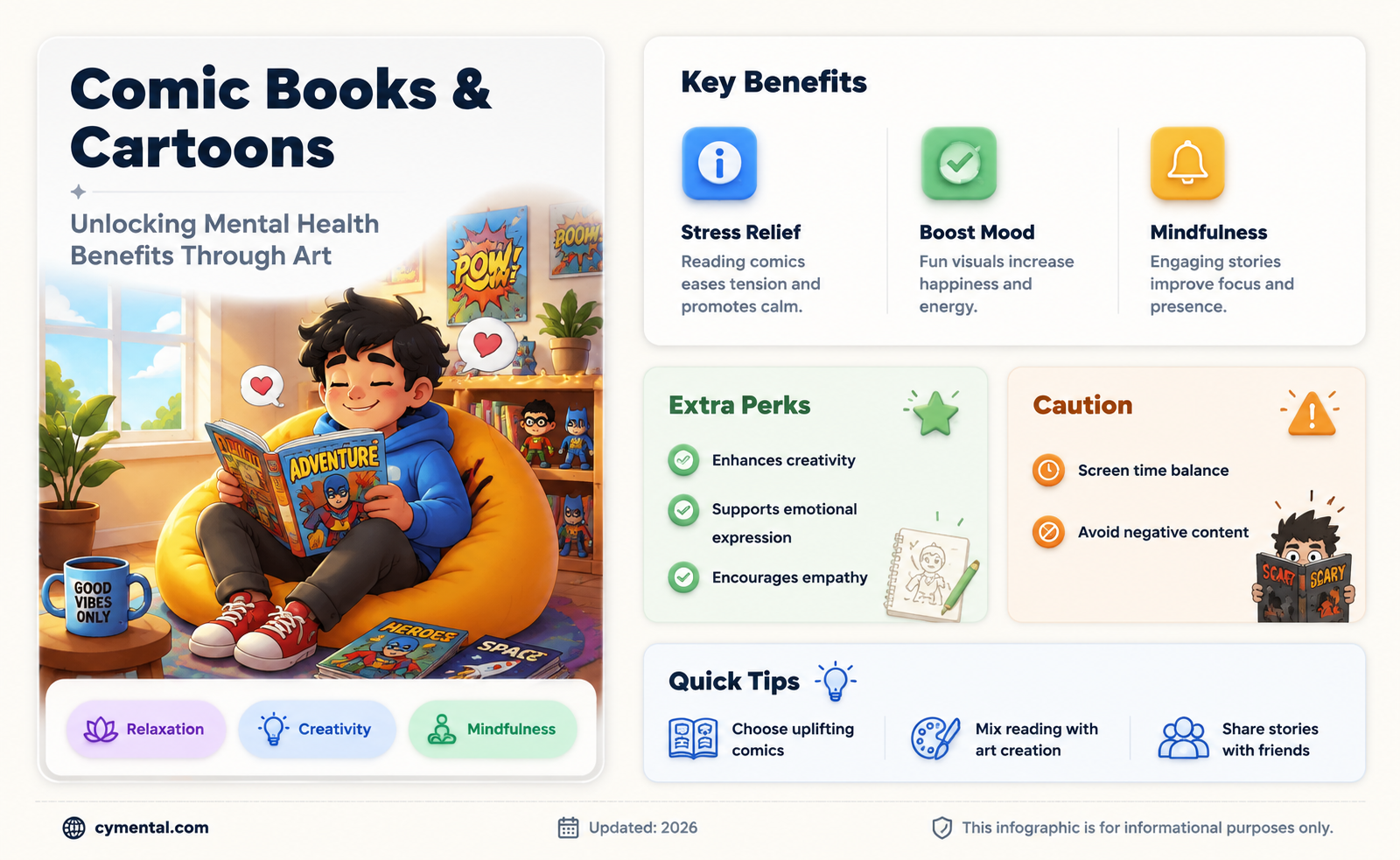
Comic books and cartoons, often dismissed as mere entertainment for children, have emerged as powerful tools for supporting mental health. Their vibrant visuals, relatable characters, and engaging narratives can provide solace, inspiration, and a sense of community for individuals struggling with mental health challenges. From addressing themes like anxiety, depression, and trauma to offering escapism and fostering empathy, these mediums can help normalize conversations around mental health, reduce stigma, and even serve as therapeutic outlets. By blending creativity with emotional depth, comic books and cartoons have the potential to play a meaningful role in promoting mental well-being and resilience.
| Characteristics | Values |
|---|---|
| Emotional Outlet | Provides a safe space to explore and process emotions, reducing stress and anxiety. |
| Escapism | Offers temporary relief from real-life problems, allowing individuals to immerse themselves in a different world. |
| Cognitive Stimulation | Enhances problem-solving skills, creativity, and critical thinking through engaging narratives and visual storytelling. |
| Social Connection | Fosters a sense of community and belonging among fans, reducing feelings of isolation and loneliness. |
| Self-Reflection | Encourages introspection and self-awareness through relatable characters and storylines. |
| Coping Mechanism | Helps individuals cope with trauma, grief, or mental health challenges by providing relatable experiences and hope. |
| Educational Value | Raises awareness about mental health issues, reducing stigma and promoting understanding. |
| Mindfulness | Promotes focus and presence through immersive storytelling and visual engagement. |
| Inspiration and Motivation | Inspires resilience and personal growth through characters overcoming adversity. |
| Accessibility | Offers an accessible form of therapy and self-help for individuals who may not seek traditional mental health services. |
| Humor and Joy | Provides laughter and joy, which are natural mood boosters and stress relievers. |
| Therapeutic Tool | Used by therapists in art and narrative therapy to help patients express and process emotions. |
| Cultural Representation | Offers diverse characters and stories, promoting inclusivity and representation in mental health discussions. |
| Stress Reduction | Lowers cortisol levels through relaxation and engagement in enjoyable content. |
| Empathy Building | Enhances emotional intelligence by encouraging readers/viewers to empathize with characters' struggles. |
Explore related products


What You'll Learn
- Stress Relief Through Humor: Laughter from comics/cartoons reduces stress hormones, promoting relaxation and emotional well-being
- Escapism and Coping: Immersive stories provide temporary escape, helping individuals cope with anxiety and trauma
- Emotional Expression: Characters and narratives aid in understanding and expressing complex emotions safely
- Community and Belonging: Fandoms foster social connections, reducing loneliness and enhancing mental health support
- Therapeutic Tools: Comics/cartoons are used in therapy to process trauma and improve communication

Stress Relief Through Humor: Laughter from comics/cartoons reduces stress hormones, promoting relaxation and emotional well-being
Laughter, often dubbed the best medicine, has a profound impact on our physiological and psychological states. When we engage with comics or cartoons, the humor triggers a release of endorphins, the body’s natural feel-good chemicals, while simultaneously reducing levels of stress hormones like cortisol. Studies show that even 15–20 minutes of daily laughter can lower cortisol by up to 20%, promoting relaxation and alleviating tension. This biochemical reaction isn’t just anecdotal; it’s backed by research from institutions like the Mayo Clinic, which highlights the role of humor in stress management. For those seeking a quick, accessible way to unwind, flipping through a comic book or watching a cartoon episode can be as effective as a short meditation session.
Consider the practical application of this stress-relief method. For adults, incorporating humor into daily routines can be as simple as keeping a favorite comic strip bookmarked on a device or dedicating 10 minutes before bed to a lighthearted cartoon. Parents can use this strategy with children, too; sharing age-appropriate comics like *Calvin and Hobbes* or *The Adventures of Tintin* not only fosters bonding but also teaches young minds to associate humor with emotional relief. For teens and young adults, webcomics or animated series like *BoJack Horseman* or *Steven Universe* offer nuanced humor that addresses complex emotions while providing a laugh. The key is consistency—making humor a habitual part of one’s day to maximize its stress-reducing benefits.
However, not all humor is created equal. The type of comedy matters; dark or sarcastic humor might not yield the same stress-relieving effects for everyone. Opt for content that aligns with your personal taste and avoids triggering topics. For instance, if workplace stress is a concern, a lighthearted office-themed comic like *Dilbert* might resonate more than a politically charged satire. Similarly, pairing humor with mindfulness can amplify its effects—try laughing yoga, which combines laughter exercises with deep breathing, or simply pause to savor the humor in a comic strip rather than skimming through it.
A cautionary note: while humor is a powerful tool, it’s not a substitute for professional mental health treatment. Chronic stress or anxiety disorders require targeted interventions, and relying solely on comics or cartoons could delay necessary care. That said, humor can complement therapy or medication by providing a daily emotional buffer. Therapists often recommend humor-based activities as part of a holistic self-care plan, especially for clients who struggle with traditional relaxation techniques. The accessibility of comics and cartoons—available in print, digital, or streaming formats—makes them an ideal addition to any stress-relief toolkit.
In conclusion, the stress-reducing power of laughter from comics and cartoons lies in its ability to shift our focus from stressors to joy, even momentarily. By understanding the science behind this phenomenon and tailoring humor to individual preferences, anyone can harness its benefits. Whether you’re a busy professional, a student, or a parent, integrating humor into your routine doesn’t require time-consuming effort—just a willingness to laugh. Start small, stay consistent, and let the endorphins do the rest. After all, as Charlie Chaplin once said, “A day without laughter is a day wasted.” Make sure your days are filled with the stress-relieving magic of humor.
Furry Fandom and Mental Health: Exploring Emotional Benefits and Support
You may want to see also
Explore related products


Escapism and Coping: Immersive stories provide temporary escape, helping individuals cope with anxiety and trauma
Immersive storytelling in comic books and cartoons offers a sanctuary for those grappling with anxiety and trauma, providing a temporary reprieve from the weight of reality. Consider the case of a teenager diagnosed with generalized anxiety disorder who finds solace in the pages of *Saga* by Brian K. Vaughan and Fiona Staples. The intricate world-building and complex characters allow them to step outside their own struggles, focusing instead on the trials of Alana and Marko, star-crossed lovers from warring extraterrestrial races. This escapism isn’t about avoidance; it’s a strategic retreat, a way to recharge emotional batteries before re-engaging with personal challenges.
To harness this benefit effectively, start by selecting stories that align with your emotional needs. For instance, if you’re overwhelmed by stress, opt for lighthearted fare like *Calvin and Hobbes* or *Hilda*, which offer humor and whimsy without demanding heavy emotional investment. Conversely, if you’re processing trauma, consider narratives like *Maus* by Art Spiegelman, which confront hardship through allegory, providing a safe distance to explore difficult themes. Limit immersion to 30–60 minutes daily to avoid disconnection from real-world responsibilities, and pair reading with reflective journaling to bridge the gap between fiction and personal growth.
Critics argue that escapism through comics or cartoons risks becoming a crutch, delaying necessary confrontation with underlying issues. However, research suggests that controlled engagement with immersive stories can enhance emotional resilience. A 2019 study published in *Psychology of Aesthetics, Creativity, and the Arts* found that participants who read emotionally engaging narratives exhibited reduced cortisol levels, a biomarker of stress. The key is balance: use these stories as a tool, not a substitute, for therapy or self-care practices like mindfulness or exercise.
For parents or caregivers, introducing children to age-appropriate comics can foster emotional coping skills. *The Adventures of Tintin* or *Bone* by Jeff Smith are excellent for younger audiences, offering adventure without overwhelming complexity. Pair reading sessions with discussions about characters’ emotions and decisions to encourage empathy and self-awareness. For teens, *Persepolis* by Marjane Satrapi provides a relatable exploration of identity and resilience, sparking conversations about navigating adversity.
Incorporating comics and cartoons into a mental health toolkit requires intentionality. Treat them as a form of emotional first aid, not a long-term solution. Combine them with professional support, such as therapy or medication, for comprehensive care. Remember, the goal isn’t to escape reality indefinitely but to find moments of peace that empower you to face it with renewed strength. As Alan Moore once said, “Comics are a gateway to imagination,” and sometimes, that’s the first step toward healing.
AI's Role in Mental Health: Support, Challenges, and Future Potential
You may want to see also
Explore related products


Emotional Expression: Characters and narratives aid in understanding and expressing complex emotions safely
Comic books and cartoons often serve as mirrors and windows, reflecting our inner worlds while offering glimpses into others’. Through characters and narratives, they provide a safe space to explore and articulate emotions that might feel overwhelming in reality. Consider the way Calvin and Hobbes captures the duality of childhood—Calvin’s boundless imagination paired with his struggles with authority—or how the *Peanuts* gang navigates anxiety, rejection, and self-doubt. These stories normalize complex feelings, showing readers they are not alone in their experiences. By externalizing emotions through relatable characters, comic books and cartoons act as emotional scaffolding, helping individuals process their own feelings without the pressure of direct confrontation.
To harness this benefit, start by selecting stories that resonate with your emotional state. For instance, if you’re grappling with grief, *The Fault in Our Stars* graphic novel or *BoJack Horseman* might offer insights into mourning and resilience. Next, engage actively with the material: jot down emotions evoked by specific scenes or characters, and reflect on how they mirror your own experiences. For younger audiences, pairing reading with guided discussions can deepen emotional understanding. For example, a parent or therapist might ask a child, “How do you think Charlie Brown felt when he failed again? Have you ever felt that way?” This approach transforms passive consumption into an interactive tool for emotional expression.
One caution: while comic books and cartoons can facilitate emotional exploration, they are not a substitute for professional therapy. Their strength lies in their ability to complement other strategies, not replace them. For instance, a teen struggling with anger might find *The Incredible Hulk* relatable, but they’ll still need healthy coping mechanisms to manage their emotions in real life. Additionally, be mindful of the medium’s limitations. Some narratives may oversimplify complex issues, so encourage critical thinking about how emotions are portrayed. For example, discuss whether a character’s sudden resolution feels realistic or if it glosses over the work required for emotional healing.
In practice, incorporating comic books and cartoons into emotional expression can be as simple as dedicating 20–30 minutes daily to reading or watching these stories, followed by a brief journaling session. For group settings, like classrooms or therapy sessions, consider creating character emotion maps—charts that track how a character’s feelings evolve throughout a narrative. This exercise not only enhances emotional literacy but also fosters empathy by encouraging readers to analyze perspectives beyond their own. By leveraging the power of storytelling, comic books and cartoons become more than entertainment—they become tools for navigating the intricate landscape of human emotion.
Mental Health Case Managers: Legal Support and Advocacy Explained
You may want to see also
Explore related products


Community and Belonging: Fandoms foster social connections, reducing loneliness and enhancing mental health support
Fandoms, those passionate communities built around shared interests in comic books and cartoons, serve as powerful antidotes to loneliness. Consider the teenager who discovers a love for *Steven Universe* and finds solace in online forums where fans dissect themes of acceptance and identity. These spaces become digital living rooms, where individuals bond over shared enthusiasm, creating a sense of belonging that transcends physical isolation. Research shows that such social connections can reduce feelings of loneliness by up to 40%, particularly among younger demographics who often struggle with mental health challenges.
To harness this benefit, start by identifying a fandom that aligns with your interests. Engage in online platforms like Reddit, Discord, or Tumblr, where fans discuss theories, share fan art, and organize meetups. For instance, the *My Hero Academia* fandom is known for its inclusive atmosphere, welcoming fans of all ages to explore themes of resilience and self-improvement. Caution: while these spaces are generally supportive, be mindful of toxic behavior and prioritize platforms with active moderation. Offline, attend local comic conventions or join book clubs focused on graphic novels to build face-to-face connections.
The mental health support within fandoms extends beyond casual camaraderie. Fans often create safe spaces to discuss personal struggles, leveraging shared narratives as metaphors for their own experiences. For example, the *BoJack Horseman* fandom frequently uses the show’s exploration of depression and addiction as a springboard for vulnerable conversations. This shared language can make it easier to articulate complex emotions, fostering empathy and understanding. Practical tip: if you’re new to a fandom, start by observing discussions before contributing, and seek out subgroups focused on mental health advocacy.
Comparatively, fandoms offer a unique blend of escapism and real-world connection that traditional support groups often lack. While therapy provides professional guidance, fandoms offer peer-to-peer support rooted in shared passion. For instance, the *She-Ra and the Princesses of Power* fandom has become a hub for LGBTQ+ individuals seeking representation and community. This dual benefit—emotional refuge and social bonding—makes fandoms a valuable complement to formal mental health resources. To maximize this, combine fandom engagement with professional care for a holistic approach to well-being.
In conclusion, fandoms are more than just fan clubs; they are lifelines for those seeking connection and understanding. By fostering a sense of community, they combat loneliness and provide a platform for mental health support. Whether you’re analyzing *Saga*’s portrayal of family dynamics or cosplaying as your favorite *Avatar* character, these shared experiences can be transformative. Dive in, engage authentically, and let the power of community enhance your mental health journey.
Nurturing Your Mind: Practical Strategies for Better Mental Health
You may want to see also
Explore related products


Therapeutic Tools: Comics/cartoons are used in therapy to process trauma and improve communication
Comics and cartoons, often dismissed as mere entertainment, have emerged as powerful therapeutic tools in mental health treatment. Their unique blend of visual storytelling and accessible language allows them to bypass cognitive barriers, making them particularly effective for processing trauma and improving communication. For instance, in trauma-focused therapy, clients who struggle to articulate their experiences verbally can use drawing or comic strips to externalize their emotions, creating a safe distance from the pain while still engaging with it. This method has been especially beneficial for children and adolescents, who may find traditional talk therapy intimidating or overwhelming.
One practical application of comics in therapy is the creation of "trauma narratives." Therapists guide clients in illustrating their traumatic experiences in a comic format, breaking the story into panels that represent key moments. This process helps fragment the trauma into manageable pieces, reducing its emotional intensity. For example, a study published in the *Journal of Child Psychology and Psychiatry* found that children who used comics to recount traumatic events showed significant reductions in post-traumatic stress symptoms compared to those using traditional narrative methods. The visual nature of comics also allows for the inclusion of symbolic imagery, which can convey complex emotions that words alone cannot capture.
Improving communication is another area where comics and cartoons excel. In couples or family therapy, drawing simple cartoons to depict conflicts or misunderstandings can defuse tension and foster empathy. For instance, a therapist might ask partners to sketch their perspectives on a recurring argument, then share and discuss their drawings. This approach not only encourages active listening but also provides a non-threatening way to address sensitive issues. Similarly, in group therapy settings, collaborative comic projects can strengthen bonds and improve interpersonal skills by encouraging participants to work together on a shared narrative.
While the benefits are clear, integrating comics and cartoons into therapy requires careful consideration. Therapists must ensure that the medium does not trivialize the client’s experiences but instead serves as a tool for deeper exploration. For younger clients, age-appropriate materials and themes are essential; for example, using superhero narratives to symbolize resilience or villain characters to externalize negative emotions. Additionally, therapists should be mindful of cultural differences in how comics are perceived and adapt their approach accordingly.
In conclusion, comics and cartoons offer a versatile and engaging way to address mental health challenges, particularly in processing trauma and enhancing communication. By combining visual and narrative elements, they provide a unique avenue for expression that complements traditional therapeutic techniques. Whether used in individual, family, or group settings, these tools can help clients navigate complex emotions and build stronger connections. As research continues to validate their effectiveness, comics and cartoons are poised to become indispensable resources in the therapist’s toolkit.
Supporting Teens: Practical Strategies for Navigating Mental Health Challenges
You may want to see also
Frequently asked questions
Yes, comic books and cartoons can be therapeutic tools for mental health. They often provide relatable characters, engaging narratives, and visual storytelling that can help individuals process emotions, reduce stress, and feel less alone in their struggles.
Comic books and cartoons often use humor, vibrant visuals, and simple storytelling to distract from stressors and promote relaxation. They can also normalize difficult emotions, making them easier to manage.
Yes, genres like slice-of-life, humor, and inspirational stories are often beneficial. Comics or cartoons that address mental health directly, such as those featuring characters with anxiety or depression, can also provide validation and coping strategies.
Absolutely. Age-appropriate comics and cartoons can help children understand and express their emotions, build empathy, and cope with challenges like bullying or anxiety in a relatable and accessible way.
Set aside time to read or watch them as a form of self-care. Discuss them with others to foster connection, or use them as prompts for journaling or reflection. Some therapists even use comics in sessions to aid communication and healing.