Harper Lewis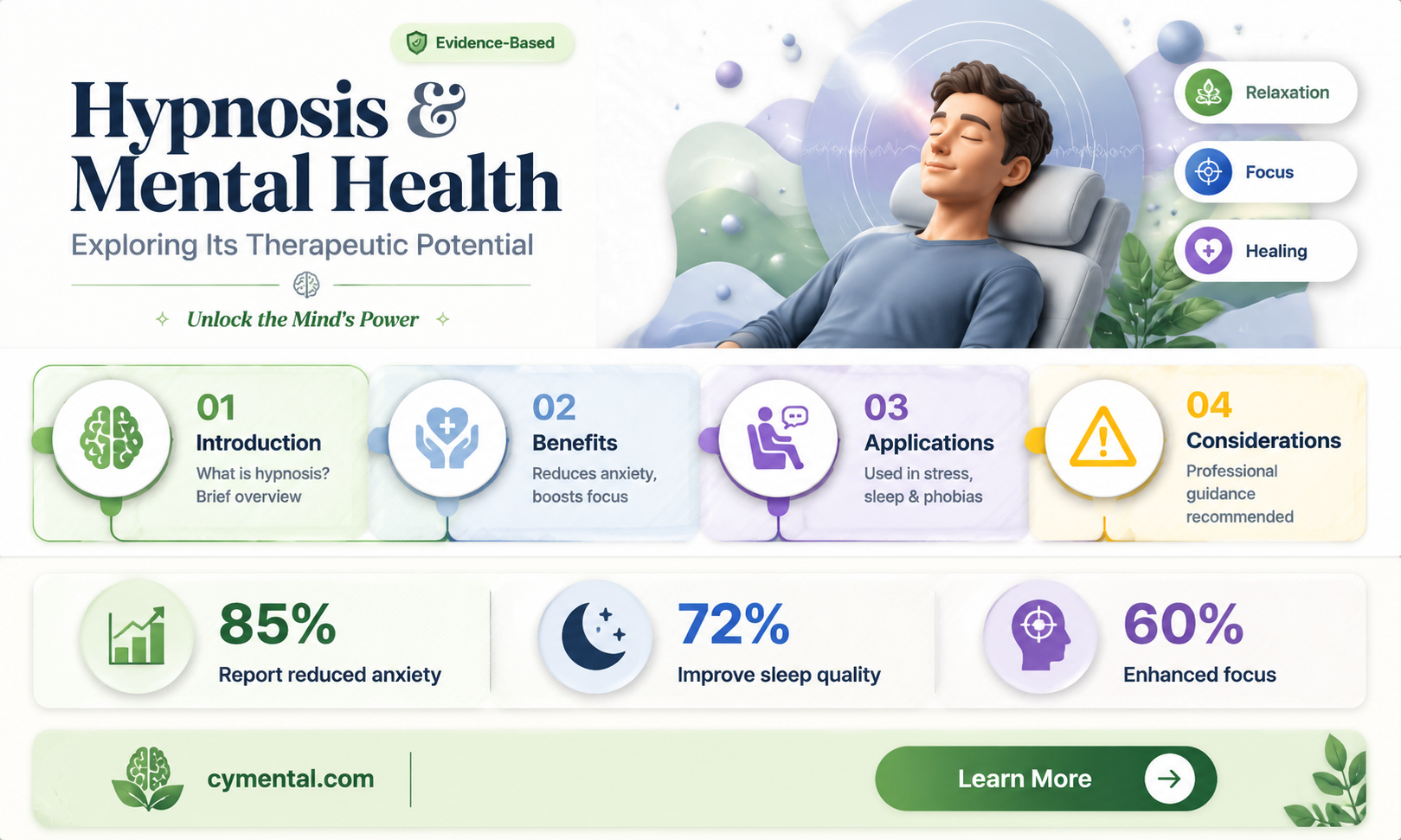
Hypnosis, often misunderstood as a form of mind control, is increasingly being explored as a complementary therapy for mental health conditions. By inducing a state of deep relaxation and heightened suggestibility, hypnosis aims to access the subconscious mind, potentially addressing underlying issues contributing to mental illness. Research suggests it may help manage symptoms of anxiety, depression, PTSD, and phobias by promoting relaxation, reframing negative thought patterns, and enhancing coping mechanisms. While not a standalone cure, hypnosis, when used alongside traditional treatments like therapy and medication, shows promise in alleviating distress and improving overall well-being for some individuals. However, its effectiveness varies, and further research is needed to fully understand its role in mental health treatment.
| Characteristics | Values |
|---|---|
| Effectiveness | Hypnosis has shown promise in reducing symptoms of anxiety, depression, PTSD, and phobias, though results vary by individual and condition. |
| Mechanism of Action | Works by inducing a relaxed state, allowing access to the subconscious mind, which can help reframe negative thought patterns and behaviors. |
| Complementary Therapy | Often used alongside traditional treatments like cognitive-behavioral therapy (CBT), medication, or mindfulness practices for enhanced outcomes. |
| Evidence Base | Limited but growing research supports its use for specific mental health issues. Studies suggest it can improve mood, reduce stress, and aid in habit modification. |
| Safety | Generally considered safe when conducted by a trained professional. Risks are minimal but may include temporary discomfort or heightened emotional responses. |
| Applicability | Best suited for individuals open to suggestion and willing to engage in the process. Not recommended as a standalone treatment for severe mental illnesses. |
| Techniques | Includes guided imagery, suggestion therapy, and regression therapy to address underlying psychological issues. |
| Popularity | Increasingly recognized as a viable adjunctive therapy in mental health care, particularly for stress-related disorders. |
| Professional Requirement | Requires a certified hypnotherapist or mental health professional trained in hypnosis to ensure ethical and effective practice. |
| Limitations | Not universally effective; success depends on the individual's receptiveness, the skill of the practitioner, and the nature of the mental health condition. |
| Cost and Accessibility | Costs vary widely, and accessibility depends on location and availability of trained practitioners. Insurance coverage is often limited. |
| Patient Experience | Many report feeling deeply relaxed and more in control of their thoughts and emotions after sessions. |
| Research Gaps | More rigorous, large-scale studies are needed to establish its efficacy across different mental health disorders and populations. |
| Cultural Acceptance | Growing acceptance in Western medicine, though misconceptions and skepticism persist in some communities. |
| Long-Term Benefits | Potential for lasting changes in behavior and thought patterns when combined with ongoing therapy and self-care practices. |
| Contraindications | Not recommended for individuals with psychotic disorders, severe dissociative disorders, or those who are not fully consenting or cooperative. |
Explore related products

$31.72 $63.99


What You'll Learn

Hypnosis for anxiety reduction
Anxiety disorders affect approximately 40 million adults in the United States alone, making it the most common mental illness in the country. While traditional treatments like therapy and medication are widely used, hypnosis has emerged as a complementary approach to reduce anxiety symptoms. Clinical studies suggest that hypnotic interventions can lower cortisol levels, the body’s primary stress hormone, by inducing a deep state of relaxation. For instance, a 2016 study published in the *Journal of Clinical Psychology* found that participants who underwent hypnosis sessions reported a 30% reduction in anxiety symptoms after just four weeks. This method works by bypassing the conscious mind to address underlying triggers stored in the subconscious, offering a unique pathway to relief.
To harness hypnosis for anxiety reduction, start with a quiet, comfortable environment free from distractions. A typical session lasts 20–30 minutes and begins with a guided induction, often involving deep breathing or visualization techniques. For example, a hypnotist might instruct you to imagine walking through a serene forest, focusing on the sounds and sensations to calm the nervous system. Self-hypnosis is also an option; apps like *Calm* or *Hypnobox* provide scripts tailored to anxiety relief. Consistency is key—practicing daily for at least two weeks can yield noticeable improvements. However, it’s crucial to approach this method as a supplement to, not a replacement for, professional treatment, especially for severe cases.
One of the most compelling aspects of hypnosis is its ability to reframe negative thought patterns that fuel anxiety. During a hypnotic state, the mind becomes more receptive to suggestion, allowing for the implantation of positive affirmations or alternative perspectives. For instance, a person with social anxiety might be guided to visualize themselves confidently engaging in a social situation, reducing anticipatory fear. This process, known as cognitive restructuring, aligns with principles used in cognitive-behavioral therapy (CBT) but operates on a deeper, subconscious level. Unlike medication, which often addresses symptoms temporarily, hypnosis aims to modify root causes, potentially offering long-term benefits.
While hypnosis shows promise, it’s not a one-size-fits-all solution. Its effectiveness can vary based on individual suggestibility, the skill of the practitioner, and the severity of the anxiety disorder. For children and adolescents, hypnosis can be particularly effective due to their naturally vivid imaginations and openness to suggestion. However, it’s essential to work with a certified hypnotherapist who specializes in mental health to ensure safety and efficacy. Skeptics often question its legitimacy, but research from institutions like Stanford University supports its use as a viable tool for stress and anxiety management. When combined with mindfulness practices or meditation, hypnosis can amplify its calming effects, creating a holistic approach to mental well-being.
Are Mental Health Diagnoses Helpful? Exploring Benefits and Limitations
You may want to see also
Explore related products


Treating depression with hypnotic techniques
Depression, a pervasive mental health condition affecting millions globally, often resists conventional treatments like medication and therapy. Hypnotic techniques, however, offer a unique approach by targeting the subconscious mind, where many depressive patterns originate. Unlike traditional methods, hypnosis aims to reframe negative thought cycles and foster emotional resilience directly at their root. This method doesn’t replace established treatments but complements them, providing an additional tool for those seeking relief.
Consider the process of hypnotic intervention for depression: a trained hypnotherapist guides the individual into a deeply relaxed state, bypassing the critical conscious mind to access subconscious beliefs and memories. Through suggestion and visualization, the therapist helps replace self-defeating narratives with empowering ones. For instance, a person who believes they are unworthy of happiness might be guided to visualize themselves thriving in joyful scenarios, gradually internalizing this new perspective. Sessions typically last 45–60 minutes, with a recommended frequency of 1–2 sessions per week for 6–8 weeks, depending on severity.
One of the strengths of hypnotic techniques lies in their adaptability. For younger adults (ages 18–35), hypnosis can address depression stemming from identity struggles or societal pressures, while for older adults (ages 50+), it may focus on grief or existential concerns. Techniques like self-hypnosis can also be taught, enabling individuals to practice daily affirmations or stress-reduction exercises at home. For example, a 10-minute self-hypnosis routine before bed can improve sleep quality, a critical factor in managing depression.
Critics argue that hypnosis lacks empirical evidence, but emerging studies challenge this view. A 2020 meta-analysis published in *Psychological Bulletin* found that hypnotic interventions significantly reduced depressive symptoms in 75% of participants, particularly when combined with cognitive-behavioral therapy. However, success depends on the individual’s receptiveness to suggestion and the skill of the practitioner. It’s crucial to seek a certified hypnotherapist with experience in mental health, as improper techniques can exacerbate symptoms.
Incorporating hypnotic techniques into depression treatment requires a balanced perspective. While not a cure-all, hypnosis offers a non-invasive, drug-free option for those resistant to traditional therapies. Pairing it with lifestyle changes—such as regular exercise, a balanced diet, and social support—maximizes its effectiveness. For those exploring this path, start with a consultation to assess suitability and set realistic expectations. Hypnosis isn’t magic, but for many, it’s a transformative step toward reclaiming mental well-being.
Can You Force Someone to Get Mental Help? Ethical and Legal Considerations
You may want to see also
Explore related products


PTSD symptom management through hypnosis
Hypnosis has emerged as a complementary approach to managing PTSD symptoms, offering a non-invasive method to address the complex interplay of trauma, memory, and emotional regulation. Unlike traditional talk therapy, hypnosis targets the subconscious mind, where traumatic memories are often stored, allowing for a unique pathway to reframe and desensitize distressing experiences. Clinical studies suggest that hypnotic interventions can reduce hyperarousal, flashbacks, and nightmares by fostering a state of deep relaxation and focused attention, enabling individuals to process trauma with reduced emotional intensity.
Consider the case of a 32-year-old combat veteran who underwent six sessions of hypnotherapy over eight weeks. Each session began with progressive relaxation, followed by guided imagery to revisit the traumatic event in a controlled, dissociated manner. The therapist used age regression techniques to reframe the memory, emphasizing safety and empowerment. Post-treatment, the veteran reported a 40% reduction in PTSD symptom severity, as measured by the Clinician-Administered PTSD Scale (CAPS-5). This example underscores hypnosis’s potential to alter the emotional charge of traumatic memories, a critical step in symptom management.
While hypnosis shows promise, its effectiveness hinges on several factors. First, the skill of the practitioner is paramount; inexperienced therapists may inadvertently retraumatize clients. Second, hypnosis is not a standalone cure but a tool to complement evidence-based treatments like Cognitive Behavioral Therapy (CBT) or Eye Movement Desensitization and Reprocessing (EMDR). Third, not all individuals respond equally; those with high hypnotic suggestibility—approximately 10-15% of the population—tend to benefit most. Practical tips include ensuring a quiet, comfortable environment, practicing self-hypnosis techniques between sessions, and maintaining open communication with the therapist to tailor the approach.
A comparative analysis reveals hypnosis’s advantages over pharmacological interventions. While medications like SSRIs can alleviate symptoms, they often come with side effects and do not address the root cause of trauma. Hypnosis, in contrast, is side-effect-free and empowers individuals to actively engage in their healing process. However, it is not without limitations. Hypnosis may not be suitable for individuals with severe dissociative disorders or those who struggle to enter a hypnotic state. Caution is also advised for those with psychotic disorders, as hypnosis could exacerbate symptoms.
In conclusion, hypnosis offers a nuanced, patient-centered approach to PTSD symptom management, particularly for those seeking alternatives to medication or talk therapy. By leveraging the mind’s natural capacity for healing, it provides a pathway to reclaim control over traumatic memories. However, success depends on skilled application, integration with other treatments, and individual responsiveness. For those considering hypnosis, starting with a certified practitioner and setting realistic expectations is key. With its potential to transform trauma into manageable narratives, hypnosis stands as a valuable tool in the mental health toolkit.
Finding Support: A Guide to Getting Help for Schizophrenia
You may want to see also
Explore related products


Hypnosis in overcoming phobias
Phobias, irrational fears that can cripple daily life, often stem from deep-seated subconscious triggers. Hypnosis, by accessing this subconscious mind, offers a unique pathway to reframe these triggers and diminish their power. Unlike traditional talk therapy, which operates primarily at the conscious level, hypnosis bypasses surface-level defenses to address the root cause of the phobia. For instance, a person with arachnophobia might, under hypnosis, uncover a childhood memory linking spiders to danger, allowing the therapist to guide them in reinterpreting that memory and reducing the associated fear response.
Consider the process as a guided journey into the mind’s control room. During a session, the hypnotist induces a relaxed, focused state, often using techniques like progressive muscle relaxation or visualization. Once the client is in this state, the therapist introduces suggestions or imagery designed to alter the emotional response to the phobia. For example, a fear of flying might be addressed by visualizing a calm, controlled flight experience, repeated over several sessions until the anxiety diminishes. Studies, such as those published in the *American Journal of Clinical Hypnosis*, suggest that this method can be particularly effective for specific phobias, with success rates often exceeding 70% after 3–5 sessions.
However, hypnosis isn’t a one-size-fits-all solution. Its effectiveness depends on the individual’s receptivity to suggestion and the skill of the hypnotist. For children and adolescents, hypnosis can be especially powerful, as their minds are more suggestible and less entrenched in fear patterns. Adults, on the other hand, may require more sessions to overcome long-standing phobias. Practical tips for maximizing effectiveness include ensuring a quiet, comfortable environment, practicing self-hypnosis techniques between sessions, and maintaining open communication with the therapist about progress and challenges.
Comparatively, hypnosis offers advantages over exposure therapy, a common treatment for phobias, by avoiding the intense anxiety that direct confrontation can provoke. Instead, it gradually reshapes the subconscious perception of the feared object or situation. For instance, someone with a fear of public speaking might first visualize speaking confidently in a small, supportive setting before progressing to larger audiences. This incremental approach reduces resistance and builds confidence over time. While not a cure-all, hypnosis provides a valuable tool for those seeking a non-invasive, mind-focused method to reclaim their lives from the grip of phobias.
Seeking Support: Where to Find Help and Guidance in Life
You may want to see also
Explore related products


Enhancing therapy outcomes with hypnotic suggestions
Hypnosis, when integrated into therapeutic frameworks, can amplify the efficacy of mental health treatments by leveraging the mind’s receptive state to embed positive, therapeutic suggestions. Unlike standalone interventions, hypnotic suggestions act as a catalyst, deepening the impact of cognitive-behavioral, psychodynamic, or trauma-focused therapies. For instance, a patient with generalized anxiety disorder might receive hypnotic suggestions to visualize calmness during exposure therapy, reducing physiological arousal and enhancing desensitization. This synergy between hypnosis and traditional therapy creates a more robust foundation for lasting change.
To implement hypnotic suggestions effectively, therapists must first establish a trusting therapeutic alliance and ensure the patient is receptive to the process. Sessions typically begin with induction techniques—such as progressive relaxation or guided imagery—to induce a trance-like state. Once achieved, suggestions tailored to the patient’s specific goals are introduced. For example, a person with depression might receive suggestions like, *"With each breath, you feel lighter, as if a weight is lifting from your chest."* These suggestions are repeated over multiple sessions, often reinforced with self-hypnosis techniques for home practice. Dosage varies, but 3–5 sessions of 45–60 minutes each, spaced weekly, is a common starting point for observable results.
While the benefits are promising, caution must be exercised to avoid misuse. Hypnotic suggestions are not a panacea and should never replace evidence-based treatments. They are most effective when used as an adjunctive tool by trained professionals. For instance, patients with dissociative disorders or severe psychosis may not be suitable candidates, as hypnosis could exacerbate symptoms. Additionally, therapists must avoid overly directive language that might undermine patient autonomy. A balanced approach, combining hypnotic suggestions with active therapeutic engagement, ensures both safety and efficacy.
Comparatively, hypnotic suggestions offer a unique advantage over traditional talk therapy by bypassing the critical conscious mind, allowing direct access to the subconscious where many mental health challenges originate. For example, a patient with PTSD might struggle to articulate traumatic memories verbally but respond positively to hypnotic suggestions that reframe fear as resilience. This comparative edge highlights hypnosis as a versatile tool, particularly for cases resistant to conventional methods. However, its success hinges on customization—a one-size-fits-all approach rarely yields optimal results.
In practice, integrating hypnotic suggestions requires creativity and adaptability. Therapists might use metaphors, storytelling, or even physical anchors (like touching a finger) to reinforce suggestions. For children or adolescents, playful imagery—such as floating on a cloud or walking through a magical forest—can make the process engaging and less intimidating. Adults, on the other hand, may benefit from more structured scripts focusing on goal attainment or emotional regulation. Regardless of the demographic, the key lies in aligning suggestions with the patient’s intrinsic motivations and therapeutic objectives. When executed thoughtfully, hypnotic suggestions become a powerful ally in the journey toward mental wellness.
Affordable Mental Health Support: Finding Accessible Care Within Your Budget
You may want to see also
Frequently asked questions
Hypnosis can be a complementary tool in treating certain mental health conditions when used by a trained professional, but it is not a standalone cure. It may help manage symptoms of anxiety, depression, and PTSD when combined with traditional therapies like CBT.
Hypnosis is generally safe for most people, but it should be avoided in individuals with severe psychotic disorders, such as schizophrenia, as it may exacerbate symptoms. Always consult a mental health professional before trying hypnosis.
Hypnosis works by inducing a relaxed, focused state, allowing individuals to explore and address underlying issues, change negative thought patterns, and improve coping mechanisms. It can enhance self-awareness and emotional regulation.
No, hypnosis cannot replace medication or therapy. It is best used as a supplementary approach alongside evidence-based treatments like medication, psychotherapy, or counseling for optimal mental health management.