Madison Cole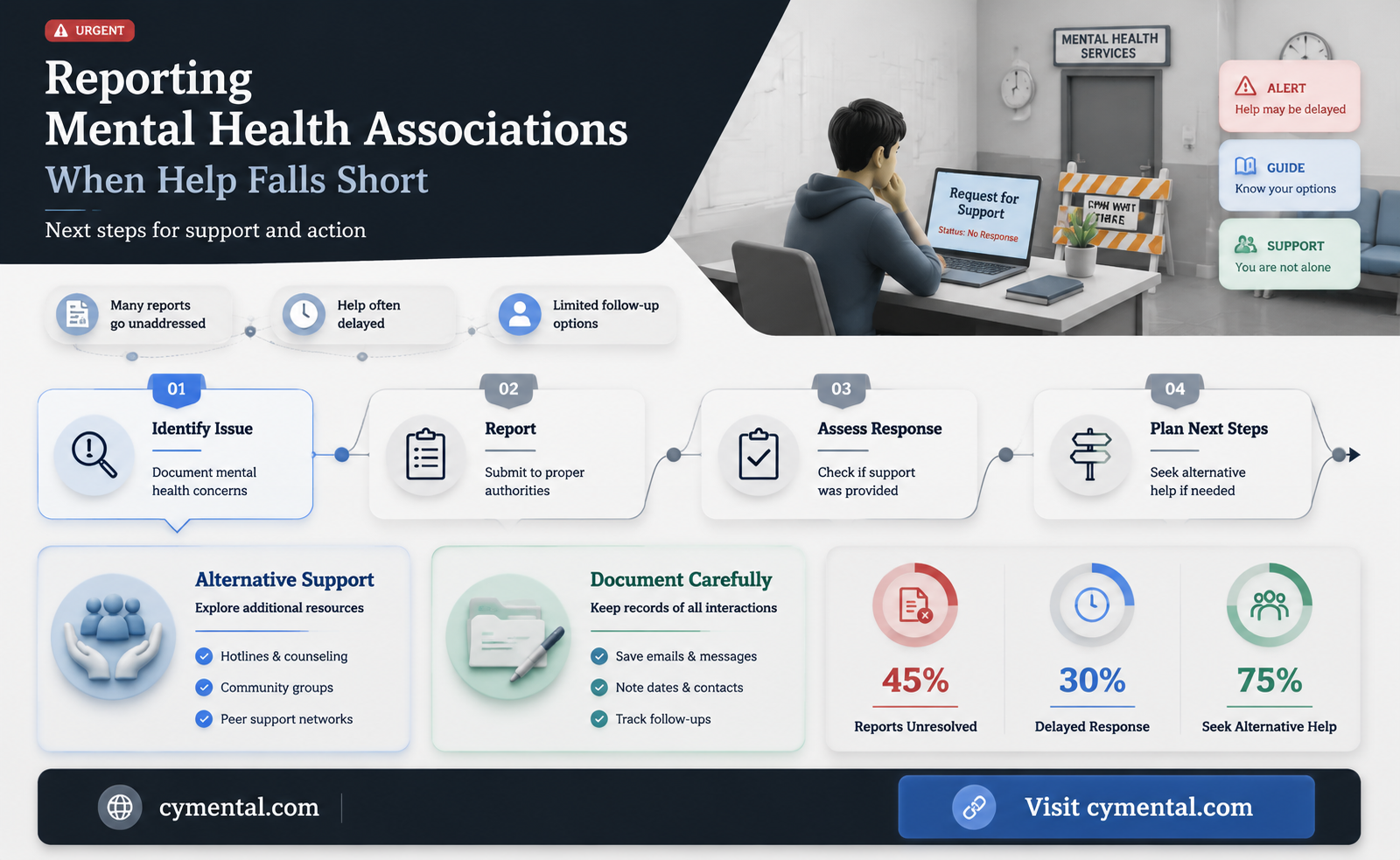
If you're considering reporting a mental health association for not providing adequate support, it's essential to understand the context and available options. Mental health organizations are typically committed to assisting individuals in need, but there may be instances where their services fall short or fail to meet expectations. Before taking any action, it's crucial to evaluate whether the association has violated any legal or ethical obligations, such as neglecting to provide necessary care or discriminating against certain individuals. You may want to start by documenting your experiences, gathering evidence, and attempting to resolve the issue through direct communication with the organization. If these efforts prove unsuccessful, you can explore formal complaint procedures, which may involve contacting regulatory bodies, licensing agencies, or legal professionals who specialize in mental health advocacy. By carefully considering your options and seeking guidance, you can make an informed decision about whether reporting the mental health association is the appropriate course of action.
| Characteristics | Values |
|---|---|
| Legal Grounds | Reporting a mental health association for not helping typically requires evidence of negligence, breach of duty, or violation of specific laws/regulations. |
| Jurisdiction | Laws vary by country/region; in the U.S., complaints can be filed with state licensing boards or the Office for Civil Rights (OCR) if discrimination is involved. |
| Duty of Care | Mental health associations may not have a legal duty to provide services unless a specific relationship (e.g., therapist-client) exists. |
| Negligence | Proving negligence requires demonstrating harm caused by failure to act when there was a duty to do so. |
| Discrimination | Reports can be filed if the association discriminates based on race, gender, disability, etc., under laws like the ADA (Americans with Disabilities Act). |
| Ethical Violations | Complaints about ethical breaches (e.g., unprofessional conduct) can be made to professional bodies like the American Psychological Association (APA). |
| Funding Misuse | If the association misuses funds, reports can be made to funding agencies or government oversight bodies. |
| Lack of Resources | Associations may not be legally obligated to provide services if they lack resources, unless contractual obligations exist. |
| Alternative Options | Before reporting, consider mediation, contacting the association’s leadership, or seeking help from advocacy groups. |
| Documentation | Evidence (e.g., communication records, denied services) is crucial for a successful report. |
| Time Limits | There may be statutes of limitations for filing complaints, varying by jurisdiction and type of claim. |
| Outcome | Possible outcomes include investigation, corrective action, fines, or no action if no wrongdoing is found. |
Explore related products


What You'll Learn
- Reporting Criteria: Understand legal grounds for filing a complaint against mental health organizations
- Evidence Collection: Gather proof of negligence or failure to provide assistance
- Regulatory Bodies: Identify agencies overseeing mental health associations for accountability
- Legal Consequences: Explore potential outcomes of reporting, including investigations or penalties
- Alternative Actions: Consider mediation, advocacy, or public awareness instead of formal reporting

Reporting Criteria: Understand legal grounds for filing a complaint against mental health organizations
Reporting a mental health organization for perceived inaction or inadequate support is a complex process that requires a clear understanding of legal grounds. The first step is to identify whether the organization has breached any legal or ethical obligations. Mental health associations are typically bound by laws such as the Americans with Disabilities Act (ADA), the Health Insurance Portability and Accountability Act (HIPAA), and state-specific regulations governing mental health services. For instance, if an organization fails to provide reasonable accommodations for individuals with mental health disabilities, as mandated by the ADA, this could constitute a legal violation. Similarly, breaches of confidentiality under HIPAA or failure to meet state licensing standards may also provide grounds for a complaint.
To file a complaint, you must gather evidence demonstrating that the organization’s actions (or inactions) directly harmed you or violated specific legal standards. Document all interactions, including dates, times, and details of communication, as well as any promises or commitments made by the organization. For example, if you were denied access to services without a valid reason, or if the organization failed to follow its own stated policies, these instances could support your case. It’s also crucial to understand the statute of limitations in your jurisdiction, as there may be time constraints on filing complaints.
Not all grievances rise to the level of a legal complaint. Before proceeding, consider whether the issue could be resolved through internal channels, such as speaking with a supervisor or filing a grievance with the organization’s ethics committee. If internal efforts fail, external bodies like state licensing boards, the Office for Civil Rights (for HIPAA violations), or disability rights organizations can be approached. For instance, in California, complaints against mental health providers can be filed with the Department of Health Care Services, while in New York, the Office of Mental Health oversees such matters.
A persuasive argument for filing a complaint hinges on demonstrating systemic failure rather than isolated incidents. If multiple individuals have experienced similar issues, this strengthens the case for legal action. For example, a pattern of denying services to specific demographic groups could indicate discrimination, which is actionable under civil rights laws. Collaborating with advocacy groups or legal aid organizations can provide additional support and resources, particularly if the complaint involves complex legal issues or requires litigation.
In conclusion, reporting a mental health organization for not helping requires a strategic approach grounded in legal principles. By understanding the relevant laws, gathering concrete evidence, and leveraging appropriate channels, individuals can hold organizations accountable for their obligations. While the process may be challenging, it serves as a critical mechanism for ensuring that mental health services are delivered ethically and effectively. Practical tips include keeping a detailed record of all interactions, consulting with legal experts, and exploring both internal and external avenues for redress.
Exercise and Mental Health: Unlocking the Mind-Body Connection for Wellness
You may want to see also
Explore related products


Evidence Collection: Gather proof of negligence or failure to provide assistance
To build a compelling case against a mental health association for negligence or failure to assist, evidence collection is your cornerstone. Think of it as assembling a puzzle where each piece strengthens your argument. Start by documenting every interaction with the organization. Save emails, voicemails, and written correspondence. Note dates, times, and the names of individuals involved. If communication was verbal, jot down detailed summaries immediately after each conversation. This creates a timeline of your attempts to seek help and their responses, highlighting any delays, dismissals, or outright refusals.
Creatine's Surprising Role in Boosting Mental Health and Well-Being
You may want to see also
Explore related products


Regulatory Bodies: Identify agencies overseeing mental health associations for accountability
Mental health associations play a critical role in supporting individuals, yet their effectiveness hinges on accountability. To ensure they meet their mandates, several regulatory bodies oversee their operations, providing avenues for reporting concerns. Understanding these agencies is the first step in addressing grievances effectively.
Identifying Key Regulatory Bodies
In the United States, the Substance Abuse and Mental Health Services Administration (SAMHSA) is a primary federal agency that monitors mental health programs and services. SAMHSA sets standards, provides funding, and investigates complaints about organizations failing to deliver adequate care. At the state level, Departments of Health or Mental Health oversee licensing and compliance for local associations, ensuring they adhere to legal and ethical guidelines. For instance, in California, the Department of Health Care Services regulates mental health providers, including nonprofit associations, through audits and complaint investigations.
International Perspectives
Globally, oversight varies. In the UK, the Care Quality Commission (CQC) inspects mental health services, including those run by charitable associations, to ensure they are safe, effective, and responsive. In Australia, the National Mental Health Commission advocates for accountability and can investigate systemic issues within mental health organizations. These bodies often publish inspection reports, offering transparency and a basis for public scrutiny.
Steps to Report Non-Compliance
If you believe a mental health association has failed in its duty, start by documenting specific instances of neglect or inadequacy. Contact the relevant regulatory body directly—SAMHSA, for example, accepts complaints through its website or hotline. Provide detailed information, including dates, names, and the nature of the issue. For state-level concerns, reach out to your local Department of Health, which typically has a dedicated division for mental health oversight.
Cautions and Considerations
While regulatory bodies exist to enforce accountability, their processes can be slow, and outcomes may not always align with individual expectations. Additionally, not all complaints lead to immediate action, especially if they lack evidence or fall outside the agency’s jurisdiction. It’s also important to distinguish between systemic failures and individual experiences; personal dissatisfaction doesn’t always equate to regulatory non-compliance.
Regulatory bodies serve as crucial watchdogs for mental health associations, ensuring they uphold standards of care. By familiarizing yourself with these agencies and their reporting mechanisms, you can take informed action when an association falls short. While the process may be complex, it remains a vital tool for driving accountability and improving mental health services for all.
Assessing Mental Illness Impairment: Essential Tools for Clinicians
You may want to see also
Explore related products


Legal Consequences: Explore potential outcomes of reporting, including investigations or penalties
Reporting a mental health association for perceived inaction or negligence is a serious step that can trigger legal consequences, both for the organization and the individual filing the report. Understanding these potential outcomes is crucial before taking action.
In most jurisdictions, complaints against mental health organizations are directed to oversight bodies like licensing boards, government health departments, or independent regulatory agencies. These entities have the authority to launch investigations into allegations of misconduct, negligence, or violations of ethical standards. Investigations can range from document reviews and interviews to on-site inspections, depending on the severity of the allegations.
The scope of an investigation will depend on the nature of the complaint. For instance, if the report alleges systemic failures in providing adequate care, investigators may examine patient records, staffing levels, and adherence to treatment protocols. In cases of individual complaints, the focus might be on specific interactions between staff and the complainant. It’s important to note that investigations are not automatic convictions; they are fact-finding missions to determine whether wrongdoing occurred.
If an investigation substantiates the allegations, the mental health association could face penalties ranging from fines and corrective action plans to license revocation or criminal charges in extreme cases. For example, in the United States, the Office for Civil Rights (OCR) can impose fines under the Health Insurance Portability and Accountability Act (HIPAA) for privacy violations, while state licensing boards can suspend or revoke licenses for negligence. In the UK, the Care Quality Commission (CQC) can issue warning notices, impose conditions on a provider’s registration, or prosecute for breaches of the Health and Social Care Act 2008.
For the individual filing the report, there are also potential consequences. While whistleblower protections exist in many countries to shield individuals from retaliation, these safeguards are not absolute. False or malicious reports can lead to legal action for defamation or harassment. Additionally, the emotional toll of navigating a complaint process should not be underestimated, as it can be lengthy and stressful.
Before reporting a mental health association, consider whether less adversarial avenues, such as mediation or internal grievance procedures, might resolve the issue. If reporting is the only option, ensure the complaint is well-documented, factual, and supported by evidence. Consulting with a legal advisor or advocacy group can provide clarity on the process and potential outcomes, helping to balance the desire for accountability with the practical realities of legal action.
Mental Therapists and SSI Disability: Can Therapy Strengthen Your Claim?
You may want to see also
Explore related products


Alternative Actions: Consider mediation, advocacy, or public awareness instead of formal reporting
Before resorting to formal complaints against a mental health association for perceived inaction, consider the transformative potential of mediation. This process involves a neutral third party facilitating dialogue between you and the organization. Mediation allows for a nuanced understanding of the situation, often revealing systemic challenges like resource shortages or bureaucratic hurdles that hinder service delivery. For instance, a study by the American Bar Association found that 70% of mediated disputes in the healthcare sector resulted in mutually agreeable solutions, fostering collaboration rather than adversarial outcomes. To initiate mediation, contact local dispute resolution centers or legal aid services, which often offer sliding-scale fees based on income.
Advocacy emerges as another powerful alternative, leveraging collective action to drive systemic change. Instead of isolating your experience, connect with others who’ve faced similar barriers. Platforms like Change.org or local advocacy groups can amplify your voice, pressuring mental health associations to improve accessibility and accountability. For example, the National Alliance on Mental Illness (NAMI) provides resources for grassroots advocacy, including templates for policy letters and guidelines for organizing community forums. Start by documenting your experience, identifying specific gaps in service, and proposing actionable solutions. Remember, advocacy thrives on persistence—consistent, well-informed efforts yield greater impact than sporadic complaints.
Public awareness campaigns serve as a dual-purpose tool: they educate communities about mental health needs while holding organizations accountable. Utilize social media, local media outlets, or community events to share your story and highlight systemic issues. A 2021 report by the Kaiser Family Foundation noted that public narratives significantly influence policy changes in healthcare. To maximize reach, craft concise, emotionally resonant messages and pair them with actionable steps, such as petition links or contact information for policymakers. For instance, a campaign targeting wait times for mental health services could include statistics (e.g., "43% of patients wait over a month for care") and a call to action like, "Tell [Organization Name] to prioritize timely access."
While formal reporting may seem like a direct solution, it often lacks the flexibility to address root causes or foster long-term improvement. Mediation, advocacy, and public awareness, on the other hand, empower individuals to engage constructively with mental health associations, driving meaningful change. Each approach requires investment—time, energy, and sometimes resources—but offers the potential for systemic transformation that benefits not just you, but countless others. Choose the path that aligns with your goals, whether it’s resolving a personal grievance, improving services, or reshaping public discourse on mental health.
Supporting Veterans: Strategies to Address Mental Health Challenges Effectively
You may want to see also
Frequently asked questions
Yes, you can report a Mental Health Association if you believe they failed to provide adequate services or violated ethical standards. Contact the organization’s oversight body, local health department, or file a complaint with a relevant regulatory agency.
Before reporting, document your interactions, attempts to seek help, and any responses received. Try to resolve the issue directly with the organization first, and if unsuccessful, proceed with a formal complaint.
Mental Health Associations are generally required to provide services within their capacity and scope. However, limitations may exist based on funding, resources, or eligibility criteria. If they fail to meet their stated obligations, you may have grounds for a report.
Outcomes vary depending on the nature of the complaint and the investigation. Possible results include improved services, policy changes, or disciplinary action against the organization. However, compensation or immediate personal assistance is not guaranteed.


![Help![Blu-ray]](https://m.media-amazon.com/images/I/6155cLsT0HL._AC_UY218_.jpg)