Madison Cole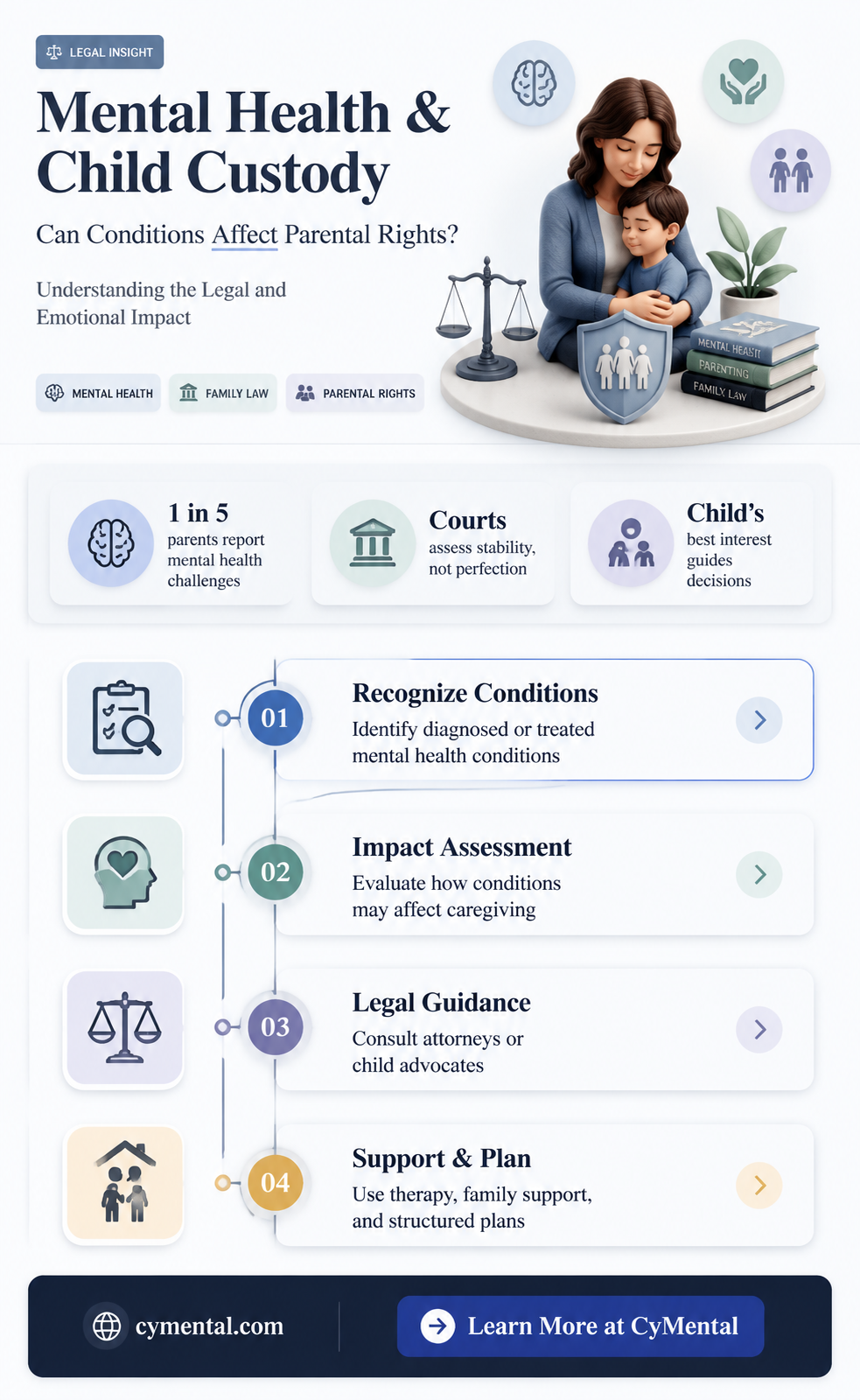
Navigating child custody battles can be emotionally taxing, and the presence of a mental health condition often adds another layer of complexity to the process. While mental health challenges do not automatically disqualify a parent from obtaining custody, courts prioritize the best interests of the child, carefully evaluating how a parent’s condition may impact their ability to provide a stable and nurturing environment. Factors such as the severity of the condition, treatment adherence, and its effect on parenting abilities are scrutinized, with documentation from mental health professionals often playing a crucial role in the court’s decision. Ultimately, a well-managed mental health condition, coupled with evidence of responsible parenting, can support a custody case, but transparency and proactive steps toward treatment are essential to demonstrating a parent’s commitment to their child’s well-being.
Explore related products


What You'll Learn

Impact of Mental Health on Parenting Abilities
Mental health conditions do not automatically disqualify a parent from custody, but their impact on parenting abilities is a critical factor in court decisions. Conditions like depression, anxiety, or bipolar disorder can affect a parent’s ability to provide consistent care, emotional stability, or a safe environment. For example, untreated severe depression may lead to neglect of a child’s basic needs, while anxiety disorders might hinder a parent’s ability to manage stress in high-pressure situations. Courts assess whether the condition is managed effectively—through therapy, medication, or support systems—to determine if it impairs parenting.
Consider the case of a parent with schizophrenia. If their condition is well-controlled with antipsychotic medication (e.g., olanzapine 10–20 mg daily) and regular psychiatric monitoring, they may demonstrate stability and competence in parenting. Conversely, untreated psychosis could lead to erratic behavior or inability to meet a child’s emotional needs. Courts often rely on expert evaluations, such as psychological assessments or parenting capacity reports, to gauge the risk level. Practical steps for parents include maintaining treatment records, securing character references, and demonstrating a structured routine that accommodates their condition.
A comparative analysis reveals that some mental health conditions, when managed, can even enhance parenting. For instance, a parent with ADHD may bring creativity and energy to child-rearing, provided they use coping strategies like time management tools or behavioral therapy. Similarly, a parent with mild anxiety might be hyper-vigilant about safety, though excessive worry could become counterproductive. The key is not the diagnosis itself but its functional impact. Courts often favor parents who proactively address their condition, such as attending parenting classes or joining support groups, over those who deny or ignore it.
Persuasively, the legal system prioritizes the child’s best interests, not the parent’s rights. This means a parent with a mental health condition must prove their ability to provide a stable, nurturing environment. For example, a single mother with borderline personality disorder might strengthen her custody case by showing consistent therapy attendance, a stable home, and a co-parenting plan that includes a supportive partner or family member. Conversely, a parent who refuses treatment or exhibits harmful behaviors (e.g., substance abuse as a coping mechanism) is unlikely to gain custody. The takeaway: transparency, accountability, and evidence of effective management are essential.
Descriptively, the courtroom becomes a stage where a parent’s mental health is scrutinized through the lens of daily life. Judges may ask: Can this parent handle a toddler’s tantrum without escalating? Will they remember a teenager’s medical appointments? A parent with bipolar disorder, for instance, might present a detailed plan outlining how they manage manic episodes (e.g., mood-tracking apps, emergency contacts) and ensure their child’s routine remains undisturbed. Such specificity can shift the narrative from stigma to capability, turning a potential liability into a testament to resilience.
Do Mental Hospitals Help: Exploring Effectiveness and Patient Outcomes
You may want to see also
Explore related products


Legal Considerations in Custody Cases
Mental health conditions do not automatically disqualify a parent from gaining custody, but they introduce complex legal considerations that courts must navigate carefully. Judges prioritize the child’s best interests, evaluating whether a parent’s mental health impacts their ability to provide a stable, safe, and nurturing environment. Documentation of treatment, such as therapy records or medication adherence, can demonstrate a parent’s proactive management of their condition. Conversely, untreated or destabilizing mental health issues may raise concerns about parental capacity, particularly if they affect decision-making or emotional availability. Courts often rely on psychological evaluations or expert testimony to assess the severity and implications of a parent’s condition.
In custody cases, the court may impose conditions or restrictions to safeguard the child’s welfare while allowing the parent with a mental health condition to maintain a relationship. For instance, supervised visitation or mandatory therapy sessions might be ordered if the parent’s condition poses a risk. Co-parenting plans may also include provisions for regular mental health check-ins or crisis management protocols. These measures aim to balance the parent’s rights with the child’s need for stability. A parent’s willingness to cooperate with such conditions can significantly influence the court’s perception of their fitness.
Comparatively, mental health conditions are treated differently from physical disabilities in custody cases, as they often involve subjective assessments of emotional and behavioral stability. While physical disabilities may require accommodations like wheelchair accessibility, mental health issues demand evaluations of cognitive and emotional functioning. Courts may scrutinize conditions like bipolar disorder, severe depression, or PTSD more closely due to their potential for episodic impairment. However, a well-managed condition, supported by consistent treatment and a strong support network, can strengthen a parent’s case by demonstrating resilience and responsibility.
Practically, parents with mental health conditions should prepare thoroughly for custody proceedings. Gathering evidence of treatment, such as therapist letters or medication logs, is crucial. Testimonies from mental health professionals can provide expert validation of the parent’s stability. Additionally, maintaining a structured routine for the child, including consistent school attendance and extracurricular activities, can highlight the parent’s ability to provide stability despite their condition. Parents should also be prepared to address any past incidents related to their mental health, offering context and evidence of growth or improvement.
Ultimately, the legal system seeks to avoid stigmatizing mental health while ensuring children are protected. A parent’s mental health condition can be a factor in custody decisions, but it is not determinative. The key lies in demonstrating that the condition is managed effectively and does not hinder the parent’s ability to care for the child. Courts are increasingly recognizing the importance of mental health treatment and support systems, making proactive management a critical strategy for parents navigating custody cases. By focusing on stability, accountability, and the child’s needs, parents can present a compelling case that transcends their diagnosis.
Supporting Loved Ones: Practical Ways to Help Family with Mental Illness
You may want to see also
Explore related products


$9.49 $12.99


Role of Treatment and Stability
A mental health condition does not automatically disqualify a parent from gaining custody, but courts prioritize the child’s best interests, which often hinge on the parent’s ability to provide a stable environment. Treatment and stability are critical factors in demonstrating this capability. For instance, a parent with a diagnosed condition like depression or anxiety who consistently adheres to a treatment plan—such as attending therapy sessions, taking prescribed medications (e.g., 20mg of fluoxetine daily), and participating in support groups—can present a strong case for their ability to manage their condition effectively. Courts view active engagement in treatment as evidence of responsibility and commitment to the child’s well-being.
Consider the case of a parent with bipolar disorder who maintains a detailed treatment log, including medication adherence, therapy notes, and mood tracking. This documentation not only proves stability but also shows proactive management of their condition. In contrast, a parent who sporadically attends therapy or frequently misses medication doses may raise concerns about their ability to provide consistent care. Stability is not just about managing symptoms; it’s about creating a predictable and secure environment for the child. For example, a parent who can demonstrate a consistent daily routine, such as waking up at 7 a.m. to prepare the child for school and ensuring homework is completed by 6 p.m., reinforces their reliability.
Practical steps to enhance stability include establishing a structured home environment, maintaining open communication with the child’s school, and involving the child in age-appropriate discussions about mental health. For younger children (ages 5–10), this might mean using simple language to explain that “Mommy takes medicine to feel better, just like you take vitamins to stay healthy.” For teenagers (ages 13–18), more detailed conversations about the parent’s condition and treatment plan can foster trust and understanding. Additionally, involving a mental health professional in custody proceedings can provide an expert perspective on the parent’s stability and ability to care for the child.
However, stability is not solely measured by treatment adherence. Courts also consider external factors, such as employment, housing, and social support networks. A parent who holds a steady job, lives in a safe neighborhood, and has a strong support system—whether through family, friends, or community resources—is more likely to be viewed favorably. For example, a single parent with schizophrenia who lives in subsidized housing, works part-time, and relies on a sibling for childcare during therapy sessions demonstrates a balanced approach to managing their condition while meeting the child’s needs.
Ultimately, the role of treatment and stability in custody cases is about proving that a mental health condition does not hinder a parent’s ability to provide a loving and secure home. By focusing on consistent treatment, structured routines, and external supports, parents can effectively advocate for their custody rights while prioritizing their child’s best interests. Courts are increasingly recognizing that mental health conditions, when managed properly, do not inherently disqualify a parent from custody—what matters is the evidence of stability and the child’s well-being.
Coconut Oil and Mental Health: Exploring Potential Benefits and Science
You may want to see also
Explore related products




Child’s Best Interest Assessment
In custody battles, the court's primary concern is the child's best interest, a principle that often intersects with parental mental health. A mental health condition, in itself, does not automatically disqualify a parent from custody. Instead, the court assesses how the condition impacts the parent's ability to provide a stable, nurturing environment. For instance, a parent with well-managed depression, supported by consistent therapy and medication, may be deemed fully capable of meeting their child’s needs. Conversely, untreated severe conditions that impair judgment or emotional availability could raise red flags. The key lies in demonstrating that the condition is under control and does not hinder parenting effectiveness.
To evaluate this, courts often rely on a "Child's Best Interest Assessment," a comprehensive evaluation that examines multiple factors, including parental mental health. This assessment typically involves interviews, psychological evaluations, and observations of parent-child interactions. For example, a parent with anxiety might be asked to provide records of therapy sessions, medication adherence, and coping strategies. If the assessment reveals that the parent has developed healthy mechanisms to manage their condition and maintain a stable routine for the child, it can actually strengthen their custody case. The goal is to show that the mental health condition is not a barrier but a managed aspect of their life.
One critical aspect of this assessment is the child’s perspective, particularly for older children whose preferences may be considered. A child who feels secure and supported by a parent with a mental health condition may advocate for that parent during the assessment. For younger children, the court observes how the parent’s condition affects daily interactions, such as emotional responsiveness, consistency in care, and ability to handle stress. Practical tips for parents include maintaining a structured routine, involving the child in age-appropriate conversations about mental health, and ensuring access to a strong support network.
Comparatively, untreated or poorly managed conditions often lead to unfavorable outcomes. For instance, a parent with bipolar disorder who refuses treatment and exhibits erratic behavior is less likely to gain custody. However, a parent with the same diagnosis who actively participates in therapy, takes prescribed medication, and has a stable living situation may fare better. The court values effort and accountability in managing mental health, viewing it as a sign of commitment to the child’s well-being.
In conclusion, a mental health condition can paradoxically strengthen a custody case if it is managed effectively and does not compromise the child’s best interest. The Child's Best Interest Assessment is not about stigmatizing mental health but about ensuring the child’s safety, stability, and emotional development. Parents should focus on transparency, proactive management of their condition, and demonstrating a nurturing environment. By doing so, they can turn a potential challenge into evidence of their dedication to their child’s future.
Exercise and Mental Health: Can Physical Activity Alleviate Psychological Issues?
You may want to see also
Explore related products


Stigma and Discrimination in Court Decisions
Mental health conditions, when properly managed, should not inherently disqualify a parent from custody. Yet, stigma and discrimination persist in courtrooms, often overshadowing a parent’s ability to care for their child. Judges and attorneys, despite legal mandates to prioritize the child’s best interest, frequently rely on outdated stereotypes and misconceptions about mental illness. For instance, a parent with depression might be labeled "unstable" without evidence of neglect or harm, while a parent with anxiety could be deemed "overly emotional" and unfit. These biases, rooted in societal prejudice, can lead to decisions that punish parents for seeking treatment rather than rewarding their proactive approach to health.
Consider the case of a mother diagnosed with bipolar disorder who, after years of stable medication and therapy, was denied custody because the judge feared "potential episodes." Her consistent compliance with treatment and lack of incidents were overshadowed by the stigma attached to her diagnosis. This example illustrates how courts often prioritize hypothetical risks over empirical evidence, perpetuating discrimination. Similarly, fathers with PTSD from military service are sometimes portrayed as volatile, despite their condition being unrelated to parenting ability. Such decisions not only harm parents but also deprive children of loving caregivers, reinforcing the notion that mental health is a moral failing rather than a treatable condition.
To combat this, parents must proactively address stigma in court. First, gather comprehensive documentation from mental health professionals, including treatment plans, progress reports, and testimonials affirming your stability. Second, educate your legal team about the specifics of your condition, ensuring they can counter misconceptions with facts. For example, if you have schizophrenia, emphasize that with medication adherence, 70% of individuals manage symptoms effectively. Third, seek expert witnesses who can testify to your parenting capabilities, such as therapists or social workers familiar with your case. Finally, highlight your support network—family, friends, or community resources—that bolster your ability to parent.
Courts must also evolve by mandating mental health training for judges and attorneys. A study by the American Psychological Association found that legal professionals with such training are 40% less likely to make biased custody decisions. Additionally, adopting a "presumption of fitness" for parents with managed mental health conditions could shift the burden of proof to those alleging unfitness, rather than requiring parents to prove their worthiness. Until these systemic changes occur, parents must navigate a system that often equates mental illness with incompetence, armed with evidence, advocacy, and resilience.
The takeaway is clear: stigma and discrimination in custody cases are not inevitable. By challenging biases with facts, leveraging professional support, and advocating for systemic reform, parents with mental health conditions can fight for their right to custody. Courts, too, must recognize that a diagnosis does not define parenting ability—it is the management of that condition, and the love and care provided, that truly matter.
Can Lawyers Improve Mental Health Outcomes in Legal Cases?
You may want to see also
Frequently asked questions
No, a mental health condition does not automatically disqualify you from custody. Courts focus on the best interests of the child, considering factors like the parent’s ability to provide a stable and safe environment, treatment adherence, and the impact of the condition on parenting.
Courts evaluate mental health conditions by assessing their severity, treatment status, and potential impact on the child’s well-being. Documentation of consistent treatment, therapy, and stability can strengthen your case.
Yes, actively seeking and adhering to treatment for a mental health condition demonstrates responsibility and commitment to your child’s well-being, which can positively influence custody decisions.
If your mental health is stable and you can provide a safe environment, the other parent’s condition may be considered by the court. However, the primary focus remains on the best interests of the child, not solely on one parent’s mental health.