Noah Parker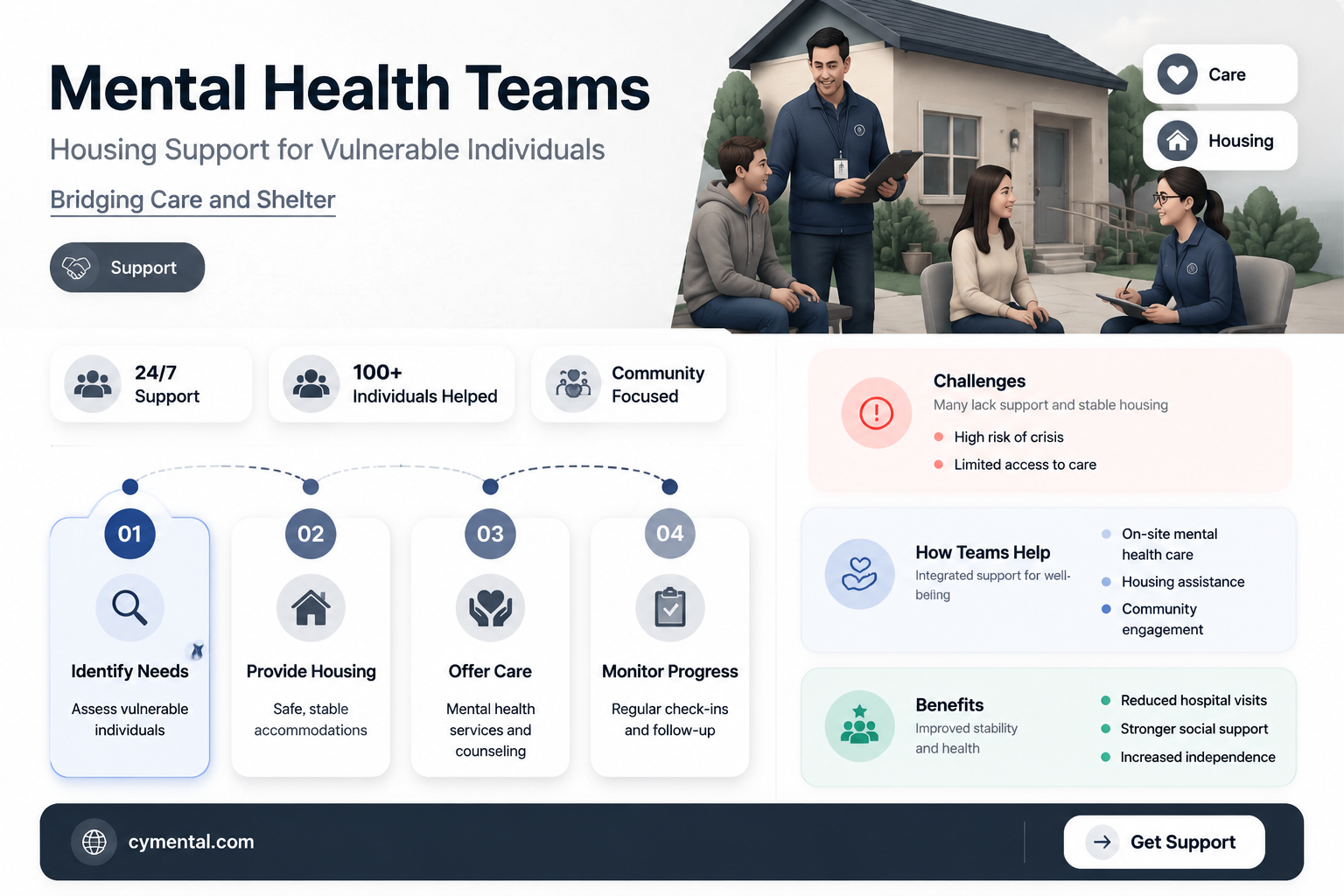
Mental health teams play a crucial role in supporting individuals facing housing challenges, as the link between mental well-being and stable housing is well-established. These teams often collaborate with housing services, social workers, and community organizations to address the complex needs of those experiencing homelessness or housing instability, particularly when mental health issues are a contributing factor. By providing tailored interventions, such as case management, therapy, and access to resources, mental health teams can help individuals secure and maintain housing, improve their overall quality of life, and reduce the risk of relapse or hospitalization. Additionally, they advocate for systemic changes to ensure that housing policies and programs are inclusive and supportive of people with mental health conditions, recognizing that safe and affordable housing is a fundamental aspect of recovery and resilience.
| Characteristics | Values |
|---|---|
| Role of Mental Health Teams | Mental health teams, including Community Mental Health Teams (CMHTs), can provide support and advocacy for individuals with mental health issues who are facing housing difficulties. |
| Assessment and Referral | They assess clients' needs, including housing instability, and refer them to appropriate housing services or support programs. |
| Collaboration with Housing Services | Mental health teams often work with local housing authorities, charities, and support organizations to find suitable accommodation for their clients. |
| Support for Tenancy Sustainment | They may offer ongoing support to help individuals maintain their tenancies, such as assistance with managing finances, resolving conflicts with landlords, or accessing benefits. |
| Crisis Intervention | In cases of homelessness or housing crises, mental health teams can provide emergency support and help clients access temporary accommodation or shelters. |
| Benefits and Financial Advice | They can assist clients in applying for housing benefits, disability allowances, or other financial support to help with housing costs. |
| Personalized Care Plans | Mental health teams develop individualized care plans that address housing needs alongside mental health treatment and support. |
| Advocacy and Representation | They advocate on behalf of clients with housing providers, ensuring their needs are understood and met within the housing system. |
| Link to Supported Housing | Mental health teams can refer clients to supported housing schemes, which offer accommodation with on-site mental health support services. |
| Prevention of Homelessness | By addressing housing issues early, mental health teams aim to prevent homelessness and its detrimental impact on mental health. |
| Holistic Approach | Their support often extends beyond housing to include social inclusion, employment, and overall well-being, recognizing the interconnectedness of these factors. |
| Limitations | The extent of housing support may vary depending on local resources, funding, and the specific policies of the mental health team or region. |
Explore related products


$39.99 $49.99


What You'll Learn

Assessing housing needs for mental health patients
Housing instability exacerbates mental health conditions, creating a cycle where symptoms like depression, anxiety, or psychosis hinder the ability to maintain stable living arrangements. Conversely, secure housing can significantly improve treatment adherence, reduce hospitalizations, and foster recovery. Mental health teams play a pivotal role in breaking this cycle by assessing and addressing housing needs as part of holistic care. This assessment must go beyond identifying homelessness to understanding the nuanced challenges patients face, such as unsafe living conditions, overcrowding, or unaffordable rent.
Assessing housing needs begins with a structured evaluation of the patient’s current living situation. Use standardized tools like the Housing Instability Index or the Vulnerability Index to quantify risk factors. For instance, a 25-year-old with schizophrenia living in a shelter may score high on vulnerability due to lack of privacy and consistent support. Pair these tools with open-ended questions to uncover subjective experiences: “How safe do you feel at home?” or “Do you struggle to pay rent?” This dual approach ensures both objective data and personal context inform the assessment.
Once needs are identified, mental health teams must collaborate with housing agencies to match patients with appropriate resources. Supported housing programs, such as Housing First models, offer a proven framework by providing permanent housing without preconditions like sobriety. For a 40-year-old with bipolar disorder, this might mean a subsidized apartment with on-site case management. Alternatively, for a 60-year-old with chronic depression, a shared living arrangement with peer support could reduce isolation. Tailoring solutions to individual needs ensures sustainability.
Cautions abound in this process. Avoid over-relying on generic housing solutions; a one-size-fits-all approach often fails mental health patients with complex needs. For example, placing someone with severe agoraphobia in a high-rise apartment without accessibility features could worsen their condition. Additionally, ensure patients are actively involved in decision-making to prevent feelings of disempowerment. Regular follow-ups are critical—a 30-day check-in post-placement can identify emerging issues before they escalate.
In conclusion, assessing housing needs for mental health patients requires a blend of structured evaluation, individualized planning, and ongoing support. Mental health teams equipped with the right tools and partnerships can transform housing from a destabilizing factor into a cornerstone of recovery. By prioritizing this aspect of care, they not only improve patient outcomes but also reduce the societal costs of untreated mental illness and homelessness.
Sports and Mental Health: Boosting Well-Being Through Physical Activity
You may want to see also
Explore related products


Linking mental health support with housing services
Mental health and housing are deeply interconnected, yet traditional systems often treat them in isolation. Individuals with severe mental health conditions are disproportionately affected by homelessness, with studies showing that up to 30% of homeless populations experience serious mental illness. Conversely, unstable housing exacerbates mental health issues, creating a cycle of vulnerability. Linking mental health support with housing services isn’t just a compassionate approach—it’s a strategic intervention that addresses both issues simultaneously.
Consider the Housing First model, a proven framework that prioritizes providing permanent housing without preconditions like sobriety or treatment compliance. Once housed, individuals receive wraparound mental health services tailored to their needs. For example, in cities like Helsinki, this approach reduced homelessness by 40% over a decade. Mental health teams play a critical role here by conducting assessments, coordinating care, and offering on-site support such as cognitive behavioral therapy or crisis intervention. For instance, a team might work with a 35-year-old with schizophrenia to set up daily medication reminders and weekly therapy sessions within their new home environment.
However, integrating these services requires careful planning. Mental health teams must collaborate with housing providers to ensure accommodations meet specific needs, such as accessible units for those with physical disabilities or quiet spaces for individuals prone to sensory overload. Funding is another hurdle; programs often rely on a mix of government grants, private donations, and Medicaid reimbursements. For instance, in the U.S., the Assertive Community Treatment (ACT) program pairs mental health professionals with housing specialists, funded through Medicaid’s Section 1915(i) waiver, allowing for flexible service delivery.
To implement this linkage effectively, start by mapping local resources. Identify housing agencies willing to partner and train mental health staff in housing advocacy. Establish clear protocols for referrals and follow-ups, ensuring clients aren’t lost in the system. For example, a mental health team might use a shared digital platform to track a client’s progress from shelter placement to stable housing, with alerts for missed appointments or rent deadlines.
The takeaway is clear: treating housing and mental health as separate issues perpetuates suffering. By embedding mental health support within housing services, we create a foundation for recovery that’s both practical and compassionate. This approach doesn’t just provide a roof—it rebuilds lives.
ChatGPT and Mental Health: A Supportive Tool or Limited Aid?
You may want to see also
Explore related products


Preventing homelessness through mental health interventions
Mental health interventions can serve as a critical lifeline in preventing homelessness, particularly for individuals whose conditions destabilize their living situations. Research indicates that untreated mental health issues often exacerbate financial insecurity, social isolation, and housing instability. For instance, a study by the National Alliance on Mental Illness (NAMI) found that 25% of homeless individuals in the U.S. live with severe mental illness, compared to 6% of the general population. This disparity highlights the urgent need for targeted interventions that address mental health as a root cause of homelessness. By integrating housing support within mental health services, teams can create a safety net that prevents at-risk individuals from falling into homelessness in the first place.
One effective strategy involves Assertive Community Treatment (ACT), a team-based approach that provides comprehensive mental health services, including housing assistance, to individuals with severe mental illness. ACT teams typically consist of psychiatrists, nurses, case managers, and peer specialists who work collaboratively to address both clinical and practical needs. For example, a case manager might help a client apply for housing vouchers while a psychiatrist adjusts their medication regimen to improve stability. A study published in the *Journal of Mental Health Policy and Economics* found that ACT participants experienced a 50% reduction in homelessness compared to those receiving standard care. This model demonstrates how mental health teams can proactively prevent housing crises by addressing mental health and housing needs simultaneously.
Another key intervention is Housing First, a philosophy that prioritizes providing permanent housing to individuals experiencing homelessness without preconditions, such as sobriety or treatment compliance. Mental health teams play a vital role in this approach by offering wraparound services once housing is secured. For instance, a mental health professional might conduct regular home visits to monitor a client’s mental health, provide therapy, and connect them with community resources. A randomized controlled trial in Canada showed that Housing First reduced homelessness by 35% among participants with mental illness and substance use disorders. This approach underscores the importance of stable housing as a foundation for mental health recovery and highlights the indispensable role of mental health teams in its implementation.
To maximize the impact of these interventions, mental health teams must adopt a trauma-informed approach. Many individuals at risk of homelessness have experienced trauma, which can complicate their ability to engage with services or maintain housing. By incorporating trauma-informed practices—such as building trust, offering choice, and creating safety—mental health teams can foster more effective and compassionate care. For example, a therapist might use cognitive-behavioral therapy (CBT) tailored to trauma survivors to help a client manage symptoms that interfere with their housing stability. Practical tips for mental health teams include conducting regular training on trauma-informed care, using non-judgmental language, and collaborating with clients to develop personalized housing plans.
Finally, policy advocacy is essential to ensure mental health teams have the resources and support needed to prevent homelessness. Funding for integrated housing and mental health programs remains inadequate in many regions, limiting their reach and effectiveness. Mental health professionals can advocate for policies like increased funding for supportive housing, expansion of Medicaid coverage for housing-related services, and incentives for landlords to participate in housing programs. For instance, the U.S. Department of Housing and Urban Development’s (HUD) Permanent Supportive Housing program has demonstrated success but requires sustained investment to meet demand. By combining direct service delivery with advocacy, mental health teams can address systemic barriers and create lasting solutions to homelessness.
Mental Health Case Managers: Legal Support and Advocacy Explained
You may want to see also
Explore related products


Supportive housing options for mental health recovery
Access to stable housing is a cornerstone of mental health recovery, yet individuals facing severe mental health challenges often struggle to secure and maintain suitable living arrangements. Supportive housing emerges as a critical solution, blending affordable housing with on-site or integrated services tailored to mental health needs. This model addresses the cyclical relationship between homelessness and mental illness by providing a foundation of safety and consistency, essential for therapeutic progress. Unlike traditional housing, supportive options are designed to foster independence while offering a safety net of professional assistance, making them uniquely suited to those in recovery.
Consider the structure of supportive housing programs, which typically include case management, mental health counseling, and life skills training. For instance, Assertive Community Treatment (ACT) teams often collaborate with housing providers to deliver wraparound services directly to residents. These teams consist of psychiatrists, nurses, and social workers who conduct regular home visits, ensuring medication adherence, therapy engagement, and crisis intervention. Studies show that individuals in such programs experience reduced hospitalization rates and improved symptom management, demonstrating the efficacy of this integrated approach. For those transitioning from homelessness or institutional care, starting with a structured program like ACT can be transformative.
A key advantage of supportive housing is its flexibility to cater to diverse needs. For younger adults, aged 18–25, transitional housing programs often focus on education and employment readiness, equipping them with tools for long-term self-sufficiency. Older adults, particularly those with chronic mental health conditions, may benefit from permanent supportive housing, which emphasizes stability and health maintenance. Tailoring these options to age-specific challenges ensures that recovery is not just about housing but about rebuilding a meaningful life. Practical steps include researching local programs through mental health teams or community health centers, as they often have partnerships with housing providers.
However, navigating the application process for supportive housing can be daunting. Eligibility criteria vary widely, often requiring documentation of mental health diagnoses, income levels, and housing history. Prospective residents should prepare by gathering medical records, benefit statements, and references from healthcare providers. Additionally, understanding the rules and expectations of each program is crucial; some may require participation in treatment plans or sobriety commitments. Mental health teams can play a pivotal role here, assisting with applications, advocating for clients, and coordinating with housing agencies to streamline access.
Despite its benefits, supportive housing is not without challenges. Limited availability and long waiting lists are common barriers, particularly in urban areas. To mitigate this, individuals should explore multiple options, including Section 8 Housing Choice Vouchers with attached services or state-funded programs. Advocacy efforts, such as engaging local policymakers or joining housing coalitions, can also drive expansion of these resources. Ultimately, supportive housing is more than a roof—it’s a bridge to recovery, offering structure, support, and hope for those rebuilding their lives after mental health crises.
Biotin's Role in Mental Health: Potential Benefits and Limitations Explored
You may want to see also
Explore related products


Collaborating with housing agencies for better outcomes
Housing instability exacerbates mental health challenges, creating a cycle where individuals struggle to access care while navigating precarious living conditions. Mental health teams, by collaborating with housing agencies, can disrupt this cycle. This partnership allows for integrated support systems that address both clinical needs and housing barriers, ensuring clients receive holistic care. For instance, a mental health team might refer a client to a housing agency that specializes in supportive housing, which combines affordable rent with on-site mental health services. This dual approach not only stabilizes living situations but also improves treatment adherence and overall well-being.
To initiate collaboration, mental health teams should identify local housing agencies with aligned goals, such as those offering rapid re-housing programs or permanent supportive housing. Establishing formal agreements, like memorandums of understanding, clarifies roles and expectations. For example, the mental health team could commit to providing clinical assessments and therapy, while the housing agency handles rental assistance and tenancy support. Regular joint case conferences ensure both teams remain informed about client progress, fostering a cohesive care plan. Practical tools, such as shared digital platforms or standardized referral forms, streamline communication and reduce administrative burdens.
A critical aspect of successful collaboration is training. Mental health professionals should educate housing agency staff on the nuances of mental health conditions and trauma-informed care, while housing specialists can train mental health teams on navigating housing systems, such as Section 8 vouchers or local landlord relationships. This cross-training builds mutual understanding and equips both teams to address the interconnected challenges their clients face. For instance, a housing caseworker trained in mental health awareness can better advocate for a tenant experiencing psychotic episodes, while a therapist understanding housing policies can help a client prepare for a housing interview.
Measuring outcomes is essential to refine collaborative efforts. Key performance indicators might include housing retention rates, reductions in hospitalizations, or improvements in mental health symptom severity. Case studies from cities like Seattle and Los Angeles demonstrate that such partnerships reduce homelessness by up to 30% among individuals with severe mental illness. To sustain these gains, funding models like Housing First initiatives or Medicaid waivers can be leveraged, ensuring financial stability for both mental health and housing services. By systematically evaluating and adapting their approach, mental health teams and housing agencies can maximize their collective impact.
Finally, advocacy plays a pivotal role in scaling these collaborations. Mental health teams should engage policymakers to promote legislation that funds integrated housing and mental health programs. Sharing success stories and data-driven evidence can sway public opinion and secure resources. For example, a pilot program in Chicago that paired mental health teams with housing agencies reduced emergency shelter stays by 40%, leading to expanded funding. By championing these partnerships, mental health professionals can transform isolated interventions into systemic solutions, ensuring housing becomes a cornerstone of mental health recovery.
Supporting Your Wife: Navigating Mental Health Conversations and Care Options
You may want to see also
Frequently asked questions
Yes, mental health teams can help connect individuals with housing resources, support services, and referrals to organizations specializing in housing assistance for those with mental health needs.
Mental health teams can offer support such as accessing supported housing, applying for housing benefits, liaising with landlords, and providing advocacy to ensure stable housing for their clients.
Yes, mental health teams can intervene by linking individuals to emergency housing services, homelessness prevention programs, and community resources to address immediate housing needs.
No, mental health teams typically do not manage housing directly, but they can coordinate with housing providers, offer guidance, and ensure housing needs are considered as part of a holistic care plan.