Harper Lewis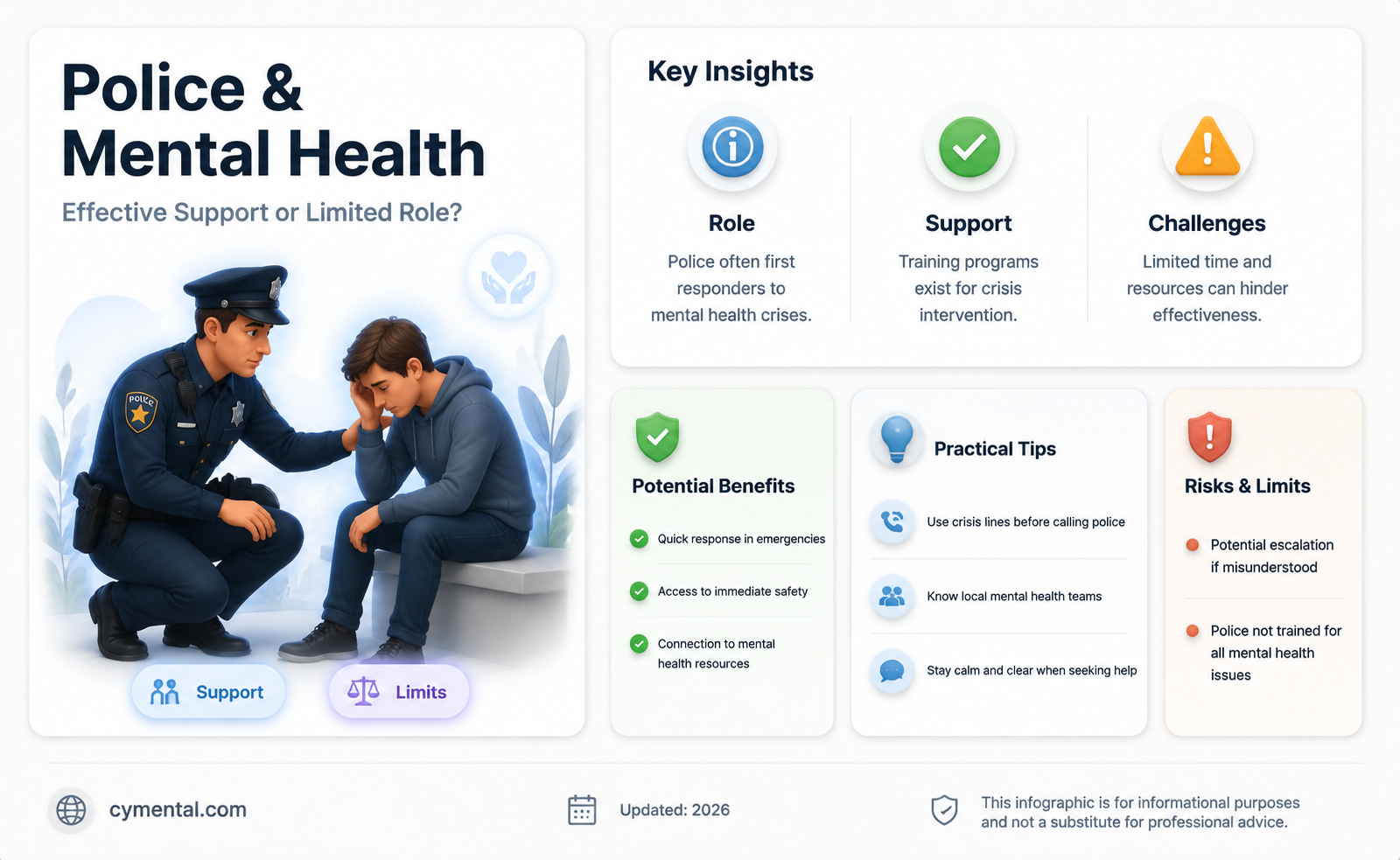
Police officers often find themselves on the front lines of mental health crises, responding to calls involving individuals experiencing severe emotional distress, psychotic episodes, or suicidal tendencies. While their primary role is to maintain public safety and enforce the law, the increasing prevalence of mental health issues has led to debates about whether and how police can effectively assist in these situations. Critics argue that law enforcement may lack the specialized training to de-escalate mental health crises, potentially leading to tragic outcomes, while proponents suggest that with proper resources and collaboration with mental health professionals, police can play a crucial role in connecting individuals to care and preventing harm. This complex issue highlights the need for a multifaceted approach that balances public safety with compassionate, informed support for those in mental distress.
| Characteristics | Values |
|---|---|
| Role of Police in Mental Health Crises | Police are often the first responders to mental health emergencies, but their primary role is public safety, not mental health treatment. |
| Training | Many police departments provide Crisis Intervention Team (CIT) training to officers to better handle mental health situations. However, not all officers receive this training. |
| Effectiveness | Studies show that CIT-trained officers are more likely to de-escalate situations and connect individuals to appropriate mental health services. |
| Limitations | Police lack specialized mental health expertise and resources, leading to potential misuse of force or inappropriate arrests in some cases. |
| Alternatives | Growing advocacy for mobile crisis teams composed of mental health professionals and social workers to respond to mental health emergencies instead of police. |
| Data (US) | In 2022, approximately 1 in 4 fatal police shootings involved individuals with mental illness (Treatment Advocacy Center). |
| Public Opinion | Surveys indicate mixed opinions: some support police involvement in mental health crises, while others advocate for alternative response models. |
Explore related products


What You'll Learn
- Crisis Intervention Teams: Specialized police units trained to handle mental health emergencies effectively
- De-escalation Techniques: Methods police use to calm individuals in mental health crises
- Collaboration with Health Professionals: Partnerships between police and mental health experts for better outcomes
- Mental Health Training: Mandatory programs to educate officers on recognizing and responding to mental illness
- Diversion Programs: Alternatives to arrest, redirecting individuals to mental health treatment instead of jail

Crisis Intervention Teams: Specialized police units trained to handle mental health emergencies effectively
Police officers are often the first responders to mental health crises, yet traditional training may not equip them to de-escalate these situations effectively. Crisis Intervention Teams (CITs) address this gap by providing specialized training to officers, enabling them to handle mental health emergencies with empathy and skill. Developed in Memphis, Tennessee, in 1988, CIT programs have since spread across the U.S. and internationally, demonstrating a proactive approach to bridging the gap between law enforcement and mental health care.
The core of CIT training lies in its comprehensive curriculum, which typically spans 40 hours. Officers learn to recognize signs of mental illness, such as schizophrenia, bipolar disorder, and severe depression, and practice de-escalation techniques to reduce the risk of harm. For instance, instead of issuing commands, officers are trained to use calm, non-threatening language and active listening to build trust with individuals in crisis. Role-playing scenarios, such as responding to a suicidal person or someone experiencing a psychotic episode, allow officers to apply these skills in realistic settings. This hands-on approach ensures that officers are better prepared to handle the complexities of mental health emergencies.
One of the key strengths of CITs is their collaboration with mental health professionals. In many jurisdictions, CIT officers work closely with local mental health providers, crisis hotlines, and community resources to ensure individuals receive appropriate care after the initial intervention. For example, instead of arresting a person in crisis, officers may divert them to a mental health facility or connect them with outpatient services. This partnership not only reduces the likelihood of unnecessary arrests but also fosters a more compassionate and effective response to mental health issues within the community.
Despite their potential, CITs are not a one-size-fits-all solution. Their success depends on several factors, including adequate funding, ongoing training, and community support. Departments must commit to maintaining CIT programs over the long term, as their effectiveness can diminish without consistent reinforcement. Additionally, while CITs can improve outcomes in many cases, they do not replace the need for robust mental health infrastructure. Policymakers and community leaders must also invest in prevention, treatment, and support services to address the root causes of mental health crises.
In conclusion, Crisis Intervention Teams represent a critical step toward integrating mental health awareness into law enforcement practices. By equipping officers with specialized training and fostering collaboration with mental health professionals, CITs offer a more humane and effective approach to handling mental health emergencies. While challenges remain, the widespread adoption and refinement of CIT programs highlight their potential to transform how communities respond to those in crisis.
Effective Strategies to Help Others: A Comprehensive Guide to Support
You may want to see also
Explore related products


De-escalation Techniques: Methods police use to calm individuals in mental health crises
Police officers are often the first responders to mental health crises, yet their role extends beyond mere containment. De-escalation techniques, when effectively employed, can transform these encounters from potentially volatile situations into opportunities for stabilization and support. One critical method is active listening, where officers focus on understanding the individual’s distress rather than immediately asserting control. By repeating back key phrases or acknowledging emotions—such as "I hear that you’re feeling overwhelmed"—officers can build trust and reduce agitation. This approach aligns with crisis intervention team (CIT) training, which equips officers with the skills to recognize mental health symptoms and respond empathetically.
Another proven technique is creating physical and emotional space. Officers trained in de-escalation avoid crowding the individual, as proximity can heighten anxiety. Instead, they maintain a non-threatening distance, use open body language, and speak in a calm, measured tone. For instance, lowering one’s voice and slowing speech can signal safety and encourage the individual to mirror this calmness. Practical tips include avoiding sudden movements, using the person’s name (if known), and offering choices when possible, such as "Would you like to sit here or over there?" This empowers the individual and reduces feelings of coercion.
Distraction and redirection are also powerful tools in de-escalation. By shifting the individual’s focus away from their distress, officers can interrupt escalating behavior. For example, asking neutral questions like "What’s your favorite hobby?" or "Can you tell me about a place that makes you feel safe?" can redirect their thoughts. This technique is particularly effective when combined with breathing exercises, such as instructing the person to inhale deeply for four seconds, hold for four seconds, and exhale for six seconds. These exercises, grounded in physiological calming mechanisms, can lower heart rate and reduce panic.
However, de-escalation is not without challenges. Officers must balance empathy with safety, especially when the individual poses a risk to themselves or others. Cautions include avoiding overly personal questions, which can trigger further distress, and recognizing when verbal de-escalation is insufficient. In such cases, officers may need to involve mental health professionals or use non-violent restraint methods as a last resort. The goal is always to minimize harm while connecting the individual to appropriate care, such as crisis stabilization units or outpatient services.
In conclusion, de-escalation techniques are not just strategies—they are lifelines. When officers approach mental health crises with patience, understanding, and skill, they can prevent tragedies and foster a sense of community trust. Programs like CIT training and partnerships with mental health providers are essential in equipping officers with these tools. By prioritizing de-escalation, law enforcement can play a vital role in supporting individuals in crisis, ensuring that encounters end not in handcuffs, but in care.
Mental Health Meds and Pain Relief: Exploring the Connection
You may want to see also
Explore related products


Collaboration with Health Professionals: Partnerships between police and mental health experts for better outcomes
Police officers are often the first responders to mental health crises, yet their training primarily focuses on law enforcement, not mental health intervention. This mismatch can lead to tragic outcomes, as seen in high-profile cases where individuals in crisis were met with force rather than care. To bridge this gap, collaboration with mental health professionals is essential. By embedding mental health experts within police departments or creating co-response teams, officers can access real-time guidance on de-escalation techniques and appropriate referrals. For instance, the Crisis Assistance Helping Out On The Streets (CAHOOTS) program in Eugene, Oregon, pairs medics and crisis workers to respond to non-violent emergencies, reducing the need for arrests and hospitalizations.
Effective partnerships require structured protocols to ensure seamless communication and action. A key step is establishing clear roles for each party: police handle safety concerns, while mental health professionals assess and address the individual’s needs. Training programs like Crisis Intervention Team (CIT) models equip officers with basic mental health knowledge and emphasize empathy over enforcement. However, success hinges on ongoing collaboration, not just initial training. Regular joint debriefs and case reviews allow both sides to refine strategies and address challenges. For example, in the UK, Street Triage programs involve mental health nurses working alongside police to provide immediate assessments, leading to better outcomes for individuals in crisis.
While collaboration is promising, it’s not without challenges. Resource allocation is a significant hurdle, as mental health services are often underfunded, and police departments may resist diverting funds to non-traditional roles. Additionally, cultural differences between law enforcement and healthcare can create friction. Police prioritize control and quick resolution, whereas mental health professionals focus on long-term care and patient autonomy. To overcome these barriers, agencies must commit to shared goals and invest in cross-disciplinary training. For instance, co-response teams in Australia report higher job satisfaction when both parties understand and respect each other’s expertise, fostering a more cohesive approach to crisis management.
The ultimate goal of these partnerships is to shift the response to mental health crises from punitive to supportive. By integrating mental health expertise into policing, individuals in crisis are more likely to receive appropriate care rather than criminalization. This not only improves outcomes for those in need but also reduces the burden on police and emergency services. For example, a study in Houston found that co-response teams led to a 30% reduction in repeat calls for the same individual, demonstrating the long-term benefits of collaboration. As communities increasingly demand humane approaches to mental health, these partnerships offer a viable path forward, blending safety with compassion.
Finding Support: Where to Go for Mental Health Help and Guidance
You may want to see also
Explore related products





Mental Health Training: Mandatory programs to educate officers on recognizing and responding to mental illness
Police officers are often the first responders to crises involving individuals with mental health issues, yet many lack the training to de-escalate these situations effectively. Mandatory mental health training programs aim to bridge this gap by equipping officers with the skills to recognize signs of mental illness and respond appropriately. These programs typically cover a range of topics, including the basics of mental health conditions, crisis intervention techniques, and strategies for building rapport with individuals in distress. For instance, officers learn to identify symptoms of schizophrenia, bipolar disorder, or severe depression, which can manifest in erratic behavior, paranoia, or suicidal tendencies. This foundational knowledge is critical for distinguishing between criminal intent and a mental health crisis.
One effective model is the Crisis Intervention Team (CIT) training, a 40-hour program developed in Memphis, Tennessee, which has been widely adopted across the U.S. CIT training emphasizes collaboration with mental health professionals and includes role-playing scenarios to simulate real-world encounters. Studies show that officers who complete CIT training are more likely to divert individuals to treatment rather than arrest them, reducing the risk of harm to both parties. For example, in a 2019 study published in the *Journal of the American Academy of Psychiatry and the Law*, jurisdictions with CIT programs saw a 50% reduction in officer injuries during mental health-related calls. This data underscores the tangible benefits of such training in improving outcomes for both officers and individuals in crisis.
Implementing mandatory mental health training requires careful consideration of logistics and resources. Departments must allocate time and funding for officers to participate without compromising their regular duties. One practical approach is to integrate training into existing professional development schedules, offering modules in phases to avoid overwhelming officers. Additionally, trainers should include local mental health resources in the curriculum, such as crisis hotlines, community mental health centers, and peer support programs. This ensures officers know how to connect individuals with long-term care after the immediate crisis is resolved.
Critics argue that while training is essential, it is not a standalone solution. Without systemic changes in how law enforcement interacts with mental health systems, even well-trained officers may struggle to achieve positive outcomes. For instance, a lack of available psychiatric beds or long wait times for outpatient services can limit officers’ ability to secure timely treatment for individuals in crisis. To address this, departments should advocate for increased funding for mental health infrastructure and collaborate with policymakers to develop alternative response models, such as co-responder programs that pair officers with mental health professionals.
Ultimately, mandatory mental health training is a critical step toward transforming the role of police in addressing mental health crises. By fostering empathy, knowledge, and practical skills, these programs empower officers to act as helpers rather than enforcers in vulnerable situations. However, their success depends on ongoing evaluation and adaptation to meet the evolving needs of communities. Departments must commit to continuous improvement, collecting feedback from officers and mental health experts to refine training content and delivery methods. In doing so, law enforcement can become a more effective partner in the broader effort to support mental health and public safety.
Empowering Actions: Simple Ways to Make a Positive Impact Today
You may want to see also
Explore related products


Diversion Programs: Alternatives to arrest, redirecting individuals to mental health treatment instead of jail
Police officers are often the first responders to mental health crises, yet their training primarily focuses on law enforcement, not crisis intervention. This mismatch can lead to tragic outcomes, such as arrests or use of force, when individuals in crisis need medical attention, not handcuffs. Diversion programs offer a critical alternative, redirecting those experiencing mental health emergencies to treatment instead of jail. These programs, often partnerships between law enforcement and mental health providers, aim to de-escalate situations, connect individuals with appropriate care, and reduce the criminalization of mental illness.
For instance, the Crisis Intervention Team (CIT) model trains officers to recognize signs of mental illness, communicate effectively, and connect individuals with crisis services. In Memphis, where CIT originated, arrests related to mental health crises decreased by 40% after implementation. Similarly, the CAHOOTS (Crisis Assistance Helping Out On The Streets) program in Eugene, Oregon, dispatches unarmed medics and crisis workers to non-violent 911 calls, successfully resolving 98% of cases without police involvement. These examples illustrate the potential of diversion programs to transform how communities respond to mental health emergencies.
Implementing effective diversion programs requires careful planning and collaboration. Key steps include establishing partnerships between law enforcement, mental health providers, and community organizations; training officers in crisis intervention techniques; and creating clear protocols for identifying and redirecting individuals in crisis. Funding is crucial, as these programs often require dedicated resources for staffing, training, and transportation. Additionally, ongoing evaluation and data collection are essential to measure success, identify areas for improvement, and demonstrate the program’s value to stakeholders. Without these elements, even well-intentioned initiatives risk falling short of their goals.
Critics argue that diversion programs may not address the root causes of mental illness or systemic issues like lack of affordable housing and healthcare. While valid, these concerns should not overshadow the immediate benefits of diverting individuals from jail, where they often face worsening mental health and limited access to treatment. Diversion programs are not a panacea but a vital step toward a more compassionate and effective response to mental health crises. By focusing on short-term crisis resolution and long-term care coordination, these programs can reduce recidivism, alleviate strain on law enforcement, and improve outcomes for individuals in need.
Ultimately, diversion programs represent a paradigm shift in how society addresses the intersection of mental health and criminal justice. They challenge the notion that police are the default responders to mental health crises and highlight the importance of specialized, community-based interventions. As more cities adopt and adapt these models, they set a precedent for prioritizing treatment over punishment. For policymakers, law enforcement agencies, and advocates, the message is clear: investing in diversion programs is not just a moral imperative but a practical strategy to build safer, healthier communities.
Gratitude's Power: Enhancing Mental Health and Emotional Well-being
You may want to see also
Frequently asked questions
Yes, police officers can respond to mental health crises, but their primary role is to ensure safety. They may de-escalate situations, call for medical assistance, or transport individuals to appropriate care facilities.
Many police departments provide Crisis Intervention Team (CIT) training to help officers recognize and respond to mental health issues effectively, though training levels vary by jurisdiction.
In some cases, police can initiate involuntary commitment or transport individuals to mental health facilities if they pose a danger to themselves or others, following local laws and procedures.
Contact local mental health hotlines, crisis centers, or healthcare providers for assistance. Many communities offer non-police crisis response teams as alternatives.
While police focus on immediate safety, they may refer individuals to community mental health services, social workers, or support programs for ongoing care.