Noah Parker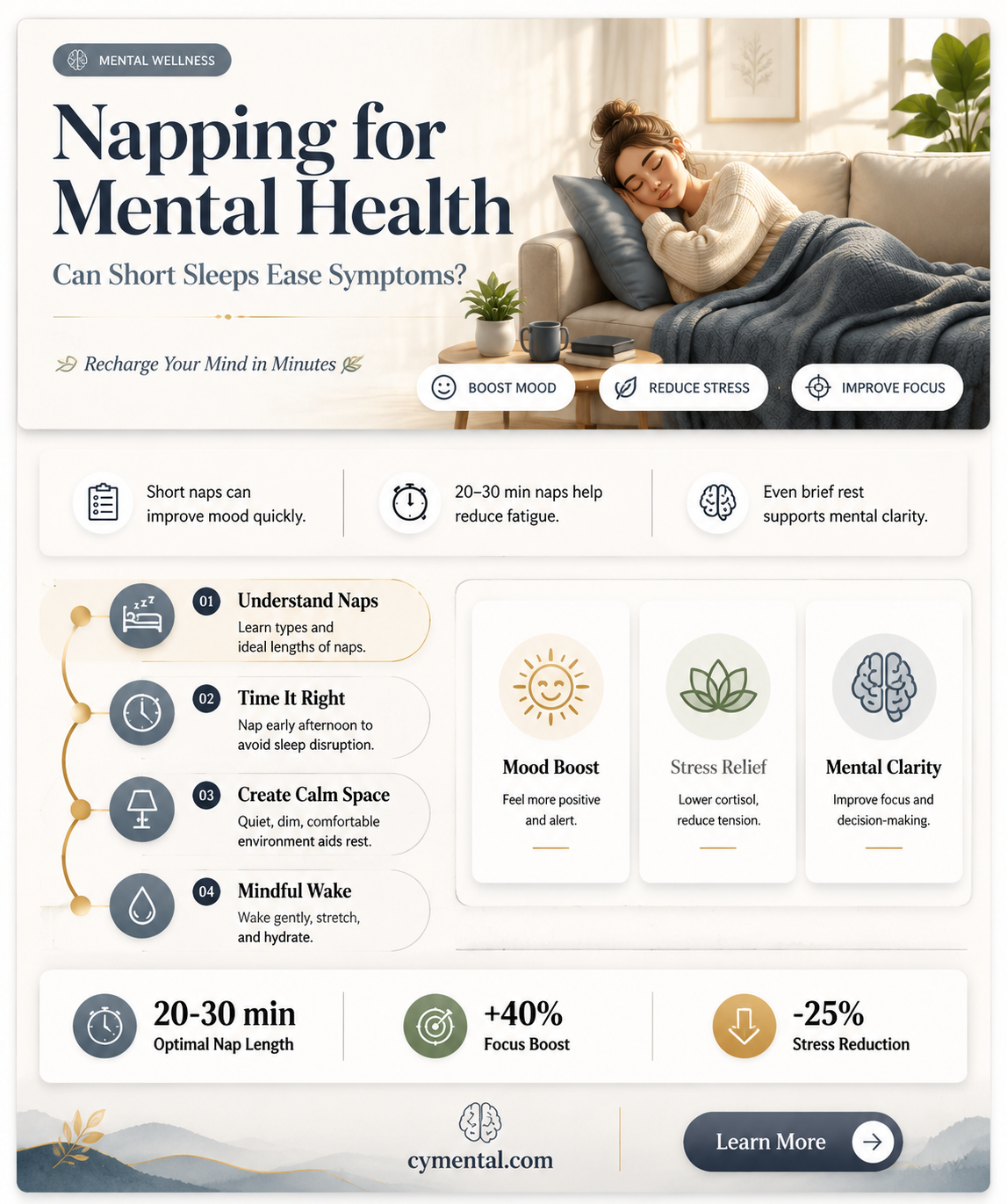
Napping, often viewed as a simple way to recharge during the day, has gained attention for its potential benefits in supporting mental health. Research suggests that short, strategic naps can improve mood, reduce stress, and enhance cognitive function, which may be particularly beneficial for individuals dealing with mental illness. Conditions like depression, anxiety, and bipolar disorder often disrupt sleep patterns, leading to fatigue and exacerbated symptoms. Naps, when incorporated mindfully, could help mitigate these effects by promoting emotional regulation and restoring energy levels. However, the relationship between napping and mental health is complex, as excessive or poorly timed naps might disrupt nighttime sleep, potentially worsening symptoms. Understanding how to optimize napping habits could offer a complementary approach to managing mental health challenges.
Explore related products


What You'll Learn

Naps and stress reduction
Naps, when strategically timed, can act as a powerful tool for stress reduction by modulating the body’s cortisol levels. Cortisol, often called the stress hormone, follows a natural circadian rhythm, typically peaking in the morning and dipping in the afternoon. A 10- to 20-minute nap during the early afternoon slump (around 1–3 PM) aligns with this rhythm, helping to reset cortisol levels without disrupting nighttime sleep. Longer naps, however, can lead to sleep inertia—a groggy, disoriented state—which may counteract stress-reducing benefits. For adults under chronic stress, this short, timed nap can serve as a daily reset, offering a physiological break from the body’s stress response.
To maximize stress reduction, consider the environment in which you nap. A cool, dark, and quiet space enhances relaxation by minimizing sensory input, allowing the brain to enter a restorative state more easily. Use earplugs, an eye mask, or white noise machines to create an optimal setting. Pairing the nap with a consistent pre-sleep routine—such as deep breathing or gentle stretching—can signal to the body that it’s time to unwind. For those with anxiety or racing thoughts, incorporating a brief mindfulness exercise before napping can improve both nap quality and stress relief.
Comparing naps to other stress-reduction techniques highlights their efficiency. While meditation or exercise requires active engagement, naps offer passive recovery, making them accessible even on busy days. However, naps are not a replacement for adequate nighttime sleep; they are a supplement. Over-relying on naps can disrupt sleep patterns, particularly in older adults or those with insomnia. For shift workers or individuals with irregular schedules, a 20- to 30-minute nap before a stressful task can improve alertness and reduce perceived stress, but consistency is key—irregular napping may yield inconsistent results.
A cautionary note: napping is not a one-size-fits-all solution. Individuals with conditions like sleep apnea or severe insomnia may find naps exacerbate their symptoms. Additionally, napping too late in the day (after 4 PM) can interfere with nighttime sleep, particularly in younger adults or those with delayed sleep phase disorder. To avoid this, monitor your body’s response to napping and adjust duration and timing accordingly. For instance, if you wake up feeling more stressed after a nap, shorten the duration or skip it altogether on that day. Practical tip: keep a nap journal to track how different lengths and times affect your stress levels and overall mood.
Mental Health and Child Custody: Can Conditions Impact Parental Rights?
You may want to see also
Explore related products


Impact of naps on mood disorders
Naps, when strategically timed, can act as a buffer against the symptoms of mood disorders such as depression and bipolar disorder. Research suggests that a 20–30 minute midday nap can stabilize emotional regulation by reducing cortisol levels, the stress hormone often elevated in these conditions. For individuals with depression, where fatigue and anhedonia (loss of interest) are common, a short nap can provide a temporary reset, improving alertness and mood without disrupting nighttime sleep. However, longer naps (over 60 minutes) may exacerbate symptoms by increasing grogginess and disrupting circadian rhythms, so precision in duration is key.
Consider the bipolar disorder context, where sleep disturbances are both a symptom and a trigger for mood episodes. A 10–20 minute nap during the early afternoon can help manage hypomania or irritability by preventing overtiredness, which often fuels emotional volatility. Conversely, during depressive phases, a slightly longer nap (up to 30 minutes) can counteract lethargy without risking nighttime insomnia. The timing is critical: napping after 3 PM may interfere with sleep onset, worsening mood instability. For both disorders, consistency in nap duration and timing is more effective than sporadic, unstructured rest.
From a practical standpoint, integrating naps into a mood disorder management plan requires intentionality. Start by identifying your "slump time"—typically 7–9 hours after waking—and schedule a nap then. Use a timer to avoid oversleeping, and create a restful environment with minimal light and noise. For those on medication, consult a healthcare provider, as some antidepressants or mood stabilizers may alter sleep architecture. Pair napping with other mood-stabilizing habits, such as morning sunlight exposure and evening screen reduction, to amplify benefits.
A comparative analysis of napping versus other interventions reveals its unique role. While cognitive-behavioral therapy (CBT) and medication address root causes of mood disorders, naps offer immediate symptom relief by recalibrating the brain’s emotional circuitry. Unlike caffeine, which can heighten anxiety, naps provide sustainable energy without side effects. However, naps are not a standalone solution; they work best as part of a holistic approach. For instance, combining a 20-minute nap with a 10-minute mindfulness exercise can enhance emotional resilience more effectively than either practice alone.
Finally, age and lifestyle factors influence how naps impact mood disorders. Younger adults (18–35) with depression may benefit more from shorter, rejuvenating naps, while older adults (50+) might require slightly longer durations to counteract age-related sleep fragmentation. Shift workers with mood disorders face unique challenges; a 30-minute nap before a night shift can reduce emotional exhaustion, but consistency is harder to achieve. Tailoring nap strategies to individual needs—considering age, work schedule, and symptom severity—maximizes their therapeutic potential in managing mood disorders.
Nature's Healing Power: Boosting Mental Health and Well-being Naturally
You may want to see also
Explore related products


Sleep quality vs. mental health
The relationship between sleep quality and mental health is bidirectional: poor sleep can exacerbate mental health issues, while mental health struggles often disrupt sleep. Research indicates that individuals with insomnia are ten times more likely to develop depression and anxiety disorders. Conversely, those with depression frequently experience sleep disturbances, creating a cycle that’s difficult to break. Naps, when strategically incorporated, can serve as a tool to improve sleep quality and, by extension, mental health—but only if they complement, rather than replace, a consistent sleep routine.
To harness the benefits of naps for mental health, consider the timing and duration. A 20- to 30-minute nap in the early afternoon can enhance mood, alertness, and cognitive function without interfering with nighttime sleep. This "power nap" aligns with the body’s natural circadian dip and avoids the grogginess associated with longer sleep sessions. For individuals with conditions like bipolar disorder or severe depression, however, napping may disrupt sleep patterns, so consultation with a healthcare provider is essential. The key is to view naps as a supplement to, not a substitute for, quality nighttime sleep.
Analyzing the data, it’s clear that naps are not a one-size-fits-all solution. For older adults, who often experience fragmented sleep, a short nap can mitigate cognitive decline and improve emotional resilience. In contrast, younger adults with anxiety or ADHD may find that napping worsens nighttime insomnia. Practical tips include maintaining a dark, quiet environment for napping and avoiding caffeine at least 4–6 hours before the nap. Pairing naps with a consistent sleep hygiene routine—such as a fixed bedtime and limited screen time before sleep—maximizes their mental health benefits.
A persuasive argument for integrating naps into mental health care is their ability to reduce stress and improve emotional regulation. Cortisol, the stress hormone, decreases during sleep, and a well-timed nap can interrupt the body’s stress response. For shift workers or those with irregular schedules, naps become a necessity to prevent burnout and mood disorders. However, reliance on napping to compensate for chronic sleep deprivation is counterproductive. Instead, prioritize 7–9 hours of nighttime sleep and use naps as a strategic tool to address occasional deficits or high-stress periods.
In conclusion, the interplay between sleep quality and mental health underscores the need for a nuanced approach to napping. While naps can alleviate symptoms of mental illness by improving mood and cognitive function, they must be tailored to individual needs and conditions. For those struggling with mental health, combining short, structured naps with evidence-based sleep hygiene practices offers a practical pathway to better well-being. Always consult a professional to ensure napping supports, rather than hinders, your mental health journey.
Finding Support: Where to Get Mental Health Help and Resources
You may want to see also
Explore related products


![670nm Red Light Night Light for Sleep Therapy[2 Pack] - Zero Blue Light, Auto On/Off LED Red Night Light Plug into Wall for Nursery Bedroom Bathroom with Dusk to Dawn Sensor](https://m.media-amazon.com/images/I/51+OWIIKrWL._AC_UY218_.jpg)


Napping to combat anxiety symptoms
Anxiety often thrives on exhaustion, creating a vicious cycle where worry disrupts sleep, and lack of sleep intensifies anxiety. Strategic napping can interrupt this cycle by providing the brain with essential recovery time. Research suggests that a 20- to 30-minute nap in the early afternoon can reduce cortisol levels, the stress hormone closely linked to anxiety. This "power nap" duration is optimal; longer naps may lead to grogginess, which can paradoxically increase feelings of unease. For individuals with anxiety disorders, incorporating this brief restorative pause into daily routines may offer a simple yet effective tool to manage symptoms.
Consider the physiological mechanisms at play. During sleep, the brain processes emotions and consolidates memories, activities that are often disrupted in anxious individuals. A short nap allows the amygdala, the brain’s emotional center, to reset, reducing hyperactivity associated with anxiety. Additionally, napping improves prefrontal cortex function, enhancing decision-making and emotional regulation. For those prone to rumination, this mental recalibration can provide a temporary reprieve from the relentless loop of anxious thoughts. However, timing is critical; napping too late in the day can interfere with nighttime sleep, negating potential benefits.
Practical implementation requires mindfulness. Create a calming environment by dimming lights, using white noise, or incorporating relaxation techniques like deep breathing before napping. Avoid caffeine at least 4–6 hours prior to your nap to prevent restlessness. For individuals with generalized anxiety disorder or panic disorder, pairing napping with a consistent sleep schedule reinforces circadian rhythms, further stabilizing mood. While napping is not a standalone treatment, it complements therapies like cognitive-behavioral therapy (CBT) and medication by addressing the sleep-anxiety nexus.
Comparatively, napping for anxiety differs from general fatigue management. Unlike restorative sleep for physical exhaustion, anxiety-focused napping prioritizes emotional regulation. It’s not about accumulating sleep debt but about creating moments of mental respite. For instance, a student experiencing test anxiety might use a pre-exam nap to reduce cortisol spikes, improving focus and performance. Similarly, professionals facing work-related stress can use midday naps to reset, preventing anxiety from escalating into burnout.
In conclusion, napping is a low-cost, accessible strategy to combat anxiety symptoms, particularly when tailored to individual needs. While not a cure, it serves as a valuable adjunctive approach, offering immediate relief and long-term emotional stability. By understanding the science and practicalities, individuals can harness the power of naps to disrupt the anxiety-exhaustion cycle, fostering greater mental resilience.
Veganism and Mental Health: Exploring the Mind-Diet Connection
You may want to see also
Explore related products


Cognitive benefits of short daytime sleep
Short daytime naps, when strategically timed, can significantly enhance cognitive function by improving memory consolidation, attention, and problem-solving skills. Research indicates that a 20- to 30-minute nap—often referred to as a "power nap"—is optimal for boosting alertness and cognitive performance without inducing grogginess. This duration aligns with the first two stages of sleep, which include light sleep and rapid eye movement (REM) sleep, both critical for processing and storing information. For instance, a study published in the *Journal of Sleep Research* found that participants who took a 30-minute afternoon nap performed better on memory recall tasks compared to those who stayed awake. This suggests that napping can act as a cognitive reset, particularly for individuals experiencing mental fatigue or stress.
For those struggling with mental health conditions like depression or anxiety, incorporating short naps into a daily routine can provide a mental respite. Anxiety often disrupts sleep patterns, leading to cognitive impairments such as difficulty concentrating or making decisions. A 10- to 20-minute nap can mitigate these effects by temporarily reducing cortisol levels, the stress hormone, and improving emotional regulation. However, it’s crucial to avoid napping too close to bedtime, as this can interfere with nighttime sleep, exacerbating mental health symptoms. Aim for a nap between 1 p.m. and 3 p.m. to align with the body’s natural circadian dip in energy.
Comparatively, longer naps (60 minutes or more) can have the opposite effect, leading to sleep inertia—a groggy, disoriented state that impairs cognitive function. This is particularly counterproductive for individuals with mental illness, as it can worsen feelings of lethargy or hopelessness. For older adults, especially those with conditions like depression or mild cognitive impairment, sticking to shorter naps is essential. A study in *Nature Aging* highlighted that older adults who napped for 30 minutes or less showed improved executive function and verbal fluency compared to those who napped longer.
To maximize the cognitive benefits of napping, create a conducive environment. Use a comfortable chair or bed, dim the lights, and minimize noise. If falling asleep quickly is a challenge, try a guided relaxation technique or white noise. For individuals with mental illness, consistency is key—aim to nap at the same time daily to regulate your body’s internal clock. Pairing naps with other cognitive-enhancing habits, such as light exercise or mindfulness, can further amplify their benefits. Remember, napping is not a replacement for quality nighttime sleep but a complementary tool to support mental clarity and emotional well-being.
Animal Companionship: Boosting Mental Health and Emotional Well-Being in Humans
You may want to see also
Frequently asked questions
Yes, short naps (20–30 minutes) can help reduce anxiety by lowering cortisol levels and promoting relaxation, but longer naps may disrupt sleep patterns and worsen symptoms.
Naps can temporarily boost mood by reducing fatigue and improving alertness, but they are not a substitute for consistent sleep hygiene or treatment for depression.
Short naps may improve attention and cognitive function in individuals with ADHD by reducing mental fatigue, but they should complement, not replace, other management strategies.
Yes, brief naps can alleviate stress by restoring energy and improving emotional regulation, but excessive napping may indicate underlying sleep problems that need addressing.
Naps can disrupt sleep patterns in bipolar disorder, potentially triggering mood episodes. Individuals with bipolar disorder should monitor their napping habits and consult a healthcare provider for guidance.