Lucas Bennett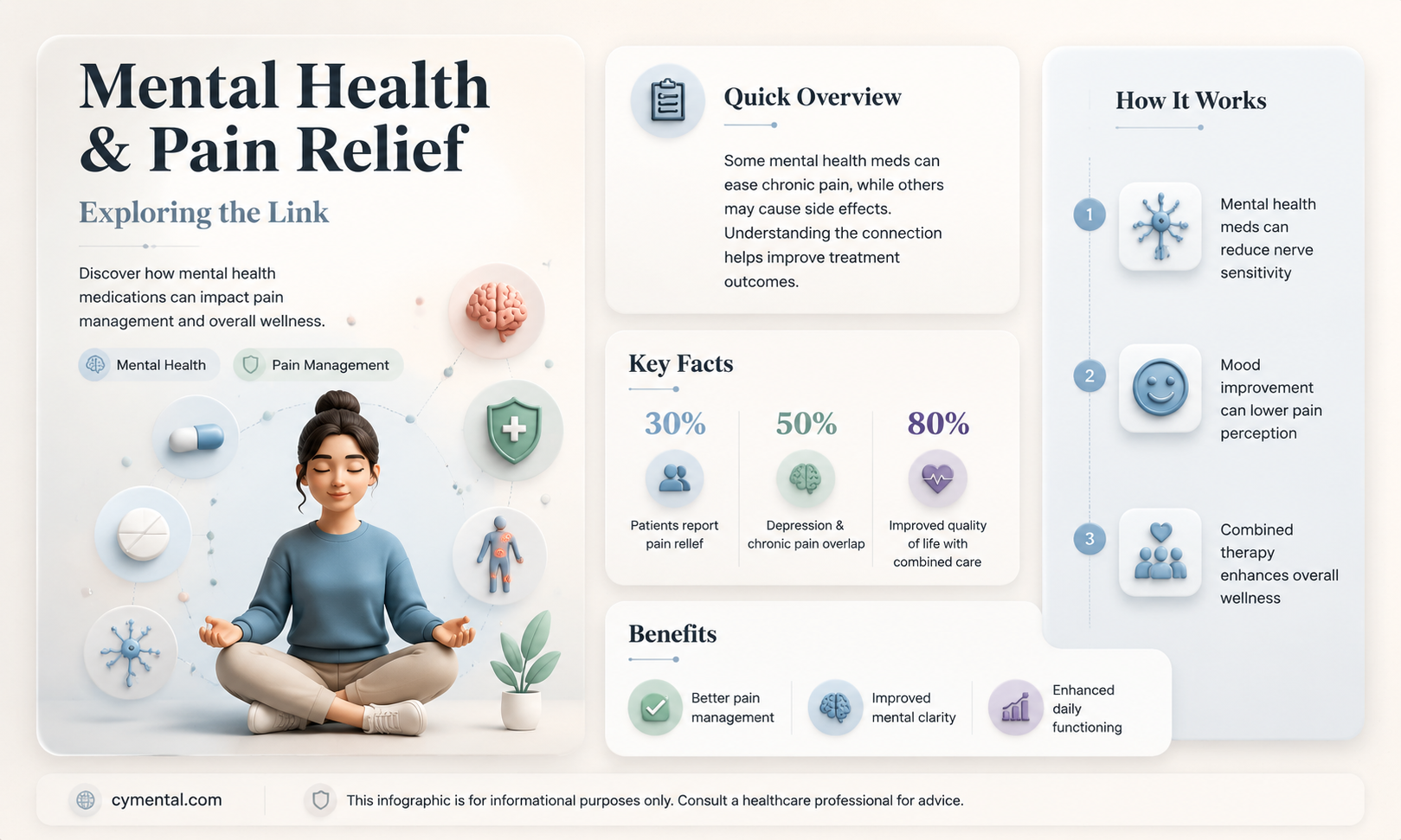
Many individuals wonder whether their mental health medications, such as antidepressants or anti-anxiety drugs, can also alleviate physical pain. While these medications are primarily prescribed to manage conditions like depression, anxiety, or PTSD, some have been found to influence pain perception due to their effects on neurotransmitters like serotonin and norepinephrine. For instance, certain antidepressants are commonly used to treat chronic pain conditions, such as neuropathic pain or fibromyalgia, because they can modulate pain signals in the brain. However, the effectiveness of mental health meds for pain varies from person to person, and their use for this purpose should always be discussed with a healthcare provider to ensure safety and appropriateness.
Explore related products

$12.23 $14.39


What You'll Learn
- Antidepressants for Pain Relief: Some antidepressants can reduce chronic pain by altering brain chemistry
- Antipsychotics and Pain Management: Certain antipsychotics may alleviate neuropathic pain symptoms
- Mood Stabilizers’ Role in Pain: Medications like lithium can indirectly ease pain through mood regulation
- Anxiolytics and Pain Perception: Anti-anxiety drugs may lower pain sensitivity by reducing stress
- Side Effects vs. Pain Benefits: Balancing pain relief with potential medication side effects

Antidepressants for Pain Relief: Some antidepressants can reduce chronic pain by altering brain chemistry
Antidepressants, primarily developed to treat mood disorders, have emerged as a surprising yet effective tool for managing chronic pain. This dual functionality stems from their ability to modulate neurotransmitters like serotonin and norepinephrine, which play a critical role in both mood regulation and pain perception. For instance, tricyclic antidepressants (TCAs) such as amitriptyline are often prescribed at lower doses (10–50 mg daily) to alleviate neuropathic pain, while selective serotonin and norepinephrine reuptake inhibitors (SNRIs) like duloxetine (30–120 mg daily) are FDA-approved for conditions like diabetic neuropathy and fibromyalgia. This repurposing of antidepressants highlights the intricate connection between mental health and physical pain.
Consider the mechanism: chronic pain often amplifies stress and anxiety, creating a feedback loop that worsens both conditions. Antidepressants disrupt this cycle by increasing neurotransmitter levels in the brain and spinal cord, effectively dampening pain signals. For example, TCAs block the reuptake of serotonin and norepinephrine, enhancing their pain-relieving effects, while SNRIs specifically target these neurotransmitters to reduce pain sensitivity. This biochemical intervention not only addresses the physical symptoms but also improves emotional resilience, making it easier for individuals to cope with persistent pain.
However, using antidepressants for pain relief isn’t a one-size-fits-all solution. Dosage and selection depend on the type of pain and the patient’s medical history. Neuropathic pain, characterized by nerve damage, often responds well to TCAs or SNRIs, whereas musculoskeletal pain may require a different approach. Patients must start with the lowest effective dose to minimize side effects like drowsiness, dry mouth, or dizziness. It’s also crucial to monitor progress over several weeks, as these medications typically take time to exert their full analgesic effect.
Practical tips can enhance the effectiveness of this treatment. Combining antidepressants with non-pharmacological strategies, such as physical therapy or mindfulness, can amplify pain relief. Patients should maintain open communication with their healthcare provider to adjust dosages or switch medications if needed. Additionally, older adults or individuals with comorbidities like cardiovascular disease must be cautious, as certain antidepressants may interact with other medications or exacerbate health risks.
In conclusion, antidepressants offer a unique and evidence-based approach to managing chronic pain by targeting the brain’s chemistry. While not a cure-all, their dual action on mood and pain perception makes them a valuable option for those struggling with persistent discomfort. With careful consideration of dosage, patient profile, and complementary therapies, this treatment can significantly improve quality of life for many.
Can Lawyers Improve Mental Health Outcomes in Legal Cases?
You may want to see also
Explore related products


Antipsychotics and Pain Management: Certain antipsychotics may alleviate neuropathic pain symptoms
Antipsychotics, primarily prescribed for conditions like schizophrenia and bipolar disorder, have emerged as unexpected allies in managing neuropathic pain. This type of pain, often described as burning, shooting, or tingling, arises from nerve damage and can be notoriously difficult to treat. Certain antipsychotics, such as quetiapine and olanzapine, have demonstrated efficacy in alleviating these symptoms, even in patients without psychiatric diagnoses. Their mechanism of action involves modulating neurotransmitters like dopamine and serotonin, which play a role in both mental health and pain perception.
Consider the case of quetiapine, often prescribed at doses ranging from 25 to 300 mg daily for neuropathic pain. Studies suggest it may reduce pain intensity by up to 50% in some patients, particularly those with diabetic neuropathy or postherpetic neuralgia. However, its sedative effects can be a double-edged sword—beneficial for sleep-disrupting pain but potentially impairing daytime functioning. Olanzapine, another option, acts similarly but carries a higher risk of metabolic side effects, such as weight gain and glucose intolerance, which must be carefully monitored.
The use of antipsychotics for pain management requires a nuanced approach. Unlike traditional pain medications, these drugs are not first-line treatments and are typically reserved for cases where other therapies, like gabapentinoids or antidepressants, have failed. Clinicians must weigh the potential benefits against risks, such as extrapyramidal symptoms or cognitive dulling, especially in older adults. Starting at the lowest effective dose and titrating slowly can minimize adverse effects while maximizing pain relief.
A comparative analysis highlights the advantages of antipsychotics in specific scenarios. For instance, while opioids provide rapid pain relief, they carry significant risks of dependence and tolerance. Tricyclic antidepressants, though effective, may be poorly tolerated due to anticholinergic side effects. Antipsychotics, in contrast, offer a unique pharmacological profile that can address both pain and comorbid conditions like anxiety or insomnia, making them a versatile option for complex patients.
In practice, integrating antipsychotics into a pain management regimen demands collaboration between patients and providers. Patients should be educated about potential side effects and encouraged to report any changes in symptoms promptly. Regular follow-ups are essential to assess efficacy and adjust dosages as needed. For those with chronic neuropathic pain, antipsychotics may not be a cure, but they can provide meaningful relief, improving quality of life when other options fall short.
Addressing Mental Health: Are Our Efforts Truly Making a Difference?
You may want to see also
Explore related products


$7.35 $11.79


Mood Stabilizers’ Role in Pain: Medications like lithium can indirectly ease pain through mood regulation
Mood stabilizers, such as lithium, are primarily prescribed to manage bipolar disorder by balancing extreme mood swings. However, their role in pain management is an emerging area of interest. While not directly analgesic, these medications can indirectly alleviate pain by stabilizing emotional states, which often exacerbate physical discomfort. For instance, anxiety and depression can heighten pain perception, creating a cycle where emotional distress intensifies physical symptoms. By regulating mood, lithium and similar drugs may disrupt this cycle, offering relief to individuals whose pain is compounded by mental health challenges.
Consider the mechanism: lithium modulates neurotransmitters like serotonin and norepinephrine, which influence both mood and pain perception. A study in *The Journal of Pain* found that bipolar patients on lithium reported reduced pain intensity compared to those not on mood stabilizers. This effect is particularly notable in neuropathic pain, where emotional factors play a significant role. Dosage is critical—typically, lithium is prescribed at 900–1200 mg/day for bipolar disorder, but pain-related benefits may emerge at lower doses, though this requires further research. Patients should consult their physician to tailor dosage and monitor lithium levels, as therapeutic ranges are narrow and toxicity risks exist.
Practical application of this approach demands caution. Mood stabilizers are not first-line treatments for pain and should not replace conventional analgesics. Instead, they may serve as adjuncts for individuals with comorbid mental health conditions. For example, a 45-year-old with fibromyalgia and bipolar disorder might find that lithium not only stabilizes their mood but also reduces widespread pain. However, side effects like weight gain, tremors, or thyroid dysfunction must be weighed against potential benefits. Combining lithium with other pain medications requires careful oversight to avoid drug interactions, particularly with NSAIDs or opioids.
The takeaway is clear: mood stabilizers like lithium offer a dual benefit for those whose pain is intertwined with emotional dysregulation. While not a panacea, they provide a unique avenue for holistic pain management. Patients should approach this strategy with realistic expectations and close medical supervision, recognizing that the link between mental health and pain is complex but increasingly understood. As research evolves, this intersection of psychiatry and pain medicine may unlock new therapeutic possibilities for a subset of chronic pain sufferers.
Seeking Support: A Guide to Finding Help When You Need It Most
You may want to see also
Explore related products

$9.99

$37.95 $39.95


Anxiolytics and Pain Perception: Anti-anxiety drugs may lower pain sensitivity by reducing stress
Anxiolytics, commonly prescribed to manage anxiety disorders, may inadvertently offer relief from physical pain by modulating the body’s stress response. These medications, including benzodiazepines like diazepam and alprazolam, act on the central nervous system to reduce anxiety, but their effects extend to pain perception. Research suggests that by lowering stress hormones such as cortisol, anxiolytics can decrease the body’s sensitivity to pain signals. For instance, a study published in *Pain Medicine* found that patients taking low-dose alprazolam (0.25–0.5 mg daily) reported a 20% reduction in chronic pain intensity compared to placebo. This dual benefit highlights the interconnectedness of mental and physical health, though it’s crucial to note that such use should always be under medical supervision.
Consider the mechanism: anxiolytics enhance the activity of gamma-aminobutyric acid (GABA), a neurotransmitter that inhibits neural activity, including pain pathways. This inhibition not only calms anxiety but also dampens the brain’s interpretation of pain signals. For example, a patient with fibromyalgia, a condition characterized by widespread pain and heightened stress, might find that a benzodiazepine prescribed for anxiety also alleviates their physical discomfort. However, this effect is often dose-dependent; higher doses may increase sedation without proportionally reducing pain, while lower doses (e.g., 0.25 mg of clonazepam) can provide a balanced benefit. Practical tip: if you’re already on anxiolytics for anxiety, monitor your pain levels and discuss any changes with your healthcare provider to optimize treatment.
While the pain-relieving potential of anxiolytics is promising, it’s not without risks. Prolonged use of benzodiazepines can lead to tolerance, dependence, and withdrawal symptoms, making them less suitable for long-term pain management. Additionally, their sedative effects may impair daily functioning, particularly in older adults (aged 65 and above), who are more susceptible to falls and cognitive decline. Alternatives like selective serotonin reuptake inhibitors (SSRIs) or cognitive-behavioral therapy (CBT) may offer similar pain-reducing benefits without the same risks. For those already on anxiolytics, a gradual tapering plan under medical guidance can help mitigate withdrawal while exploring other pain management strategies.
In practice, integrating anxiolytics into a pain management regimen requires a nuanced approach. Start by identifying whether pain is acute or chronic and whether it coexists with anxiety or stress. For acute pain, short-term use of anxiolytics (e.g., 1–2 weeks) may suffice, while chronic cases demand a multidisciplinary strategy. Combining anxiolytics with non-pharmacological interventions like mindfulness or physical therapy can enhance their effectiveness. For instance, a 40-year-old with chronic back pain and generalized anxiety disorder might benefit from a low-dose benzodiazepine alongside yoga sessions to address both conditions. Always prioritize open communication with your healthcare provider to tailor treatment to your specific needs.
The takeaway is clear: anxiolytics can play a role in pain management by reducing stress and modulating pain perception, but their use must be strategic and monitored. While they offer a potential dual benefit for those with comorbid anxiety and pain, they are not a standalone solution. Dosage, duration, and individual health factors must be carefully considered to maximize benefits while minimizing risks. If you’re exploring this option, start with a detailed discussion with your doctor, who can help weigh the pros and cons based on your unique circumstances. Remember, managing pain is as much about addressing its psychological roots as its physical symptoms.
Altruism's Healing Power: Can Selfless Acts Improve Mental Health?
You may want to see also
Explore related products



Side Effects vs. Pain Benefits: Balancing pain relief with potential medication side effects
Certain mental health medications, such as antidepressants and antipsychotics, can indeed alleviate chronic pain conditions like neuropathic pain or fibromyalgia. For instance, tricyclic antidepressants (e.g., amitriptyline 25–150 mg/day) and SNRIs (e.g., duloxetine 60–120 mg/day) are often prescribed off-label for pain management due to their ability to modulate neurotransmitters like serotonin and norepinephrine. However, this dual benefit comes with a critical trade-off: managing pain while navigating potential side effects, which can range from mild (drowsiness, dry mouth) to severe (cardiovascular changes, increased suicidal ideation in younger adults under 25).
Consider the case of a 45-year-old patient with both depression and chronic back pain. Prescribing venlafaxine (75–225 mg/day) might address both conditions, but the patient must weigh the pain relief against risks like hypertension or withdrawal symptoms if the medication is abruptly stopped. This balancing act requires proactive monitoring: regular blood pressure checks, dose titration, and open dialogue with a healthcare provider to adjust treatment as needed.
From a persuasive standpoint, prioritizing pain relief over side effects can be tempting, especially when pain is debilitating. Yet, dismissing side effects as "minor" can lead to long-term complications. For example, prolonged use of high-dose amitriptyline (over 100 mg/day) may cause cognitive impairment in older adults, while younger patients on SSRIs might experience sexual dysfunction. The takeaway? Pain relief is not a one-size-fits-all solution—it demands individualized risk-benefit analysis.
Comparatively, non-pharmacological interventions like cognitive-behavioral therapy (CBT) or physical therapy offer side-effect-free alternatives but may not provide immediate relief. Medications, however, act faster and can be particularly effective for neuropathic pain. A practical tip: start with the lowest effective dose (e.g., duloxetine 30 mg/day) and gradually increase under supervision to minimize side effects while maximizing pain control.
In conclusion, leveraging mental health meds for pain relief is a viable strategy, but it’s a delicate balance. Patients and providers must collaborate to monitor efficacy and side effects, adjusting treatment plans dynamically. For those over 65 or with comorbidities, extra caution is warranted due to heightened sensitivity to side effects. Ultimately, informed decision-making ensures that the pursuit of pain relief doesn’t compromise overall well-being.
Can Ibuprofen Ease Mental Pain? Exploring Science and Limits
You may want to see also
Frequently asked questions
Yes, certain antidepressants like tricyclic antidepressants (TCAs) and serotonin-norepinephrine reuptake inhibitors (SNRIs) are often prescribed to manage chronic pain, even for those without depression, as they can modulate pain signals in the brain.
Some anti-anxiety medications, particularly benzodiazepines, may provide temporary relief from pain by relaxing muscles and reducing stress, but they are not typically used as a primary treatment for chronic pain due to risks of dependence.
Yes, certain mood stabilizers (e.g., gabapentin) and low-dose antipsychotics are sometimes used to treat neuropathic pain or chronic pain conditions, as they can affect nerve signaling and pain perception.
Some mental health medications can interact with pain relievers, such as SSRIs with NSAIDs increasing bleeding risk, or opioids with benzodiazepines causing sedation. Always consult your doctor to ensure safe combinations.