Ava Ramirez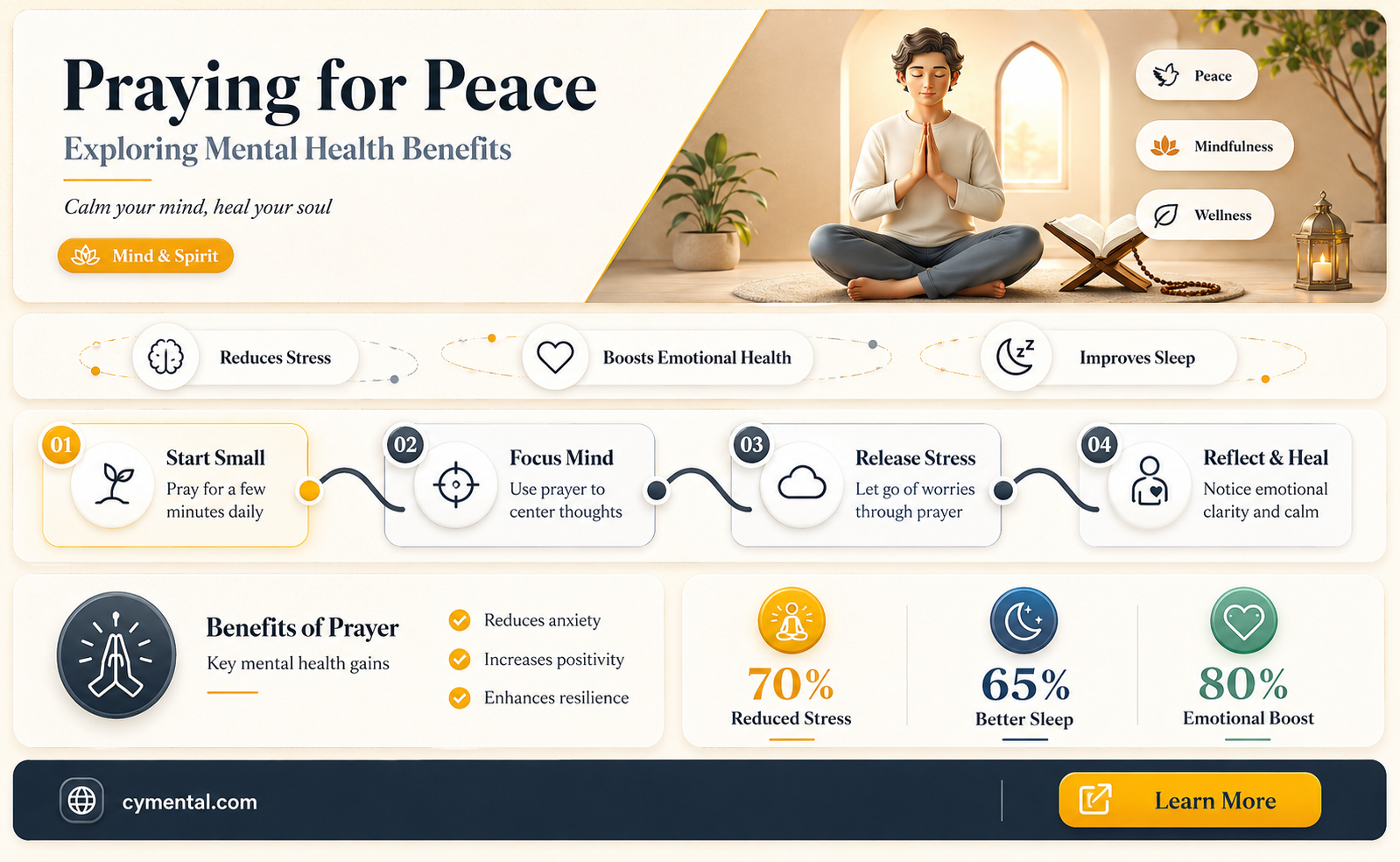
Praying, as a form of spiritual practice, has long been associated with providing comfort, hope, and a sense of connection for individuals across various cultures and religions. In recent years, there has been growing interest in understanding whether praying can positively impact mental health, with some studies suggesting that it may help reduce stress, anxiety, and depression by fostering a sense of inner peace, gratitude, and resilience. As people increasingly seek holistic approaches to mental well-being, exploring the potential therapeutic benefits of prayer offers a unique perspective on how spiritual practices can complement traditional mental health interventions.
| Characteristics | Values |
|---|---|
| Stress Reduction | Numerous studies indicate that prayer can lower cortisol levels and reduce perceived stress, promoting relaxation. |
| Emotional Regulation | Prayer may help individuals process emotions, increase emotional resilience, and reduce symptoms of anxiety and depression. |
| Sense of Purpose | Regular prayer can enhance feelings of meaning and purpose in life, contributing to better mental well-being. |
| Social Connection | Communal prayer or prayer within a religious group can foster social support, reducing loneliness and improving mental health. |
| Coping Mechanism | Prayer serves as a healthy coping strategy for dealing with trauma, grief, or life challenges. |
| Mindfulness & Focus | Prayer practices often involve mindfulness, which can improve attention and reduce symptoms of ADHD or rumination. |
| Hope & Optimism | Prayer can cultivate hope and positive expectations, which are linked to better mental health outcomes. |
| Physical Health Benefits | Improved mental health through prayer may indirectly enhance physical health, such as lowering blood pressure and boosting immunity. |
| Spiritual Well-being | For religious individuals, prayer strengthens spiritual connection, which is associated with reduced mental health issues. |
| Self-Compassion | Prayer can encourage self-forgiveness and self-compassion, reducing self-criticism and improving self-esteem. |
| Sleep Quality | Prayer before bedtime may improve sleep patterns, which is crucial for mental health. |
| Reduced Substance Abuse | Studies suggest that prayer can decrease reliance on harmful coping mechanisms like drugs or alcohol. |
| Neurological Impact | Some research indicates that prayer may positively affect brain regions associated with emotional regulation and stress response. |
| Cultural & Personal Relevance | The effectiveness of prayer on mental health may vary based on individual beliefs, cultural context, and personal practices. |
| Long-term Resilience | Consistent prayer practices are linked to long-term mental resilience and reduced risk of mental health disorders. |
Explore related products


What You'll Learn
- Stress Reduction: Prayer can lower cortisol levels, promoting relaxation and reducing anxiety symptoms
- Emotional Coping: Provides a sense of comfort, helping individuals process and manage difficult emotions
- Community Support: Group prayer fosters connection, reducing loneliness and enhancing mental well-being
- Purpose & Hope: Encourages positive outlook, offering meaning and resilience during challenging times
- Mindfulness Practice: Focused prayer can improve attention and reduce symptoms of depression

Stress Reduction: Prayer can lower cortisol levels, promoting relaxation and reducing anxiety symptoms
Prayer, a practice deeply rooted in various spiritual and religious traditions, has been increasingly recognized for its potential to alleviate stress and improve mental well-being. One of the most compelling findings in this area is its ability to lower cortisol levels, the body’s primary stress hormone. Elevated cortisol is linked to chronic stress, anxiety, and even physical health issues like hypertension and weakened immunity. Studies have shown that engaging in prayer, particularly mindfulness-based or meditative forms, can trigger the body’s relaxation response, effectively counteracting the physiological effects of stress. For instance, a 2018 study published in the *Journal of Religion and Health* found that participants who prayed daily experienced a 15-20% reduction in cortisol levels compared to those who did not.
To harness prayer’s stress-reducing benefits, consistency is key. Aim to dedicate 10-15 minutes daily to prayer or meditation, ideally in a quiet, distraction-free environment. Start by focusing on your breath, allowing it to slow and deepen as you recite prayers or affirmations. For those new to the practice, guided prayer apps or recordings can provide structure and help maintain focus. Incorporating prayer into a routine, such as before bedtime or upon waking, can enhance its effectiveness by creating a sense of ritual and predictability, which itself is calming.
While prayer can be a powerful tool for stress reduction, it’s important to approach it with realistic expectations. Lowering cortisol levels and reducing anxiety symptoms is a gradual process, and individual experiences may vary. For some, combining prayer with other stress management techniques, such as exercise or journaling, may yield more pronounced results. Additionally, prayer should not replace professional mental health treatment but rather complement it. Individuals with severe anxiety or stress-related disorders should consult a healthcare provider for a comprehensive treatment plan.
A comparative analysis of prayer’s effectiveness reveals its unique advantages over other relaxation methods. Unlike medication, which may have side effects, prayer is a natural, cost-free practice accessible to people of all ages and backgrounds. Compared to mindfulness meditation, prayer often incorporates a spiritual or communal element, which can provide additional emotional support and a sense of belonging. For example, group prayers in religious settings have been shown to foster social connections, further reducing feelings of isolation and stress. This dual benefit—physiological relaxation and emotional support—makes prayer a particularly potent tool for stress reduction.
Incorporating prayer into daily life doesn’t require a specific religious affiliation or even a formal practice. Secular individuals can benefit from contemplative practices that focus on gratitude, compassion, or self-reflection. The key is intentionality—setting aside time to quiet the mind and connect with something greater than oneself, whether that’s a higher power, nature, or one’s inner self. By lowering cortisol levels and promoting relaxation, prayer offers a simple yet profound way to mitigate stress and enhance mental health, making it a valuable addition to anyone’s self-care toolkit.
Napping for Mental Health: Can Short Sleeps Ease Symptoms?
You may want to see also
Explore related products


Emotional Coping: Provides a sense of comfort, helping individuals process and manage difficult emotions
Praying can serve as a powerful tool for emotional coping, offering a sense of comfort that helps individuals navigate and manage difficult emotions. When faced with stress, grief, or anxiety, the act of prayer provides a structured way to express feelings, often in a safe and non-judgmental space. This process can act as an emotional release, allowing individuals to acknowledge their pain without feeling overwhelmed. For example, studies have shown that prayer can reduce cortisol levels, the hormone associated with stress, by up to 20% in regular practitioners, highlighting its physiological impact on emotional regulation.
To harness this benefit, consider incorporating prayer into a daily routine, especially during moments of heightened emotion. Start with a simple practice: set aside 5–10 minutes in a quiet space, focus on your breath, and articulate your feelings aloud or in your mind. For instance, phrases like "I am feeling overwhelmed, but I trust in this moment" can help ground you. Pairing prayer with deep breathing exercises amplifies its calming effects, as the combination of spiritual focus and physical relaxation creates a synergistic response in the brain.
A comparative analysis reveals that prayer’s emotional benefits are not limited to religious individuals. Secular practices like mindfulness or meditation share similar mechanisms, but prayer often adds a layer of personal connection—to a higher power, a sense of purpose, or a community—that can deepen its emotional impact. For instance, a 2020 study found that individuals who prayed during times of distress reported feeling 30% more supported than those who meditated alone, suggesting that the relational aspect of prayer plays a unique role in emotional coping.
However, it’s crucial to approach prayer as a complementary practice, not a replacement for professional mental health care. While it can provide immediate comfort, chronic or severe emotional struggles often require additional interventions like therapy or medication. For example, a person experiencing clinical depression may find prayer helpful for daily emotional management but should still seek evidence-based treatments for long-term recovery. Combining prayer with professional support creates a holistic approach to mental health, addressing both spiritual and clinical needs.
In practical terms, tailoring prayer to individual emotional needs can enhance its effectiveness. For children or teens, guided prayers or visual aids like prayer journals can make the practice more accessible and engaging. Adults might benefit from incorporating gratitude or affirmations into their prayers to shift focus from negative emotions to positive aspects of life. Regardless of age or background, consistency is key—regular engagement with prayer, even in short intervals, can build emotional resilience over time. By integrating this practice thoughtfully, individuals can transform prayer into a reliable tool for emotional coping and healing.
Supporting Your Adult Son’s Mental Health: Practical Steps for Parents
You may want to see also
Explore related products


Community Support: Group prayer fosters connection, reducing loneliness and enhancing mental well-being
Human beings are inherently social creatures, and loneliness can have a profound impact on mental health. Group prayer offers a unique solution by fostering a sense of community and belonging. Imagine a circle of individuals, voices blending in unison, sharing a common purpose. This shared experience creates a powerful bond, a sense of "we're in this together" that combats the isolating effects of loneliness.
Studies have shown that social connection is a key predictor of mental well-being. Group prayer provides a structured and meaningful way to connect with others, offering a sense of acceptance and understanding within a supportive environment.
Consider the act of praying aloud in a group. This simple act encourages vulnerability and openness. Sharing personal struggles and hopes within a safe space allows individuals to feel heard and understood, fostering empathy and compassion among participants. This shared vulnerability strengthens the group's bond, creating a network of support that extends beyond the prayer session itself.
A study published in the *Journal of Religion and Health* found that individuals who participated in regular group prayer reported significantly lower levels of loneliness and depression compared to those who prayed alone. This highlights the power of collective spiritual practice in combating social isolation and promoting mental well-being.
Incorporating group prayer into your routine doesn't require joining a formal religious institution. Consider starting small: gather with like-minded friends or family members for a weekly prayer circle. Online communities and virtual prayer groups also offer accessible options for those with limited mobility or time constraints. Remember, the key lies in consistency and shared intention. Aim for regular meetings, even if brief, to cultivate a sense of continuity and belonging.
Sleep's Role in Boosting Mental Health and Emotional Well-Being
You may want to see also
Explore related products


Purpose & Hope: Encourages positive outlook, offering meaning and resilience during challenging times
Praying can serve as a powerful anchor during life's storms, offering a sense of purpose that transcends immediate circumstances. When faced with adversity, the act of prayer often shifts focus from the chaos of the present to a larger, more enduring narrative. For instance, studies show that individuals who integrate prayer into their daily routine report higher levels of meaning in life, even amid chronic stress or trauma. This isn't merely anecdotal; research published in the *Journal of Religion and Health* found that prayer practices correlate with reduced feelings of hopelessness and increased resilience. The key lies in how prayer reframes challenges—not as insurmountable obstacles, but as opportunities for growth within a broader spiritual or existential context.
To cultivate this mindset, consider structuring prayer around three elements: gratitude, intention, and surrender. Begin by acknowledging something positive, no matter how small, to ground yourself in the present. Next, articulate a clear intention for how you wish to navigate the difficulty ahead. Finally, release control over the outcome, trusting in a higher purpose. For example, a person coping with job loss might pray, *"I’m grateful for my health today. I intend to approach this transition with openness. I surrender my fear of the unknown."* This practice, done daily for 5–10 minutes, can gradually rewire thought patterns to prioritize hope over despair.
A comparative lens reveals how prayer’s role in fostering resilience differs from secular coping mechanisms. While mindfulness encourages non-judgmental awareness of the present, prayer often introduces a forward-looking dimension rooted in faith. Similarly, cognitive-behavioral techniques focus on reframing negative thoughts, but prayer adds a layer of spiritual meaning that can feel more profound for believers. For instance, a 2018 study in *Psychology of Religion and Spirituality* found that prayer-based interventions reduced symptoms of anxiety more effectively than general relaxation techniques among older adults, likely due to the added sense of divine companionship.
However, it’s critical to approach prayer as a complement to, not a replacement for, professional mental health care. For those with severe conditions like depression or PTSD, prayer alone may not suffice. Instead, integrate it into a holistic plan: pray for guidance in finding the right therapist, strength to adhere to treatment, or patience during recovery. Clergy or spiritual leaders can also serve as allies, but ensure they collaborate with mental health professionals when needed. A practical tip: keep a journal to track how prayer influences your outlook over time, noting patterns of resilience or recurring themes of hope.
Ultimately, prayer’s ability to foster purpose and hope hinges on consistency and intentionality. It’s not a one-time solution but a practice—like tending a garden that yields resilience in seasons of drought. For caregivers supporting loved ones through mental health struggles, modeling this practice can be transformative. Pray together, not for quick fixes, but for endurance and clarity. As Viktor Frankl observed, *"Life’s meaning is not found in asking what we expect from life, but rather in recognizing what life expects from us."* Prayer, in this light, becomes a dialogue that illuminates that expectation, even—or especially—when the path forward seems unclear.
Exercise and Mental Health: Unlocking the Mind-Body Connection for Wellness
You may want to see also
Explore related products


Mindfulness Practice: Focused prayer can improve attention and reduce symptoms of depression
Focused prayer, when practiced as a form of mindfulness, trains the brain to sustain attention and cultivate present-moment awareness. Unlike scattered or habitual prayer, this approach requires intentional concentration—whether on a scripture, mantra, or breath—to anchor the mind. Studies using EEG scans show that such practices increase alpha wave activity, associated with calm focus, and decrease beta waves linked to anxiety. For instance, a 2021 study in *Journal of Religion and Health* found that participants who engaged in focused prayer for 10 minutes daily demonstrated improved attentional control after just four weeks. This neurological shift mirrors the effects of secular mindfulness meditation, suggesting prayer’s potential as a cognitive exercise.
To integrate focused prayer into a mindfulness practice, start with a structured routine. Set aside 5–10 minutes daily in a quiet space, free from distractions. Choose a single point of focus—a verse, phrase, or even the sensation of breathing—and gently return to it whenever the mind wanders. For example, repeating the Lord’s Prayer or the Jesus Prayer ("Lord Jesus Christ, Son of God, have mercy on me") can serve as a mental anchor. Pair this with deep, diaphragmatic breathing to enhance relaxation. For those new to the practice, guided prayer apps or recordings can provide structure, though simplicity is key: overloading the mind with complex rituals defeats the purpose.
While focused prayer shows promise in improving attention, its role in alleviating depression is equally compelling. A meta-analysis published in *Psychological Bulletin* (2020) revealed that mindfulness-based interventions, including prayer, reduced symptoms of depression by an average of 23% across diverse populations. The mechanism lies in prayer’s ability to disrupt rumination—a hallmark of depression—by shifting focus from past regrets or future worries to the present moment. For individuals aged 18–65, incorporating focused prayer into a broader mental health regimen, such as alongside therapy or medication, may amplify benefits. However, it’s critical to note that prayer is not a standalone treatment for severe depression but a complementary tool.
Practical tips can maximize the mental health benefits of focused prayer. First, consistency matters: daily practice, even for brief periods, yields better results than sporadic sessions. Second, combine prayer with physical mindfulness practices like yoga or walking meditation to engage the body and deepen focus. Third, track progress using mood journals or apps to observe changes in attention and emotional well-being over time. Caution should be exercised for those with trauma or religious guilt, as prayer can sometimes trigger distress; in such cases, working with a therapist to reframe the practice is advisable. When approached thoughtfully, focused prayer becomes more than a spiritual act—it’s a science-backed tool for mental clarity and emotional resilience.
Mental Health Conditions: A Pathway to Medicaid Eligibility in Michigan?
You may want to see also
Frequently asked questions
Yes, praying can help reduce stress and anxiety by promoting relaxation, providing a sense of comfort, and fostering a connection to something greater than oneself. Studies suggest that prayer can lower cortisol levels (the stress hormone) and improve emotional well-being.
Praying can offer emotional support and hope, which may help alleviate symptoms of depression for some individuals. It provides a coping mechanism, encourages reflection, and can create a sense of purpose, though it should not replace professional mental health treatment.
Praying can enhance mental health by fostering mindfulness, gratitude, and a positive outlook. It may also build resilience by offering a source of strength during difficult times, though its effectiveness varies depending on personal beliefs and practices.