Ava Ramirez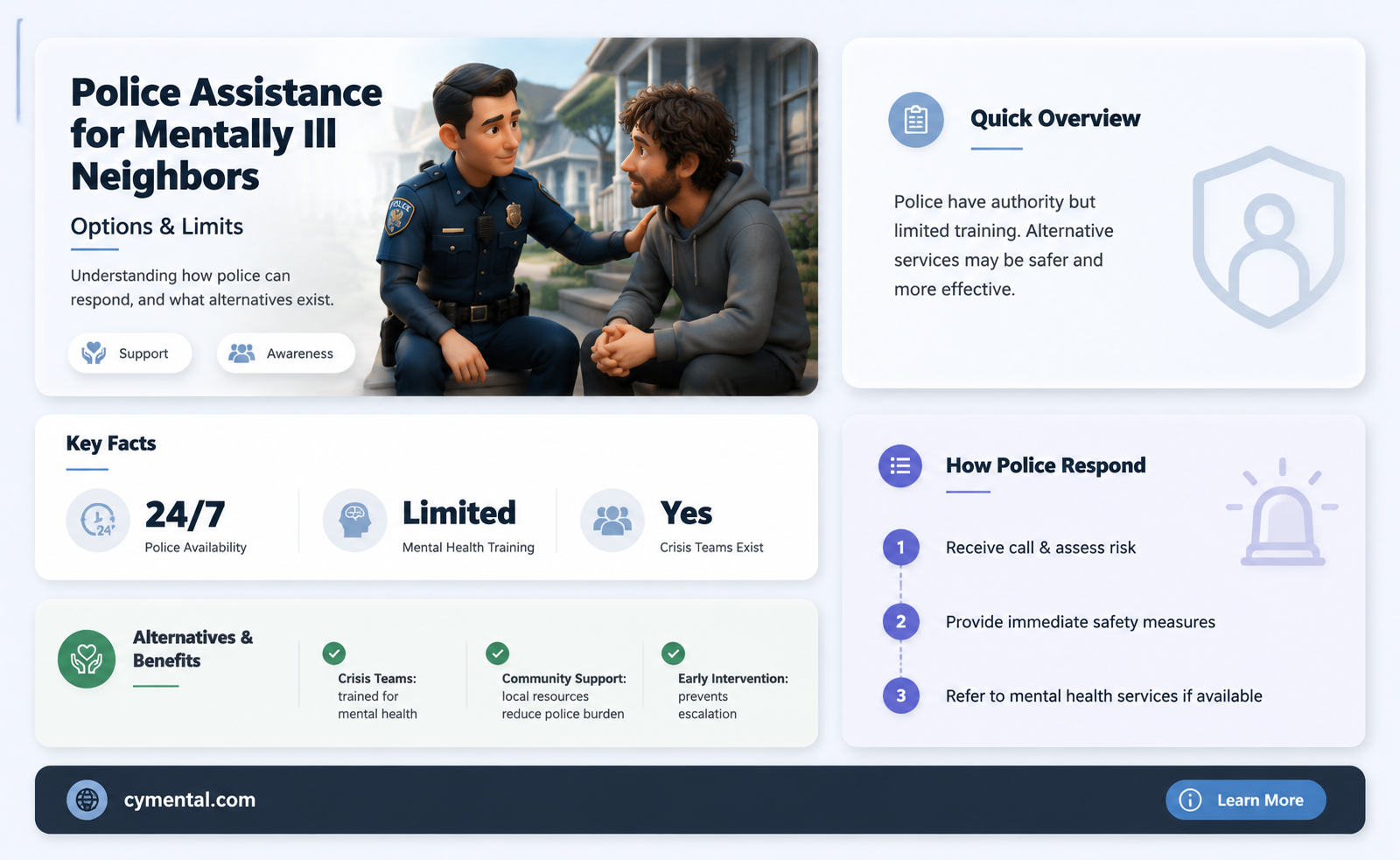
Dealing with mentally ill neighbors can be a challenging and sensitive issue, often leaving individuals unsure of how to proceed or who to turn to for assistance. In such situations, many people wonder whether the police can intervene and provide support. While law enforcement officers are typically trained to handle emergencies and maintain public safety, their role in addressing mental health crises is complex. Police involvement can be a double-edged sword; on one hand, they have the authority to ensure immediate safety and connect individuals to appropriate resources, but on the other hand, their presence might escalate tensions or lead to unfortunate outcomes if not handled with specialized training and empathy. This raises important questions about the effectiveness and appropriateness of relying on law enforcement as the primary response to mental health-related neighborhood concerns.
| Characteristics | Values |
|---|---|
| Police Role | Police can respond to emergencies involving mentally ill individuals, but they are not mental health professionals. Their primary role is to ensure public safety and de-escalate situations. |
| Crisis Intervention Teams (CIT) | Specialized units trained to handle mental health crises, available in some areas. CIT officers receive 40+ hours of training in mental health issues, de-escalation techniques, and local resources. |
| Legal Authority | Police can detain individuals under emergency mental health holds (criteria vary by jurisdiction) if they pose an imminent danger to themselves or others. |
| Limitations | Police may lack adequate training in mental health, leading to potential misuse of force. They cannot provide long-term treatment or counseling. |
| Community Resources | Police often connect individuals to mental health services, crisis hotlines, or community support programs. |
| Alternatives | Mobile crisis teams, mental health professionals, or social workers may be better equipped to handle non-emergency situations. |
| Stigma | Police involvement can sometimes exacerbate stigma surrounding mental illness, potentially deterring individuals from seeking help. |
| Data (US) | Approximately 1 in 4 fatal police shootings involve individuals with mental illness (Treatment Advocacy Center, 2021). |
| International Variations | Approaches to police involvement with mentally ill individuals vary widely across countries, influenced by healthcare systems and cultural attitudes. |
| Recent Trends | Increasing calls for police reform and investment in alternative crisis response models, such as the CAHOOTS program in Eugene, Oregon. |
Explore related products


What You'll Learn
- Crisis Intervention Teams: Specialized police units trained to handle mental health crises effectively and compassionately
- De-escalation Techniques: Methods police use to calm mentally ill individuals without resorting to force
- Community Resources: Connecting neighbors to mental health services, support groups, and local programs
- Legal Boundaries: Understanding police limitations in intervening with mentally ill individuals without consent or danger
- Prevention Strategies: Proactive measures to identify and address mental health issues before situations escalate

Crisis Intervention Teams: Specialized police units trained to handle mental health crises effectively and compassionately
Police encounters with individuals experiencing mental health crises often escalate due to misunderstandings, fear, or inadequate training. Crisis Intervention Teams (CIT) address this gap by equipping officers with specialized skills to de-escalate situations, connect individuals to appropriate care, and prevent tragic outcomes.
Recognizing the limitations of traditional law enforcement responses, CIT programs emerged in the late 1980s as a collaborative effort between law enforcement, mental health professionals, and community advocates. This multi-faceted approach ensures officers receive comprehensive training in mental health conditions, crisis communication techniques, and local resources.
CIT training typically involves a 40-hour curriculum covering topics like recognizing mental health disorders, active listening, verbal de-escalation strategies, and legal considerations. Officers learn to identify signs of distress, build rapport, and connect individuals to crisis services, hospitals, or community support programs. This specialized training empowers officers to respond with empathy and understanding, prioritizing de-escalation over force.
For instance, instead of immediately resorting to handcuffs, a CIT-trained officer might engage a distressed individual in conversation, acknowledge their feelings, and offer assistance in accessing mental health services. This approach not only reduces the risk of harm but also fosters trust and cooperation, leading to more positive outcomes for both the individual and the community.
While CIT programs show promise, their effectiveness relies on several factors. Adequate funding for training, ongoing support for officers, and strong partnerships with mental health providers are crucial. Additionally, community engagement and education are essential to ensure public understanding and support for CIT initiatives. By investing in CIT programs and fostering collaboration, communities can create a more compassionate and effective response to mental health crises, ultimately improving safety and well-being for all.
Suicidal Individuals: Are They Receiving Adequate Mental Health Support?
You may want to see also
Explore related products


De-escalation Techniques: Methods police use to calm mentally ill individuals without resorting to force
Police officers often encounter individuals experiencing mental health crises, and their response can significantly impact the outcome. De-escalation techniques are critical tools in these situations, allowing officers to calm mentally ill individuals without resorting to force. One foundational method is active listening, where officers focus on understanding the person’s perspective rather than immediately asserting control. For example, repeating back phrases like, “I hear you’re feeling overwhelmed” can validate emotions and reduce agitation. This approach requires patience and empathy, shifting the interaction from confrontation to collaboration.
Another effective technique is creating physical and emotional space. Officers trained in Crisis Intervention Team (CIT) programs learn to maintain a non-threatening distance, avoiding sudden movements or raised voices. For instance, standing at least six feet away and using a calm, even tone can prevent triggering a fight-or-flight response. Additionally, officers are taught to avoid blocking exits, as this can heighten anxiety. These strategies are particularly useful when dealing with individuals experiencing paranoia or schizophrenia, where perceived threats can escalate behavior rapidly.
Using clear and simple communication is equally vital. Complex instructions or rapid-fire questions can overwhelm someone in crisis. Officers are trained to speak slowly, use short sentences, and ask yes-or-no questions. For example, instead of “What’s wrong with you?” an officer might say, “Can you tell me what’s happening right now?” This clarity helps the individual feel understood and reduces confusion. Research shows that such communication techniques can decrease the likelihood of physical intervention by up to 50% in mental health-related calls.
Finally, offering choices empowers individuals and reduces feelings of helplessness. For instance, an officer might say, “Would you like to sit down here or over there?” This small act of agency can de-escalate tension by shifting the focus from control to cooperation. However, officers must be cautious not to overwhelm with too many options, as this can backfire. Limiting choices to two or three simple alternatives is most effective. These techniques, when applied thoughtfully, demonstrate that police can indeed help mentally ill neighbors by prioritizing compassion and understanding over coercion.
Nourish Your Mind: How Healthy Eating Boosts Mental Well-Being
You may want to see also
Explore related products




Community Resources: Connecting neighbors to mental health services, support groups, and local programs
Police officers are often the first responders to mental health crises, but they may not always be the most equipped to handle these situations effectively. While their role is crucial in ensuring public safety, connecting mentally ill individuals to appropriate community resources can be a more sustainable and compassionate approach. This is where neighbors can play a pivotal role in bridging the gap between those in need and the support services available.
In many communities, local mental health services, support groups, and outreach programs exist but remain underutilized due to lack of awareness or stigma. For instance, the National Alliance on Mental Illness (NAMI) offers peer-led support groups for individuals and families affected by mental illness, often free of charge. Similarly, local community mental health centers provide counseling, medication management, and crisis intervention services tailored to specific age groups, such as adolescents (ages 12–17) or seniors (ages 65+). By familiarizing themselves with these resources, neighbors can act as informed advocates, guiding those in need toward professional help rather than relying solely on law enforcement.
A practical first step is to compile a list of local resources, including 24-hour crisis hotlines, outpatient clinics, and peer support groups. For example, the Substance Abuse and Mental Health Services Administration (SAMHSA) offers a national helpline (1-800-662-HELP) that provides referrals to local treatment centers and support services. Sharing this information within the community—via neighborhood newsletters, social media groups, or community bulletin boards—can empower residents to take proactive measures. Additionally, organizing informational workshops or inviting mental health professionals to speak at community meetings can demystify available services and reduce stigma.
However, connecting neighbors to these resources requires sensitivity and discretion. Not everyone will be receptive to direct intervention, and privacy must be respected. A more indirect approach, such as leaving informational pamphlets at shared spaces or suggesting resources in a non-confrontational manner, can be more effective. For example, if a neighbor exhibits signs of depression, offering a flyer for a local support group with a simple, "I thought this might be helpful," can open the door without imposing.
Ultimately, fostering a community that prioritizes mental health requires collective effort and education. By leveraging local resources and encouraging open dialogue, neighbors can reduce the burden on law enforcement while ensuring that individuals receive the care they need. This collaborative approach not only strengthens community bonds but also creates a safer, more supportive environment for everyone involved.
Nurturing Your Mind: Practical Strategies for Better Mental Health
You may want to see also
Explore related products


Legal Boundaries: Understanding police limitations in intervening with mentally ill individuals without consent or danger
Police intervention with mentally ill individuals is a delicate balance between public safety and individual rights. In most jurisdictions, officers cannot forcibly detain or treat someone solely because they exhibit signs of mental illness. The legal threshold typically requires imminent danger to self or others, as defined by statutes like the Baker Act in Florida or Section 5150 in California. Without this, police are limited to offering referrals to mental health services or crisis intervention teams, highlighting the tension between legal constraints and community expectations.
Consider a scenario where a neighbor with schizophrenia behaves erratically but non-violently. Despite concerns, police cannot legally enter their home or mandate treatment without evidence of immediate harm. This limitation stems from constitutional protections against unreasonable searches and seizures, as well as the right to refuse medical care. While frustrating for worried neighbors, these boundaries safeguard civil liberties, preventing abuse of power under the guise of welfare.
To navigate this, communities must understand the crisis intervention team (CIT) model, a collaborative approach between law enforcement and mental health professionals. Officers trained in CIT de-escalate situations, assess risk, and connect individuals to resources. However, CIT programs are not universally available, and their effectiveness depends on funding and interagency cooperation. Neighbors can advocate for such programs while recognizing police are not mental health providers but first responders with legal constraints.
A practical tip for concerned neighbors is to document behaviors that pose a clear danger, such as threats of self-harm or violence. This evidence can help police meet the legal threshold for intervention. Additionally, familiarize yourself with local mental health hotlines or mobile crisis units, which often work alongside law enforcement to provide timely support. While police may not always intervene as hoped, understanding their limitations fosters realistic expectations and encourages systemic solutions.
Ultimately, the legal boundaries governing police intervention reflect a society’s commitment to balancing safety and autonomy. While these constraints can feel restrictive, they underscore the need for robust mental health infrastructure. Neighbors can play a proactive role by supporting policy changes, funding mental health services, and fostering community awareness. Police are one piece of the puzzle, not the solution itself, in addressing the complex needs of mentally ill individuals.
AI's Role in Mental Health: Support, Challenges, and Future Potential
You may want to see also
Explore related products


Prevention Strategies: Proactive measures to identify and address mental health issues before situations escalate
Police officers are often the first responders to mental health crises, but their role can extend beyond reactionary measures. By adopting proactive strategies, law enforcement agencies can help identify and address mental health issues in the community before situations escalate, reducing the need for emergency interventions.
Community Policing and Mental Health Training
A key prevention strategy involves integrating mental health training into community policing initiatives. Officers can be trained to recognize signs of mental illness, such as changes in behavior, appearance, or communication patterns. For instance, a neighbor who suddenly becomes withdrawn, stops maintaining their property, or exhibits erratic behavior may be experiencing a mental health crisis. By identifying these signs early, officers can connect individuals with appropriate resources, such as local mental health clinics or support groups. A study by the National Alliance on Mental Illness (NAMI) found that officers with specialized training in mental health are more likely to de-escalate situations and divert individuals from the criminal justice system.
Collaborative Partnerships with Mental Health Professionals
Establishing partnerships between law enforcement agencies and mental health professionals is crucial for effective prevention. Co-responder programs, which pair officers with mental health clinicians, have shown promising results. In these programs, clinicians accompany officers on calls involving individuals with suspected mental illness. This collaborative approach allows for on-the-spot assessments, crisis intervention, and referrals to treatment. For example, the CAHOOTS (Crisis Assistance Helping Out On The Streets) program in Eugene, Oregon, has successfully reduced the number of arrests and hospitalizations related to mental health crises. Since its inception in 1989, CAHOOTS has handled approximately 20% of the local public safety calls, demonstrating the effectiveness of this model.
Early Intervention and Outreach Programs
Proactive outreach programs can help identify and support individuals at risk of developing mental health issues. Police departments can collaborate with local schools, community centers, and healthcare providers to implement early intervention initiatives. These programs may include mental health screenings, psychoeducation, and skill-building workshops for at-risk populations, such as adolescents, veterans, or individuals experiencing homelessness. By addressing mental health concerns before they escalate, these programs can prevent crises and reduce the likelihood of police involvement. A randomized controlled trial published in the Journal of the American Medical Association (JAMA) found that early intervention programs for first-episode psychosis led to significant improvements in symptoms, functioning, and quality of life.
Data-Driven Approaches and Risk Assessment Tools
Utilizing data-driven approaches and risk assessment tools can aid in identifying individuals at high risk of experiencing a mental health crisis. Police departments can analyze call data, emergency room visits, and other relevant information to predict hotspots and allocate resources accordingly. Risk assessment tools, such as the Crisis Intervention Team (CIT) Risk Assessment, can help officers evaluate an individual's risk of harm to themselves or others. By combining these tools with officer discretion and clinical expertise, law enforcement agencies can develop targeted prevention strategies. However, it is essential to ensure that data collection and analysis comply with privacy regulations, such as the Health Insurance Portability and Accountability Act (HIPAA), to protect individuals' rights and confidentiality.
Implementing proactive prevention strategies requires a shift in police culture, prioritizing collaboration, empathy, and problem-solving over traditional law enforcement approaches. Departments should allocate sufficient resources, including funding, training, and personnel, to support these initiatives. Additionally, ongoing evaluation and refinement of programs are necessary to ensure their effectiveness and adaptability to local needs. By embracing these strategies, police departments can play a vital role in promoting community mental health, reducing stigma, and fostering a more compassionate and supportive response to individuals experiencing mental illness. As police chiefs and policymakers consider adopting these measures, they should engage with community stakeholders, including mental health professionals, advocates, and individuals with lived experience, to develop tailored and culturally responsive approaches.
Nutritional Supplements: Potential Benefits for Mentally Retarded Children Explored
You may want to see also
Frequently asked questions
Yes, the police can intervene if a mentally ill neighbor poses a risk to themselves or others, or if their behavior is disruptive or illegal. However, their primary role is to ensure safety, not to provide mental health treatment. They may call for a mental health professional or crisis intervention team if available.
If the situation is escalating and your neighbor refuses help, call 911 or your local non-emergency police line. Clearly explain the situation and any concerns about safety. The police can assess the situation and may involve mental health professionals or crisis services to de-escalate and provide assistance.
The police cannot force someone into treatment unless they meet specific legal criteria, such as being an immediate danger to themselves or others. In some cases, they may initiate an involuntary psychiatric evaluation (e.g., a 5150 hold in California), but this depends on local laws and the severity of the situation.