Caleb Wright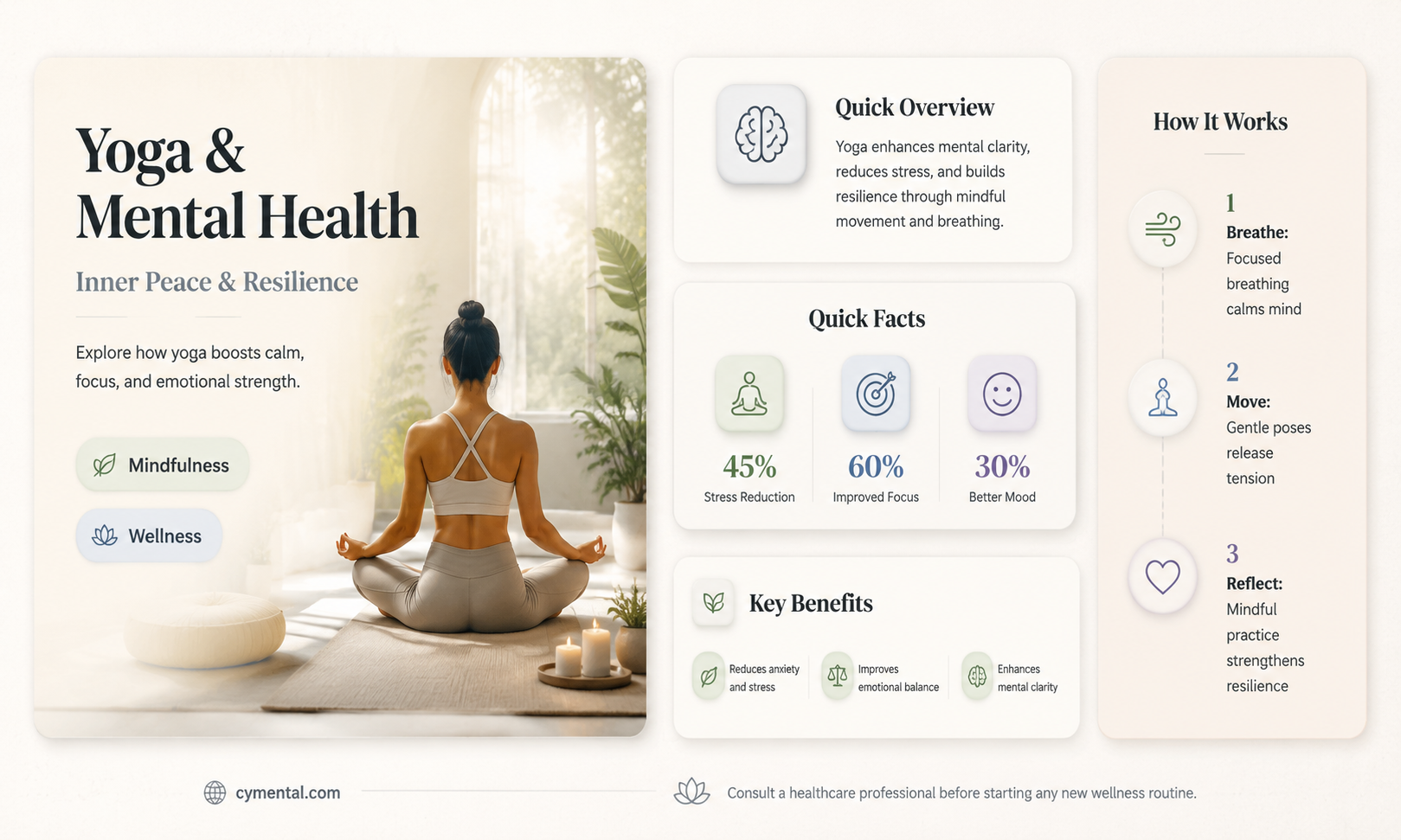
Yoga, an ancient practice rooted in physical postures, breathing techniques, and meditation, has gained widespread recognition for its potential to enhance mental health. Beyond its physical benefits, yoga is increasingly acknowledged as a powerful tool for managing stress, anxiety, depression, and other mental health challenges. By promoting mindfulness, reducing cortisol levels, and fostering a sense of inner calm, yoga helps individuals cultivate emotional resilience and mental clarity. Studies suggest that regular practice can improve mood, enhance sleep quality, and even alleviate symptoms of PTSD and ADHD. As mental health awareness grows, yoga is being integrated into therapeutic settings, offering a holistic approach to well-being that complements traditional treatments. Whether practiced in a studio or at home, yoga provides a gentle yet effective way to nurture both the mind and spirit.
| Characteristics | Values |
|---|---|
| Stress Reduction | Yoga has been shown to decrease cortisol levels, the body's primary stress hormone, promoting relaxation and reducing anxiety. |
| Anxiety Management | Regular practice can reduce symptoms of anxiety disorders, improving overall mental well-being. |
| Depression Relief | Studies indicate yoga can alleviate symptoms of depression, often used as a complementary therapy. |
| Improved Mood | Yoga stimulates the release of neurotransmitters like serotonin and GABA, enhancing mood and emotional stability. |
| Enhanced Mindfulness | Encourages present-moment awareness, reducing rumination and improving mental clarity. |
| Better Sleep Quality | Helps regulate sleep patterns, benefiting those with insomnia or sleep disturbances. |
| Increased Resilience | Builds mental resilience, helping individuals cope with stress and adversity more effectively. |
| Cognitive Function | Improves focus, memory, and executive function through mindfulness and breathing techniques. |
| PTSD Symptom Reduction | Yoga therapy has shown promise in reducing symptoms of post-traumatic stress disorder (PTSD). |
| Social Connection | Group yoga classes can foster a sense of community, reducing feelings of loneliness and isolation. |
| Physical Health Benefits | Improved physical health (e.g., flexibility, strength) can positively impact mental health and self-esteem. |
| Accessibility | Can be practiced by people of all ages and fitness levels, making it widely accessible. |
| Holistic Approach | Addresses mental, emotional, and physical health, offering a comprehensive approach to well-being. |
Explore related products

$20.4 $29.99


What You'll Learn

Stress Reduction Techniques
Stress is an inevitable part of life, but chronic stress can wreak havoc on both physical and mental health. Yoga offers a multifaceted approach to stress reduction, combining physical postures, breath control, and mindfulness to calm the nervous system. One of the most effective techniques is pranayama, or yogic breathing. Deep, diaphragmatic breathing activates the parasympathetic nervous system, which counteracts the body’s stress response. For instance, the 4-7-8 technique—inhale for 4 seconds, hold for 7, exhale for 8—can be practiced anytime, anywhere, to induce immediate relaxation. Incorporating this for 5–10 minutes daily can significantly lower cortisol levels, the hormone associated with stress.
Beyond breathing, yoga’s physical postures, or asanas, play a crucial role in stress reduction. Gentle, restorative poses like Child’s Pose or Legs-Up-the-Wall encourage the body to release tension held in muscles, particularly in the shoulders, neck, and back—common areas affected by stress. These poses are accessible to all ages and fitness levels, making them ideal for anyone seeking relief. Pairing asanas with mindful movement amplifies their stress-relieving benefits, as the focus on the present moment distracts the mind from worries and anxieties.
A lesser-known but powerful aspect of yoga for stress reduction is its emphasis on mindfulness and meditation. Practices like body scan meditation guide individuals to observe physical sensations without judgment, fostering a sense of calm. Research shows that consistent mindfulness practice, even for 10 minutes daily, can reduce symptoms of anxiety and improve emotional regulation. Yoga’s holistic approach ensures that stress is addressed not just physically, but mentally and emotionally, making it a comprehensive tool for long-term stress management.
For those new to yoga, starting with a structured routine is key. Begin with Hatha or Yin yoga, styles that focus on slow, deliberate movements and longer holds, ideal for stress relief. Avoid intense, fast-paced practices like Vinyasa or Power Yoga, which may initially increase stress for beginners. Consistency is more important than duration; even 15–20 minutes of daily practice can yield noticeable benefits. Pairing yoga with other stress-reduction techniques, such as journaling or nature walks, can further enhance its effectiveness, creating a robust strategy to combat stress in daily life.
Birth Control and Mental Health: Exploring Potential Benefits and Risks
You may want to see also
Explore related products


Anxiety and Depression Relief
Yoga's ability to alleviate symptoms of anxiety and depression is rooted in its unique combination of physical movement, breath control, and mindfulness. A 2017 meta-analysis published in the *Journal of Psychiatric Practice* found that yoga interventions significantly reduced anxiety and depressive symptoms across diverse populations. The practice activates the parasympathetic nervous system, often referred to as the "rest and digest" response, counteracting the body’s stress reaction. For instance, a study in the *Journal of Clinical Psychology* noted that participants who engaged in 60–90 minutes of Hatha yoga twice weekly for 8 weeks reported a 50% reduction in anxiety symptoms. This physiological shift is complemented by yoga’s emphasis on present-moment awareness, which disrupts the cyclical thought patterns common in anxiety and depression.
To harness yoga’s benefits for mental health, consistency is key. Beginners should start with 20–30 minutes of practice daily, focusing on gentle poses like Child’s Pose, Cat-Cow, and Legs-Up-the-Wall. These asanas promote relaxation and improve blood flow to the brain. Incorporating pranayama (breath control) techniques, such as diaphragmatic breathing or alternate nostril breathing, amplifies the calming effects. For example, a 5-minute session of deep belly breathing before bed can reduce cortisol levels, aiding sleep—a critical factor in managing mood disorders. Apps like *Insight Timer* or *YogaGlo* offer guided sessions tailored to anxiety and depression relief, making it accessible for all ages, including teens and older adults.
While yoga is a powerful tool, it’s not a standalone cure for severe anxiety or depression. It should complement, not replace, professional treatment like therapy or medication. Caution is advised for individuals with physical limitations or trauma histories; modifications or one-on-one instruction may be necessary. For instance, forward folds can sometimes trigger anxiety in trauma survivors, so alternatives like seated twists or supported backbends are recommended. Additionally, overdoing intense styles like Vinyasa or Power Yoga without proper pacing can lead to burnout, defeating the purpose of stress relief.
The comparative advantage of yoga lies in its holistic approach. Unlike medication, which targets specific neurotransmitters, yoga addresses the mind-body connection, fostering resilience over time. A 2019 study in *Frontiers in Psychiatry* highlighted that yoga practitioners exhibited increased gray matter volume in brain regions associated with emotional regulation, such as the hippocampus. This neuroplasticity underscores yoga’s long-term potential in managing chronic mental health conditions. For those skeptical of its efficacy, starting with a 7-day challenge can provide tangible proof of its benefits, from improved sleep to reduced rumination.
In practice, creating a dedicated space for yoga—even a small corner with a mat and calming elements like candles or plants—enhances its therapeutic impact. Pairing sessions with journaling can help track emotional shifts, providing insight into triggers and progress. For families, incorporating partner poses or group sessions fosters connection, reducing feelings of isolation often tied to depression. Ultimately, yoga’s simplicity and adaptability make it a sustainable practice for anyone seeking relief from anxiety and depression, offering both immediate solace and lasting transformation.
Recognizing the Signs: When to Seek Help for Your Well-Being
You may want to see also
Explore related products


Mindfulness and Focus Enhancement
Yoga's emphasis on mindfulness and focus isn't just a trendy add-on; it's a core mechanism through which it benefits mental health. Studies show that regular yoga practice, particularly styles emphasizing mindfulness like Hatha or Yin, increases activity in the prefrontal cortex, the brain region responsible for attention and decision-making. This neurological shift translates to tangible improvements in focus, concentration, and the ability to manage distractions.
Think of it as mental weight training: just as lifting weights strengthens muscles, consistently practicing mindfulness during yoga poses strengthens your brain's ability to sustain attention.
Consider this practical example: a 2018 study published in the *Journal of Clinical Psychology* found that participants who engaged in a 12-week yoga program demonstrated significantly improved performance on attention-demanding tasks compared to a control group. The yoga group also reported lower levels of mind-wandering and increased feelings of present-moment awareness. This suggests that the mindfulness cultivated during yoga practice extends beyond the mat, enhancing focus in daily life.
For optimal results, aim for 3-4 yoga sessions per week, each lasting 45-60 minutes. Styles like Vinyasa or Ashtanga, which link movement with breath, are particularly effective for cultivating focus due to their dynamic nature.
While the benefits are clear, it's important to approach mindfulness in yoga with realistic expectations. Like any skill, focus enhancement takes time and consistent practice. Don't be discouraged if your mind wanders during practice; gently bring your attention back to your breath and the sensations in your body. Remember, the goal isn't to achieve a perfectly focused mind, but to cultivate a greater awareness of your thoughts and a capacity to redirect them when needed.
Incorporating mindfulness techniques outside of yoga can further amplify its focus-enhancing effects. Try incorporating short mindfulness meditations into your daily routine, focusing on your breath for 5-10 minutes each morning or evening. Additionally, practicing mindful walking, where you pay close attention to the sensations of each step, can help train your brain to stay present and focused. By integrating mindfulness into various aspects of your life, you can create a synergistic effect, maximizing the focus-enhancing benefits of your yoga practice.
Microadenoma Removal: A Potential Boost for Mental Health?
You may want to see also
Explore related products


Emotional Regulation Practices
Yoga's emphasis on breath control (pranayama) and mindful movement offers a powerful toolkit for emotional regulation. Deep, slow breathing activates the parasympathetic nervous system, counteracting the body's stress response. Techniques like diaphragmatic breathing (belly breathing) or alternate nostril breathing can be practiced for 5-10 minutes daily to cultivate a sense of calm and reduce anxiety.
Consider the example of a person experiencing a panic attack. Instead of succumbing to overwhelming emotions, they could employ a simple pranayama technique like 4-7-8 breathing: inhale for 4 counts, hold for 7, exhale for 8. This deliberate focus on breath disrupts the panic cycle, allowing for a sense of control and emotional grounding.
Research suggests that regular yoga practice can lead to structural changes in the brain, particularly in areas associated with emotional regulation like the amygdala and prefrontal cortex. This neurological adaptation may explain why yogis often report increased emotional resilience and a greater ability to manage stress.
While yoga is generally safe, it's important to approach emotional regulation practices with awareness. Certain poses or breathing techniques might trigger discomfort for individuals with specific trauma histories. It's advisable to start slowly, listen to your body, and seek guidance from a qualified yoga instructor, especially if you're new to the practice or have underlying mental health concerns.
Texas State Services for Mentally Disabled Individuals: Available Resources and Support
You may want to see also
Explore related products





Improved Sleep Quality Benefits
Sleep quality is a cornerstone of mental health, and yoga offers a multifaceted approach to enhancing it. Studies suggest that regular yoga practice can significantly improve sleep duration and reduce insomnia symptoms, particularly in adults over 60. A 2019 meta-analysis published in the *Journal of Sleep Research* found that participants who engaged in yoga for at least 25 minutes daily experienced deeper, more restorative sleep cycles. The combination of physical postures, breath control, and mindfulness in yoga activates the parasympathetic nervous system, signaling the body to relax and prepare for rest. For those struggling with sleep, incorporating a gentle yoga routine 1–2 hours before bedtime can be a game-changer.
Consider the mechanics: yoga reduces cortisol levels, the stress hormone often responsible for sleep disturbances. A study in the *Indian Journal of Psychiatry* revealed that participants practicing yoga for 10 weeks saw a 24% decrease in cortisol compared to a control group. Pair this with the physical exhaustion from holding poses like *Balasana* (Child’s Pose) or *Uttanasana* (Standing Forward Bend), and the body naturally transitions into a state primed for sleep. For maximum benefit, focus on restorative poses and pranayama techniques like *Nadi Shodhana* (alternate nostril breathing), which balances the nervous system and calms the mind.
However, not all yoga styles are created equal for sleep improvement. High-intensity practices like Vinyasa or Power Yoga, while beneficial for strength and flexibility, may be too stimulating when practiced close to bedtime. Instead, opt for Yin Yoga or a bedtime-specific sequence that emphasizes long-held, passive stretches. For instance, holding *Supta Baddha Konasana* (Reclined Butterfly Pose) for 5–7 minutes can release tension in the hips and groin, areas where stress often accumulates. Pair this with a guided meditation or soft music to amplify the calming effects.
Practicality is key. For busy individuals, even a 10-minute routine can yield results. Start with *Legs-Up-The-Wall Pose* (*Viparita Karani*) for 3–5 minutes to improve circulation and reduce anxiety. Follow with *Savasana* (Corpse Pose) for 5 minutes, focusing on deep, diaphragmatic breathing. Consistency is more important than duration; practicing this short sequence nightly can rewire the brain to associate bedtime with relaxation. For those with chronic sleep issues, combining yoga with a sleep hygiene routine—like dimming lights and avoiding screens—maximizes effectiveness.
Incorporating yoga into your sleep regimen isn’t just about physical poses; it’s about cultivating a mindset of calm. The mindfulness aspect of yoga trains the brain to let go of racing thoughts, a common culprit of insomnia. Over time, this mental discipline translates into better sleep quality and, by extension, improved mental health. Whether you’re a beginner or a seasoned practitioner, tailoring your practice to prioritize sleep can unlock profound benefits, proving that yoga is more than exercise—it’s a holistic tool for well-being.
Plant-Based Diets and Mental Health: Exploring the Mind-Body Connection
You may want to see also
Frequently asked questions
Yes, yoga can effectively reduce anxiety and stress by promoting relaxation, lowering cortisol levels, and encouraging mindfulness through breathing techniques and movement.
Yoga can improve mood by increasing serotonin levels, reducing inflammation, and fostering a sense of calm and self-awareness, which may help alleviate symptoms of depression.
Yes, yoga, particularly trauma-informed practices, can help individuals with PTSD by improving emotional regulation, reducing hyperarousal, and creating a safe space for healing.
Yoga can enhance concentration and reduce restlessness in individuals with ADHD by combining physical movement, breath control, and mindfulness practices.
Yes, regular yoga practice can lead to long-term mental health benefits, including increased resilience, better emotional balance, and improved coping mechanisms for life’s challenges.