Noah Parker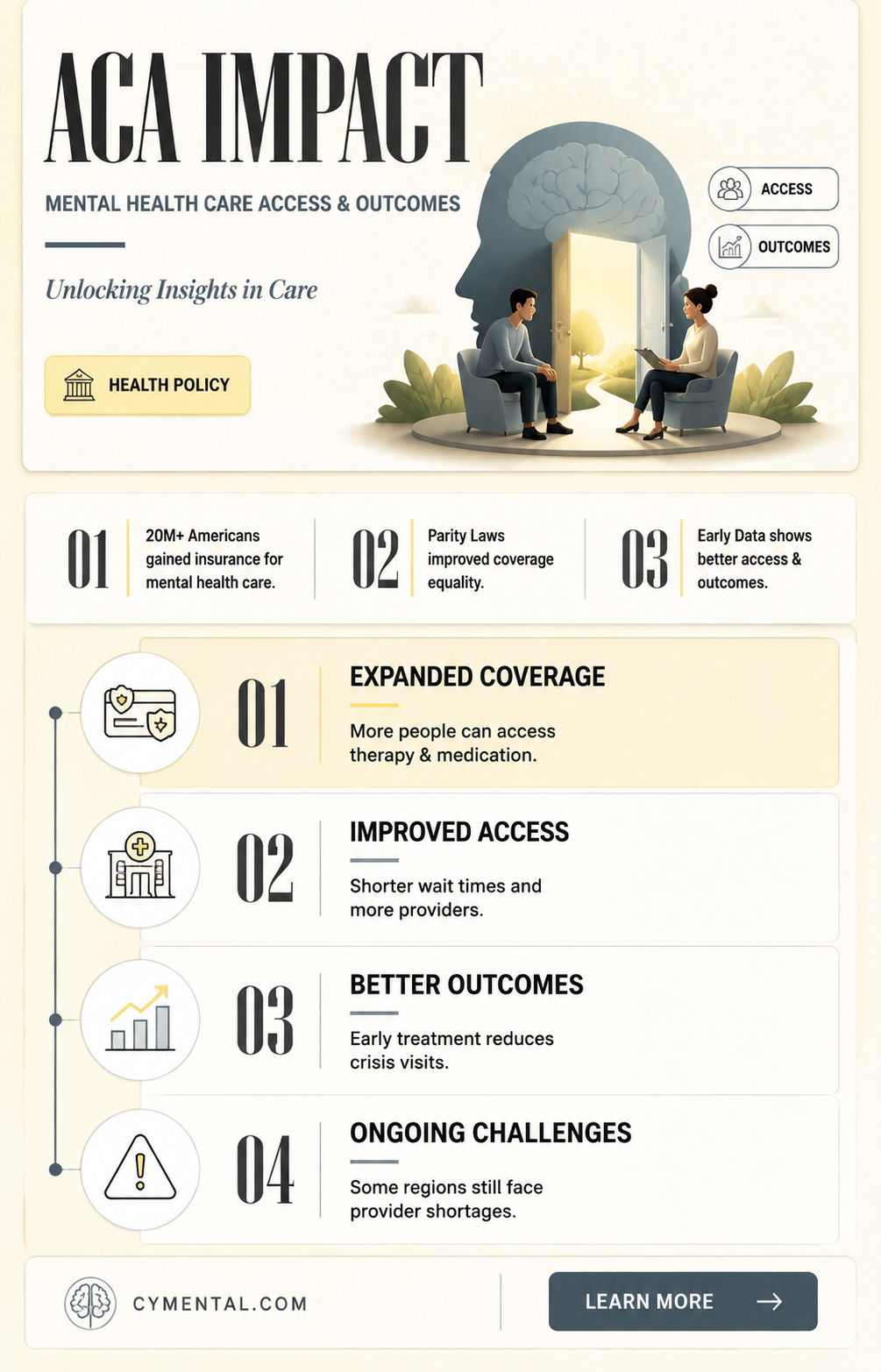
The Affordable Care Act (ACA), also known as Obamacare, has significantly impacted mental health care in the United States by expanding access to insurance coverage and mandating mental health parity. Prior to the ACA, many individuals with mental illness faced barriers to care due to limited insurance options, high out-of-pocket costs, and discriminatory practices. The ACA addressed these issues by requiring most health plans to cover mental health and substance use disorder services on par with medical and surgical care, ensuring that millions of Americans gained access to essential treatments. Additionally, the expansion of Medicaid under the ACA provided coverage to low-income individuals, many of whom suffer from mental health conditions, thereby reducing disparities in care. While the ACA has made substantial strides in improving mental health care accessibility, challenges remain, including provider shortages, varying state implementation, and ongoing stigma surrounding mental illness. Evaluating the ACA’s impact on the mentally ill reveals both progress and areas needing further reform to achieve comprehensive and equitable care.
| Characteristics | Values |
|---|---|
| Increased Insurance Coverage | The ACA significantly expanded Medicaid eligibility, leading to increased insurance coverage for individuals with mental illness. As of 2023, approximately 12 million adults with mental illness gained coverage through Medicaid expansion. |
| Mental Health Parity | The ACA reinforced the Mental Health Parity and Addiction Equity Act (MHPAEA), requiring insurers to provide equal coverage for mental and physical health services. This has improved access to mental health treatment. |
| Essential Health Benefits (EHBs) | The ACA mandated that all insurance plans cover ten essential health benefits, including mental health and substance use disorder services, ensuring comprehensive care for the mentally ill. |
| Reduction in Uninsured Rates | Uninsured rates among individuals with mental illness decreased from 22% in 2010 to 10% in 2021, primarily due to Medicaid expansion and marketplace subsidies. |
| Improved Access to Care | Studies show that ACA provisions have increased the likelihood of individuals with mental illness receiving treatment, with a 12% rise in outpatient mental health visits post-ACA. |
| Financial Protection | Out-of-pocket costs for mental health services decreased for many, as the ACA eliminated lifetime and annual limits on essential health benefits. |
| Integration of Behavioral Health | The ACA promoted integrated care models, encouraging primary care providers to address mental health issues, leading to better coordination of care. |
| Workforce Development | The ACA funded initiatives to expand the mental health workforce, addressing shortages in underserved areas. |
| Prevention and Early Intervention | ACA-supported programs focus on prevention and early intervention, reducing the long-term impact of mental illness. |
| Disparities in Access | Despite improvements, disparities persist, with racial and ethnic minorities and low-income individuals still facing barriers to mental health care. |
| State Variability | Outcomes vary by state, with Medicaid expansion states showing greater improvements in mental health coverage and access compared to non-expansion states. |
| Long-term Impact | Longitudinal studies indicate sustained improvements in mental health outcomes and reduced stigma associated with seeking mental health care post-ACA. |
Explore related products





What You'll Learn

Expanded Medicaid Coverage for Mental Health Services
One of the most significant changes brought about by the Affordable Care Act (ACA) was the expansion of Medicaid eligibility, which has had a profound impact on access to mental health services for millions of Americans. Prior to the ACA, Medicaid primarily served specific categories of low-income individuals, such as pregnant women, children, and the disabled, leaving many low-income adults without coverage. The ACA’s Medicaid expansion extended eligibility to all adults with incomes up to 138% of the federal poverty level, dramatically increasing the number of people eligible for mental health care. This shift addressed a critical gap in the system, as mental illness often disproportionately affects low-income populations due to stressors like financial instability and lack of resources.
Consider the practical implications of this expansion. For instance, a 30-year-old individual earning $18,000 annually (approximately 138% of the federal poverty level) would now qualify for Medicaid under the expanded criteria. Before the ACA, this person might have struggled to afford therapy sessions, which average $100–$200 per visit, or psychiatric medications, which can cost hundreds of dollars monthly without insurance. With Medicaid coverage, they gain access to essential services like outpatient therapy, medication management, and crisis intervention at little to no cost. This not only improves individual well-being but also reduces the societal burden of untreated mental illness, such as increased emergency room visits and lost productivity.
However, the success of expanded Medicaid coverage for mental health services is not without challenges. While the ACA mandated that Medicaid cover mental health and substance use disorder services on par with physical health services (a principle known as parity), enforcement of these requirements varies by state. Some states have struggled to ensure an adequate provider network, leaving beneficiaries with coverage but limited access to care. For example, in rural areas, where 20% of the U.S. population resides, there is one mental health provider for every 7,000 residents, compared to one for every 350 residents in urban areas. To address this, states can implement telehealth initiatives, loan repayment programs for providers in underserved areas, and increased reimbursement rates to incentivize participation in Medicaid.
A comparative analysis highlights the tangible benefits of Medicaid expansion. States that expanded Medicaid under the ACA saw a 23% increase in mental health service utilization among low-income adults, compared to no significant change in non-expansion states. For example, in Ohio, Medicaid expansion led to a 25% reduction in untreated mental illness among eligible adults within two years. Conversely, in states like Texas and Florida, which opted not to expand Medicaid, low-income adults continue to face significant barriers to mental health care. This disparity underscores the critical role of state-level policy decisions in shaping access to care and outcomes for the mentally ill.
In conclusion, expanded Medicaid coverage under the ACA has been a game-changer for mental health care access, particularly for low-income individuals. By removing financial barriers and mandating comprehensive coverage, the ACA has enabled millions to seek treatment they might otherwise have gone without. However, maximizing the impact of this expansion requires addressing ongoing challenges, such as provider shortages and inconsistent enforcement of parity laws. For policymakers, providers, and advocates, the lesson is clear: expanding coverage is just the first step—ensuring meaningful access to care is the ongoing mission.
Supporting Your Wife: Navigating Mental Health Conversations and Care Options
You may want to see also
Explore related products


Parity Laws for Mental and Physical Healthcare
The Affordable Care Act (ACA) significantly advanced parity laws for mental and physical healthcare, ensuring that insurance plans cover mental health services on an equal basis with medical and surgical care. Before the ACA, many plans imposed stricter limits on mental health coverage, such as higher copays or fewer therapy sessions, creating barriers to care. The ACA’s parity provisions mandate that if a plan covers physical health treatments, it must also cover mental health treatments with comparable terms, including substance use disorder services. This shift aimed to dismantle financial and structural obstacles that historically marginalized mental healthcare.
Consider the practical implications of parity laws for a 35-year-old individual with depression. Under pre-ACA policies, their insurance might have covered only 20 therapy sessions annually, with a $50 copay per visit, while physical therapy for a back injury had no session limits and a $20 copay. Post-ACA, parity laws require the plan to offer equivalent coverage, such as unlimited therapy sessions with a $20 copay, aligning mental and physical healthcare costs. This example illustrates how parity laws translate into tangible benefits, reducing out-of-pocket expenses and improving access to necessary treatment.
However, enforcing parity remains a challenge. Insurers sometimes skirt regulations by using opaque criteria to deny mental health claims or limit provider networks. For instance, a 2021 study found that 40% of mental health claims were denied compared to 25% of medical claims, despite parity laws. Advocates and policymakers must address these loopholes through stricter oversight and penalties for non-compliance. Individuals can also take proactive steps, such as reviewing their plan’s Summary of Benefits and Coverage (SBC) to ensure parity is upheld and filing appeals if coverage is unfairly denied.
Parity laws under the ACA also extend to preventive services, such as depression screenings and behavioral counseling, which must be covered without cost-sharing. This provision is particularly impactful for younger populations, like adolescents aged 12–18, who often face stigma and delays in accessing mental health support. By integrating preventive care into routine physical checkups, parity laws encourage early intervention and destigmatize mental health treatment. For example, a teenager’s annual wellness visit can now include a depression screening at no additional cost, fostering a holistic approach to healthcare.
In conclusion, while the ACA’s parity laws marked a pivotal step toward equitable mental healthcare, their success hinges on robust enforcement and public awareness. Policymakers, insurers, and individuals must collaborate to close gaps in implementation, ensuring that parity is not just a legal mandate but a lived reality. Practical tools, such as scrutinizing plan documents and utilizing appeal processes, empower consumers to hold insurers accountable. Ultimately, parity laws under the ACA offer a framework for transformative change, but their potential can only be realized through collective action and vigilance.
College and Mental Health: A Path to Wellness or Stress?
You may want to see also
Explore related products


Impact on Access to Affordable Therapy
The Affordable Care Act (ACA) mandated that mental health services, including therapy, be covered as an essential health benefit, significantly expanding access for millions. Prior to the ACA, many insurance plans either excluded mental health coverage or imposed stringent limits, leaving individuals with few affordable options. Now, under the ACA, plans must cover behavioral health treatment, counseling, and psychotherapy on par with medical and surgical care. This shift has been particularly transformative for low-income individuals and those with pre-existing mental health conditions, who previously faced prohibitive out-of-pocket costs or were denied coverage altogether.
Consider the practical implications for someone seeking therapy. Before the ACA, a 30-minute session with a licensed therapist could cost $100 or more, often without insurance reimbursement. Today, with ACA-compliant plans, the same session might be subject to a copay of $20–$40, depending on the plan’s specifics. For individuals with severe mental health conditions requiring weekly sessions, this reduction in cost can mean the difference between consistent care and financial strain. However, disparities remain: not all therapists accept insurance, and those who do may have limited availability due to high demand, creating a bottleneck in access despite the ACA’s provisions.
To maximize the ACA’s benefits for therapy access, individuals should take proactive steps. First, verify that your insurance plan covers mental health services by reviewing the Summary of Benefits and Coverage (SBC). Next, use your insurer’s provider directory to locate in-network therapists, as out-of-network providers often result in higher costs. If affordability remains an issue, explore community health centers or sliding-scale clinics, which offer therapy based on income. Additionally, telehealth platforms, expanded during the COVID-19 pandemic, provide a cost-effective alternative, with some sessions priced as low as $60–$90 without insurance.
Despite these advancements, challenges persist. The ACA’s impact on therapy access is uneven across states, particularly in those that did not expand Medicaid. For example, in non-expansion states, individuals earning too much for traditional Medicaid but too little for ACA subsidies often fall into the “coverage gap,” leaving them without affordable options. Furthermore, the shortage of mental health providers in rural areas exacerbates access issues, even with insurance coverage. Policymakers must address these gaps by incentivizing providers to practice in underserved areas and increasing funding for community mental health programs.
In conclusion, the ACA has undeniably improved access to affordable therapy, but its success is incomplete. By understanding the nuances of coverage, leveraging available resources, and advocating for systemic improvements, individuals and communities can further enhance the ACA’s impact on mental health care. The journey toward equitable access is ongoing, but the ACA has laid a critical foundation for progress.
Exercise and Mental Health: Unlocking the Mind-Body Connection for Wellness
You may want to see also
Explore related products


Reduction in Uninsured Rates Among Mentally Ill
One of the most significant impacts of the Affordable Care Act (ACA) on mental health has been the reduction in uninsured rates among individuals with mental illness. Prior to the ACA, many people with mental health conditions struggled to obtain insurance due to pre-existing condition exclusions or prohibitively high premiums. The ACA’s prohibition on denying coverage based on pre-existing conditions and the expansion of Medicaid eligibility have been game-changers. For instance, in states that expanded Medicaid, the uninsured rate among low-income adults with mental illness dropped from 32% in 2013 to 14% in 2019, according to the Kaiser Family Foundation. This shift has provided millions with access to essential mental health services they were previously denied.
Consider the practical implications of this reduction. For a 35-year-old with bipolar disorder, pre-ACA, securing insurance might have meant paying exorbitant premiums or being rejected outright. Post-ACA, this individual could enroll in a marketplace plan or qualify for Medicaid, depending on their income. This access isn’t just about coverage—it’s about continuity of care. Regular access to psychiatrists, therapists, and medication management can stabilize conditions, reduce hospitalizations, and improve overall quality of life. For example, a study in *Health Affairs* found that Medicaid expansion states saw a 10% increase in the use of mental health services among previously uninsured individuals.
However, the benefits aren’t evenly distributed. States that opted out of Medicaid expansion continue to see higher uninsured rates among the mentally ill. In these states, individuals with incomes slightly above the federal poverty level often fall into the “coverage gap,” earning too much for Medicaid but too little for marketplace subsidies. This disparity highlights the need for universal adoption of Medicaid expansion to ensure equitable access. Advocates should push for policy changes at the state level, emphasizing the economic and humanitarian benefits of closing this gap.
To maximize the ACA’s impact, individuals and providers must navigate its complexities. For instance, when selecting a marketplace plan, scrutinize the mental health coverage details. Plans must comply with parity laws, but the devil is in the details—some may have higher copays for therapy or limit the number of covered visits. Additionally, leverage resources like Healthcare.gov or local navigators to understand eligibility and enrollment processes. For providers, integrating mental health screenings into primary care can help identify uninsured individuals who may qualify for coverage, ensuring they don’t slip through the cracks.
In conclusion, the ACA’s role in reducing uninsured rates among the mentally ill is undeniable, but its full potential remains untapped. By addressing gaps in Medicaid expansion, improving plan transparency, and fostering awareness, we can build on this progress. The ACA isn’t a panacea, but it’s a critical step toward ensuring that mental health care is accessible to all, not just a privilege for the few.
Supporting Mental Health: Practical Ways to Help Loved Ones Heal
You may want to see also
Explore related products





Effectiveness of ACA in Reducing Stigma
The Affordable Care Act (ACA) has been a game-changer in expanding mental health coverage, but its impact on reducing stigma is less straightforward. While the ACA mandated parity for mental health services, ensuring insurance plans cover these conditions equally to physical ailments, this policy shift alone doesn’t dismantle deeply rooted societal attitudes. Stigma thrives on misinformation and fear, often perpetuated by media portrayals and cultural narratives. The ACA’s focus on access to care addresses one facet of the problem—treatment—but stigma reduction requires a broader strategy that includes education, public awareness, and community engagement. For instance, while the ACA helped millions access therapy and medication, it didn’t inherently challenge the stereotypes that prevent individuals from seeking help in the first place.
Consider the practical implications: before the ACA, many individuals with mental illness avoided treatment due to cost barriers, which indirectly reinforced stigma by isolating them from support systems. Post-ACA, expanded Medicaid and private insurance coverage have enabled more people to seek care openly, normalizing mental health treatment to some extent. However, this normalization is uneven. In rural areas or communities with limited mental health resources, access remains a challenge, and stigma persists due to a lack of visible role models or success stories. For example, a 2018 study found that while ACA-enabled coverage increased mental health visits by 12% nationally, rural counties saw only a 5% increase, highlighting disparities that hinder stigma reduction efforts.
To maximize the ACA’s potential in reducing stigma, policymakers and advocates must pair coverage expansion with targeted interventions. One effective strategy is integrating mental health education into school curricula and workplace training programs. For instance, programs like Mental Health First Aid, which teach individuals how to recognize and respond to mental health crises, have shown promise in reducing stigma by fostering empathy and understanding. Similarly, public campaigns featuring real stories of recovery can humanize mental illness and challenge stereotypes. The ACA’s success in reducing stigma will depend on such complementary efforts, not just on policy changes.
A comparative analysis reveals that countries with comprehensive mental health policies, like the UK’s Improving Access to Psychological Therapies (IAPT) program, have made strides in stigma reduction by combining access to care with public awareness campaigns. The ACA could learn from these models by incentivizing insurers to fund stigma-reduction initiatives as part of their mental health programs. For example, offering tax breaks or grants to insurers that partner with community organizations to host mental health workshops could amplify the ACA’s impact. Without such integrated approaches, the ACA risks treating stigma as a secondary concern rather than a critical barrier to care.
Ultimately, the ACA’s effectiveness in reducing stigma hinges on its ability to shift cultural norms alongside expanding access. While the law has laid a foundation by making mental health care more attainable, it’s up to society to build upon it. Practical steps include advocating for media representation that portrays mental illness accurately, supporting peer-led initiatives that empower individuals to share their stories, and pushing for policies that address systemic inequalities in mental health care. The ACA is a tool, not a solution—its true potential in reducing stigma lies in how we wield it.
Hydrogen Water and Mental Health: Exploring Potential Benefits and Science
You may want to see also
Frequently asked questions
Yes, the ACA expanded mental health coverage by requiring most insurance plans to include mental health and substance use disorder services as one of the ten essential health benefits.
The ACA expanded Medicaid eligibility in many states, providing millions of low-income individuals with access to mental health services that were previously unavailable to them.
Yes, the ACA reinforced the Mental Health Parity and Addiction Equity Act (MHPAEA), ensuring that insurance plans cover mental health services on par with physical health services in terms of costs and treatment limitations.
Yes, the ACA significantly reduced the uninsured rate among individuals with mental illness by expanding coverage options through Medicaid expansion, health insurance marketplaces, and protections for pre-existing conditions.