Noah Parker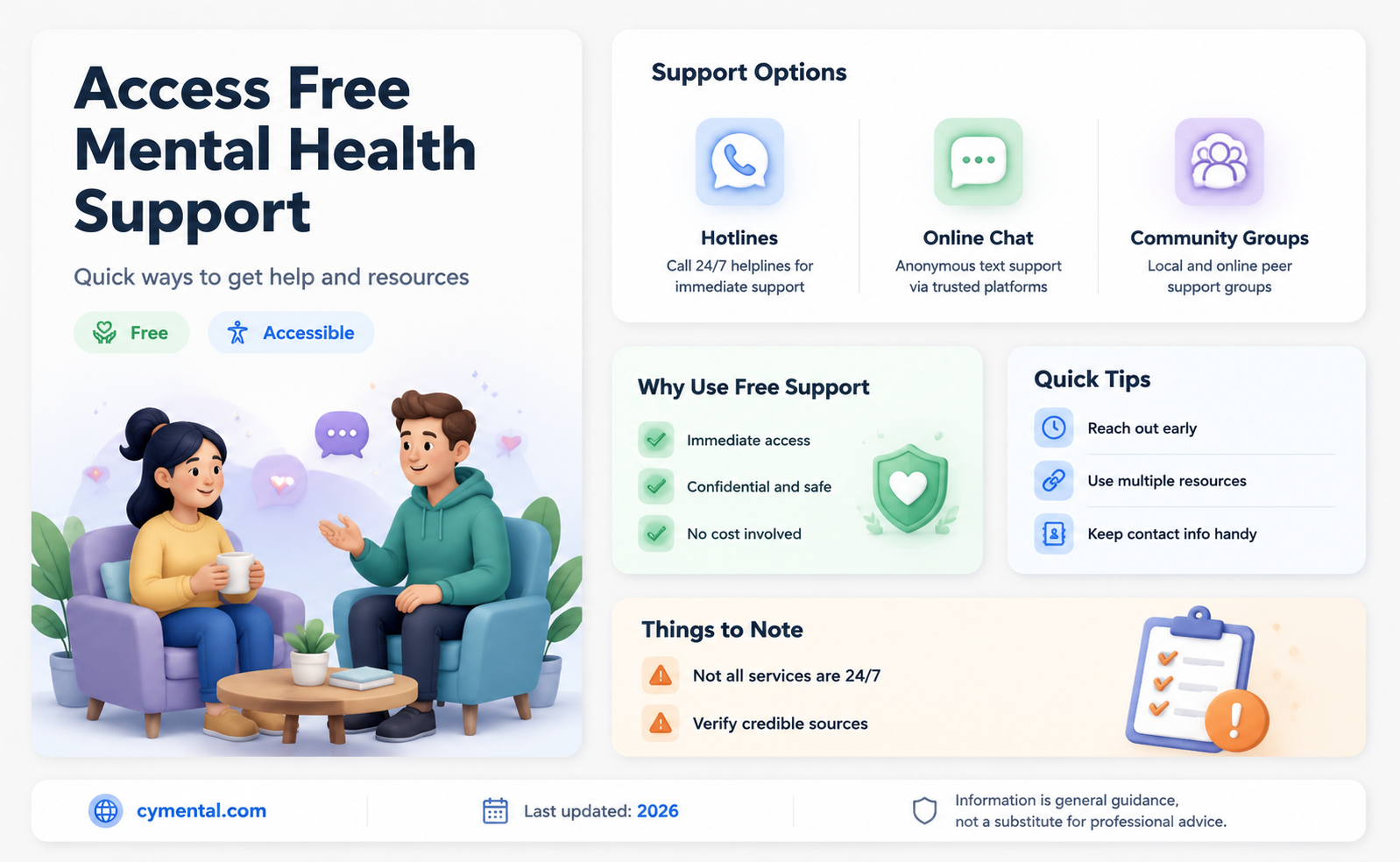
Access to free mental health support is a critical concern for many individuals seeking assistance but facing financial barriers. Fortunately, numerous resources are available to provide free or low-cost mental health services, including government-funded programs, non-profit organizations, and community-based initiatives. These options often include counseling, therapy, support groups, and crisis hotlines, ensuring that individuals can find help regardless of their financial situation. Additionally, many online platforms and apps offer free mental health tools, such as guided meditations, mood tracking, and educational resources, making support more accessible than ever. While the availability of these services may vary by location, exploring these avenues can be a vital first step toward improving mental well-being without incurring significant costs.
| Characteristics | Values |
|---|---|
| Availability | Varies by country and region |
| Types of Services | Counseling, therapy, support groups, crisis hotlines, online resources |
| Eligibility | Often based on income, insurance status, or specific criteria (e.g., veterans, students) |
| Funding Sources | Government programs, non-profit organizations, community health centers, grants |
| Examples of Free Services | NHS Talking Therapies (UK), SAMHSA Disaster Distress Helpline (USA), Headspace (limited free access), 7 Cups (online peer support) |
| Wait Times | Can range from immediate (hotlines) to several weeks/months for therapy |
| Duration of Support | Varies; some offer single sessions, others provide ongoing care |
| Confidentiality | Generally protected by law, but specifics depend on the provider |
| Accessibility | In-person, online, phone, or text-based options available |
| Limitations | May have restricted hours, limited availability, or specific focus areas |
| How to Find | Local health departments, online directories (e.g., FindTreatment.gov in the USA), community organizations |
Explore related products


What You'll Learn
- Government-Funded Programs: Access free counseling, therapy, and support through local or national mental health initiatives
- Nonprofit Organizations: Charities and NGOs offer free or low-cost mental health services and resources
- Online Platforms: Free apps, forums, and websites provide therapy, mindfulness tools, and peer support
- Community Clinics: Sliding-scale or no-cost mental health care at local community health centers
- Support Groups: Join free peer-led groups for shared experiences and emotional support

Government-Funded Programs: Access free counseling, therapy, and support through local or national mental health initiatives
Government-funded mental health programs are a lifeline for individuals who might otherwise struggle to afford professional support. These initiatives, often overlooked, provide free or low-cost counseling, therapy, and community resources tailored to diverse needs. For instance, the Substance Abuse and Mental Health Services Administration (SAMHSA) in the U.S. offers a national helpline (1-800-662-HELP) that connects individuals to local treatment centers, many of which operate on sliding scales or grant funding. Similarly, the UK’s Improving Access to Psychological Therapies (IAPT) program provides free cognitive-behavioral therapy for common mental health issues like anxiety and depression, accessible through a GP referral. These programs demonstrate how governments are stepping in to bridge the affordability gap in mental healthcare.
Navigating these resources requires knowing where to look. Start by checking your local health department’s website, which often lists government-funded mental health services available in your area. For example, in Canada, the Canadian Mental Health Association (CMHA) partners with provincial governments to offer free counseling and support groups for youth, adults, and seniors. In Australia, Headspace provides free mental health services for individuals aged 12–25, funded by the Department of Health. Additionally, many countries have crisis intervention programs, such as mobile response teams or 24/7 hotlines, which are entirely free and funded by public health budgets. These services are designed to be accessible, often requiring no insurance or proof of income.
While government-funded programs are invaluable, they come with limitations. Wait times can be long due to high demand, and services may be restricted to specific demographics or conditions. For example, some programs focus exclusively on severe mental illnesses or crisis situations, leaving those with mild to moderate issues with fewer options. To maximize access, consider combining these resources with other free or low-cost alternatives, such as university training clinics, where graduate students provide therapy under supervision at reduced rates. Additionally, some programs require a referral from a healthcare provider, so maintaining a relationship with a primary care physician can be beneficial.
The key to leveraging government-funded mental health programs lies in persistence and proactive research. Begin by identifying your specific needs—whether it’s individual therapy, group support, or crisis intervention—and then search for programs that align. For instance, veterans in the U.S. can access free mental health services through the Veterans Affairs (VA) system, while low-income families might qualify for Medicaid-covered therapy. Keep a record of the programs you’ve explored and their eligibility criteria to streamline the process. Remember, these resources exist to serve you, and advocating for your mental health is a powerful step toward well-being.
Supporting Friends Through Mental Health Struggles: Compassionate Steps to Take
You may want to see also
Explore related products

$7.76 $18.99


Nonprofit Organizations: Charities and NGOs offer free or low-cost mental health services and resources
Nonprofit organizations, including charities and NGOs, play a pivotal role in bridging the gap in mental health care accessibility. These entities often provide free or low-cost services, ensuring that financial barriers do not prevent individuals from receiving the support they need. For instance, organizations like the National Alliance on Mental Illness (NAMI) offer peer-led support groups, educational programs, and helplines at no cost. Similarly, the Crisis Text Line provides 24/7 text-based mental health support, funded entirely by donations and grants. These services are particularly vital in regions where public mental health resources are limited or overburdened.
One of the standout features of nonprofit mental health services is their community-driven approach. Unlike traditional healthcare systems, which can feel impersonal or clinical, nonprofits often emphasize empathy, understanding, and shared experiences. For example, peer support programs, such as those offered by Mental Health America (MHA), connect individuals with trained volunteers who have lived experience with mental health challenges. This model fosters a sense of belonging and reduces stigma, making it easier for people to seek help. Additionally, many nonprofits provide culturally sensitive services, ensuring that diverse communities receive care tailored to their unique needs.
While nonprofit services are invaluable, navigating the landscape can be overwhelming. To maximize their utility, start by identifying organizations aligned with your specific needs. For instance, if you’re a young adult, The Trevor Project offers free mental health support for LGBTQ+ youth, including crisis intervention and peer chat services. For veterans, Give an Hour connects service members with volunteer mental health professionals for free counseling sessions. Once you’ve identified a suitable organization, take advantage of their resources proactively—attend workshops, join support groups, or utilize helplines as needed. Remember, these services are designed to be accessible, so don’t hesitate to reach out.
Despite their benefits, nonprofit mental health services are not without limitations. Funding constraints can lead to waitlists or reduced availability, particularly for specialized care. For example, free therapy sessions may be limited to a certain number of sessions or provided by trainees under supervision. To mitigate this, consider combining nonprofit resources with other low-cost options, such as sliding-scale clinics or university training programs. Additionally, while nonprofits excel in providing immediate support and education, they may not replace long-term therapeutic interventions for severe conditions. Always assess your needs critically and seek professional advice when necessary.
In conclusion, nonprofit organizations are a cornerstone of free and low-cost mental health care, offering diverse services that cater to a wide range of needs. By leveraging their community-focused approach, culturally sensitive programs, and accessible resources, individuals can find meaningful support without financial strain. However, it’s essential to approach these services with awareness of their limitations and complement them with other resources when needed. In doing so, nonprofits become not just a safety net, but a vital part of a holistic mental health strategy.
Nurturing Mental Well-Being: Essential Strategies for a Healthier Mind
You may want to see also
Explore related products


Online Platforms: Free apps, forums, and websites provide therapy, mindfulness tools, and peer support
The digital age has unlocked a treasure trove of free mental health resources, putting support within reach of anyone with an internet connection. Online platforms, from apps to forums, offer a spectrum of tools—therapy sessions, mindfulness exercises, and peer communities—often at no cost. These resources democratize access to mental health care, breaking down barriers like cost and geography. For instance, apps like Insight Timer provide thousands of free guided meditations, while 7 Cups connects users with trained listeners for anonymous emotional support.
Consider the practicality of these tools. Apps like Headspace and Calm offer free trials or limited free content, including breathing exercises and sleep stories, ideal for managing stress and anxiety. Forums like Reddit’s r/mentalhealth or Elefriends foster peer support, allowing users to share experiences and advice in a judgment-free space. Websites like BetterHelp or Talkspace occasionally provide free introductory sessions, though their core services are paid. These platforms cater to diverse needs, whether you’re seeking structured therapy alternatives or casual mindfulness practices.
However, not all free resources are created equal. While apps like Sanvello use evidence-based techniques like cognitive-behavioral therapy (CBT), their free versions often limit access to advanced features. Forums, while supportive, lack professional oversight, making them unsuitable for crisis situations. It’s crucial to evaluate credibility: look for platforms backed by mental health professionals or peer-reviewed research. For example, Woebot uses CBT principles and has studies supporting its effectiveness, while Moodpath helps track symptoms over time, offering insights to share with a healthcare provider.
To maximize these tools, start by identifying your specific needs. If you’re dealing with mild anxiety, mindfulness apps like Smiling Mind (tailored for all ages, including kids) might suffice. For deeper issues, combine apps with peer support forums for a sense of community. Remember, these platforms are not replacements for professional therapy but can serve as valuable supplements. Regular use is key—dedicate 10–15 minutes daily to mindfulness or journaling apps to build a routine.
In conclusion, free online platforms are a powerful starting point for mental health support, offering flexibility and accessibility. By choosing the right tools and using them consistently, you can take meaningful steps toward improving your well-being. Just as you’d curate a playlist for motivation, curate your mental health toolkit—experiment, combine, and adapt to find what works best for you.
Neurologists and Mental Health: Unlocking Treatment Options for Illness
You may want to see also
Explore related products


Community Clinics: Sliding-scale or no-cost mental health care at local community health centers
Local community health centers often provide sliding-scale or no-cost mental health care, making therapy and counseling accessible to those who might otherwise go without. These clinics operate on a pay-what-you-can model, adjusting fees based on income and family size. For instance, a single parent earning minimum wage might pay as little as $10 per session, while a higher-income individual could be charged $100 or more. This flexibility ensures that financial barriers don’t prevent anyone from seeking help.
To locate these services, start by searching online for "community mental health clinics" or "sliding-scale therapy" in your area. Many clinics are federally qualified health centers (FQHCs), which receive government funding to offer reduced-cost care. Websites like FindTreatment.gov or 211.org can also connect you to local resources. When contacting a clinic, ask specifically about their sliding-scale policies and what documentation (e.g., pay stubs, tax returns) you’ll need to verify eligibility.
One common misconception is that low-cost care equates to low quality. In reality, community clinics often employ licensed therapists, social workers, and psychologists who provide evidence-based treatments like cognitive-behavioral therapy (CBT) or dialectical behavior therapy (DBT). Some clinics also offer group therapy sessions, which can be particularly cost-effective and provide peer support. However, wait times can be longer at these clinics due to high demand, so it’s best to inquire about availability when you first reach out.
For those without insurance, community clinics can be a lifeline. They often accept Medicaid and may offer additional financial assistance programs. Even if you have insurance, these clinics can be a more affordable option than private providers, especially if your plan has high copays or deductibles. Keep in mind that while services are affordable, they may not include specialized treatments like intensive outpatient programs (IOPs) or psychiatric medication management, though some clinics partner with external providers for these needs.
Finally, don’t underestimate the power of community-based care. These clinics are often deeply rooted in the neighborhoods they serve, fostering a sense of trust and cultural competence. Therapists are more likely to understand local challenges, such as systemic poverty or language barriers, and tailor their approach accordingly. By leveraging these resources, you can access quality mental health care without breaking the bank, proving that financial constraints don’t have to stand in the way of healing.
Seeking Support: A Guide to Accessing Mental Health Assistance
You may want to see also
Explore related products



Support Groups: Join free peer-led groups for shared experiences and emotional support
Support groups offer a unique avenue for free mental health assistance, leveraging the power of shared experiences to foster healing and resilience. Unlike professional therapy, these groups are peer-led, creating a safe space where individuals facing similar challenges can connect, share, and grow together. Whether you’re dealing with anxiety, grief, addiction, or chronic illness, there’s likely a support group tailored to your needs. Many are free and accessible both in-person and online, making them an inclusive option for those who may not have access to paid mental health services.
To find a support group, start by identifying your specific need—for example, "anxiety support group" or "grief counseling for parents." Organizations like the National Alliance on Mental Illness (NAMI) and local community centers often host free sessions. Online platforms such as Meetup, Facebook, or specialized websites like 7 Cups provide virtual options, ensuring flexibility for busy schedules or those in remote areas. When joining, remember that participation is voluntary; you can share as much or as little as you feel comfortable with. The key is to listen, empathize, and build connections that reinforce a sense of belonging.
One of the most compelling aspects of support groups is their ability to combat isolation. Research shows that individuals who participate in peer-led groups report reduced symptoms of depression and anxiety, as well as increased self-esteem. For instance, a study published in the *Journal of Clinical Psychology* found that participants in grief support groups experienced significant emotional improvement within 12 weeks. This highlights the transformative potential of collective healing, where stories of struggle and triumph become tools for mutual empowerment.
However, it’s important to approach support groups with realistic expectations. While they provide emotional solace and practical advice, they are not a substitute for professional treatment in severe cases. If you’re experiencing suicidal thoughts or severe mental health crises, seek immediate help from a crisis hotline or healthcare provider. Additionally, not all groups are created equal—some may lack structure or moderation, so it’s worth attending a few sessions to find the right fit. Look for groups with clear guidelines, respectful facilitators, and a supportive atmosphere.
Incorporating support groups into your mental health toolkit can be a game-changer, especially when combined with other strategies like mindfulness or journaling. For maximum benefit, aim to attend regularly—consistency fosters deeper connections and allows for ongoing support. Remember, vulnerability is strength in these spaces, and every voice contributes to the collective healing journey. By joining a free support group, you’re not just seeking help—you’re becoming part of a community that thrives on shared resilience.
Hydration and Clarity: Can Water Clear Mental Fog Effectively?
You may want to see also
Frequently asked questions
Yes, many community health centers, non-profit organizations, and government programs offer free or low-cost mental health services for uninsured individuals.
Yes, there are numerous free online platforms, apps, and hotlines (like Crisis Text Line or 988 Suicide & Crisis Lifeline) that provide mental health support and resources.
Many schools and universities offer free or subsidized counseling services for students as part of their student support programs.
Yes, programs like Medicaid, local health departments, and federally qualified health centers (FQHCs) often provide free or low-cost mental health services based on income eligibility.