Harper Lewis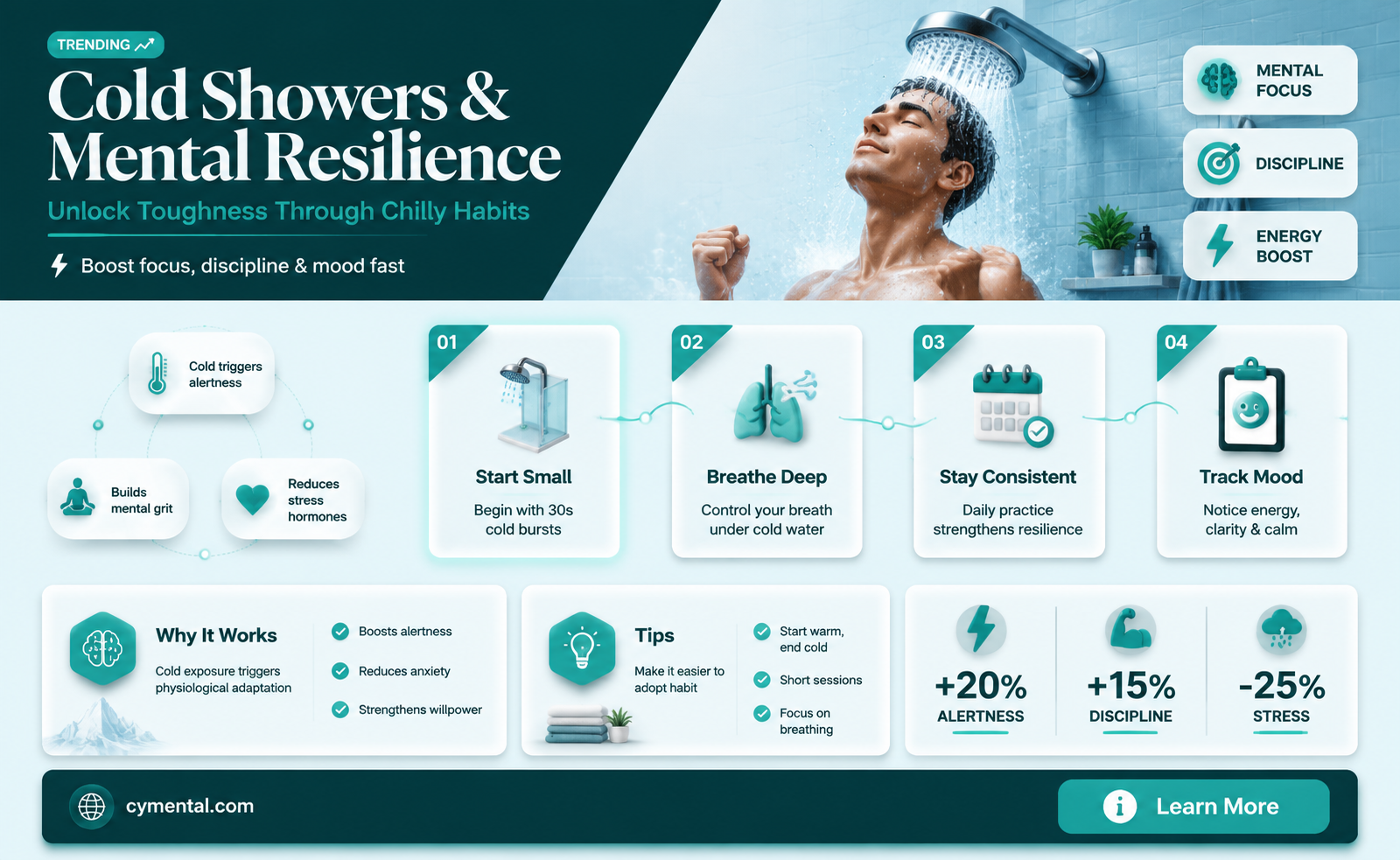
Cold showers have gained attention as a potential tool for enhancing mental toughness, with proponents suggesting that the practice can improve resilience, focus, and stress tolerance. The idea stems from the body’s response to cold exposure, which triggers the release of endorphins, activates the sympathetic nervous system, and promotes a sense of accomplishment through discomfort. Advocates argue that regularly enduring the initial shock and discomfort of cold water can translate into greater mental fortitude in other areas of life, such as handling pressure or overcoming challenges. While anecdotal evidence and some studies support these claims, the scientific consensus remains limited, prompting further exploration into the psychological and physiological benefits of cold showers as a mental toughness-building practice.
| Characteristics | Values |
|---|---|
| Stress Reduction | Cold showers stimulate the release of endorphins, which can reduce stress and improve mood. |
| Resilience Building | Regular exposure to cold water may increase tolerance to discomfort, fostering mental resilience. |
| Alertness & Focus | Cold showers can activate the sympathetic nervous system, enhancing alertness and cognitive function. |
| Mood Enhancement | The endorphin rush from cold showers can alleviate symptoms of depression and anxiety. |
| Willpower Strengthening | Overcoming the initial aversion to cold water can strengthen self-discipline and willpower. |
| Immune System Boost | Cold exposure may stimulate the immune system, indirectly supporting mental health. |
| Reduced Inflammation | Cold therapy can decrease inflammation, which is linked to improved mental clarity and emotional stability. |
| Hormesis Effect | Mild stress from cold showers can trigger adaptive responses, improving overall mental toughness. |
| Mindfulness Practice | The intense sensation of cold water encourages present-moment awareness, a key aspect of mindfulness. |
| Recovery & Adaptation | Cold showers aid in recovery from physical and mental stress, promoting adaptability. |
Explore related products


What You'll Learn

Cold showers and stress reduction
Cold showers trigger a physiological response that can directly counteract stress. When you step into a cold shower, your body activates the sympathetic nervous system, increasing heart rate and alertness. This initial shock prompts the release of endorphins, often referred to as "feel-good" hormones, which act as natural painkillers and mood elevators. Studies suggest that regular exposure to cold water can lead to a higher tolerance for stress, as the body becomes more adept at managing the fight-or-flight response. For instance, a 2016 study published in the *European Journal of Applied Physiology* found that cold water immersion reduced uric acid levels, a marker of oxidative stress, in athletes.
To harness these benefits, start with short durations—30 seconds to 1 minute—and gradually increase to 2–5 minutes. Aim for a water temperature between 15°C and 20°C (59°F to 68°F) for optimal results. Incorporate deep breathing during the shower to enhance relaxation. Inhale slowly through your nose for a count of four, hold for four, and exhale through your mouth for six. This technique helps regulate the stress response by activating the parasympathetic nervous system, promoting calmness.
While cold showers can be a powerful tool, they’re not a one-size-fits-all solution. Individuals with cardiovascular conditions, such as hypertension or heart disease, should consult a healthcare provider before starting this practice. Pregnant women and older adults should also approach cold showers cautiously, as extreme temperature changes can pose risks. Additionally, avoid cold showers immediately after intense physical activity, as they may hinder muscle recovery by constricting blood vessels.
The psychological benefits of cold showers extend beyond immediate stress relief. Regular practice can foster mental resilience by teaching the mind to embrace discomfort. This concept, often referred to as "stress inoculation," parallels exposure therapy in psychology. By repeatedly facing a manageable stressor, such as cold water, individuals can build emotional fortitude to handle larger stressors in daily life. Think of it as training for the mind—just as lifting weights strengthens muscles, cold showers strengthen your ability to remain calm under pressure.
Incorporating cold showers into your routine requires consistency. Start with 2–3 sessions per week and observe how your body and mind adapt. Pair this practice with other stress-reduction techniques, such as mindfulness meditation or journaling, for a holistic approach. Remember, the goal isn’t to endure suffering but to cultivate a healthier relationship with stress. Over time, you may find that the initial shock of cold water transforms into a refreshing ritual, leaving you more grounded and resilient.
Probiotics and Mental Health: Can Gut Bacteria Boost Your Mood?
You may want to see also
Explore related products




Impact on willpower and discipline
Cold showers, often hailed as a simple yet powerful practice, have been linked to enhanced willpower and discipline. The immediate discomfort of stepping into chilly water forces the mind to confront resistance, a microcosm of the daily battles against procrastination, temptation, and self-doubt. This act of voluntary discomfort trains the brain to tolerate adversity, fostering a mental resilience that translates into other areas of life. Studies suggest that regular exposure to cold stress can increase norepinephrine levels, a neurotransmitter associated with focus and alertness, which may underpin its impact on self-control.
To harness this effect, start with 30-second cold showers, gradually increasing to 2–3 minutes over several weeks. Consistency is key; aim for daily practice, ideally in the morning to prime your willpower for the day. Pair this ritual with a specific intention, such as resisting a bad habit or committing to a challenging task, to reinforce the mental link between discomfort and discipline. For those over 18, this practice is generally safe, though individuals with cardiovascular conditions should consult a doctor first.
A comparative analysis reveals that cold showers share similarities with other willpower-building practices like intermittent fasting or meditation. Each involves embracing discomfort to strengthen mental fortitude. However, cold showers offer a unique advantage: their brevity and simplicity make them accessible to nearly everyone. Unlike fasting or meditation, which require time and patience, a cold shower demands only a few minutes and a willingness to endure temporary discomfort.
Critics argue that the benefits of cold showers are placebo-driven, but anecdotal evidence and emerging research suggest otherwise. Athletes, entrepreneurs, and high performers often credit this practice with sharpening their focus and discipline. For instance, Navy SEALs incorporate cold exposure into their training to build mental toughness. While not a panacea, cold showers serve as a daily reminder that discomfort is temporary and that the mind can be trained to overcome it.
Incorporating cold showers into your routine is not about masochism but about strategic self-improvement. Begin with small steps, track your progress, and observe how this practice spills over into other areas of your life. Whether it’s resisting the urge to skip a workout or staying focused during a demanding task, the discipline cultivated in the shower can become a cornerstone of mental toughness. The water may be cold, but the rewards are anything but.
Pats and Mental Health: Unlocking the Healing Power of Touch
You may want to see also
Explore related products


Effects on mood and anxiety
Cold showers have been touted as a simple yet powerful tool for enhancing mental toughness, but their effects on mood and anxiety are particularly intriguing. Research suggests that the sudden exposure to cold water triggers a surge in electrical impulses from nerve endings to the brain, which can lead to an anti-depressive effect. A study published in the *Medical Hypotheses* journal found that cold showers, particularly those lasting 2–3 minutes, increased the release of endorphins, often referred to as "feel-good" hormones. This biochemical response may explain why many individuals report feeling more alert, energized, and even euphoric after a cold shower.
To harness these benefits, consider incorporating cold showers into your routine gradually. Start with 30 seconds of cold water at the end of your regular shower and progressively increase the duration by 15–30 seconds each week. For optimal results, aim for 2–3 minutes of cold exposure, 2–3 times per week. It’s important to listen to your body; if you experience discomfort or excessive shivering, reduce the duration or temperature. Individuals with cardiovascular conditions should consult a healthcare professional before attempting prolonged cold exposure.
While the immediate mood-boosting effects are well-documented, cold showers may also play a role in reducing anxiety over time. The practice activates the parasympathetic nervous system, which counteracts the body’s stress response. A 2007 study in the *European Journal of Applied Physiology* found that repeated cold exposure led to lower levels of urinary norepinephrine, a hormone associated with stress and anxiety. This suggests that consistent cold showers could help build resilience to anxiety-inducing situations by training the body to recover more quickly from stress.
However, it’s crucial to approach cold showers as a complementary practice rather than a standalone solution for anxiety or mood disorders. For individuals with generalized anxiety disorder or clinical depression, cold showers should be used in conjunction with evidence-based therapies and medications. Combining cold showers with mindfulness techniques, such as deep breathing during the cold exposure, can enhance their calming effects. For example, try inhaling deeply for 4 seconds, holding for 4 seconds, and exhaling for 6 seconds while under the cold water to maximize relaxation.
Incorporating cold showers into your routine requires consistency and patience. While some individuals notice improvements in mood and anxiety within a few weeks, others may take longer to experience the full benefits. Keep a journal to track your progress, noting changes in mood, energy levels, and stress response. Over time, this practice may not only enhance mental toughness but also foster a sense of discipline and self-mastery, further contributing to emotional resilience.
Social Workers' Role in Mental Health Support: Impact and Challenges
You may want to see also
Explore related products



Building resilience through discomfort
Cold showers, often dismissed as a mere test of willpower, serve as a microcosm of resilience training. The initial shock of cold water triggers a stress response, activating the sympathetic nervous system and releasing cortisol. This physiological reaction mirrors the body’s response to larger stressors, making cold showers a controlled environment to practice stress management. Research suggests that consistent exposure to this discomfort can reduce overall stress sensitivity, as the body adapts to repeated activation. For instance, a 2016 study published in the *European Journal of Applied Physiology* found that regular cold showers led to a 25% decrease in subjective stress levels among participants. To harness this effect, start with 30-second cold showers daily, gradually increasing to 2–3 minutes over several weeks.
The mental benefits of cold showers extend beyond stress reduction; they foster a mindset of endurance. When you step into cold water, the immediate urge is to escape, but staying put requires overriding this instinct. This act of self-discipline strengthens the prefrontal cortex, the brain region responsible for decision-making and impulse control. Over time, this practice translates into greater mental toughness in other areas of life, such as resisting procrastination or enduring challenging tasks. A practical tip: pair the cold shower with a mantra like “I can handle this” to reinforce mental resilience during the experience.
Comparatively, cold showers offer a unique advantage over other discomfort-based practices like fasting or endurance exercise: they are accessible, time-efficient, and require no equipment. While fasting demands prolonged commitment and exercise can be physically taxing, cold showers provide a daily, low-barrier opportunity to confront discomfort. However, it’s crucial to approach this practice with caution. Individuals with cardiovascular conditions or Raynaud’s disease should consult a doctor, as the sudden temperature drop can pose risks. For healthy adults, consistency is key—skipping days diminishes the adaptive benefits.
The cumulative effect of cold showers on mental toughness lies in their ability to reframe discomfort as a tool rather than an obstacle. Each shower becomes a metaphorical battleground where you prove to yourself that you can endure more than you think. This mindset shift is particularly valuable for athletes, entrepreneurs, or anyone facing high-pressure situations. For example, Navy SEALs incorporate cold exposure into their training to build mental fortitude. To maximize this effect, reflect on the experience post-shower: note how the initial aversion subsides, and carry that lesson into other challenges.
Incorporating cold showers into your routine is not about masochism but about strategic discomfort. It’s a deliberate choice to step into a controlled stressor, confront it, and emerge stronger. Start small, stay consistent, and view each shower as a mental workout. Over time, the discomfort becomes less daunting, and the resilience built spills into every facet of life. As with any habit, results take time—typically 4–6 weeks of consistent practice to notice a shift in mental toughness. Embrace the chill, not as punishment, but as preparation for life’s inevitable storms.
Assessing Mental Illness Impairment: Essential Tools for Clinicians
You may want to see also
Explore related products


Cold exposure and mental clarity
Cold showers jolt your system, triggering a cascade of physiological responses that extend beyond the initial shiver. This sudden exposure to low temperatures activates the sympathetic nervous system, responsible for our "fight or flight" response. Heart rate increases, breathing quickens, and blood flow is redirected to vital organs. While this might sound stressful, it's this very activation that can lead to heightened mental clarity. Think of it as a controlled stressor, a way to train your body and mind to respond effectively to challenging situations.
Just as athletes use interval training to improve physical endurance, cold showers can be seen as a form of "mental interval training," preparing you for moments that demand focus and resilience.
The science behind this phenomenon lies in the release of neurotransmitters like norepinephrine. This chemical, often associated with alertness and focus, surges during cold exposure. Studies have shown that norepinephrine levels can increase by up to 530% after a cold shower. This surge can lead to improved cognitive function, enhanced attention span, and a heightened sense of awareness. Imagine starting your day with a natural, drug-free way to boost your mental acuity, setting the tone for productivity and clarity.
Incorporating cold showers into your routine doesn't require an Arctic plunge. Start gradually, ending your regular shower with 30 seconds of cold water. Over time, aim for 2-3 minutes of cold exposure, 2-3 times a week. Consistency is key; the cumulative effect of regular cold showers can lead to long-term benefits. For those new to this practice, consider starting with colder temperatures during warmer months, gradually increasing the intensity as you adapt. Remember, the goal isn't to endure extreme discomfort but to stimulate your body's natural responses for optimal mental performance.
While the physical benefits of cold showers are well-documented, the mental clarity they provide is a powerful, often overlooked advantage. The ability to think clearly under pressure, make quick decisions, and maintain focus is invaluable in today's fast-paced world. By embracing the initial discomfort of cold exposure, you're not just toughening up physically; you're sharpening your mind, preparing it to tackle challenges with resilience and clarity.
Playing Piano: A Therapeutic Key to Enhancing Mental Well-Being
You may want to see also
Frequently asked questions
Yes, cold showers can help build mental toughness by forcing you to confront discomfort and practice discipline, which strengthens your ability to handle stress and adversity.
Cold showers activate the body’s stress response, releasing endorphins and training your mind to remain calm under pressure, thereby enhancing mental resilience over time.
Start with 30 seconds to 1 minute and gradually increase to 2-5 minutes. Consistency is key—daily or near-daily exposure yields the best results.
Yes, cold showers stimulate the vagus nerve, which can reduce anxiety and improve focus by promoting a sense of calm and clarity.
While generally safe, cold showers may not be suitable for everyone, especially those with certain medical conditions like heart issues or Raynaud’s disease. Always consult a doctor if unsure.