Noah Parker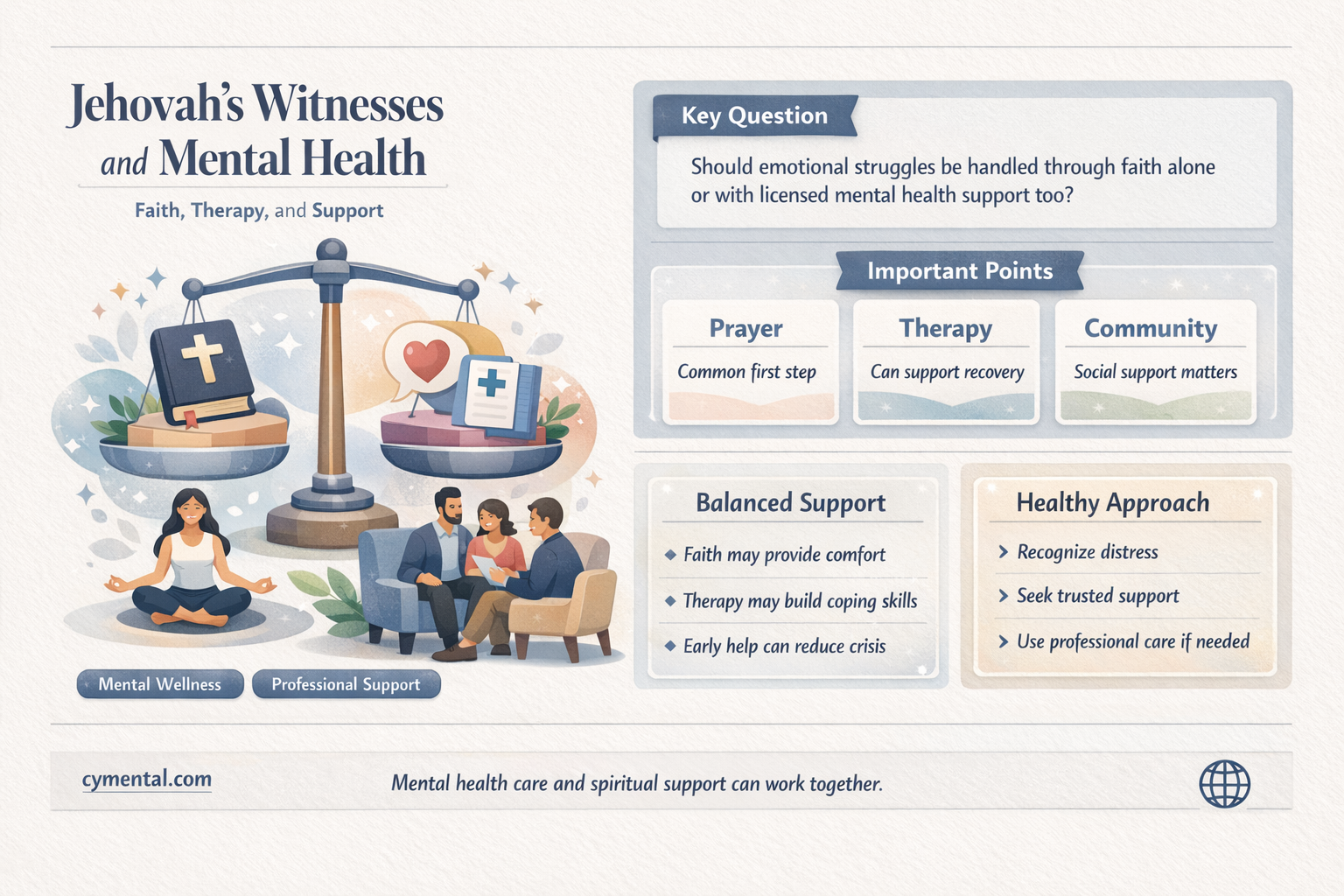
Jehovah's Witnesses approach mental health with a unique perspective, blending their religious beliefs with practical considerations. While they emphasize reliance on faith, prayer, and spiritual support from their community, they also acknowledge the importance of professional help for mental illness. The Watchtower Society, their governing body, has provided guidance encouraging members to seek medical treatment when necessary, including therapy and medication, as long as it does not conflict with their religious principles, such as avoiding practices they deem spiritually harmful. However, there is sometimes a stigma within the community surrounding mental health issues, which can deter individuals from seeking help. Balancing spiritual coping mechanisms with professional care remains a nuanced issue for Jehovah's Witnesses, reflecting broader tensions between faith and modern healthcare.
| Characteristics | Values |
|---|---|
| Belief in Medical Treatment | Jehovah's Witnesses generally accept medical treatment, including mental health care, as long as it does not conflict with their religious beliefs (e.g., blood transfusions). |
| Encouragement of Professional Help | The Watchtower Society (their governing body) has published articles acknowledging the importance of seeking professional help for mental health issues, emphasizing the role of qualified healthcare providers. |
| Spiritual Support | They believe in combining professional treatment with spiritual support, such as prayer, Bible study, and encouragement from fellow believers. |
| Stigma Reduction | Recent publications aim to reduce stigma around mental illness, encouraging members to be compassionate and understanding toward those struggling with mental health. |
| Limitations on Secular Therapy | Some forms of therapy (e.g., those involving practices contrary to their beliefs) may be discouraged, but cognitive-behavioral therapy and other evidence-based approaches are generally accepted. |
| Role of Elders | Congregation elders may provide spiritual counsel but are advised not to replace professional mental health treatment. |
| Emphasis on Faith | While faith and spiritual practices are seen as supportive, they are not considered a replacement for professional mental health care. |
| Awareness of Mental Health Issues | Increased awareness of mental health issues within the community, with efforts to educate members about recognizing and addressing mental health concerns. |
| Avoidance of Extreme Practices | Practices like exorcism or attributing all mental illness to demonic influence are not part of their teachings. |
| Community Support | Strong emphasis on community support and encouragement for individuals dealing with mental health challenges. |
Explore related products


What You'll Learn

JW views on therapy and counseling
Jehovah's Witnesses approach therapy and counseling with a nuanced perspective, balancing their faith with the practical need for mental health support. While they encourage seeking help for physical ailments, their stance on mental health treatment is shaped by their religious beliefs and organizational guidelines. The Watchtower Society, their governing body, has historically cautioned against certain therapeutic practices that might conflict with their doctrine, such as those involving secular philosophies or practices deemed incompatible with their faith. However, they do not outright reject all forms of therapy, particularly when it aligns with their spiritual values.
For instance, Jehovah's Witnesses often prefer faith-based counseling, where the focus is on biblical principles and spiritual growth rather than secular psychological theories. This approach is seen as more harmonious with their worldview, emphasizing prayer, reliance on God, and support from the congregation. Elders within the community may offer informal counseling, though they are not trained mental health professionals. This internal support system is valued, but it can also lead to challenges when dealing with complex mental health issues that require specialized expertise.
When considering professional therapy, Jehovah's Witnesses are advised to be discerning. They are encouraged to avoid therapists who promote ideas contrary to their beliefs, such as reincarnation or practices rooted in non-Christian philosophies. Instead, they may seek out Christian counselors or therapists who respect their faith and incorporate biblical teachings into their approach. This selective approach ensures that therapy remains aligned with their spiritual convictions while addressing mental health needs.
Practical tips for Jehovah's Witnesses navigating therapy include researching therapists beforehand to ensure compatibility with their beliefs, being open with therapists about their faith, and setting clear boundaries regarding topics or techniques they find objectionable. Additionally, integrating spiritual practices like prayer and scripture reading into their mental health routine can provide a sense of coherence between their faith and their treatment.
In conclusion, while Jehovah's Witnesses prioritize their spiritual framework, they do not dismiss therapy and counseling outright. Their approach is selective, favoring faith-based solutions and professional help that respects their doctrinal boundaries. By carefully navigating these options, individuals can find a balance between their mental health needs and their commitment to their faith.
Brain Fingerprinting: Predicting Mental Health Risks Before Symptoms Appear?
You may want to see also
Explore related products


Use of medication for mental health
Jehovah's Witnesses approach mental health treatment with a blend of spiritual reliance and practical considerations, often navigating a delicate balance between faith and medical intervention. When it comes to the use of medication for mental health, their stance is nuanced. While they do not inherently reject psychiatric medications, they emphasize caution and discernment. The Watchtower Society, their governing body, encourages members to carefully evaluate the necessity and potential side effects of any prescribed drugs, often urging consultation with healthcare professionals who respect their religious beliefs.
From an analytical perspective, the use of medication among Jehovah’s Witnesses is framed within their broader theological framework. They believe that mental health struggles can stem from spiritual, emotional, or physical causes, and medication is seen as a temporary aid rather than a long-term solution. For instance, antidepressants or anti-anxiety medications might be accepted if deemed essential, but members are often advised to explore non-pharmacological alternatives first, such as prayer, counseling, or lifestyle adjustments. This approach reflects their belief in the power of faith and spiritual resilience.
Instructively, if a Jehovah’s Witness decides to take medication, they are typically guided to follow specific steps. First, they should verify that the medication does not contain blood-derived products, as their faith prohibits the use of blood. Second, they should discuss potential side effects with their doctor, particularly those that might impair their ability to engage in spiritual activities. For example, a medication causing drowsiness might be avoided if it interferes with attending religious meetings. Lastly, they are encouraged to monitor their progress and reassess the need for medication regularly, ideally with the goal of tapering off if possible.
A comparative analysis reveals that Jehovah’s Witnesses’ approach to mental health medication differs significantly from secular perspectives. While mainstream mental health practices often prioritize evidence-based treatments, including medication as a first-line option, Jehovah’s Witnesses prioritize spiritual and ethical considerations. For instance, a secular psychiatrist might prescribe a selective serotonin reuptake inhibitor (SSRI) like fluoxetine (20–60 mg/day) for depression without hesitation, whereas a Jehovah’s Witness might first seek spiritual counsel and only accept the prescription after thorough deliberation.
Descriptively, the experience of a Jehovah’s Witness on mental health medication can vary widely. Some members report feeling conflicted, torn between their faith and the need for relief from debilitating symptoms. Others find a middle ground, using medication as a tool while remaining deeply committed to their spiritual practices. For example, a young adult diagnosed with generalized anxiety disorder might take a low dose of an SSRI (e.g., sertraline 25 mg/day) while also engaging in daily prayer and attending congregation meetings for emotional support. This dual approach highlights their unique integration of faith and medicine.
In conclusion, the use of medication for mental health among Jehovah’s Witnesses is a carefully navigated path, shaped by their religious beliefs and practical concerns. While they do not outright reject medication, they approach it with caution, emphasizing spiritual solutions and ethical considerations. For those within the faith, this approach requires thoughtful decision-making, often involving consultation with both medical professionals and spiritual elders. For outsiders, understanding this perspective offers insight into the complex interplay between religion and mental health care.
Hypnotherapy for Mental Health: Unlocking Healing Potential and Inner Peace
You may want to see also
Explore related products


Congregation support vs. professional help
Within Jehovah's Witness communities, the congregation often serves as a primary source of emotional and spiritual support for members struggling with mental health issues. Elders and fellow believers may offer prayer, counseling, and encouragement rooted in biblical principles, emphasizing faith and reliance on God. This approach aligns with the belief that spiritual strength can overcome many challenges, including mental distress. However, this reliance on congregational support can sometimes overshadow the need for professional intervention, leaving individuals without access to evidence-based treatments like therapy or medication.
Consider the case of a Jehovah's Witness experiencing severe depression. Congregational support might involve regular visits from elders, group prayers, and reminders of God's love and purpose. While these efforts can provide comfort, they may not address the biochemical or psychological roots of the condition. For instance, depression often requires a combination of cognitive-behavioral therapy (CBT) and antidepressants, such as selective serotonin reuptake inhibitors (SSRIs), which are prescribed based on symptom severity and patient history. Without professional guidance, individuals may miss out on treatments that could significantly improve their quality of life.
A critical distinction lies in the scope of support each avenue offers. Congregational support excels in fostering a sense of belonging and spiritual resilience, which can be invaluable for emotional well-being. However, it lacks the specialized training needed to diagnose and treat mental health disorders. Professionals, on the other hand, bring expertise in evidence-based practices, such as dialectical behavior therapy (DBT) for borderline personality disorder or exposure therapy for anxiety. For example, a therapist might help a Jehovah's Witness with anxiety develop coping strategies like mindfulness exercises or breathing techniques, which can be practiced alongside spiritual routines.
Balancing these two forms of support requires open communication and a willingness to integrate both approaches. Elders and congregants can encourage members to seek professional help while continuing to provide spiritual and emotional backing. For instance, a practical tip could be for elders to maintain a list of mental health resources, including therapists who respect religious beliefs, to share with those in need. Similarly, individuals could advocate for themselves by explaining to healthcare providers their spiritual values, ensuring treatment plans align with their faith.
Ultimately, the goal is to create a supportive ecosystem where congregational care complements professional treatment. This dual approach acknowledges the importance of spiritual well-being while addressing the clinical aspects of mental illness. For example, a Jehovah's Witness with bipolar disorder might benefit from medication management by a psychiatrist, coupled with congregational support to navigate the spiritual implications of their condition. By fostering collaboration between these two spheres, individuals can receive holistic care that honors both their faith and their mental health needs.
Helping Others, Hurting Yourself: The Mental Health Toll of Caregiving
You may want to see also
Explore related products



Stigma around mental illness in JWs
Within Jehovah's Witness communities, mental illness is often shrouded in silence, a silence that breeds stigma. This stigma manifests in various ways: members may fear being labeled as weak in faith, spiritually deficient, or even possessed by demons if they openly discuss their struggles. The emphasis on spiritual strength and reliance on prayer can inadvertently discourage individuals from seeking professional help, as it may be seen as a lack of trust in Jehovah's provision. This internalized shame can lead to isolation, delayed treatment, and worsening symptoms, creating a cycle of suffering that could be mitigated with proper support.
Consider the case of Sarah, a 28-year-old Jehovah's Witness who experienced severe anxiety and depression. Despite her deteriorating mental health, she hesitated to seek therapy, fearing judgment from her congregation. When she finally confided in an elder, she was advised to "pray more and rely on Jehovah’s strength." While well-intentioned, this advice overlooked the biochemical and psychological complexities of her condition. Sarah’s story is not unique; it reflects a broader pattern where spiritual counsel is prioritized over evidence-based treatment, often at the expense of the individual’s well-being.
The stigma is further perpetuated by a lack of education within the community about mental health. Jehovah's Witness literature occasionally addresses emotional well-being but rarely distinguishes between transient emotional struggles and clinical mental illnesses. This ambiguity leaves many members ill-equipped to recognize symptoms in themselves or others, let alone advocate for professional intervention. For instance, a 2019 survey of Jehovah's Witnesses found that 60% of respondents believed mental illness could be cured solely through prayer and Bible study, highlighting a critical gap in understanding.
To address this stigma, a two-pronged approach is necessary. First, congregation leaders should be trained to recognize mental health issues and encouraged to normalize conversations about them. Second, members must be educated about the compatibility of faith and mental health treatment. Practical steps include inviting mental health professionals to give talks at Kingdom Halls, distributing literature that integrates spiritual and medical perspectives, and fostering an environment where seeking help is seen as an act of faith, not a failure.
Ultimately, dismantling the stigma around mental illness within Jehovah's Witness communities requires empathy, education, and a willingness to adapt long-held beliefs. By acknowledging the limitations of spiritual solutions alone and embracing the role of professional care, the community can better support its members in their holistic well-being. After all, faith and mental health are not mutually exclusive—they can, and should, coexist in harmony.
Exploring Hallucinogens: Potential Benefits for Mental Health Treatment?
You may want to see also
Explore related products


Balancing faith and medical treatment
Jehovah's Witnesses prioritize faith and spiritual well-being, often turning to prayer, scripture, and congregation support for guidance in times of distress, including mental health challenges. However, their stance on medical treatment, particularly regarding blood transfusions, raises questions about how they balance spiritual beliefs with professional mental health care. While they accept most medical interventions, the integration of faith and psychiatry requires careful navigation to ensure both spiritual and emotional needs are met.
Understanding the Framework
Jehovah's Witnesses believe in relying on God's strength and the support of their community to cope with mental health issues. For instance, elders may offer counseling rooted in biblical principles, encouraging individuals to focus on spiritual resilience. Yet, this does not preclude seeking professional help. The Watchtower Society has clarified that therapy, medication, and other mental health treatments are acceptable, provided they align with their religious teachings. For example, antidepressants or anti-anxiety medications are generally permitted, but dosages and types should be discussed with healthcare providers to avoid potential conflicts with faith-based practices.
Practical Steps for Integration
To balance faith and medical treatment, Jehovah's Witnesses can take specific steps. First, openly communicate with both spiritual leaders and healthcare professionals to ensure transparency and alignment. For instance, if prescribed medication, verify its compatibility with religious beliefs and inform the prescribing doctor of any concerns. Second, incorporate spiritual practices into treatment plans. A 20-year-old Witness diagnosed with anxiety might pair cognitive-behavioral therapy (CBT) sessions with daily scripture reading and prayer, creating a holistic approach. Third, seek therapists who respect religious values; some Witnesses prefer faith-based counselors or those familiar with their beliefs to avoid misunderstandings.
Cautions and Considerations
While faith can be a powerful coping mechanism, over-reliance on spiritual solutions alone may delay necessary medical intervention. For example, a Witness experiencing severe depression might hesitate to start medication, believing prayer alone will suffice. This delay could worsen symptoms. Additionally, some mental health professionals may lack understanding of Jehovah's Witnesses' beliefs, potentially leading to friction. It’s crucial to educate providers about religious practices, such as the refusal of blood products, to ensure treatment plans remain respectful and effective.
Suicidal Individuals: Are They Receiving Adequate Mental Health Support?
You may want to see also
Frequently asked questions
Yes, Jehovah’s Witnesses are encouraged to seek professional help for mental health issues. The organization acknowledges the importance of qualified medical and psychological treatment alongside spiritual support.
Yes, Jehovah’s Witnesses are allowed to take medication prescribed by healthcare professionals for mental health conditions. The decision is left to the individual in consultation with their doctor.
No, Jehovah’s Witnesses do not view mental illness as a lack of faith or spiritual weakness. They recognize it as a medical condition that requires appropriate care and support.
Yes, Jehovah’s Witnesses can receive counseling or therapy from non-Witness professionals. The focus is on finding qualified help, regardless of the provider’s religious background.