Noah Parker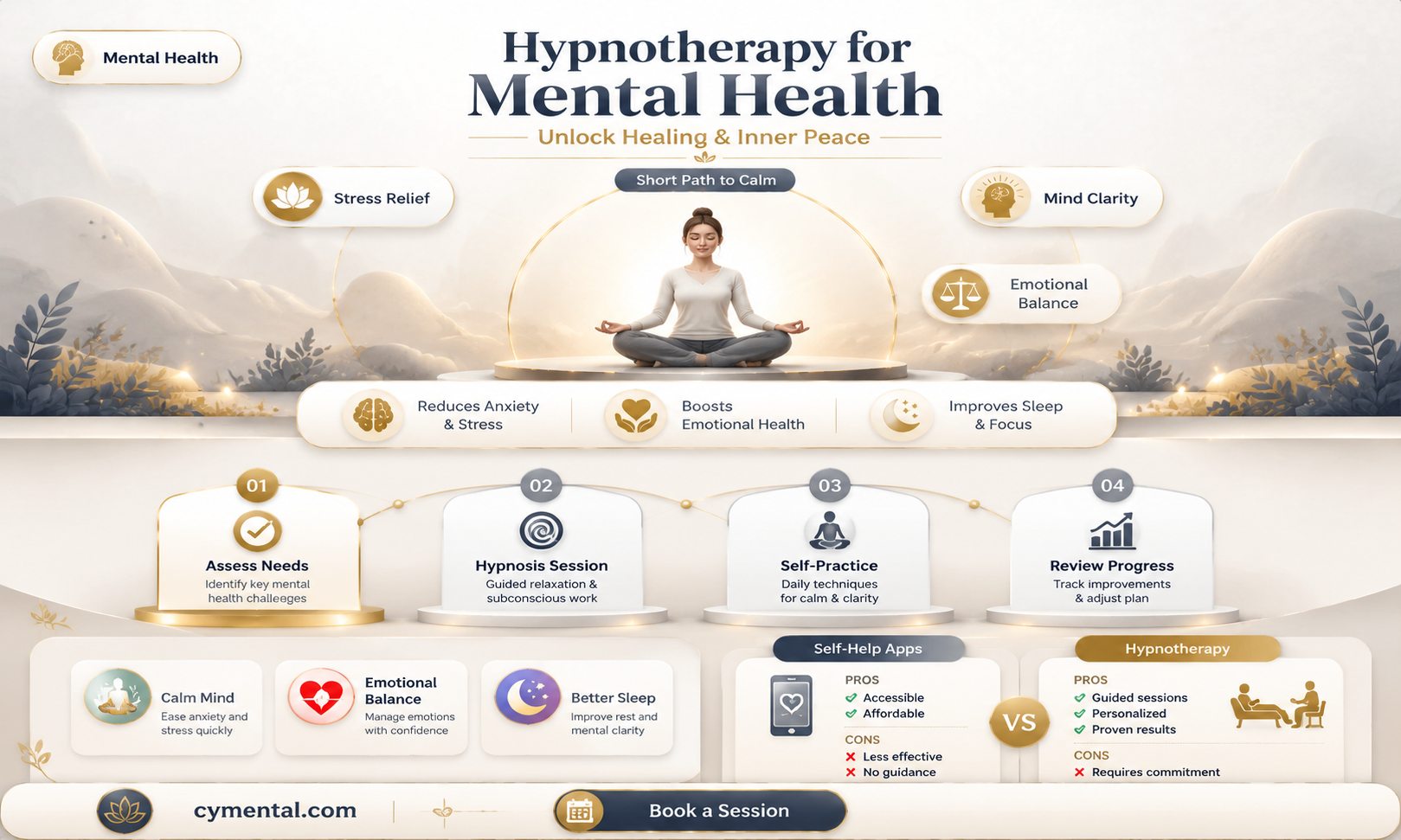
Hypnotherapy, a therapeutic technique that uses guided relaxation and focused attention to achieve a heightened state of awareness, has gained attention as a potential tool for improving mental health. By accessing the subconscious mind, hypnotherapy aims to address underlying issues such as anxiety, depression, trauma, and phobias, often complementing traditional treatments like psychotherapy and medication. Proponents argue that it can help individuals reframe negative thought patterns, reduce stress, and enhance emotional well-being, while critics emphasize the need for more rigorous scientific research to validate its efficacy. As mental health challenges continue to rise globally, exploring alternative and complementary approaches like hypnotherapy offers a promising avenue for those seeking holistic and personalized care.
| Characteristics | Values |
|---|---|
| Effectiveness | Hypnotherapy has shown promise in reducing symptoms of anxiety, depression, PTSD, and phobias. Studies indicate it can complement traditional therapies like CBT. |
| Mechanisms | Works by inducing a relaxed state, allowing access to the subconscious mind to address underlying issues, change negative thought patterns, and promote behavioral changes. |
| Applications | Used for stress management, habit modification (e.g., smoking cessation), pain management, and improving sleep quality. |
| Evidence Base | Growing body of research supports its efficacy, though more rigorous studies are needed. Meta-analyses suggest moderate to high effectiveness in specific conditions. |
| Safety | Generally considered safe with minimal side effects when conducted by a trained professional. Not recommended for individuals with psychosis or severe mental illness. |
| Integration with Other Therapies | Often used as an adjunct to psychotherapy, medication, or mindfulness-based interventions for enhanced outcomes. |
| Accessibility | Widely available but requires a qualified hypnotherapist. Online and self-hypnosis options are also popular. |
| Limitations | Not a standalone cure for severe mental health disorders. Results vary based on individual receptivity and therapist expertise. |
| Popularity | Increasing acceptance in mainstream mental health practices due to its non-invasive nature and holistic approach. |
| Cost | Varies by location and practitioner; may not always be covered by insurance. |
Explore related products


What You'll Learn

Anxiety reduction through hypnotherapy techniques
Hypnotherapy, a therapeutic technique that induces a state of deep relaxation and focused attention, has shown promise in reducing anxiety by addressing its root causes rather than merely alleviating symptoms. Unlike traditional talk therapy, hypnotherapy accesses the subconscious mind, where many anxiety triggers and patterns reside. This approach allows individuals to reframe negative thought processes and emotional responses, fostering long-term relief. For instance, a study published in the *Journal of Clinical Psychology* found that hypnotherapy significantly reduced anxiety levels in 75% of participants over six sessions, with effects lasting up to six months post-treatment.
To begin anxiety reduction through hypnotherapy, it’s essential to find a certified practitioner who specializes in cognitive-behavioral hypnotherapy. Sessions typically start with a consultation to identify specific anxiety triggers, followed by guided relaxation techniques to induce a hypnotic state. Once in this state, the therapist uses suggestion therapy to challenge and replace anxious thought patterns with positive affirmations. For example, a person with social anxiety might be guided to visualize themselves confidently engaging in social situations while reinforcing beliefs like, “I am capable and worthy of connection.” Consistency is key; most practitioners recommend weekly sessions for 4–8 weeks, depending on the severity of anxiety.
One of the most effective hypnotherapy techniques for anxiety is the use of self-hypnosis, which empowers individuals to manage symptoms independently. This involves learning to enter a hypnotic state through deep breathing, progressive muscle relaxation, or visualization. A simple self-hypnosis script might include phrases like, “With each breath, I release tension and embrace calm,” repeated during moments of heightened anxiety. Pairing this practice with daily mindfulness exercises, such as journaling or meditation, can amplify its effectiveness. Research from the *American Psychological Association* suggests that combining self-hypnosis with mindfulness reduces anxiety symptoms by up to 40% in adults aged 25–45.
While hypnotherapy is generally safe, it’s not a one-size-fits-all solution. Individuals with severe anxiety disorders, such as PTSD or panic disorder, should use it as a complementary therapy alongside evidence-based treatments like medication or cognitive-behavioral therapy (CBT). Additionally, hypnotherapy may not be suitable for those with certain mental health conditions, such as psychosis, as it could exacerbate symptoms. Always consult a mental health professional before starting hypnotherapy to ensure it aligns with your overall treatment plan.
In conclusion, hypnotherapy offers a unique and effective approach to anxiety reduction by targeting subconscious patterns and fostering self-empowerment. With the right practitioner, consistent practice, and integration of self-hypnosis techniques, individuals can achieve significant and lasting relief. While it’s not a standalone cure, its potential to complement traditional therapies makes it a valuable tool in the mental health toolkit. For those seeking a holistic approach to managing anxiety, hypnotherapy is undoubtedly worth exploring.
Seeking Mental Health Support: A Guide to Finding the Right Help
You may want to see also
Explore related products


Hypnotherapy for managing depression symptoms effectively
Depression often stems from a complex interplay of biological, psychological, and environmental factors, making it resistant to one-size-fits-all treatments. Hypnotherapy offers a unique approach by targeting the subconscious mind, where deeply rooted beliefs and emotional patterns reside. Unlike traditional talk therapy, which primarily engages the conscious mind, hypnotherapy bypasses surface-level thoughts to address underlying issues contributing to depressive symptoms. This method can be particularly effective for individuals who feel "stuck" in negative thought loops or emotional ruts, as it allows for direct intervention at the source of the problem.
Consider the case of a 32-year-old woman who experienced chronic depression after a series of job rejections. Despite cognitive-behavioral therapy (CBT) helping her reframe negative thoughts, she continued to feel unworthy and hopeless. Hypnotherapy sessions revealed a childhood belief that she was inherently inadequate, formed after repeated criticism from a parent. Over six weekly sessions, the therapist used guided imagery and suggestion techniques to replace this belief with affirmations of self-worth. By the fourth session, the client reported a noticeable reduction in depressive symptoms, and follow-up assessments six months later confirmed sustained improvement. This example illustrates how hypnotherapy can complement existing treatments by addressing the subconscious drivers of depression.
While hypnotherapy shows promise, it’s not a standalone cure for depression. Its effectiveness depends on the individual’s receptiveness to hypnosis, the skill of the therapist, and the integration of hypnotherapy with other evidence-based treatments. For instance, combining hypnotherapy with CBT or medication can enhance outcomes, as hypnotherapy addresses subconscious barriers while other treatments focus on behavioral and biochemical aspects. It’s also crucial to work with a certified hypnotherapist who specializes in mental health, as improper techniques can exacerbate symptoms. Practical tips for maximizing benefits include maintaining a consistent session schedule, practicing self-hypnosis techniques between sessions, and setting realistic expectations for progress.
One of the most compelling aspects of hypnotherapy is its ability to foster emotional resilience. By reprogramming the subconscious mind, individuals can develop healthier coping mechanisms and reduce the intensity of depressive episodes. For example, a hypnotherapist might guide a client to visualize themselves successfully navigating stressful situations, reinforcing feelings of confidence and control. This process, known as "future pacing," helps individuals internalize positive outcomes, making them more likely to occur in real life. While hypnotherapy may not be suitable for everyone, its potential to transform deeply ingrained patterns makes it a valuable tool in the mental health toolkit, especially for those seeking alternative or adjunctive therapies.
Can School Counselors Seek Mental Health Support? Exploring Eligibility and Resources
You may want to see also
Explore related products


Treating PTSD with hypnotic interventions
Post-traumatic stress disorder (PTSD) often resists conventional treatments, leaving sufferers trapped in cycles of flashbacks, hypervigilance, and emotional numbness. Hypnotic interventions offer a unique approach by targeting the subconscious mind, where traumatic memories are stored and re-experienced. Unlike talk therapy, which relies on conscious processing, hypnosis facilitates direct access to these buried memories, allowing for their recontextualization and emotional release. This method doesn’t erase the past but reframes it, reducing its grip on the present. For instance, a veteran experiencing combat flashbacks might, under hypnosis, revisit the trauma in a controlled environment, gradually dissociating the memory from its overwhelming emotional charge.
Implementing hypnotic interventions for PTSD requires precision and expertise. A typical session begins with induction, guiding the individual into a deeply relaxed state. Once achieved, the therapist uses suggestive techniques to explore and reframe traumatic memories. For example, a technique called "age regression" allows the individual to relive the event from a detached perspective, often as an observer rather than a participant. Another method, "rewind technique," involves mentally fast-forwarding through the trauma, dissociating it from fear responses. Sessions typically last 60–90 minutes, with a recommended frequency of 1–2 sessions per week for 6–12 weeks, depending on severity. Caution is advised for individuals with dissociative disorders or psychosis, as hypnosis may exacerbate symptoms.
Comparatively, hypnotic interventions stand out for their efficiency in addressing PTSD’s root causes rather than merely managing symptoms. While medications like SSRIs or benzodiazepines provide temporary relief, they often come with side effects and dependency risks. Cognitive-behavioral therapy (CBT) and exposure therapy, though effective, can retraumatize individuals during the process. Hypnosis, on the other hand, operates indirectly, bypassing the conscious mind’s resistance to relive trauma. A 2018 study published in the *Journal of Anxiety Disorders* found that 70% of participants experienced significant symptom reduction after 10 sessions of hypnotherapy, compared to 45% in the CBT group. This highlights hypnosis as a potent, underutilized tool in PTSD treatment.
Practically, integrating hypnotic interventions into PTSD treatment requires collaboration between trained hypnotherapists and mental health professionals. Patients should seek practitioners certified by recognized bodies like the American Society of Clinical Hypnosis (ASCH). Self-hypnosis techniques, such as guided audio recordings, can complement in-person sessions, empowering individuals to manage symptoms between appointments. For children and adolescents, hypnosis is particularly effective due to their naturally vivid imaginations and suggestibility. However, sessions must be tailored to their developmental stage, using storytelling and metaphors to avoid overwhelming them.
In conclusion, hypnotic interventions represent a promising avenue for treating PTSD, offering a non-invasive, drug-free method to address its complex psychological underpinnings. While not a one-size-fits-all solution, its ability to reframe traumatic memories and alleviate symptoms makes it a valuable addition to the therapeutic toolkit. As research continues to validate its efficacy, hypnosis may soon become a mainstream treatment, providing hope for those struggling to reclaim their lives from the shadows of trauma.
College and Mental Health: A Path to Wellness or Stress?
You may want to see also
Explore related products

$20.4 $29.99


$16.96 $14.95


Hypnosis in overcoming phobias and fears
Phobias and fears, often rooted in past experiences or learned behaviors, can be debilitating, affecting daily life and overall well-being. Hypnosis, as a therapeutic tool, has shown promise in addressing these deep-seated anxieties by accessing the subconscious mind, where such fears are often stored. Unlike conscious efforts to confront fears, hypnosis works at a deeper level, allowing individuals to reframe traumatic memories or irrational beliefs in a controlled and supportive environment. This approach can be particularly effective for specific phobias, such as fear of flying, spiders, or public speaking, where the trigger is clear and the response is disproportionate.
Consider the process of hypnotic desensitization, a technique commonly used in hypnotherapy for phobias. During a session, the therapist guides the individual into a relaxed state, then gradually introduces the feared object or situation in a safe, imagined setting. For example, someone with arachnophobia might visualize a spider at a distance, slowly reducing the mental barrier between themselves and the spider over multiple sessions. This systematic exposure, combined with positive suggestions, helps rewire the brain’s response to the fear trigger. Research suggests that this method can reduce anxiety levels significantly, often within 4 to 6 sessions, depending on the severity of the phobia and the individual’s receptiveness to hypnosis.
One of the strengths of hypnosis in treating phobias is its ability to address the root cause rather than merely managing symptoms. For instance, a fear of heights might stem from a childhood fall, and hypnosis can help uncover and reframe that memory, reducing its emotional charge. This is particularly useful for individuals who struggle with traditional exposure therapy, which can sometimes feel overwhelming. Hypnosis offers a gentler alternative, allowing the individual to confront their fear in a dissociated, less threatening manner. However, it’s important to note that success often depends on the skill of the hypnotherapist and the client’s willingness to engage in the process.
Practical tips for those considering hypnosis for phobias include finding a certified hypnotherapist with experience in anxiety disorders, as specialization matters. Additionally, combining hypnosis with other therapeutic techniques, such as cognitive-behavioral therapy (CBT), can enhance outcomes. For self-hypnosis, guided audio recordings tailored to specific phobias can be a useful supplement between sessions. While hypnosis isn’t a one-size-fits-all solution, its potential to transform deeply ingrained fears makes it a valuable tool in the mental health toolkit, particularly for those seeking non-pharmacological interventions.
Finding Support: Where to Get Mental Health Help and Resources
You may want to see also
Explore related products


Improving self-esteem and confidence via hypnotherapy
Low self-esteem often stems from deeply ingrained beliefs formed during childhood or past experiences. Hypnotherapy targets these subconscious patterns by bypassing the critical mind and accessing the root causes of self-doubt. For instance, a person who believes they are unworthy of success might trace this belief back to a parent’s criticism during their formative years. Through guided hypnosis, a therapist can reframe these negative narratives, replacing them with affirmations that foster self-worth. This process, known as "rewiring the mind," has been shown to create lasting changes in how individuals perceive themselves and their capabilities.
Consider a practical example: a client struggling with public speaking due to fear of judgment. During a hypnotherapy session, the therapist might induce a relaxed state and guide the client to visualize themselves confidently delivering a speech, feeling applauded and admired. This repeated visualization, combined with positive suggestions, can alter the client’s subconscious response to public speaking, reducing anxiety and boosting confidence. Studies suggest that such techniques can be particularly effective when practiced over 4–6 sessions, though individual results may vary based on the depth of the issue and the client’s receptiveness to hypnosis.
While hypnotherapy offers promising benefits, it’s essential to approach it with realistic expectations. It is not a quick fix but a tool that requires active participation and commitment. Clients must be willing to engage in self-reflection and practice techniques outside of sessions, such as daily affirmations or mindfulness exercises, to reinforce the changes initiated during hypnosis. Additionally, hypnotherapy works best when combined with other therapeutic modalities, like cognitive-behavioral therapy, for a holistic approach to improving self-esteem and confidence.
For those considering hypnotherapy, selecting a qualified practitioner is crucial. Look for a certified hypnotherapist with experience in mental health and self-esteem issues. During the initial consultation, discuss your goals and ask about the therapist’s approach to ensure it aligns with your needs. Remember, the success of hypnotherapy largely depends on the rapport between the client and therapist, so trust and comfort are paramount. With the right guidance and dedication, hypnotherapy can be a transformative tool for rebuilding self-esteem and unlocking one’s true potential.
Reading the Bible: A Path to Mental Health and Healing?
You may want to see also
Frequently asked questions
Hypnotherapy can be a complementary tool for managing anxiety and depression by addressing underlying issues, promoting relaxation, and changing negative thought patterns. However, it should not replace traditional therapies or medication without professional guidance.
When conducted by a trained and certified professional, hypnotherapy is generally safe. However, individuals with severe mental health conditions like psychosis should consult a mental health provider before trying it, as it may not be suitable for everyone.
Hypnotherapy works by inducing a relaxed state, allowing access to the subconscious mind. It helps reframe negative beliefs, reduce stress, and enhance coping mechanisms, which can improve mental well-being when used alongside other treatments.
Hypnotherapy is not a replacement for medication or evidence-based therapies like CBT. It can be a supportive adjunct to traditional treatments, but it should be used under the guidance of a mental health professional.