Harper Lewis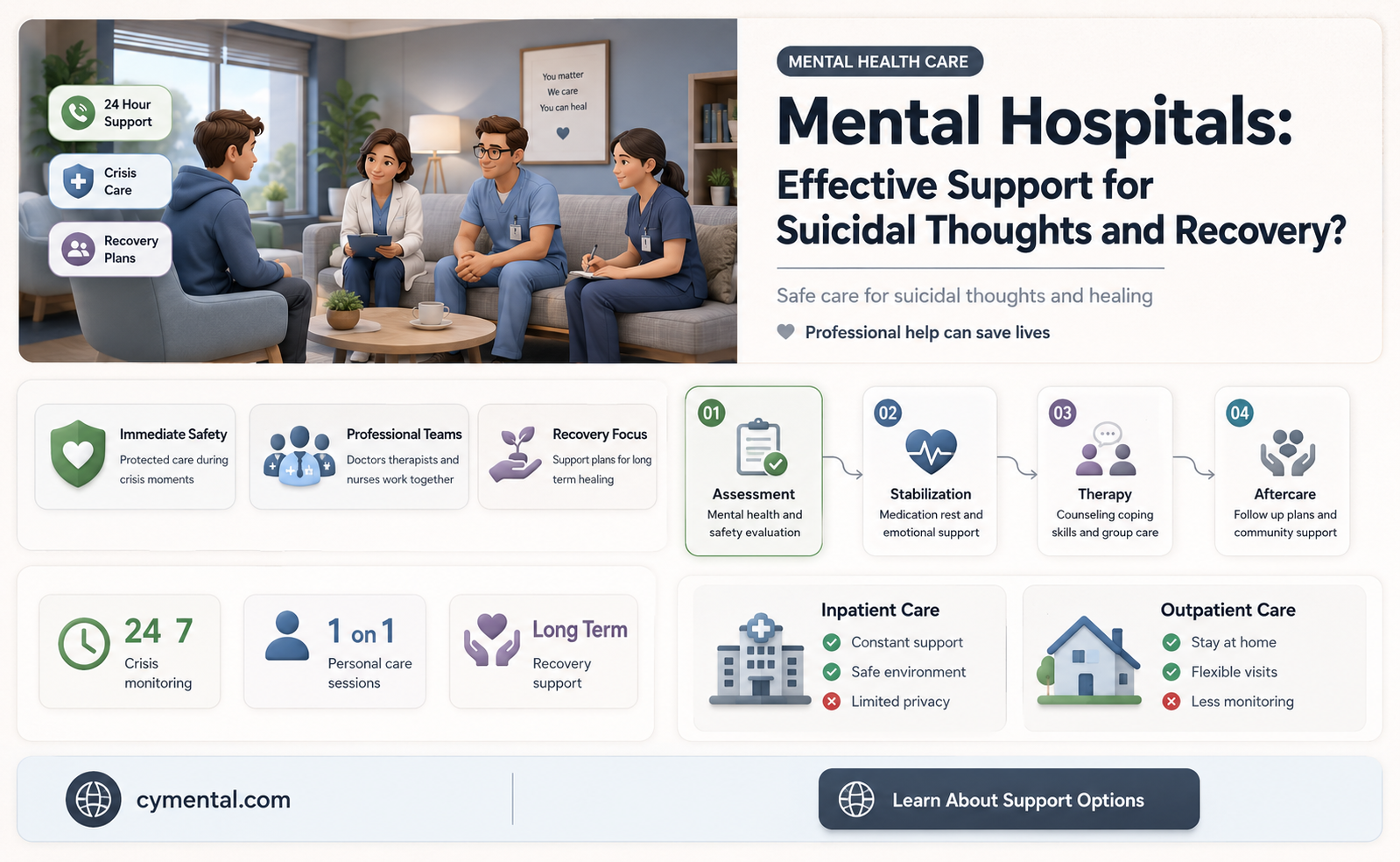
Mental hospitals, also known as psychiatric hospitals, play a crucial role in addressing suicidal thoughts by providing intensive, structured care in a safe environment. These facilities offer a combination of medical supervision, therapy, and medication management tailored to individuals experiencing severe mental health crises, including suicidal ideation. By removing patients from potentially harmful situations and offering 24/7 support, mental hospitals aim to stabilize acute symptoms, develop coping strategies, and connect individuals with long-term treatment plans. While they are not a one-size-fits-all solution, for those in immediate danger or with complex needs, mental hospitals can be a vital lifeline, offering both crisis intervention and a pathway to recovery. However, their effectiveness depends on factors such as the quality of care, patient engagement, and access to follow-up resources.
| Characteristics | Values |
|---|---|
| Effectiveness of Inpatient Treatment | Studies show hospitalization can significantly reduce suicide risk in the short term (during and immediately after admission). A 2021 meta-analysis found a 27% reduction in suicide attempts within 12 months post-discharge. |
| Types of Treatment Offered | Individual therapy (CBT, DBT), group therapy, medication management, crisis intervention, safety planning, and 24/7 monitoring. |
| Length of Stay | Varies depending on individual needs, typically ranging from a few days to several weeks. |
| Success Factors | Early intervention, comprehensive assessment, individualized treatment plans, family involvement, and aftercare planning are crucial for long-term success. |
| Limitations | Stigma surrounding hospitalization, potential for re-traumatization, lack of long-term follow-up care, and limited access to inpatient beds. |
| Alternatives | Intensive outpatient programs, partial hospitalization programs, crisis hotlines, and community-based mental health services. |
| Recent Trends | Increased focus on trauma-informed care, peer support, and integrating technology (telehealth) into treatment. |
Explore related products


What You'll Learn
- Assessment and Crisis Intervention: Immediate evaluation and stabilization for individuals at high risk of suicide
- Therapy and Counseling: Evidence-based treatments like CBT to address underlying suicidal ideation
- Medication Management: Prescription of antidepressants or mood stabilizers to reduce suicidal tendencies
- Supportive Environment: Safe, structured settings to prevent self-harm and promote emotional healing
- Aftercare Planning: Transition programs and follow-up to maintain progress and prevent relapse

Assessment and Crisis Intervention: Immediate evaluation and stabilization for individuals at high risk of suicide
Suicidal thoughts demand immediate, structured responses to mitigate risk and ensure safety. Assessment and crisis intervention serve as the first line of defense, combining rapid evaluation with stabilization techniques to address acute distress. This process is not merely about identifying risk factors but also about creating a therapeutic alliance that fosters trust and cooperation.
Steps in Immediate Evaluation:
- Screening Tools: Use validated instruments like the Columbia-Suicide Severity Rating Scale (C-SSRS) or the Suicide Behaviors Questionnaire-Revised (SBQ-R) to quantify risk. These tools assess ideation frequency, lethality of plans, and access to means.
- Clinical Interview: Conduct a semi-structured interview to explore triggers, protective factors, and previous attempts. Open-ended questions like, *"What’s kept you from acting on these thoughts so far?"* can reveal coping mechanisms.
- Safety Planning: Collaborate with the individual to create a written safety plan. Include warning signs, coping strategies, and emergency contacts. For example, a 24-year-old patient might list *"calling my sister"* as step one and *"going to the nearest ER"* as step three.
Cautions in Crisis Intervention:
Avoid dismissive language or false reassurance, as these can alienate the individual. For instance, saying *"Everything will be fine"* undermines their experience. Instead, use empathetic statements like, *"I’m here to help you through this." Also, be mindful of cultural or gender-specific barriers. A 16-year-old male might hesitate to disclose suicidal thoughts due to stigma, requiring a more indirect approach.
Stabilization Techniques:
Pharmacological interventions, such as low-dose benzodiazepines (e.g., 0.5 mg lorazepam) or antipsychotics (e.g., 2.5 mg olanzapine), can reduce agitation in acute cases. However, medication should complement, not replace, therapeutic interventions. Environmental modifications, like removing sharp objects or restricting access to heights, are equally critical.
Assessment and crisis intervention are time-sensitive, requiring a blend of clinical skill and compassion. By systematically evaluating risk, creating safety plans, and employing stabilization strategies, mental health professionals can provide immediate relief and lay the groundwork for long-term treatment. This approach not only saves lives but also communicates to the individual that their pain is acknowledged and their survival is prioritized.
Healing Companions: How Animals Support Mental Health and Well-Being
You may want to see also
Explore related products


Therapy and Counseling: Evidence-based treatments like CBT to address underlying suicidal ideation
Suicidal ideation often stems from underlying mental health conditions like depression, anxiety, or trauma, which cognitive distortions exacerbate. Evidence-based therapies, particularly Cognitive Behavioral Therapy (CBT), directly target these distortions by restructuring harmful thought patterns. For instance, a patient believing, "I am a burden to everyone," might work with a therapist to challenge this belief through reality testing and behavioral experiments. Meta-analyses show CBT reduces suicidal ideation by 50-60% in adults over 12-16 sessions, making it a cornerstone treatment in both outpatient and inpatient settings.
Implementing CBT in a mental hospital setting requires structured, goal-oriented sessions tailored to acute crises. Therapists often start with safety planning, teaching patients to recognize warning signs and coping strategies. For adolescents, dialectical behavior therapy (DBT), a CBT offshoot, is particularly effective, reducing suicide attempts by 50% in high-risk groups. Group therapy sessions in hospitals amplify CBT’s impact by fostering peer support and normalizing struggles. However, success hinges on consistent, skilled facilitation and patient engagement, which hospitals must prioritize through staff training and individualized care plans.
Critics argue that CBT’s structured approach may feel rigid for patients in emotional turmoil, but its adaptability addresses this. For example, therapists can incorporate mindfulness techniques from DBT or trauma-focused CBT for patients with PTSD. Combining CBT with medication, such as SSRIs, enhances outcomes, particularly in severe cases. Hospitals must balance CBT’s manualized nature with flexibility, ensuring therapists can adjust techniques to meet patients’ immediate needs while maintaining evidence-based fidelity.
For families and caregivers, understanding CBT’s principles empowers them to support recovery. Encouraging patients to practice cognitive reframing outside sessions, such as journaling or disputing negative thoughts, reinforces progress. Hospitals should provide educational materials and involve families in therapy sessions when appropriate. Ultimately, CBT’s strength lies in its ability to equip patients with lifelong tools to manage suicidal ideation, transforming passive coping into active resilience.
Suicidal Individuals: Are They Receiving Adequate Mental Health Support?
You may want to see also
Explore related products





Medication Management: Prescription of antidepressants or mood stabilizers to reduce suicidal tendencies
Medication management stands as a cornerstone in the treatment of suicidal ideation, particularly through the prescription of antidepressants and mood stabilizers. These medications target the neurochemical imbalances often associated with suicidal tendencies, offering a pharmacological lifeline to those in crisis. Antidepressants, such as selective serotonin reuptake inhibitors (SSRIs), are commonly prescribed to elevate serotonin levels, which can alleviate symptoms of depression and reduce suicidal thoughts. For instance, fluoxetine (Prozac) is often initiated at a dose of 20 mg daily, with adjustments made based on patient response and tolerance. Mood stabilizers like lithium are another critical tool, particularly for individuals with bipolar disorder, where mood swings can escalate suicidal risk. Lithium’s therapeutic range is narrow, typically requiring serum levels between 0.8 to 1.2 mEq/L to balance efficacy and safety.
The effectiveness of these medications is not immediate, a fact that underscores the importance of patient education and monitoring. Antidepressants may take 4 to 6 weeks to show significant effects, during which time suicidal thoughts may persist or even intensify, especially in younger patients. This phenomenon has led the FDA to mandate black box warnings on antidepressants, emphasizing the need for close supervision, particularly in the first weeks of treatment. For adolescents and young adults, the risk-benefit profile must be carefully weighed, as studies have shown an increased risk of suicidal behavior in this age group during early treatment phases.
Practical considerations in medication management extend beyond dosage and timing. Adherence is critical, yet side effects such as nausea, weight gain, or emotional blunting can deter patients from continuing treatment. Clinicians often employ strategies like starting with lower doses, combining medications, or prescribing adjunctive therapies to mitigate these challenges. For example, adding a small dose of aripiprazole (2-5 mg) to an SSRI regimen can enhance efficacy for treatment-resistant cases. Additionally, regular follow-ups and blood tests, particularly for lithium, ensure that treatment remains both safe and effective.
Comparatively, medication management in mental hospitals offers advantages over outpatient settings. Inpatient care allows for immediate titration of medications, continuous monitoring for adverse reactions, and the integration of pharmacotherapy with psychotherapy. This holistic approach is particularly beneficial for individuals with severe or treatment-resistant suicidal ideation. For instance, electroconvulsive therapy (ECT) may be paired with medication management for rapid symptom relief in acute cases. The controlled environment of a mental hospital also minimizes external stressors, allowing medications to take effect without the interference of chaotic or triggering circumstances.
In conclusion, medication management through antidepressants and mood stabilizers is a vital component of treating suicidal tendencies, but it is not without complexities. Success hinges on precise dosing, patient education, and vigilant monitoring, particularly in vulnerable populations. Mental hospitals provide an optimal setting for this process, offering structured care that maximizes the benefits of pharmacotherapy while addressing its limitations. For those grappling with suicidal thoughts, this approach can be a critical step toward stabilization and recovery.
Can Your GP Support Mental Health? Exploring Primary Care Options
You may want to see also
Explore related products


Supportive Environment: Safe, structured settings to prevent self-harm and promote emotional healing
Mental hospitals often serve as critical sanctuaries for individuals grappling with suicidal thoughts, offering a supportive environment that prioritizes safety and emotional healing. These settings are meticulously designed to remove immediate triggers and provide a structured daily routine, which research shows can significantly reduce self-harm risks. For instance, a study published in the *Journal of Psychiatric Practice* found that patients in inpatient psychiatric units experienced a 50% decrease in suicidal ideation within the first week of admission, largely due to the controlled environment. This structured framework includes scheduled therapy sessions, medication management, and supervised activities, all of which foster stability during moments of crisis.
Creating a safe physical space is only the first step; the emotional atmosphere is equally vital. Mental hospitals employ trained staff who are adept at de-escalating crises and providing empathetic support. For example, many facilities use the "therapeutic milieu" approach, where every interaction—from group therapy to mealtimes—is an opportunity for healing. Patients aged 18–25, who are at particularly high risk for suicide, often benefit from peer support groups within these settings, as shared experiences can reduce feelings of isolation. Practical tips for families include encouraging open communication with the treatment team and participating in family therapy sessions, which can strengthen the support network outside the hospital.
While the structured nature of mental hospitals is beneficial, it’s essential to balance safety with autonomy. Overly restrictive environments can sometimes exacerbate feelings of helplessness, particularly in adolescents. To address this, progressive facilities incorporate "graduated privileges," allowing patients to earn more freedom as they demonstrate progress. For instance, a patient might start with supervised outdoor time and eventually progress to unsupervised group activities. This approach not only prevents self-harm but also empowers individuals to rebuild trust in themselves and their abilities.
Critics argue that hospitalization can be traumatic, but evidence suggests that when combined with evidence-based therapies like cognitive-behavioral therapy (CBT) and dialectical behavior therapy (DBT), these environments can be transformative. A 2020 meta-analysis in *JAMA Psychiatry* revealed that patients who received DBT in a hospital setting were 60% less likely to attempt suicide post-discharge. The key takeaway is that supportive environments in mental hospitals are not one-size-fits-all; they require individualized care plans, consistent monitoring, and a focus on long-term emotional resilience. For those in crisis, these settings can be a lifeline, offering both immediate protection and a foundation for lasting recovery.
Medications for Mental Illness: A Helpful Treatment or Not?
You may want to see also
Explore related products





Aftercare Planning: Transition programs and follow-up to maintain progress and prevent relapse
Mental hospitals often serve as critical lifelines for individuals experiencing suicidal thoughts, providing immediate stabilization and intensive treatment. However, the true test of their effectiveness lies in what happens after discharge. Without robust aftercare planning, the risk of relapse remains alarmingly high. Transition programs and structured follow-up are not optional luxuries—they are essential components of long-term recovery. These programs bridge the gap between inpatient care and independent living, ensuring that progress made during hospitalization is not lost in the chaos of reintegration.
Consider the case of a 28-year-old patient who, after a suicide attempt, spent two weeks in a psychiatric ward. During this time, they received medication adjustments, therapy, and coping skills training. Upon discharge, they were enrolled in a step-down partial hospitalization program (PHP), which provided daily therapy sessions and group support for four hours a day, five days a week. This structured environment allowed them to practice new skills while gradually reacclimating to daily life. Simultaneously, a case manager coordinated weekly check-ins and connected them with a local outpatient therapist. This layered approach—combining intensity with gradual independence—is a hallmark of effective aftercare planning.
Not all transition programs are created equal, however. A common pitfall is assuming that a single follow-up appointment or a generic referral is sufficient. Research shows that individuals who receive personalized aftercare plans, including clear goals, emergency contacts, and a schedule of ongoing support, are 40% less likely to relapse within the first year. For instance, a 17-year-old adolescent might benefit from a family-based program that includes parental education on recognizing warning signs, while a 45-year-old professional may require vocational counseling to address workplace stressors. Tailoring aftercare to the individual’s age, circumstances, and specific triggers is non-negotiable.
Practical tips for implementing aftercare include creating a "relapse prevention toolkit" during hospitalization, which patients can take home. This toolkit might include a list of coping strategies, emergency contacts, and a journal for tracking mood patterns. Additionally, integrating technology—such as mental health apps that monitor symptoms or telehealth sessions for remote follow-up—can enhance accessibility. For those on medication, a clear plan for managing prescriptions, including refills and side-effect monitoring, is crucial. For example, a patient on a low dose of an SSRI (e.g., 20 mg of fluoxetine) might need a follow-up appointment within two weeks to assess efficacy and adjust dosage if necessary.
Ultimately, aftercare planning is about building resilience, not just managing symptoms. It requires collaboration between patients, families, healthcare providers, and community resources. Without it, the progress made in mental hospitals risks unraveling, leaving individuals vulnerable to the same crises that brought them there. By investing in comprehensive transition programs and follow-up, we can transform short-term stabilization into lasting recovery.
Obama's Mental Health Legacy: Progress and Impact on Americans' Well-being
You may want to see also
Frequently asked questions
Yes, mental hospitals are equipped to provide comprehensive treatment for suicidal thoughts, including crisis intervention, therapy, medication management, and 24/7 monitoring to ensure safety.
The length of stay varies depending on individual needs, but it typically ranges from a few days to several weeks. The goal is stabilization and creating a safety plan for ongoing care.
While mental hospitals cannot guarantee prevention, they significantly reduce immediate risk by providing a safe environment, intensive treatment, and connecting individuals to long-term resources for continued support.
After discharge, individuals are typically referred to outpatient therapy, support groups, or partial hospitalization programs to continue treatment and maintain progress in managing suicidal thoughts.