Madison Cole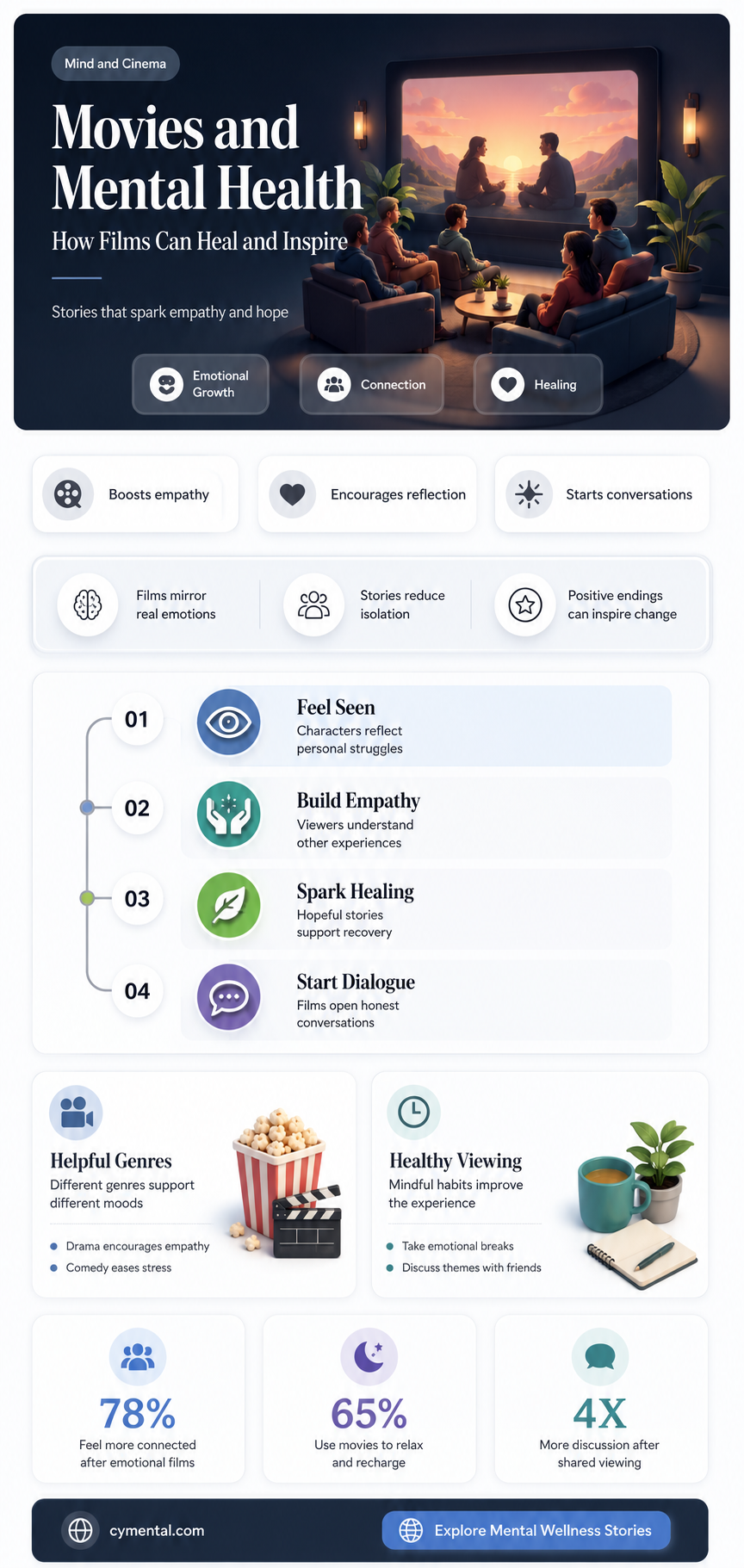
Movies can play a significant role in supporting mental health by offering a unique blend of escapism, emotional catharsis, and relatable narratives. Through compelling storytelling, films often mirror human experiences, allowing viewers to feel understood and less alone in their struggles. They can provide insights into complex emotions, normalize mental health issues, and even inspire coping strategies. Additionally, the act of watching a movie can serve as a therapeutic distraction, reducing stress and promoting relaxation. However, the impact varies depending on the content and the individual’s state of mind, making it essential to choose films mindfully. Overall, when approached thoughtfully, movies can be a valuable tool in fostering empathy, self-awareness, and emotional well-being.
| Characteristics | Values |
|---|---|
| Emotional Catharsis | Movies allow viewers to experience and release emotions in a safe environment, which can reduce stress and anxiety. Studies show that crying during emotional scenes can lead to emotional relief. |
| Escapism | Films provide an escape from daily stressors, offering temporary relief from negative thoughts and feelings. Research indicates that immersive storytelling can reduce cortisol levels. |
| Social Connection | Watching movies with others or discussing them can foster a sense of community and reduce feelings of loneliness, which is beneficial for mental health. |
| Empathy and Perspective | Movies can enhance empathy by allowing viewers to see life from different perspectives, promoting understanding and compassion. Studies link film-watching to increased empathy scores. |
| Cognitive Stimulation | Engaging storylines and complex characters can stimulate the brain, improving cognitive function and potentially delaying cognitive decline. |
| Therapeutic Tool | Cinetherapy is a recognized therapeutic technique where specific films are used to address psychological issues, often in conjunction with traditional therapy. |
| Mood Regulation | Comedies and uplifting films can improve mood and reduce symptoms of depression by triggering the release of endorphins. |
| Stress Reduction | Relaxing or humorous movies can lower stress levels by promoting laughter and relaxation, which has physiological benefits. |
| Self-Reflection | Thought-provoking films can encourage introspection, helping viewers process their own experiences and emotions. |
| Coping Mechanism | For some, movies provide a healthy coping mechanism to deal with trauma or difficult emotions, offering a distraction or a way to process feelings. |
| Education and Awareness | Films depicting mental health issues can raise awareness, reduce stigma, and encourage viewers to seek help. |
| Mindfulness | The act of focusing on a movie can promote mindfulness, helping viewers stay present and reducing rumination. |
| Inspiration and Motivation | Inspirational films can motivate viewers to make positive changes in their lives, fostering a sense of hope and purpose. |
| Cultural and Emotional Learning | Movies expose viewers to different cultures and emotional experiences, broadening their emotional intelligence and understanding. |
| Sleep Aid | Watching calming or familiar movies before bed can improve sleep quality by reducing anxiety and promoting relaxation. |
Explore related products


What You'll Learn
- Escapism and Stress Relief: Movies offer temporary escape, reducing stress and anxiety through immersive storytelling
- Emotional Catharsis: Watching films can help process emotions, fostering empathy and emotional release
- Social Connection: Shared movie experiences combat loneliness, promoting bonding and community
- Educational Impact: Films raise awareness about mental health, reducing stigma and encouraging dialogue
- Therapeutic Tools: Cinematic therapy uses movies to explore and address psychological issues effectively

Escapism and Stress Relief: Movies offer temporary escape, reducing stress and anxiety through immersive storytelling
Movies have long been a go-to remedy for unwinding after a stressful day, but their role in mental health goes beyond casual relaxation. Research suggests that immersive storytelling can trigger a psychological state known as "flow," where viewers become fully absorbed in the narrative, temporarily disconnecting from their worries. This escapism isn't merely passive; it actively reduces cortisol levels, the body's primary stress hormone. For instance, a 2018 study published in *Frontiers in Psychology* found that participants who watched emotionally engaging films experienced a 20% decrease in stress markers compared to those who engaged in non-immersive activities. The key lies in the film's ability to transport the viewer into another world, offering a mental break from real-life pressures.
To maximize this benefit, consider the genre and duration of your movie choice. Comedies and feel-good dramas are particularly effective for stress relief, as they evoke positive emotions without demanding intense emotional labor. Aim for films between 90 to 120 minutes—long enough to sustain immersion but short enough to avoid mental fatigue. Pairing the experience with a comfortable environment, such as dim lighting and minimal distractions, enhances the escapist effect. For those with anxiety, starting with lighter content and gradually exploring more complex narratives can prevent overwhelming emotions.
However, escapism through movies isn’t a one-size-fits-all solution. While it provides temporary relief, over-reliance on this coping mechanism can delay addressing underlying issues. A 2020 study in *Psychology of Popular Media Culture* warned that excessive escapism might lead to emotional avoidance, particularly in individuals already prone to anxiety or depression. To strike a balance, limit movie-watching to 2–3 hours daily and complement it with active stress-management techniques like mindfulness or exercise. Think of movies as a tool in your mental health toolkit, not the entire kit itself.
For parents or caregivers, leveraging movies for stress relief in children and teens requires careful curation. Age-appropriate content ensures the experience remains positive and non-triggering. For example, animated films with uplifting themes can help younger viewers process emotions indirectly, while older teens might benefit from coming-of-age stories that mirror their struggles. Encourage post-movie discussions to help them articulate feelings inspired by the narrative, fostering emotional intelligence alongside escapism.
Incorporating movies into a mental health routine doesn’t require a psychologist’s guidance, but intentionality is key. Start by identifying triggers—whether it’s work stress, social anxiety, or existential dread—and select films that counterbalance these emotions. For instance, nature documentaries can soothe overstimulation, while action films might provide a safe outlet for pent-up energy. Track your mood before and after watching to gauge effectiveness, adjusting your choices accordingly. Remember, the goal isn’t to numb emotions but to reset your mental state, allowing you to return to reality with renewed clarity.
Can You Admit Yourself to Mental Health Treatment? A Guide
You may want to see also
Explore related products




![Psych: The Complete Collection [DVD]](https://m.media-amazon.com/images/I/7111KdwL-hL._AC_UY218_.jpg)

Emotional Catharsis: Watching films can help process emotions, fostering empathy and emotional release
Films have long been recognized as a powerful medium for emotional expression, but their role in facilitating emotional catharsis is particularly noteworthy. When we watch characters navigate complex feelings—grief, joy, anger, or love—we often find ourselves mirroring their emotional journeys. This process, known as emotional contagion, allows us to experience and process our own suppressed emotions in a safe, vicarious way. For instance, crying during a poignant scene in *The Fault in Our Stars* can serve as a release valve for pent-up sadness, while laughing at the absurdity of *The Grand Budapest Hotel* can lighten our mood. This emotional release is not merely passive; it’s an active engagement with our inner world, often leading to a sense of relief and clarity.
To harness this benefit, consider selecting films that resonate with your current emotional state. If you’re feeling overwhelmed by stress, a lighthearted comedy like *Amélie* might provide the emotional distance needed to unwind. Conversely, if you’re grappling with loss, a film like *A Monster Calls* can offer a structured narrative to explore grief. The key is intentionality: approach the viewing experience as a form of self-care, not just entertainment. Research suggests that 30–60 minutes of focused viewing can be sufficient to trigger emotional catharsis, though longer sessions may be beneficial for deeper processing. Pairing the film with a reflective activity, such as journaling or discussing it with a friend, can amplify its therapeutic effects.
One of the most compelling aspects of emotional catharsis through film is its ability to foster empathy. When we immerse ourselves in a character’s story, we temporarily adopt their perspective, broadening our understanding of human experience. This empathetic engagement can be particularly transformative for adolescents and young adults, whose emotional landscapes are still developing. For example, films like *Moonlight* or *Lady Bird* offer nuanced portrayals of identity and belonging, encouraging viewers to reflect on their own struggles and those of others. Studies show that such empathetic responses can reduce feelings of isolation and increase emotional resilience, making film a valuable tool for mental health education and personal growth.
However, it’s important to approach this practice with caution. Not all films are created equal, and some may inadvertently trigger negative emotions rather than release them. For individuals with trauma histories, certain themes or scenes could exacerbate distress. To mitigate this risk, start with films that are known for their gentle handling of sensitive topics, such as *Inside Out*, which explores emotions through a child-friendly lens. Additionally, be mindful of your emotional state before pressing play—if you’re already feeling vulnerable, opt for something uplifting rather than intense. Finally, remember that while films can be a powerful adjunct to mental health care, they are not a substitute for professional therapy or medical treatment. Used thoughtfully, however, they can be a deeply effective way to process emotions and cultivate empathy.
Exercise and Mental Health: Unlocking the Mind-Body Connection for Wellness
You may want to see also
Explore related products


Social Connection: Shared movie experiences combat loneliness, promoting bonding and community
Movies have long been a communal experience, from packed theaters to cozy living rooms. This shared engagement goes beyond entertainment; it fosters a sense of connection that can be particularly powerful in combating loneliness. When we watch a film together, we enter a shared narrative space, experiencing emotions, tensions, and resolutions as a collective. This synchronized emotional journey creates a bond, a silent understanding that says, “We’ve been through something together.” For individuals feeling isolated, this can be a lifeline, a reminder that they are part of a larger community, even if only for the duration of the film.
Consider the ritual of a movie night with friends or family. The act of choosing a film, preparing snacks, and settling in together is a form of social bonding in itself. During the movie, laughter, gasps, or tears become shared reactions, breaking down barriers and encouraging vulnerability. Research suggests that such synchronized activities release oxytocin, the “bonding hormone,” which strengthens social connections. For older adults or those with limited mobility, organized movie screenings in community centers or senior homes can provide a structured social activity, reducing feelings of isolation. Even virtual watch parties, where participants stream a film simultaneously and chat in real-time, can replicate this effect in a digital space.
However, the impact of shared movie experiences isn’t limited to personal relationships. Public screenings of films with social themes can spark community-wide conversations, fostering empathy and collective action. For instance, documentaries about mental health struggles, when shown in group settings, have been shown to reduce stigma and encourage open dialogue. A study by the American Psychological Association found that participants who watched such films in groups reported greater feelings of connection and a higher likelihood of seeking support for their own mental health challenges. This highlights the dual benefit of shared movie experiences: they not only combat loneliness but also promote a culture of understanding and support.
To maximize these benefits, intentionality is key. For individuals, pairing movie nights with open discussions can deepen connections. For community organizers, selecting films with relatable themes and providing moderated Q&A sessions afterward can amplify the impact. Schools and workplaces can also leverage this by incorporating films into wellness programs, creating safe spaces for shared reflection. The key is to move beyond passive viewing, turning the movie into a catalyst for meaningful interaction. In a world where loneliness is increasingly prevalent, the humble act of watching a film together can be a surprisingly powerful tool for building and strengthening social bonds.
Accessing Free Mental Health Support: Options and Resources Available
You may want to see also
Explore related products


Educational Impact: Films raise awareness about mental health, reducing stigma and encouraging dialogue
Films have become powerful tools in the fight against mental health stigma, serving as catalysts for conversations that were once silenced. By portraying complex characters grappling with conditions like depression, anxiety, or PTSD, movies humanize these struggles, making them relatable to audiences. For instance, *Silver Linings Playbook* and *Inside Out* not only entertain but also educate viewers about bipolar disorder and emotional processing, respectively. This on-screen representation fosters empathy, challenging stereotypes and encouraging viewers to reconsider their preconceptions about mental health.
To maximize the educational impact of films, intentional viewing practices can be employed. Organize watch parties followed by structured discussions, using guided questions to explore themes like resilience, therapy, or societal attitudes. For example, after watching *The Perks of Being a Wallflower*, ask participants: "How did the characters’ support systems influence their mental health journeys?" Such activities transform passive viewing into an active learning experience, particularly effective for teens and young adults who often resonate with cinematic narratives.
Critics argue that some films oversimplify mental health issues, risking misinformation. However, when paired with factual resources, movies can serve as accessible entry points for deeper exploration. Educators and mental health advocates can curate film lists accompanied by fact sheets or expert commentary. For instance, *A Beautiful Mind* could be supplemented with materials on schizophrenia, ensuring viewers understand the realities beyond the dramatic portrayal. This approach balances emotional engagement with educational rigor.
The ripple effect of films in reducing stigma is measurable. Studies show that audiences exposed to accurate mental health portrayals in media are more likely to seek help or support others. For example, *It’s Kind of a Funny Story* normalizes therapy and hospitalization, potentially encouraging viewers to view these as viable options rather than signs of weakness. By sparking dialogue, films bridge gaps in understanding, making mental health a topic for dinner tables, classrooms, and social media feeds. Practical tip: Use post-film discussions to share local mental health resources, turning awareness into actionable steps.
Walking for Wellness: How Daily Steps Boost Mental Health
You may want to see also
Explore related products


Therapeutic Tools: Cinematic therapy uses movies to explore and address psychological issues effectively
Movies, when used intentionally, become powerful therapeutic tools. Cinematic therapy leverages film to externalize clients’ internal struggles, offering a shared language to discuss complex emotions. For instance, a therapist might recommend *Inside Out* to a child grappling with emotional regulation, using the film’s personified emotions as a framework for dialogue. This approach bypasses the pressure of direct self-disclosure, allowing clients to project their experiences onto characters or narratives. By selecting films tailored to specific issues—such as *Silver Linings Playbook* for bipolar disorder or *The Perks of Being a Wallflower* for trauma—therapists create a safe, non-confrontational space to explore psychological challenges.
The effectiveness of cinematic therapy lies in its ability to mirror human experiences, fostering empathy and insight. Films often condense years of struggle into two hours, providing viewers with a sense of resolution or hope that can feel unattainable in real life. For example, *A Beautiful Mind* offers a window into schizophrenia, helping both clients and their families understand the disorder’s impact. Therapists can structure sessions around film viewing, dedicating 30 minutes to watch a scene, 20 minutes for reflection, and 10 minutes for goal-setting. This structured approach ensures the experience remains therapeutic rather than passive entertainment.
However, cinematic therapy requires careful curation. Not all films are suitable for every client; triggering content or misaligned narratives can exacerbate issues. Therapists must assess age appropriateness, cultural relevance, and the client’s readiness to engage with certain themes. For adolescents, films like *The Half of It* or *Lady Bird* can spark conversations about identity and relationships, while older adults might benefit from *The Bucket List* to explore life transitions. Pairing films with journaling prompts or art exercises can deepen the therapeutic impact, encouraging clients to connect cinematic themes to their personal narratives.
Critics argue that relying on movies might oversimplify complex mental health issues, but when integrated thoughtfully, cinematic therapy complements traditional modalities. It’s particularly effective for clients who struggle with verbal expression or find traditional talk therapy intimidating. For instance, a group therapy session might use *The Pursuit of Happyness* to discuss resilience, followed by a round-table sharing of personal coping strategies. The key is intentionality: therapists must select films that align with therapeutic goals, provide context, and guide clients in applying insights to their lives. When executed well, cinematic therapy transforms passive viewing into an active, transformative experience.
Traveling and Mental Health: A Case for FMLA Benefits
You may want to see also
Frequently asked questions
Yes, watching movies can improve mental health by providing emotional release, reducing stress, and offering escapism. Films can evoke empathy, inspire reflection, and even serve as a form of therapy when chosen mindfully.
Movies can help by distracting from negative thoughts, providing relatable characters or stories, and fostering a sense of connection. Comedies, for example, can boost mood, while dramas may offer catharsis or perspective.
Yes, genres like comedy, feel-good dramas, and inspirational films are often beneficial for mental health. However, the impact depends on individual preferences—some may find comfort in horror or action films as a form of release.
No, movies are not a substitute for professional mental health treatment. While they can complement therapy by providing emotional support or insight, they should not replace evidence-based interventions like counseling or medication.
Choose movies that align with your emotional needs, such as uplifting films when feeling down or thought-provoking ones for self-reflection. Pair movie-watching with mindfulness, and consider discussing the film with others to deepen its therapeutic impact.