Lucas Bennett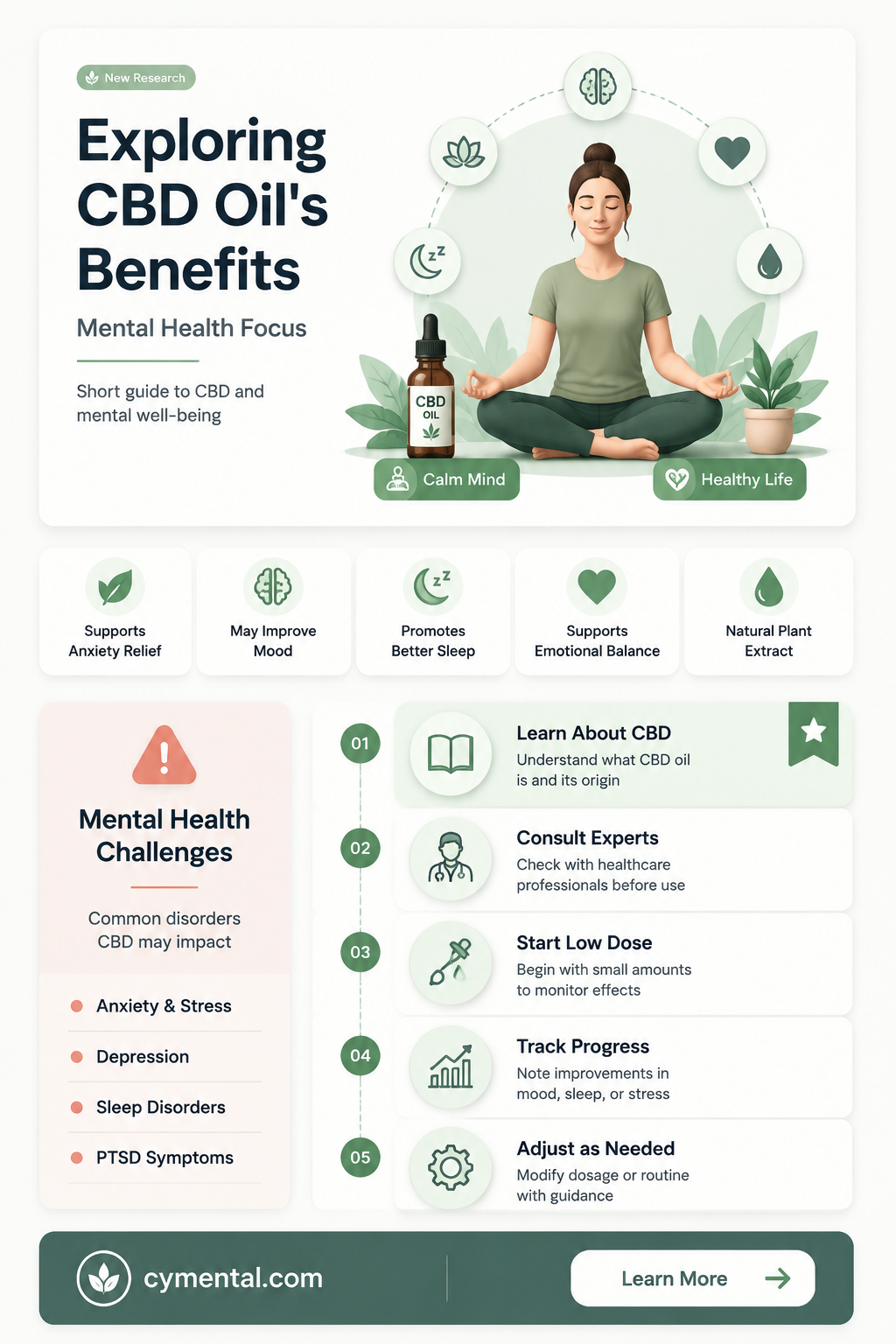
CBD oil, derived from the cannabis plant, has gained significant attention for its potential therapeutic benefits, particularly in the realm of mental health. As mental illnesses such as anxiety, depression, and PTSD continue to affect millions worldwide, many are turning to CBD as a natural alternative or complement to traditional treatments. Research suggests that CBD may interact with the endocannabinoid system, which plays a role in regulating mood, stress, and emotional responses, potentially offering relief for symptoms associated with these conditions. While preliminary studies show promise, the scientific community emphasizes the need for more extensive research to fully understand CBD’s efficacy, optimal dosages, and long-term effects on mental health. Despite this, anecdotal evidence and growing interest highlight CBD oil as a topic of increasing importance in the conversation about mental wellness.
Explore related products




What You'll Learn

CBD for Anxiety Relief
Anxiety disorders affect over 40 million adults in the United States alone, making it the most common mental illness in the country. For those seeking alternatives to traditional pharmaceuticals, CBD oil has emerged as a promising option. Derived from the cannabis plant, CBD (cannabidiol) is non-psychoactive, meaning it doesn’t produce the "high" associated with THC. Research suggests that CBD interacts with the body’s endocannabinoid system, which plays a role in regulating mood, stress, and anxiety responses. Studies, such as a 2019 review in *The Permanente Journal*, have shown that CBD may reduce anxiety symptoms in conditions like generalized anxiety disorder (GAD), social anxiety disorder (SAD), and post-traumatic stress disorder (PTSD).
When considering CBD for anxiety relief, dosage is critical. Most studies use doses ranging from 25 to 750 mg per day, with many finding effectiveness at 300–600 mg. However, starting low and gradually increasing is recommended—begin with 10–20 mg daily and monitor effects over a week. Sublingual tinctures are often preferred for quick absorption, but capsules or edibles provide longer-lasting effects. Consistency is key; CBD may take several weeks to build up in the system and produce noticeable benefits. Always consult a healthcare provider, especially if you’re taking other medications, as CBD can interact with certain drugs.
One practical tip for integrating CBD into an anxiety management routine is to pair it with mindfulness practices. For instance, take your dose 30 minutes before meditation or deep breathing exercises to enhance relaxation. For those with situational anxiety, such as public speaking or social events, a small dose 1–2 hours beforehand may help ease symptoms. Keep a journal to track dosage, timing, and effects, as individual responses to CBD vary. Additionally, opt for high-quality, third-party tested products to ensure purity and accurate CBD content.
While CBD shows potential, it’s not a one-size-fits-all solution. Some users report mild side effects like fatigue, dry mouth, or changes in appetite. It’s also important to note that CBD is not FDA-approved for anxiety treatment, and long-term studies are still limited. For severe or persistent anxiety, CBD should complement, not replace, professional therapy or prescribed medications. That said, its natural origin and relatively low risk profile make it an appealing option for those looking to explore holistic approaches to mental wellness.
In summary, CBD oil offers a viable pathway for anxiety relief, supported by growing research and anecdotal evidence. By starting with a low dose, maintaining consistency, and combining it with other stress-reduction techniques, individuals may find it a valuable tool in managing anxiety. As with any supplement, informed use and professional guidance are essential to maximize benefits while minimizing risks.
Mental Health History: Boosting Temporary Insanity Claims in Court?
You may want to see also
Explore related products


Managing Depression with CBD Oil
Depression, a pervasive mental health condition affecting millions globally, often resists conventional treatments, leaving many searching for alternative solutions. CBD oil has emerged as a potential ally in this battle, with its purported ability to interact with the body's endocannabinoid system, which plays a crucial role in regulating mood and stress responses. While research is still in its infancy, preliminary studies and anecdotal evidence suggest that CBD may offer a glimmer of hope for those grappling with depression.
The Science Behind CBD and Depression
CBD (cannabidiol) is a non-psychoactive compound derived from the cannabis plant. Unlike THC, it does not produce a "high," making it an appealing option for those seeking symptom relief without cognitive impairment. Studies indicate that CBD may influence serotonin receptors in the brain, particularly the 5-HT1A receptor, which is linked to mood regulation. A 2018 review in *Molecules* highlighted CBD’s potential as an antidepressant due to its anxiolytic and neuroprotective properties. However, it’s essential to note that most research has been conducted on animal models, with human trials still limited in scope.
Practical Considerations for Use
If you’re considering CBD oil for depression, start with a low dose—typically 10–20 mg per day—and gradually increase based on your body’s response. Sublingual tinctures are often preferred for their fast absorption, allowing effects to be felt within 15–30 minutes. Capsules and edibles offer longer-lasting relief but take 1–2 hours to kick in. Consistency is key; daily use over several weeks may yield more noticeable benefits. Always consult a healthcare provider, especially if you’re taking medications, as CBD can interact with certain drugs, including antidepressants.
Real-World Applications and Testimonials
Many individuals report reduced anxiety, improved sleep, and a sense of emotional stability after incorporating CBD into their routine. For example, a 32-year-old graphic designer shared that 25 mg of CBD oil daily helped alleviate her persistent feelings of hopelessness and allowed her to engage more fully in therapy. Another user, a 45-year-old teacher, found that combining CBD with mindfulness practices enhanced his overall well-being. These stories, while not scientifically conclusive, underscore the potential of CBD as a complementary tool in managing depression.
Cautions and Future Directions
While promising, CBD is not a cure-all. Its effectiveness varies widely among individuals, and long-term effects remain understudied. Quality control is another concern; not all products are created equal, and mislabeling is common. Look for third-party tested, full-spectrum CBD oils from reputable brands. Additionally, CBD should not replace traditional treatments like therapy or medication without professional guidance. As research evolves, it’s crucial to approach CBD as one piece of a holistic mental health strategy, not a standalone solution.
Incorporating CBD oil into depression management requires patience, informed decision-making, and collaboration with healthcare providers. While it may not work for everyone, its potential to offer relief without the side effects of traditional medications makes it a compelling option for those seeking alternative paths to healing.
Seeking Support: A Guide to Accessing Mental Health Assistance
You may want to see also
Explore related products

$12.23 $14.39


CBD and PTSD Symptoms
Post-traumatic stress disorder (PTSD) is a complex mental health condition triggered by experiencing or witnessing a traumatic event. Symptoms like flashbacks, nightmares, anxiety, and hypervigilance can significantly impair daily life. While traditional treatments like therapy and medication exist, some individuals are turning to CBD oil as a potential complementary approach.
Research suggests CBD interacts with the body's endocannabinoid system, which plays a role in regulating mood, fear response, and memory – all areas affected by PTSD. Studies indicate CBD may help reduce anxiety, improve sleep quality, and potentially dampen the emotional impact of traumatic memories.
It's crucial to understand that CBD is not a cure for PTSD. However, its potential to alleviate specific symptoms offers a glimmer of hope for those seeking additional support. A 2019 study published in the *Journal of Alternative and Complementary Medicine* found that CBD oil, administered orally at doses ranging from 25mg to 75mg daily, significantly reduced PTSD symptom severity in a small group of adults. Another study, published in *The Permanente Journal*, reported improved sleep and reduced anxiety in a 10-year-old girl with PTSD after using CBD oil.
These findings are promising, but more large-scale, controlled studies are needed to fully understand CBD's effectiveness and optimal dosage for PTSD.
If considering CBD for PTSD, consulting a healthcare professional is essential. They can help determine if CBD is appropriate, advise on potential drug interactions, and guide dosage based on individual needs. Starting with a low dose (e.g., 10-20mg daily) and gradually increasing under medical supervision is generally recommended.
While research is ongoing, CBD oil presents a potentially valuable tool in the multifaceted approach to managing PTSD symptoms. Its ability to address anxiety, sleep disturbances, and potentially modulate fear responses offers a ray of hope for those seeking relief. However, responsible use, informed by medical guidance and ongoing research, is paramount.
Can School Counselors Seek Mental Health Support? Exploring Eligibility and Resources
You may want to see also
Explore related products



CBD’s Impact on Bipolar Disorder
Bipolar disorder, characterized by extreme mood swings ranging from manic highs to depressive lows, poses significant challenges for those affected. Emerging research suggests that CBD (cannabidiol), a non-psychoactive compound derived from cannabis, may offer therapeutic benefits for managing symptoms of this complex condition. Unlike THC, CBD does not induce euphoria, making it a potentially safer option for individuals seeking alternative treatments. Studies indicate that CBD interacts with the endocannabinoid system, which plays a role in mood regulation, offering a biological rationale for its use in bipolar disorder.
One of the most compelling aspects of CBD is its potential to stabilize mood fluctuations. A 2020 study published in the *Journal of Clinical Psychology* explored CBD’s effects on anxiety and sleep, both of which are often disrupted in bipolar disorder. Participants reported improved sleep quality and reduced anxiety levels after consistent CBD use. While this study did not focus exclusively on bipolar disorder, its findings suggest that CBD could address secondary symptoms that exacerbate mood instability. For individuals with bipolar disorder, starting with a low dose of 10–20 mg of CBD oil daily and gradually increasing under medical supervision may help mitigate these symptoms.
However, caution is warranted. CBD’s impact on bipolar disorder is not yet fully understood, and its interaction with common mood stabilizers like lithium or valproate remains unclear. A 2019 review in *Frontiers in Psychiatry* highlighted the need for more rigorous clinical trials to assess CBD’s efficacy and safety in bipolar patients. Anecdotal evidence and preliminary studies are promising, but they are no substitute for large-scale, controlled research. Patients should consult healthcare providers before incorporating CBD into their treatment regimen to avoid potential drug interactions or adverse effects.
Practical considerations are essential for those exploring CBD as a complementary therapy. Opt for high-quality, third-party tested CBD products to ensure purity and accurate dosing. Sublingual tinctures or capsules are preferred for consistent dosing, while edibles or vaping may offer faster relief but with less predictable effects. Monitoring mood changes in a journal can help individuals track CBD’s impact over time. While CBD is generally well-tolerated, side effects like fatigue, dry mouth, or changes in appetite may occur, particularly at higher doses.
In conclusion, while CBD shows promise as a supplementary treatment for bipolar disorder, it is not a cure-all. Its potential to alleviate anxiety, improve sleep, and stabilize mood warrants further investigation, but current evidence is insufficient to recommend it as a standalone therapy. Patients should approach CBD with informed caution, prioritizing professional guidance and evidence-based practices. As research evolves, CBD may emerge as a valuable tool in the multifaceted management of bipolar disorder, but for now, it remains a cautiously optimistic option.
Seeking Support: Exploring Resources to Help Navigate Life's Challenges
You may want to see also
Explore related products




Using CBD for Insomnia Relief
Insomnia, a pervasive sleep disorder affecting millions, often intertwines with mental health conditions like anxiety and depression. CBD oil has emerged as a potential remedy, with its calming properties offering a glimmer of hope for those seeking restful nights. Unlike traditional sleep aids, CBD interacts with the endocannabinoid system, which regulates sleep-wake cycles, stress responses, and mood stability. This unique mechanism positions CBD as a dual-action solution for both insomnia and its underlying mental health triggers.
To harness CBD’s sleep-enhancing benefits, start with a low dose—10 to 20 milligrams—taken 30 minutes before bedtime. Sublingual tinctures are ideal for quick absorption, while capsules or edibles provide slower, sustained release. Consistency is key; nightly use allows CBD to build in your system, optimizing its effects. Pairing CBD with a bedtime routine—dim lights, herbal tea, or meditation—amplifies its calming impact. For older adults or those on medications, consult a healthcare provider to avoid interactions and tailor dosage to individual needs.
While CBD shows promise, its effectiveness varies. Some users report deeper sleep and reduced nighttime awakenings, while others experience mild side effects like drowsiness or dry mouth. Research suggests CBD’s anxiolytic properties may indirectly improve sleep by alleviating stress, a common insomnia culprit. However, it’s not a one-size-fits-all solution; factors like dosage, product quality, and individual physiology play critical roles. Opt for third-party tested, full-spectrum CBD products to ensure purity and potency.
For those wary of dependency, CBD offers a non-habit-forming alternative to prescription sleep aids. Unlike benzodiazepines or melatonin, CBD doesn’t disrupt REM sleep or cause grogginess. Its holistic approach addresses insomnia’s root causes rather than merely masking symptoms. Yet, patience is essential; results may take weeks to manifest. Combining CBD with cognitive-behavioral therapy for insomnia (CBT-I) can yield synergistic benefits, tackling both mental health and sleep disturbances simultaneously.
Incorporating CBD into your insomnia management toolkit requires mindfulness and experimentation. Track your sleep patterns using a journal or app to gauge progress. Adjust dosage incrementally until you find your “sweet spot.” Remember, CBD is a supplement, not a cure-all. Pair it with lifestyle changes—regular exercise, a balanced diet, and stress management—for comprehensive relief. With its gentle yet impactful profile, CBD stands as a promising ally in the quest for restorative sleep and mental well-being.
Helping Others, Hurting Yourself: The Mental Health Toll of Caregiving
You may want to see also
Frequently asked questions
CBD oil has shown potential in reducing symptoms of anxiety disorders, such as generalized anxiety disorder (GAD), social anxiety, and panic disorder. Studies suggest it may work by interacting with the endocannabinoid system and serotonin receptors, promoting a calming effect. However, more research is needed for definitive conclusions.
Some research indicates that CBD oil may have antidepressant-like effects by influencing serotonin levels and reducing inflammation. While preliminary findings are promising, it is not yet a proven treatment for depression, and consultation with a healthcare professional is recommended.
CBD oil has been studied for its potential to reduce symptoms of post-traumatic stress disorder (PTSD), such as nightmares, anxiety, and flashbacks. It may help regulate fear memory and stress responses, but more clinical trials are needed to establish its efficacy.
There is limited research on CBD oil’s effects on bipolar disorder. While some anecdotal reports suggest it may help with mood stabilization, there is no conclusive evidence. Individuals with bipolar disorder should consult a healthcare provider before using CBD, as it may interact with medications.
Some users report that CBD oil helps improve focus and reduce restlessness associated with ADHD. However, scientific evidence is limited, and CBD is not a recognized treatment for ADHD. It’s important to discuss its use with a healthcare professional, especially for those already on ADHD medications.