Lucas Bennett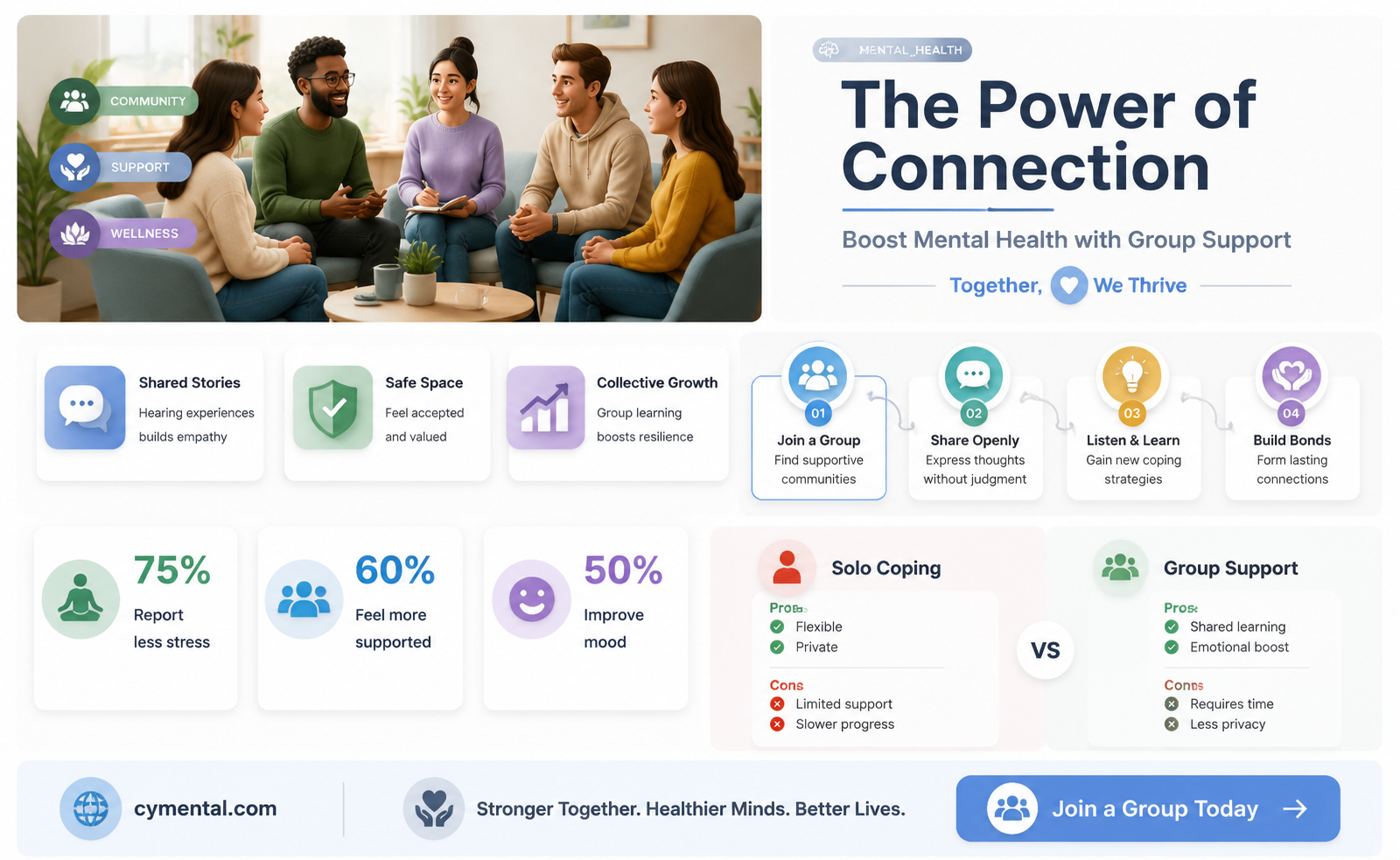
Having a supportive group can significantly impact mental health by providing a sense of belonging, emotional validation, and shared experiences. Social connections within a group foster feelings of acceptance and reduce feelings of isolation, which are common contributors to anxiety and depression. Additionally, group settings often encourage open communication, allowing individuals to express their struggles and receive encouragement or advice from others who may relate. Structured groups, such as therapy or support groups, can also offer coping strategies and professional guidance, further enhancing mental well-being. However, the quality of the group dynamic matters; positive, non-judgmental environments are beneficial, while toxic or unsupportive groups can have the opposite effect. Ultimately, the presence of a healthy group can serve as a protective factor for mental health, promoting resilience and emotional stability.
| Characteristics | Values |
|---|---|
| Social Support | Reduces feelings of loneliness, provides emotional comfort, and fosters a sense of belonging. |
| Reduced Stress | Group interactions lower cortisol levels and mitigate stress responses. |
| Improved Self-Esteem | Positive feedback and validation from group members boost self-worth. |
| Shared Experiences | Members feel understood through common struggles, reducing isolation. |
| Accountability | Group settings encourage commitment to mental health goals and habits. |
| Skill Development | Groups teach coping strategies, communication skills, and problem-solving. |
| Access to Resources | Members share information about therapists, tools, or self-help techniques. |
| Normalization of Struggles | Reduces stigma by showing mental health challenges are common. |
| Motivation and Hope | Seeing others' progress inspires optimism and perseverance. |
| Structured Environment | Regular meetings provide routine, which benefits mental health stability. |
| Cultural and Identity Validation | Groups tailored to specific identities (e.g., LGBTQ+, racial groups) offer unique support. |
| Reduced Risk of Depression | Studies show group involvement correlates with lower depression rates. |
| Enhanced Resilience | Collective coping mechanisms strengthen emotional resilience. |
| Physical Health Benefits | Social connections in groups are linked to better overall health outcomes. |
| Long-Term Mental Health Improvement | Consistent group participation leads to sustained mental well-being. |
Explore related products




What You'll Learn
- Social support reduces stress and anxiety through shared experiences and emotional connections
- Group therapy fosters understanding, empathy, and coping strategies in a safe environment
- Shared activities boost mood, motivation, and a sense of belonging among members
- Peer encouragement promotes accountability, resilience, and progress in mental health recovery
- Community groups combat loneliness, isolation, and stigma by creating meaningful connections

Social support reduces stress and anxiety through shared experiences and emotional connections
Human beings are inherently social creatures, and our mental well-being is deeply intertwined with the quality of our social connections. Research consistently shows that individuals with strong social support networks experience lower levels of stress and anxiety. This phenomenon can be attributed to the power of shared experiences and emotional connections, which act as buffers against life’s challenges. For instance, a study published in the *Journal of Health and Social Behavior* found that individuals with robust social ties had a 50% greater likelihood of survival compared to those with weaker connections, highlighting the tangible impact of social support on mental and physical health.
Consider the mechanics of how shared experiences alleviate stress. When individuals face difficulties, discussing their struggles with others who have gone through similar situations fosters a sense of validation and normalization. For example, support groups for anxiety disorders often create a safe space where members can share coping strategies and success stories. This collective wisdom not only reduces feelings of isolation but also provides practical tools for managing anxiety. A study by the American Psychological Association suggests that participating in group therapy can reduce anxiety symptoms by up to 40%, underscoring the therapeutic value of communal experiences.
Emotional connections, another cornerstone of social support, play a critical role in stress reduction. When we feel understood and accepted by others, our brains release oxytocin, often referred to as the "bonding hormone," which promotes feelings of calm and security. For instance, a simple act like hugging a trusted friend for 20 seconds can increase oxytocin levels, thereby lowering cortisol, the stress hormone. This biochemical response illustrates how emotional connections can directly counteract stress. Practical tips for fostering such connections include scheduling regular face-to-face interactions, practicing active listening, and expressing gratitude toward loved ones.
However, not all social interactions are created equal. The quality of social support matters more than quantity. A large but superficial social network may offer little benefit, whereas even a small circle of deeply connected individuals can provide significant emotional relief. For example, a study involving college students found that those who reported having just one close friend experienced lower levels of anxiety during exam periods compared to those with many acquaintances but no deep connections. This finding emphasizes the importance of cultivating meaningful relationships rather than merely expanding one’s social circle.
Incorporating social support into daily life requires intentionality. Start by identifying individuals or groups that align with your interests or experiences—whether through community organizations, online forums, or local meetups. For older adults, who may face increased social isolation, programs like senior centers or virtual book clubs can be particularly beneficial. Similarly, adolescents can benefit from peer support groups focused on navigating academic or social pressures. By prioritizing shared experiences and emotional connections, individuals can harness the stress-reducing power of social support, ultimately fostering greater mental resilience and well-being.
Mental Distractions: Unlocking Higher Pain Tolerance Through Cognitive Shifts
You may want to see also
Explore related products


$8.5 $19.99


Group therapy fosters understanding, empathy, and coping strategies in a safe environment
Group therapy offers a unique platform for individuals to navigate their mental health challenges collectively, leveraging shared experiences to foster understanding, empathy, and coping strategies. Unlike individual therapy, where the focus is solely on one person, group settings allow participants to witness others’ struggles and triumphs, normalizing their own experiences. For instance, a study published in the *Journal of Clinical Psychology* found that 75% of participants reported reduced feelings of isolation after just eight sessions of group therapy. This normalization is particularly powerful for those dealing with conditions like anxiety or depression, where feelings of uniqueness can exacerbate symptoms.
To maximize the benefits of group therapy, it’s essential to create a safe and nonjudgmental environment. Facilitators play a critical role in setting ground rules, such as active listening and confidentiality, to ensure participants feel secure sharing vulnerably. For example, a structured group for adolescents with social anxiety might start each session with a check-in, followed by role-playing scenarios to practice coping skills. Research indicates that groups with clear boundaries and consistent facilitation see a 40% higher rate of participant engagement compared to less structured settings. Practical tips for facilitators include using icebreakers to ease tension and encouraging members to share one actionable coping strategy they’ve learned each week.
Empathy thrives in group therapy because participants are not just passive observers but active contributors to each other’s healing. Hearing others articulate similar struggles can help individuals reframe their own experiences, reducing self-blame and increasing compassion. For instance, a group for individuals recovering from trauma might use a technique called “cross-talk,” where members reflect on each other’s stories, highlighting common themes and strengths. This process not only deepens understanding but also builds a sense of collective resilience. A study in *Psychotherapy Research* found that participants who engaged in cross-talk reported a 30% increase in self-compassion over 12 weeks.
Coping strategies are another cornerstone of group therapy, as members learn from each other’s successes and failures. For example, a group focused on managing chronic stress might compile a shared list of techniques, such as mindfulness exercises, journaling, or physical activity, and assign members to test and report back on their effectiveness. This collaborative approach not only diversifies the toolkit available to each participant but also reinforces accountability. A practical tip for participants is to keep a journal tracking which strategies work best for them, noting specifics like duration (e.g., 10 minutes of meditation daily) and context (e.g., before bedtime).
Ultimately, the power of group therapy lies in its ability to transform individual struggles into collective growth. By fostering understanding, empathy, and practical coping strategies within a safe environment, it addresses both the emotional and practical dimensions of mental health. For those considering group therapy, it’s worth noting that consistency is key—attending regularly and actively participating yields the best results. Whether you’re dealing with grief, addiction, or everyday stress, group therapy offers a space where you’re not alone, and that, in itself, can be a profound source of healing.
Crying and Mental Health: Unlocking Emotional Release for Well-Being
You may want to see also
Explore related products


Shared activities boost mood, motivation, and a sense of belonging among members
Engaging in shared activities with a group can significantly enhance mental well-being by fostering a sense of connection and purpose. Whether it’s a weekly book club, a community garden project, or a team sport, these activities create structured opportunities for social interaction. Research shows that participating in group tasks releases oxytocin, often called the "bonding hormone," which reduces stress and increases feelings of trust. For instance, a study published in *The Journal of Social Psychology* found that individuals who engaged in group activities reported lower levels of cortisol, the stress hormone, compared to those who performed tasks alone. The key lies in consistency—aim for at least two shared activities per week to maximize these benefits.
Consider the mechanics of motivation within a group setting. When individuals commit to a shared goal, such as training for a charity run or organizing a local event, they are more likely to stay motivated due to accountability and peer encouragement. This phenomenon is rooted in social facilitation, where the presence of others enhances performance and effort. For example, a fitness class attendee is 30% more likely to show up regularly when they’ve committed to a group, according to a study by the *American Council on Exercise*. To leverage this, choose activities that align with personal interests but also require collaboration, ensuring both enjoyment and a sense of responsibility.
The sense of belonging cultivated through shared activities is particularly powerful for combating loneliness and isolation. In a group, individuals often find common ground, reducing feelings of otherness. Take intergenerational programs, where seniors and youth engage in activities like cooking or crafting together. These initiatives not only bridge age gaps but also provide a platform for meaningful relationships. A report by *Age UK* highlighted that older adults participating in such programs experienced a 40% decrease in depressive symptoms. For maximum impact, ensure activities are inclusive and allow for personal contributions, fostering a sense of ownership and value within the group.
Practical implementation is key to reaping these benefits. Start small by joining a local hobby group or initiating a monthly meetup with friends centered around a shared interest. For those hesitant to commit, begin with low-stakes activities like a board game night or a group walk. Apps like Meetup or platforms like Facebook Groups can connect you with like-minded individuals. Remember, the goal isn’t to fill every moment with group activities but to create a balance that enhances mental health. By prioritizing quality over quantity, shared activities become a sustainable and enjoyable way to boost mood, motivation, and belonging.
Gardening for Mental Health: Cultivating Peace and Well-Being Naturally
You may want to see also
Explore related products


Peer encouragement promotes accountability, resilience, and progress in mental health recovery
Peer encouragement is a cornerstone of mental health recovery, transforming isolation into a collective journey of growth. When individuals share their struggles and triumphs within a supportive group, they create a network of accountability that fosters consistent progress. For instance, a study published in the *Journal of Consulting and Clinical Psychology* found that participants in group therapy sessions were 40% more likely to adhere to treatment plans compared to those in individual therapy. This statistic underscores the power of peer encouragement in maintaining commitment to recovery goals. Accountability arises naturally when group members check in with one another, share milestones, and offer constructive feedback, creating a structured environment that reduces the likelihood of relapse.
Resilience, another critical component of mental health recovery, is significantly bolstered by peer encouragement. Groups provide a safe space for individuals to practice vulnerability, learn coping strategies, and witness others overcoming similar challenges. A comparative analysis of support groups for anxiety disorders revealed that members who actively engaged in peer encouragement reported a 35% increase in emotional resilience over six months. This resilience is not just emotional but also practical; group members often share tools like mindfulness techniques, journaling prompts, or stress-reduction exercises that can be immediately applied. For example, a 30-year-old participant in a depression support group credited her peers’ encouragement for helping her develop a daily gratitude practice, which she now uses to combat negative thought patterns.
Progress in mental health recovery is often nonlinear, but peer encouragement provides the momentum needed to navigate setbacks. Groups celebrate small victories—whether it’s a week without panic attacks or a successful social interaction—reinforcing the idea that every step forward matters. A persuasive argument for this lies in the concept of “social proof,” where seeing others achieve progress inspires individuals to believe in their own potential. For instance, a 25-year-old recovering from addiction shared that witnessing a peer’s one-year sobriety milestone motivated him to recommit to his recovery plan. Practical tips for maximizing this benefit include setting group goals, such as collectively committing to a 30-day mindfulness challenge, and using visual aids like progress trackers to keep everyone motivated.
However, leveraging peer encouragement effectively requires intentionality. Not all groups are created equal, and individuals must seek out environments that align with their needs. For example, younger adults (ages 18–25) may benefit from groups focused on identity exploration and skill-building, while older adults (ages 50+) might thrive in groups addressing life transitions and chronic stress. Cautions include avoiding groups that foster comparison or negativity, as these can undermine progress. A descriptive example of a well-structured group is one that combines peer sharing with professional facilitation, ensuring that encouragement is balanced with evidence-based guidance. By prioritizing authenticity, consistency, and mutual respect, peer encouragement becomes a dynamic force that accelerates mental health recovery.
Pets and Mental Health: How Furry Friends Boost Well-Being
You may want to see also
Explore related products


$12.23 $14.39


Community groups combat loneliness, isolation, and stigma by creating meaningful connections
Loneliness, isolation, and stigma are silent epidemics that erode mental well-being, often leaving individuals feeling invisible and disconnected. Community groups act as antidotes by fostering environments where shared experiences and collective support dismantle these barriers. For instance, a study published in the *Journal of Community Psychology* found that participation in local book clubs or gardening groups reduced feelings of loneliness by 40% among adults over 50. These groups provide structured yet flexible spaces where individuals can engage at their own pace, gradually building trust and belonging. Unlike fleeting social interactions, community groups offer recurring opportunities for connection, allowing relationships to deepen over time.
Consider the mechanics of how these groups operate. A well-designed community group incorporates three key elements: shared purpose, regular meetings, and inclusive leadership. Take, for example, a mental health support group that meets weekly for 90 minutes. The shared purpose—navigating mental health challenges—creates an immediate bond among members. Regular meetings establish a rhythm, making participation a habit rather than a chore. Inclusive leadership ensures everyone’s voice is heard, reducing the stigma often associated with vulnerability. Practical tips for organizers include starting meetings with icebreakers, setting ground rules for respectful communication, and incorporating activities like mindfulness exercises or goal-setting sessions to keep engagement high.
From a comparative perspective, community groups stand out from other social interventions due to their ability to address both emotional and structural isolation. While one-on-one therapy focuses on individual healing, community groups provide a collective context that normalizes struggles and amplifies resilience. For example, a LGBTQ+ youth group not only combats isolation but also challenges societal stigma by creating a safe space for self-expression. Similarly, cultural or hobby-based groups—such as knitting circles or language exchange programs—offer dual benefits: skill development and social connection. This dual focus makes community groups particularly effective for marginalized populations, who often face intersecting forms of isolation.
To maximize the mental health benefits of community groups, consider the following actionable steps. First, identify groups aligned with your interests or needs—whether through local community centers, online platforms like Meetup, or social media. Second, commit to consistent attendance; research suggests that participating in group activities at least twice a month yields significant improvements in mood and self-esteem. Third, actively contribute to the group dynamic by sharing your experiences or volunteering for organizational tasks. Cautions include avoiding groups that feel overly prescriptive or judgmental, as these can exacerbate feelings of inadequacy. Finally, recognize that building meaningful connections takes time; patience and openness are key.
In conclusion, community groups are powerful tools for combating loneliness, isolation, and stigma by creating spaces where individuals can connect authentically and grow collectively. Their structured yet flexible nature, combined with a shared purpose, makes them uniquely effective in fostering mental well-being. By participating in or organizing such groups, individuals can transform their social landscapes, turning isolation into inclusion and stigma into solidarity. The evidence is clear: in the fight for better mental health, community is not just helpful—it’s essential.
Therapy's Impact: Unlocking Mental Health Healing and Personal Growth
You may want to see also
Frequently asked questions
Yes, being part of a group can improve mental health by providing social support, reducing feelings of loneliness, and fostering a sense of belonging.
Group interaction positively impacts mental well-being by encouraging open communication, sharing experiences, and offering emotional validation, which can reduce stress and anxiety.
Yes, group activities can help with depression by promoting engagement, distraction from negative thoughts, and the release of endorphins through shared experiences.
Yes, support groups are effective for managing anxiety as they provide a safe space to share struggles, learn coping strategies, and gain perspective from others facing similar challenges.
A sense of community plays a crucial role in mental health by reducing isolation, boosting self-esteem, and providing a network of resources and encouragement during difficult times.