Ava Ramirez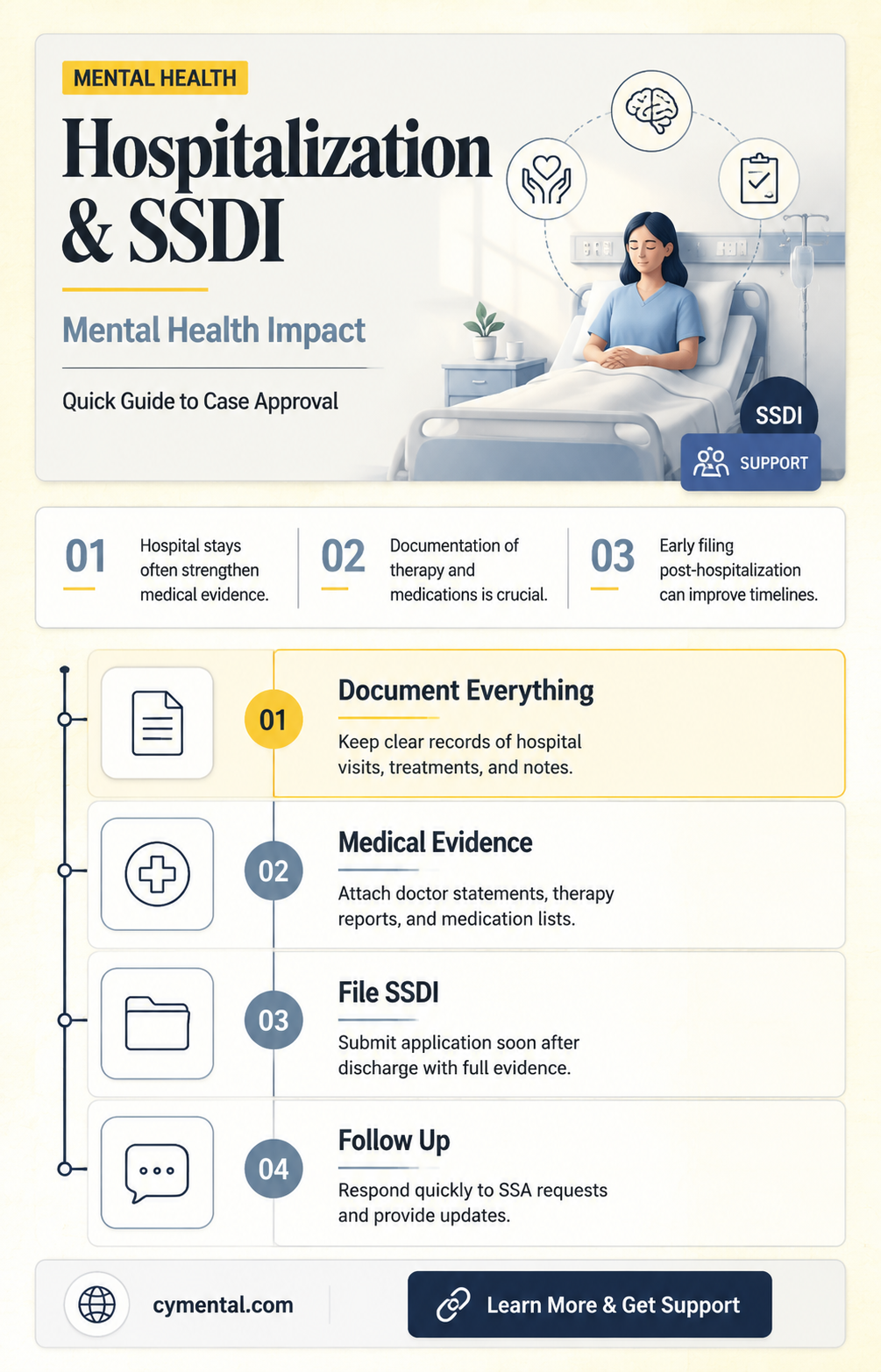
Hospitalization for mental health services can significantly impact a Social Security Disability Insurance (SSDI) case, as it provides critical evidence of the severity and persistence of a claimant’s mental health condition. Medical records from inpatient stays often document symptoms, treatment plans, and functional limitations, which are essential for demonstrating an inability to engage in substantial gainful activity. Additionally, hospitalization can highlight the claimant’s need for intensive care, reinforcing the argument that their condition meets or equals the criteria outlined in the Social Security Administration’s Blue Book listings. However, the effectiveness of hospitalization in supporting an SSDI case depends on consistent follow-up care, adherence to treatment, and clear documentation of ongoing impairments. Ultimately, while hospitalization alone may not guarantee approval, it can strengthen a case by substantiating the claimant’s mental health struggles and their impact on daily functioning.
Explore related products


What You'll Learn
- Medical Evidence: Hospital records provide critical proof of mental health severity for SSDI claims
- Treatment Compliance: Hospitalization shows adherence to treatment, supporting disability credibility
- Functional Limitations: Hospital notes document daily activity restrictions, key for SSDI approval
- Professional Opinions: Psychiatrist/therapist assessments during hospitalization strengthen case validity
- Duration of Impairment: Hospital stays highlight long-term mental health struggles, aiding SSDI eligibility

Medical Evidence: Hospital records provide critical proof of mental health severity for SSDI claims
Hospitalization records serve as a cornerstone in substantiating the severity of mental health conditions for Social Security Disability Insurance (SSDI) claims. These documents provide a detailed, objective account of a claimant’s symptoms, treatment, and functional limitations during acute episodes. For instance, a record of a 72-hour psychiatric hold under Section 5150 in California or a similar involuntary commitment elsewhere can demonstrate the claimant’s inability to manage daily life without intervention. Such evidence is particularly compelling because it reflects a professional judgment that the individual posed a danger to themselves or others, a criterion often aligned with SSDI’s definition of disability.
When preparing an SSDI claim, claimants should ensure hospital records include specific details such as diagnostic codes (e.g., F32.3 for major depressive disorder with psychotic features), medication regimens (e.g., 20 mg of fluoxetine daily), and observations of behavioral impairments (e.g., inability to engage in conversations or complete basic tasks). These specifics bridge the gap between a diagnosis and the functional impact required by SSDI evaluators. For example, a record noting "patient exhibited severe psychomotor retardation, requiring assistance with hygiene" directly supports claims of marked limitations in personal care.
However, not all hospitalizations carry equal weight. Short-term stays (e.g., 24–48 hours) for stabilization may be less persuasive than longer admissions (e.g., 7–14 days) that involve intensive treatment, such as electroconvulsive therapy (ECT) or medication adjustments. Claimants should also ensure records reflect compliance with treatment, as non-adherence could be misinterpreted as lack of severity. For instance, a note stating "patient discontinued olanzapine due to intolerable side effects" provides context, whereas an abrupt stop without explanation might raise questions.
To maximize the utility of hospital records, claimants should request comprehensive discharge summaries, progress notes, and treatment plans. These documents should align with SSDI’s Blue Book criteria for mental disorders, such as Listing 12.04 (Depressive, bipolar, and related disorders). For example, a record noting "patient experienced three or more episodes of decompensation within 12 months" directly addresses a key listing requirement. Additionally, claimants should authorize their healthcare providers to submit records promptly, as delays can stall the claims process.
In conclusion, hospital records are not merely administrative documents but powerful tools in SSDI claims. They transform subjective experiences into objective evidence, making them indispensable for proving the severity and persistence of mental health conditions. By understanding their value and ensuring their completeness, claimants can significantly strengthen their case for disability benefits.
Music's Power: Boosting Middle Schoolers' Mental Health and Well-Being
You may want to see also
Explore related products

$22.99 $7.95


Treatment Compliance: Hospitalization shows adherence to treatment, supporting disability credibility
Hospitalization for mental health treatment can significantly bolster an SSDI case by demonstrating a claimant's commitment to managing their condition. When individuals undergo inpatient care, it provides concrete evidence of the severity of their mental health issues and their willingness to follow prescribed treatment plans. This adherence is crucial because SSDI evaluators often scrutinize whether applicants have actively sought and complied with recommended therapies. A documented history of hospitalization can serve as irrefutable proof that the claimant has taken substantial steps to address their disability, thereby enhancing the credibility of their application.
Consider the case of a 34-year-old applicant diagnosed with severe depression and anxiety. Despite consistent outpatient therapy and medication management, their symptoms escalated to the point of suicidal ideation, necessitating a week-long psychiatric hospitalization. During this stay, they participated in intensive group therapy, received adjustments to their medication regimen (increasing their SSRI dosage from 20mg to 40mg daily), and engaged in cognitive-behavioral interventions. This hospitalization not only stabilized their acute symptoms but also provided detailed medical records outlining their treatment compliance. Such documentation can be pivotal in SSDI evaluations, as it illustrates the claimant’s proactive approach to managing their condition despite its debilitating nature.
However, hospitalization alone is not a guarantee of SSDI approval. It must be part of a broader narrative of treatment adherence and functional impairment. For instance, if a claimant has been hospitalized multiple times but continues to miss outpatient appointments or fails to take prescribed medications, this could raise questions about their commitment to recovery. Conversely, consistent follow-up care post-hospitalization, such as attending weekly therapy sessions or participating in partial hospitalization programs, reinforces the argument that the claimant is doing everything possible to manage their disability. SSDI evaluators are more likely to approve claims when they see a pattern of sustained effort, even if the outcomes are not always positive.
Practical tips for claimants include maintaining a detailed record of all hospitalizations, including dates, diagnoses, treatments received, and follow-up plans. Requesting a discharge summary from the hospital and ensuring it is included in the SSDI application can provide a comprehensive overview of the claimant’s condition and treatment compliance. Additionally, claimants should communicate openly with their healthcare providers about their SSDI application, as consistent medical documentation from treating physicians can further substantiate the need for disability benefits. By framing hospitalization as a critical component of a long-term treatment strategy, claimants can strengthen their case and demonstrate the legitimacy of their disability.
Gym and Mind: How Physical Fitness Boosts Mental Well-Being
You may want to see also
Explore related products


Functional Limitations: Hospital notes document daily activity restrictions, key for SSDI approval
Hospitalization for mental health often leaves a detailed trail of functional limitations in medical records, a critical asset when applying for Social Security Disability Insurance (SSDI). These notes, meticulously documenting daily activity restrictions, serve as tangible evidence of how mental health conditions impair one’s ability to work or perform routine tasks. For instance, a patient with severe depression might have records noting an inability to concentrate for more than 15 minutes, or someone with anxiety may be restricted from leaving their home without a caregiver. Such specifics are not just clinical observations—they are the backbone of a compelling SSDI case.
Consider the process of translating these limitations into SSDI criteria. The Social Security Administration (SSA) evaluates mental health claims based on how impairments affect daily functioning, social interactions, and task persistence. Hospital notes that explicitly state restrictions—like "patient unable to manage finances independently" or "requires assistance with personal hygiene"—directly align with the SSA’s functional assessment. Without this level of detail, claimants risk their case being perceived as subjective or exaggerated. For example, a vague note like "patient struggles with anxiety" carries far less weight than "patient experiences panic attacks lasting 30–45 minutes, requiring immediate isolation."
However, not all hospital notes are created equal. Some records may focus on symptoms rather than functional impact, leaving gaps in the SSDI application. To maximize their utility, patients or advocates should ensure hospital staff document *how* symptoms disrupt daily life. For instance, instead of merely noting "severe paranoia," the record should specify, "patient avoids public spaces, limiting ability to commute to work or interact with coworkers." This shift from symptom-based to function-based documentation is crucial, as SSDI approvals hinge on demonstrable inability to sustain employment.
A practical tip for claimants: request a functional capacity evaluation (FCE) during hospitalization. This assessment explicitly measures limitations in areas like memory, decision-making, and physical endurance, providing a standardized framework for SSDI evaluators. For example, an FCE might reveal that a patient with bipolar disorder can only perform simple tasks for two hours before requiring a break—a clear indicator of work-related impairment. Pairing FCE results with detailed hospital notes creates a robust narrative of disability.
In conclusion, hospital notes are more than medical records—they are strategic tools in SSDI cases. By ensuring these documents explicitly link mental health symptoms to daily activity restrictions, claimants can bridge the gap between clinical observation and legal criteria. The key lies in specificity: every restriction noted, every limitation quantified, brings the claimant one step closer to approval. For mental health SSDI cases, the devil is in the details—and those details are found in the hospital notes.
Boost Your Mental Health: The Role of B Vitamins Explained
You may want to see also
Explore related products


Professional Opinions: Psychiatrist/therapist assessments during hospitalization strengthen case validity
Hospitalization for mental health services often includes comprehensive assessments by psychiatrists and therapists, which can significantly bolster a Social Security Disability Insurance (SSDI) case. These evaluations provide detailed, objective evidence of the claimant’s condition, its severity, and its impact on daily functioning—critical elements the Social Security Administration (SSA) requires to approve benefits. Unlike self-reported symptoms, professional assessments during hospitalization carry substantial weight because they are conducted in a controlled, clinical setting by qualified experts.
Consider the structure of these assessments: psychiatrists typically document diagnostic criteria, treatment plans, and medication regimens, while therapists focus on behavioral observations and functional limitations. For instance, a psychiatrist might note that a patient with major depressive disorder requires daily supervision due to suicidal ideation, or that an individual with schizophrenia experiences persistent hallucinations despite antipsychotic medication (e.g., 10 mg of olanzapine daily). Therapists, on the other hand, may record specific instances of social withdrawal, inability to concentrate, or impaired decision-making during group therapy sessions. These specifics transform vague claims of disability into concrete, actionable evidence.
The timing of these assessments is equally crucial. Hospitalization often occurs during acute episodes of mental illness, providing a snapshot of the claimant’s condition at its most severe. For SSDI purposes, this is invaluable, as the SSA evaluates whether an impairment is expected to last at least 12 months or result in death. A psychiatrist’s note that a patient’s anxiety disorder renders them unable to leave their room for days, or a therapist’s observation of persistent psychomotor agitation, directly supports the argument that the condition is chronic and debilitating.
However, claimants must ensure these assessments are properly documented and included in their SSDI application. Practical tips include requesting detailed discharge summaries, treatment notes, and functional capacity evaluations from the hospital. For example, a functional capacity evaluation might state that the claimant cannot sustain attention for more than 15 minutes or interact with others without decompensation. Such specificity bridges the gap between medical diagnosis and real-world limitations, making the case harder to refute.
In conclusion, psychiatrist and therapist assessments during hospitalization are not just supportive—they are transformative for SSDI cases. They provide the SSA with the clinical depth and functional context needed to understand the claimant’s disability. By leveraging these professional opinions, claimants can present a compelling, evidence-based argument that their mental health condition meets the stringent criteria for SSDI approval.
Healing Companions: How Animals Support Mental Health and Well-Being
You may want to see also
Duration of Impairment: Hospital stays highlight long-term mental health struggles, aiding SSDI eligibility
Hospitalization for mental health issues serves as a critical marker of the severity and duration of impairment, two key factors in Social Security Disability Insurance (SSDI) eligibility. When evaluating claims, the Social Security Administration (SSA) scrutinizes medical records for evidence of long-term struggles. A hospital stay, particularly one lasting several days or weeks, provides concrete proof that the individual’s condition is not only severe but also persistent. For example, a 10-day psychiatric hospitalization for major depressive disorder, documented with daily progress notes and treatment plans, demonstrates a level of impairment that outpatient therapy alone might not convey. This tangible evidence can strengthen an SSDI case by illustrating the claimant’s inability to function consistently in daily life or work settings.
Analyzing the impact of hospitalization duration reveals its dual role: it validates the claimant’s condition and underscores the ineffectiveness of less intensive treatments. The SSA requires proof that the impairment has lasted or is expected to last at least 12 months. A hospital stay, especially if it involves multiple admissions over time, directly supports this criterion. For instance, a claimant with schizophrenia who has been hospitalized three times in two years, each stay lasting 7–14 days, presents a clear pattern of recurring, debilitating episodes. This history not only highlights the chronic nature of the condition but also shows that standard outpatient care has been insufficient to manage symptoms, further bolstering the SSDI application.
Persuasively, hospitalization records can shift the narrative in favor of the claimant by humanizing the data. Detailed discharge summaries, medication adjustments, and therapy sessions documented during a hospital stay provide a comprehensive view of the individual’s struggles. For example, a claimant with bipolar disorder might have records showing failed medication trials, electroconvulsive therapy (ECT) sessions, and cognitive-behavioral therapy attempts during hospitalization. This level of detail not only proves the severity of the impairment but also demonstrates the claimant’s proactive yet unsuccessful efforts to improve, a point that can sway SSA evaluators toward approval.
Comparatively, claimants without hospitalization records often face greater challenges in proving long-term impairment. While outpatient treatment notes are valuable, they may lack the urgency and depth of inpatient documentation. For instance, a claimant with PTSD who has only attended weekly therapy sessions might struggle to prove their condition’s severity compared to someone with a 5-day hospital stay following a psychotic episode. The latter’s records include crisis intervention, 24/7 monitoring, and a detailed aftercare plan, all of which paint a vivid picture of profound impairment. This contrast underscores why hospitalization can be a game-changer in SSDI cases.
Practically, claimants and their advocates should ensure hospital records are thorough and included in the SSDI application. Request detailed discharge summaries, treatment logs, and physician statements that explicitly link the hospitalization to the claimant’s inability to work. For example, a psychiatrist’s note stating, “Patient’s severe anxiety and depression, evidenced by this 12-day hospitalization, render them unable to sustain gainful employment,” can be pivotal. Additionally, if multiple hospitalizations have occurred, compile a timeline highlighting their frequency and duration. This organized approach not only meets the SSA’s evidentiary requirements but also tells a compelling story of long-term struggle, significantly enhancing the likelihood of SSDI approval.
Tax Dollars and Mental Health: Funding Institutions for Better Care?
You may want to see also
Frequently asked questions
Yes, hospitalization can strengthen your SSDI case by providing documented evidence of the severity and impact of your mental health condition on your ability to work.
Longer hospitalizations may indicate a more severe condition, which can support your claim by demonstrating the extent of your functional limitations and treatment needs.
Yes, you should disclose all relevant hospitalizations to ensure the SSA has a complete picture of your medical history and the severity of your condition.
No, hospitalization records alone are not enough. They must be accompanied by consistent medical evidence, treatment history, and documentation of how your condition affects your ability to work.
Recent hospitalizations are more impactful, as they provide current evidence of your condition. However, older hospitalizations can still be relevant if they show a long-term pattern of impairment.